Egyptian Rheumatologist
Scope & Guideline
Pioneering insights for a healthier future.
Introduction
Aims and Scopes
- Clinical Characteristics and Management of Rheumatic Diseases:
The journal frequently publishes studies detailing the clinical features, management strategies, and outcomes of various rheumatic conditions, including systemic lupus erythematosus, rheumatoid arthritis, and spondyloarthritis. - Biomarkers and Genetic Studies:
Research on biomarkers, genetic variations, and their implications in rheumatic diseases is a core focus, with numerous papers exploring the role of interleukins and other molecular markers in disease activity and treatment response. - Ultrasound and Imaging Techniques:
The use of imaging modalities, particularly musculoskeletal ultrasound and MRI, is a significant area of interest, contributing to the understanding of disease activity, diagnosis, and treatment evaluation in rheumatology. - Comorbidities and Extra-Articular Manifestations:
The journal addresses the impact of comorbid conditions and extra-articular manifestations of rheumatic diseases, emphasizing the holistic management of patients. - Patient Quality of Life and Psychosocial Aspects:
There is a consistent focus on the quality of life, mental health issues, and psychosocial aspects related to rheumatic diseases, highlighting the importance of comprehensive care.
Trending and Emerging
- Role of Genetics and Molecular Biology:
There is a growing trend towards exploring the genetic and molecular underpinnings of rheumatic diseases, with an emphasis on identifying genetic polymorphisms and their associations with disease susceptibility and treatment outcomes. - Integrated Care Models:
Emerging studies are focusing on integrated care models that address the multifaceted aspects of rheumatic diseases, including physical, psychological, and social dimensions of patient care. - Impact of COVID-19 on Rheumatic Patients:
The pandemic has prompted an increase in research examining the effects of COVID-19 on patients with rheumatic diseases, including the implications of vaccination and infection outcomes. - Use of Advanced Imaging Techniques:
The application of advanced imaging techniques, particularly ultrasound and MRI, for better diagnosis and monitoring of disease activity is increasingly prevalent in recent publications. - Psychosocial Factors and Quality of Life:
There is an emerging focus on the psychosocial factors affecting patients with rheumatic diseases, emphasizing the need to address mental health and quality of life in treatment paradigms.
Declining or Waning
- Traditional Pharmacological Treatments:
There is a noticeable decline in studies focusing solely on traditional pharmacological treatments for rheumatic diseases, as the journal increasingly emphasizes personalized medicine and newer therapeutic approaches. - Epidemiological Studies:
Research centered on the epidemiology of rheumatic diseases appears to be less prominent, possibly due to a shift towards more mechanism-based and patient-centered studies. - Basic Science Research:
There seems to be a waning interest in basic science research without direct clinical implications, as the journal prioritizes translational studies that bridge laboratory findings with clinical applications.
Similar Journals
SEMINARS IN ARTHRITIS AND RHEUMATISM
Empowering practitioners through high-quality peer-reviewed studies.SEMINARS IN ARTHRITIS AND RHEUMATISM, published by W B Saunders Co-Elsevier Inc, is a leading journal in the fields of rheumatology and pain medicine. With an impressive impact factor and recognized as a Q1 journal in both its categories, it ranks #8 in Anesthesiology and Pain Medicine and #11 in Rheumatology based on the latest Scopus data, placing it within the top echelons of academic research. Established in 1971, this esteemed publication offers a comprehensive platform for researchers and practitioners to disseminate and engage with cutting-edge studies that advance the understanding and treatment of arthritis and related conditions. With its robust editorial process and focus on high-quality, peer-reviewed articles, the journal not only contributes to scientific knowledge but also serves as an essential resource for professionals and students seeking contemporary insights into effective management strategies and emerging therapies in the rheumatologic field. Although it does not offer open access, its subscription model ensures a wide distribution among academic and clinical institutions, reinforcing its significance in the research community.

Revista Cubana de Reumatologia
Advancing rheumatological research for a healthier future.Revista Cubana de Reumatologia is a prominent open-access journal published by the SOC CUBANA REUMATOLOGIA, dedicated to advancing knowledge in the field of rheumatology since its inception in 1998. With an ISSN of 1606-5581 and an E-ISSN of 1817-5996, this journal aims to disseminate high-quality research that addresses various aspects of rheumatic diseases, their diagnosis, treatment, and management. Located in Havana, Cuba, the journal serves as a vital platform for both local and international researchers, professionals, and students interested in the latest developments within the specialty. By embracing an open-access policy, the journal ensures that groundbreaking studies are freely available to a global audience, fostering collaboration and innovation in rheumatological research. As the field continues to evolve, Revista Cubana de Reumatologia remains committed to addressing the emerging challenges and trends, making it an essential resource for practitioners and scholars alike.
Reumatologia
Pioneering research for a healthier tomorrow.Reumatologia is a dedicated open-access journal published by TERMEDIA PUBLISHING HOUSE LTD that has been serving the global scientific community since 2005. The journal focuses on the fields of Rheumatology, Immunology, and Allergy, providing a rich platform for researchers and practitioners to share innovative findings, clinical insights, and methodologies. With its roots tracing back to the early 1960s and a steady convergence of quality content through 2024, Reumatologia has secured a place in the academic landscape, currently holding a Q4 rating in Immunology and a Q3 rating in both Immunology and Allergy and Rheumatology categories for 2023. While the journal ranks #42 out of 73 in the Medicine - Rheumatology category, its open-access model ensures that research is widely disseminated, enhancing visibility and accessibility to vital knowledge that shapes therapeutic practices. Located in Poznan, Poland, Reumatologia remains a pivotal source of credible research, fostering collaboration among academics, healthcare professionals, and students internationally.

Therapeutic Advances in Musculoskeletal Disease
Empowering Clinicians with Cutting-edge InsightsTherapeutic Advances in Musculoskeletal Disease is a premier, peer-reviewed journal published by SAGE Publications Ltd, focusing on the latest advancements in the understanding and treatment of musculoskeletal disorders. Since becoming an Open Access journal in 2019, it has significantly broadened its reach, providing researchers, clinicians, and practitioners with unfettered access to high-quality studies and reviews from 2009 to 2024. With an impressive impact factor reflected by its Q1 rank in Orthopedics and Sports Medicine and Q2 rank in Rheumatology for 2023, the journal occupies a critical position within its field. Ranked #31 out of 321 in Orthopedics and Sports Medicine and #17 out of 73 in Rheumatology on Scopus, it emphasizes both the clinical and scientific aspects of musculoskeletal health. This journal serves as a vital resource for advancing knowledge, encouraging collaboration, and fostering innovative treatment methods within the musculoskeletal community.

Arthritis & Rheumatology
Leading the Charge in Rheumatology and Allergy ResearchArthritis & Rheumatology is a leading journal dedicated to the advancement of knowledge in the fields of rheumatology, immunology, and allergy. Published by WILEY in the United Kingdom, this prestigious journal boasts an impressive impact factor and a prominent reputation, ranking in the Q1 category across multiple disciplines, including Immunology and Rheumatology. With its high ranking of 4th out of 73 in Rheumatology and notable standings in related fields, it serves as a crucial platform for researchers, healthcare professionals, and scholars to disseminate groundbreaking findings. The journal embraces an Open Access model, enhancing the accessibility of vital research to a global audience and ensuring that knowledge dissemination is maximized. Since its inception in 2014, Arthritis & Rheumatology has been at the forefront of impactful research, fostering collaboration and innovation in tackling complex challenges within these medical disciplines. Researchers looking to explore the latest advancements and engage with cutting-edge studies in these fields will find this journal to be an essential resource.
Lancet Rheumatology
Pioneering insights for the future of rheumatological care.The Lancet Rheumatology, published by Elsevier, is a premier academic journal dedicated to advancing the understanding of rheumatology and immunological diseases. Launched in 2019, this esteemed publication has quickly become a leading source of research, achieving an impressive Q1 ranking in both the fields of Rheumatology and Immunology as of 2023. With Scopus rankings placing it at #2 out of 73 in Medicine - Rheumatology and #6 out of 233 in Medicine - Immunology and Allergy, the journal serves as an essential platform for disseminating high-quality, peer-reviewed articles that address the latest findings and clinical practices in these domains. The journal, accessible in print and online, is committed to fostering knowledge and collaboration among researchers, healthcare professionals, and students alike, making it an invaluable resource for those seeking to deepen their expertise in rheumatology and its interrelated fields.
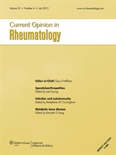
CURRENT OPINION IN RHEUMATOLOGY
Exploring the Latest Advances in RheumatologyCurrent Opinion in Rheumatology, published by Lippincott Williams & Wilkins, stands as a vital resource in the field of rheumatology. Since its inception in 1989, this prestigious journal has been at the forefront of disseminating cutting-edge research, with a notable Q1 ranking in the 2023 Rheumatology category and an impressive Scopus rank of 7 out of 73, placing it in the 91st percentile. The journal's commitment to presenting insightful reviews and critical analyses of recent advancements and treatment strategies makes it an essential read for professionals, researchers, and students dedicated to the study of rheumatic diseases. Although not an open-access journal, Current Opinion in Rheumatology continues to foster an informed dialogue within the academic community through its high-impact content, ensuring that the latest developments and practices are accessible to those at the vanguard of rheumatology research.
SKELETAL RADIOLOGY
Elevating Knowledge in Skeletal RadiologySkeletal Radiology, published by Springer, is a preeminent journal dedicated to the field of radiology, specifically focusing on the anatomical and pathological aspects of the skeletal system. Covering a breadth of topics from imaging techniques to innovative diagnostic methodologies, it aims to enhance knowledge and expertise in the interpretation of musculoskeletal conditions. Operating under the ISSN 0364-2348 and E-ISSN 1432-2161, the journal has established itself as a key resource for researchers, clinicians, and medical professionals, boasting an impressive impact factor that reflects its scholarly significance. As of 2023, it holds a commendable ranking in the Q2 quartile for Radiology, Nuclear Medicine and Imaging, and ranks #123 out of 333 in the Scopus database, placing it in the 63rd percentile. With a history spanning from 1976 to 2024, this journal continually seeks to publish high-quality research that advances the understanding of skeletal radiology. While it does not currently offer Open Access options, its rigorous peer-review process ensures that only the most relevant and impactful studies are shared with the global academic community.
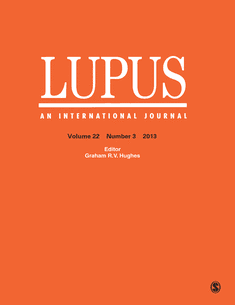
LUPUS
Exploring the complexities of rheumatology and autoimmune disorders.LUPUS is a premier peer-reviewed journal published by SAGE Publications Ltd, focusing on the field of rheumatology, with a specific emphasis on the complexities of lupus and related autoimmune disorders. Since its inception in 1991, the journal has consistently ranked in the Q2 category within the rheumatology field, currently positioned as #29 out of 73 in Scopus, reflecting its significant contributions to research and clinical practice. The journal aims to foster a deeper understanding of lupus through the publication of original research articles, reviews, and clinical studies, making it an essential resource for researchers, clinicians, and students dedicated to advancing knowledge in this vital area of medicine. With an impact factor that underscores its influence, LUPUS serves as a critical platform for sharing innovative findings and engaging discussions within the global scientific community. Although the journal follows a traditional access model, it is situated in the United Kingdom, at 1 Olivers Yard, 55 City Road, London EC1Y 1SP, England, and remains dedicated to supporting the continuous advancement of research in autoimmune diseases.

Rheumatology & Autoimmunity
Empowering professionals through open access to vital research.Rheumatology & Autoimmunity, published by WILEY, is an emerging academic journal that delves into the intricacies of rheumatological diseases and autoimmune disorders, providing a critical platform for researchers and practitioners within the field. With an ISSN of 2767-1410 and E-ISSN 2767-1429, the journal aims to disseminate cutting-edge research in both clinical and laboratory settings, enhancing knowledge and understanding among professionals and scholars. Although currently classified in Q4 for Immunology and Allergy, and Q3 for Internal Medicine and Rheumatology as of 2023, the journal is positioned for growth and greater visibility in the scientific community. The three-year publishing span from 2021 to 2024 signifies a commitment to addressing contemporary issues and fostering collaboration among various disciplines related to immunology. As an open access journal, it provides wide accessibility, ensuring that groundbreaking research is available to a broad audience. This journal is poised to become a vital resource for those dedicated to advancing the understanding and treatment of autoimmune conditions.