Electronic News
Scope & Guideline
Connecting Ideas, Shaping Futures in Media and Technology.
Introduction
Aims and Scopes
- Digital Journalism Practices:
Investigates the changing methodologies and practices within journalism as influenced by digital technologies, including social media and podcasting. - Media Framing and Representation:
Examines how various issues are framed in news media, focusing on representation and the implications for public perception and understanding. - Audience Engagement and Behavior:
Studies the ways audiences interact with news content, including their consumption patterns and the influence of social media on news perception. - Crisis and Conflict Reporting:
Analyzes how media covers significant events, such as crises or conflicts, and the impact of these portrayals on public opinion and policy. - Ethics and Professional Standards in Journalism:
Explores the ethical considerations and professional standards that guide journalism in the digital age, including issues of bias and misinformation.
Trending and Emerging
- Impact of Social Media on News:
There is a growing emphasis on how social media platforms influence news dissemination and audience engagement, including studies on algorithmic awareness and user interactions. - Podcasts and Alternative News Formats:
Research on podcasts as a medium for news delivery is trending, highlighting their role in shaping public discourse and audience habits. - Mental Health and Journalism:
Emerging studies are focusing on the portrayal of mental health issues in news media, reflecting societal concerns and the importance of responsible reporting. - Diversity and Inclusion in Media:
Increased attention is being given to diversity in news coverage and representation, addressing systemic biases and advocating for more inclusive journalism practices. - Technological Innovations in News Production:
There is a notable trend towards exploring the impact of technological advancements, such as virtual reality and interactive media, on news storytelling and audience engagement.
Declining or Waning
- Traditional Broadcast Journalism:
There is a noticeable decrease in studies focused on traditional television journalism, as the journal increasingly emphasizes digital and online news formats. - Print Media Analysis:
Research pertaining to print media and newspapers has diminished, possibly due to the ongoing decline of print as a primary news source in favor of digital platforms. - Longitudinal Studies of Media Impact:
Fewer longitudinal studies examining the long-term effects of media on society or political processes are being published, indicating a shift towards more immediate, topical analyses. - Basic Journalism Education and Training:
There appears to be less focus on foundational journalism education topics, as the journal moves towards addressing more contemporary issues in media practice. - Regulatory and Policy Issues in Journalism:
Themes related to media regulation and policy are less frequently addressed, suggesting a possible waning interest in the legal frameworks governing journalism.
Similar Journals

Vestnik Moskovskogo universiteta. Seriya 10. Zhurnalistika
Elevating Academic Discourse in Journalism and CommunicationVestnik Moskovskogo universiteta. Seriya 10. Zhurnalistika, published by the prestigious M V Lomonosov Moscow State University, serves as a vital conduit for scholarly discourse in the fields of journalism and communication. With an ISSN of 0320-8079 and an E-ISSN of 0320-8079, the journal showcases rigorously peer-reviewed research and theoretical contributions that span diverse aspects of media studies, social communication, and journalism ethics. As of 2023, it is classified within the Q3 category in both Communication and miscellaneous Social Sciences, ranking #372 out of 511 and #445 out of 604, respectively, indicating its growing influence and relevance in these crucial academic domains. Despite not being Open Access, researchers and students alike can leverage the journal's valuable insights, which continue to shape contemporary understanding of media's impact on society. With a commitment to excellence and a focus on the rapidly evolving landscape of journalism, Vestnik Moskovskogo universiteta. Seriya 10. Zhurnalistika remains an essential resource for anyone looking to engage deeply with current debates and developments in the communication field.
American Journalism
Shaping the Narrative of Today’s Media Landscape.American Journalism is a prominent peer-reviewed journal dedicated to advancing the field of communication, with a particular focus on the evolving landscapes of journalism practices and media studies. Published by Routledge Journals, Taylor & Francis Ltd, this journal serves as a critical platform for researchers, professionals, and students aiming to explore the multifaceted dimensions of journalism from 1983 to the present. While it currently holds an impact factor ranking within the Q4 category of communication disciplines, its commitment to publishing innovative research and fostering dialogue ensures it remains an integral resource for understanding contemporary media dynamics. With its address in the heart of the United Kingdom, the journal upholds a global perspective, engaging with diverse issues relevant to today's journalistic environment. Although it does not provide open access options, the journal offers access through various academic libraries and institutional subscriptions, making it a valuable asset for anyone invested in the future of journalism.
Journal of Communication Inquiry
Connecting Scholars to the Pulse of Communication PracticesJournal of Communication Inquiry, published by SAGE PUBLICATIONS INC, is a premier interdisciplinary journal that serves as a vital platform for scholars and practitioners in the fields of communication, cultural studies, and the arts and humanities. With a rich history dating back to its inception in 1974, the journal has consistently upheld rigorous academic standards, reflected in its impressive rankings within the Q1 and Q2 quartiles across various disciplines according to the latest metrics. The journal's comprehensive scope encompasses theoretical and empirical research, catering to a diverse readership who are keen to explore contemporary communication issues and cultural dynamics. While the impact factor is not explicitly stated, the journal's Scopus ranks position it favorably within its categories, with notable percentiles that highlight its influence in the academic community. As an essential resource for researchers, professionals, and students alike, the Journal of Communication Inquiry invites contributions that advance the discourse surrounding communication practices and cultural phenomena, contributing to the ongoing dialogue in these evolving fields.
African Journalism Studies
Fostering insights into the evolving landscape of African communication.African Journalism Studies is a leading journal dedicated to advancing the field of journalism research within the African context. Published by Routledge Journals, a prestigious division of Taylor & Francis Ltd, this journal features a rich repository of scholarly articles that explore critical issues in journalism, media practices, and communication strategies across the continent. With an impressive Q2 ranking in Communication for 2023, African Journalism Studies is recognized for its influence and quality, ranking #202 out of 511 journals in social sciences communication and maintaining a 60th percentile position. Despite being a non-open access publication, it remains essential for researchers, professionals, and students looking to deepen their understanding of the dynamics of journalism in Africa, offering insights into converged media practices from 2015 to 2024. The journal contributes significantly to the academic discourse, fostering a more profound knowledge base and encouraging informed discussions that reflect the evolving landscapes of African journalism.

IC-Revista Cientifica de Informacion y Comunicacion
Cultivating Excellence in Information and Communication ResearchIC-Revista Cientifica de Informacion y Comunicacion, published by UNIV SEVILLA, EDITORIAL, stands at the forefront of academic discourse in the fields of Communication, Cultural Studies, Library and Information Sciences, and Linguistics and Language. With its ISSN 1696-2508 and E-ISSN 2173-1071, this esteemed journal showcases high-quality research, contributing significantly to the advancement of knowledge since its inception in 2016. The journal is recognized for its rigorous standards, holding a Q2 category in Communication, a Q1 category in Cultural Studies, as well as Q2 rankings in both Library and Information Sciences and Linguistics and Language as of 2023. With a growing reputation, it is ranked in the mid percentiles across various Scopus categories, marking it as a key player in its spheres of influence. Although not an open-access journal, it remains accessible through institutional subscriptions, making it a vital resource for scholars and practitioners alike. The editorial team is dedicated to fostering innovation and engagement within the academic community, aligning with the evolving dynamics of information and communication.

Revista de Comunicacion-Peru
Connecting Scholars, Inspiring Change.Revista de Comunicación-Perú is a distinguished open-access journal published by Universidad de Piura, with a dedicated focus on communication studies. Since its inception in 2002, the journal has provided a vital platform for researchers, professionals, and students to disseminate knowledge and foster discourse in the field of communication. As of 2023, it proudly holds a Q1 classification in the Communication category and ranks impressively in Scopus, placing at #117 out of 1304 in Cultural Studies and #160 out of 511 in Communication, demonstrating its significant impact within the academic community. The journal’s scope encompasses diverse topics related to communication, cultural discourse, and media analysis, making it an essential resource for those seeking to explore contemporary issues in these areas. With a commitment to promoting scholarly exchange, Revista de Comunicación-Perú continues to play a pivotal role in shaping the communication landscape in Peru and beyond.

Media International Australia
Catalyzing Conversations on Cultural NarrativesMedia International Australia is a leading journal that occupies a unique position at the intersection of communication and cultural studies. Published by SAGE Publications Ltd, this journal has established itself as a vital platform for scholarly discourse since its inception, now converging efforts from 2008 to 2024. With an impressive Q1 ranking in both the Communication and Cultural Studies categories, it ranks 12th out of 1304 in Cultural Studies and 42nd out of 511 in Communication, placing it within the 99th and 91st percentiles respectively according to Scopus metrics. The journal is committed to providing access to rigorous research that reflects contemporary issues in media, making it essential reading for researchers, professionals, and students keen on advancing their understanding of media's role in society. Despite not being fully Open Access, it ensures that quality research remains accessible through institutional subscriptions, allowing a broad audience to benefit from its insightful contributions.
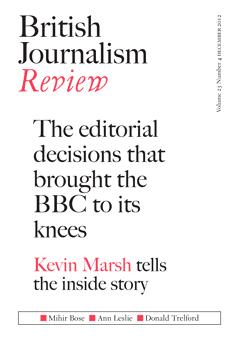
British Journalism Review
Engaging with the Challenges of Contemporary JournalismBritish Journalism Review is a distinguished academic journal dedicated to the exploration and analysis of the rapidly evolving field of journalism. Published by SAGE Publications Ltd, this journal plays a critical role in disseminating high-quality research that addresses key issues facing journalists and media organizations today. With an ISSN of 0956-4748 and an E-ISSN of 1741-2668, it is a pivotal resource for scholars, practitioners, and students alike. Although the journal does not currently offer Open Access options, it maintains a strong commitment to academic rigor and innovation in journalism studies. By engaging with a diverse range of topics such as media ethics, the impact of digital technologies, and the changing landscape of news consumption, the British Journalism Review remains instrumental in shaping contemporary debates and enhancing the scholarly discourse in its field.

Journal of African Media Studies
Pioneering Insights into Africa's Media Dynamics.Journal of African Media Studies, published by INTELLECT LTD, stands at the forefront of communication research, focusing on the rich tapestry of media practices and theories across the African continent. Since its inception in 2011, this peer-reviewed journal has dedicated itself to exploring the intricate relationships between media, culture, and society in Africa, contributing significantly to the global discourse on communication. With an impressive impact factor positioning it in Q2 of the Communication category for 2023, and ranking #218 out of 511 in the Scopus Social Sciences Communication field, it offers a rigorous platform for scholars and practitioners alike. The journal's commitment to quality research is evident in its robust editorial process and its regular publication of articles that delve into contemporary issues affecting African media landscapes. Despite being a subscription-based journal, it attracts an engaged readership interested in accessing critical insights and advancing knowledge in media studies. As it converges its timeline towards 2024, Journal of African Media Studies continues to be an essential resource for researchers, professionals, and students eager to contribute to and explore the evolving narratives of African media.

Theoretical and Practical Issues of Journalism
Navigating the Evolving Landscape of News and MediaTheoretical and Practical Issues of Journalism is a prestigious journal published by Baikal State University, that explores a broad spectrum of topics within the field of journalism. With an ISSN of 2308-6203 and an E-ISSN of 2308-6211, this journal commits to advancing the discourse in both theoretical frameworks and applied methodologies that shape contemporary journalism practices. Although it operates under an open-access model, aiming to enhance accessibility for researchers, professionals, and students worldwide, the journal does not currently display an H-index, reflecting an exciting opportunity for early career researchers to contribute to building its impact. Situated in Irkutsk, Russia, the journal serves as a vital platform for the dissemination of innovative research and critical analysis, aimed at addressing the evolving challenges in journalism today. Its scope encompasses interdisciplinary studies, media ethics, digital journalism, and the socio-political dynamics impacting the news landscape, making it an invaluable resource for anyone vested in the field. As the media environment thrives amidst rapid technological changes, Theoretical and Practical Issues of Journalism remains essential for fostering dialogue and encouraging scholarly efforts that respond to these shifts.