
Elemente der Mathematik
metrics 2024
Bridging theory and application in the world of mathematics.
Introduction
Elemente der Mathematik, published by the European Mathematical Society (EMS), is a pivotal open-access journal dedicated to advancing the field of mathematics. With an ISSN of 0013-6018 and an E-ISSN of 1420-8962, this journal serves as a vital platform for disseminating high-quality mathematical research and fostering scholarly collaboration. Open access since 2022, it aims to ensure that cutting-edge mathematical knowledge is readily available to researchers, professionals, and students alike. The journal covers a broad spectrum of topics within mathematics, promoting innovative ideas and applications that are essential for both theoretical advancements and practical implementations. By encouraging submission and dialogue within the mathematical community, Elemente der Mathematik plays an integral role in signifying mathematical excellence and impactful research.
Metrics 2024
 -0.100.10-
Metrics History
Rank 2024
IF (Web Of Science)
JCI (Web Of Science)
Quartile History
Similar Journals
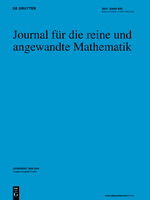
JOURNAL FUR DIE REINE UND ANGEWANDTE MATHEMATIK
Charting the Course of Mathematical InnovationJOURNAL FUR DIE REINE UND ANGEWANDTE MATHEMATIK is a prestigious publication in the field of mathematics, established in 1826 and proudly published by WALTER DE GRUYTER GMBH, a respected name in academic publishing. Renowned for its rigorous peer-review process, this journal focuses on both pure and applied mathematics, making significant contributions to various mathematical domains. With an impressive impact factor positioning it in the Q1 quartile for both applied mathematics and miscellaneous mathematics categories, the journal ranks 83rd out of 399 in General Mathematics and 282nd out of 635 in Applied Mathematics according to Scopus. The journal does not currently offer open access options but is widely available through institutional subscriptions. Its rich history and ongoing commitment to excellence position the JOURNAL FUR DIE REINE UND ANGEWANDTE MATHEMATIK as an essential resource for researchers, professionals, and students aiming to stay abreast of the latest developments in mathematical theory and practice.
JOURNAL OF THE AMERICAN MATHEMATICAL SOCIETY
Elevating Research through Rigorous ScholarshipThe Journal of the American Mathematical Society (ISSN: 0894-0347; E-ISSN: 1088-6834), published by the American Mathematical Society, stands as a pillar in the fields of mathematics and applied mathematics. This prestigious journal, with a remarkable impact factor and ranking in the top tier (*Q1*) within both the Applied Mathematics and general Mathematics categories, is recognized for its contribution to advancing mathematical research and theory. With data reflecting it as the 8th ranked journal in General Mathematics (top 2%) and the 34th in Applied Mathematics (top 6%), the journal consistently showcases groundbreaking studies and innovative methods that greatly influence academia and industry alike. Though not an open-access journal, it offers a wealth of resources and intellectual discourse for researchers, professionals, and students alike. Specializing in comprehensive and theoretical aspects of mathematics, the Journal remains dedicated to publishing articles that promote understanding and propel the field forward, highlighting its significance as an essential tool for those engaged in mathematical research.
BULLETIN OF THE BRAZILIAN MATHEMATICAL SOCIETY
Advancing Mathematical Frontiers with Every IssueBulletin of the Brazilian Mathematical Society is a distinguished journal published by Springer Heidelberg, aimed at advancing the field of mathematics through the dissemination of research findings and scholarly discourse. With an ISSN of 1678-7544 and an E-ISSN of 1678-7714, this journal is indexed within the Q2 quartile in the field of mathematics (miscellaneous), reflecting its impact and relevance in the academic community. The journal has been recognized for its commitment to quality, as evidenced by its Scopus ranking within the 58th percentile among general mathematics publications. Since its inception in 1996, the Bulletin has served as a vital platform for mathematicians to share innovative ideas, theoretical advancements, and practical applications, making it essential reading for researchers, professionals, and students alike. Open access options are available, ensuring that the latest research is accessible to a wide audience, thereby fostering collaboration and growth within the mathematics community.
Japanese Journal of Mathematics
Advancing Mathematical Frontiers with ExcellenceThe Japanese Journal of Mathematics, published by SPRINGER, stands as a premier platform for the dissemination of high-quality research in the field of mathematics. With its ISSN 0289-2316 and E-ISSN 1861-3624, this prestigious journal has been continually contributing to the academic community since its inception. Spanning a broad range of mathematical disciplines, the journal enjoys a strong reputation, recognized in the 2023 category quartiles as Q1 in Mathematics (miscellaneous), placing it among the top-tier journals in the field. Its Scopus rank of #41 out of 399, which reflects an impressive 89th percentile, further underscores its influence and the quality of articles it publishes. The Japanese Journal of Mathematics is dedicated to fostering scholarly exchange and advancing mathematical research, making it an indispensable resource for researchers, professionals, and students alike. Although it does not offer open access, its comprehensive archives provide a wealth of knowledge for those seeking to deepen their understanding of mathematical theories and applications.
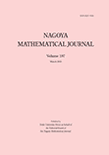
NAGOYA MATHEMATICAL JOURNAL
Pioneering Research for a Global Mathematical CommunityNAGOA MATHEMATICAL JOURNAL, published by Cambridge University Press, is a prestigious journal that has been at the forefront of advancing mathematical scholarship since its inception in 1950. With an ISSN of 0027-7630 and an E-ISSN of 2152-6842, this journal has gained recognition for its high-quality research contributions in the field of mathematics, achieving a Q1 classification in Mathematics (miscellaneous) as of 2023. The journal’s impact is further reflected in its Scopus rank of #164 out of 399 in the General Mathematics category, positioning it within the 59th percentile of its peers. Scholars, researchers, and students can access a range of innovative mathematical studies that explore diverse topics, fostering a vibrant dialogue within the mathematical community. By catering to a global audience, the NAGOYA MATHEMATICAL JOURNAL continues to play a critical role in shaping contemporary mathematical discourse and research.
Tokyo Journal of Mathematics
Pioneering Insights in the World of MathematicsTokyo Journal of Mathematics is a prestigious journal dedicated to the dissemination of high-quality research in the field of mathematics. Founded in 1978, this journal serves as a platform for researchers to publish their findings, providing cutting-edge insights into various mathematical theories and applications. Published by the TOKYO JOURNAL MATHEMATICS EDITORIAL OFFICE ACAD CENTER, the journal is based in Japan and forms an integral part of the global mathematical community. Although listed in the Q4 quartile of Mathematics (Miscellaneous) category for 2023, its inclusion in Scopus rankings highlights its ongoing commitment to scholarly excellence. The journal does not currently offer Open Access options, thus providing readers with insightful access to critical advancements in mathematics. With an ISSN of 0387-3870 and a publication history spanning over four decades, the Tokyo Journal of Mathematics remains an essential resource for researchers, professionals, and students alike, fostering the advancement of mathematical knowledge and collaboration across borders.
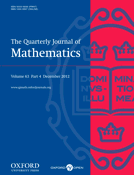
QUARTERLY JOURNAL OF MATHEMATICS
Empowering the Mathematical Community, One Quarter at a TimeQuarterly Journal of Mathematics, published by Oxford University Press, stands as a pivotal resource for the mathematical community, focusing on a broad spectrum of topics in the field of mathematics. With its esteemed history dating back to 1930, this journal continues to foster innovative research and discussions, providing a platform for scholars to share their findings and insights. Although the journal currently holds a Q3 classification in mathematics (miscellaneous) and is ranked #207 among general mathematics publications in the Scopus database, its commitment to quality and rigorous peer review ensures that it remains relevant and insightful. Researchers, professionals, and students alike will find the Quarterly Journal of Mathematics an invaluable tool for advancing knowledge and understanding in various mathematical disciplines, making it an essential addition to any academic library.
Turkish Journal of Mathematics
Exploring the Depths of Mathematical KnowledgeTurkish Journal of Mathematics is a prestigious academic publication dedicated to the advancement of mathematical research across a variety of subfields. Established in 1995 and published by the Tubitak Scientific & Technological Research Council Turkey, this journal has built a solid reputation, especially noted for its significant contributions to the field over the years, with its convergence spanning from 1995 to 2002 and again from 2006 to 2024. The journal, which holds a commendable Q2 ranking in Mathematics (miscellaneous) and is positioned in the 66th percentile of Scopus rankings for General Mathematics, aims to disseminate high-quality original research, reviews, and innovative methodologies to advance both theoretical and applied mathematics. Researchers, professionals, and students alike will find invaluable resources within its pages, providing insights that are pivotal for academic and practical applications in mathematics. Although it does not currently offer open access options, the journal remains an essential platform for those looking to engage with the forefront of mathematical inquiry.

European Journal of Mathematics
Empowering the Next Generation of MathematiciansWelcome to the European Journal of Mathematics, a prominent publication that serves as a vital platform for disseminating high-quality research in the field of mathematics. Published by Springer International Publishing AG, this journal has witnessed significant growth since its inception in 2015 and is recognized for its contributions within the Q2 category of Mathematics (miscellaneous) as per the 2023 rankings. With an ISSN of 2199-675X and an E-ISSN of 2199-6768, the journal aims to foster innovation and collaboration among researchers, professionals, and students alike. Although it operates under a traditional access model, the journal's commitment to advancing mathematical knowledge and applications cannot be overstated. Positioned among the top-tier publications, the European Journal of Mathematics is an essential resource that encourages the exploration of emerging trends and theories in mathematics, making it indispensable for anyone striving to stay at the forefront of this dynamic field.
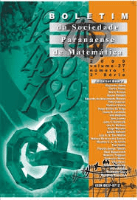
Boletim Sociedade Paranaense de Matematica
Exploring New Frontiers in MathematicsBoletim Sociedade Paranaense de Matematica is a distinguished journal within the field of Mathematics, published by the Sociedade Paranaense de Matemática in Brazil. With an ISSN of 0037-8712 and an E-ISSN of 2175-1188, this journal has been committed to fostering open access to mathematical research since 2002, ensuring that cutting-edge research is readily available to the academic community. Operating within the diverse landscape of mathematical studies and ranked Q3 for 2023 in the category of Mathematics (Miscellaneous), the journal serves as a platform for innovative contributions and discussions. It ranks 192nd out of 399 in the Scopus database for General Mathematics, reflecting its steady involvement in the global academic dialogue. The Boletim resides at JD AMERICAS, CAIXA POSTAL 19081, CURITIBA PR 81531-990, Brazil, and aims to connect researchers, practitioners, and students by promoting high-quality research and dissemination of mathematical knowledge. By bridging diverse mathematical theories and applications, the journal not only enhances understanding of the discipline but also drives future research directions.