Energy Sustainability and Society
Scope & Guideline
Advancing innovative solutions for energy challenges.
Introduction
Aims and Scopes
- Energy Transition and Decarbonization:
The journal emphasizes research on pathways to achieve energy transition and decarbonization, exploring various technologies and policies aimed at reducing greenhouse gas emissions. - Sustainable Energy Solutions:
It highlights studies focused on sustainable energy solutions, including renewable energy technologies, energy efficiency improvements, and innovative energy systems. - Socioeconomic Impacts of Energy Policies:
Research examining the socioeconomic implications of energy policies, including energy poverty, social acceptance, and equity in energy access, is a core focus. - Technological Innovations in Energy Systems:
The journal covers advancements in energy technologies, such as smart grids, energy storage, and bioenergy, that contribute to sustainable energy systems. - Environmental and Health Considerations:
It addresses the environmental and health impacts of energy production and consumption, promoting research that assesses sustainability indicators and life cycle assessments. - Community and Stakeholder Engagement:
The journal fosters studies that explore community participation, stakeholder perceptions, and governance in energy decision-making processes.
Trending and Emerging
- Gender and Diversity in Energy Research:
There is a growing emphasis on gender and diversity issues within energy research, acknowledging the importance of inclusivity in energy transitions and decision-making. - Climate Change Adaptation and Resilience:
Increasing attention is being paid to climate change adaptation strategies and the resilience of energy systems in the face of environmental challenges. - Community Energy Initiatives:
Research on community-led energy initiatives and cooperatives is on the rise, emphasizing local engagement and participatory governance in energy transitions. - Circular Economy in Energy Systems:
The integration of circular economy principles into energy systems is gaining traction, focusing on waste reduction, resource efficiency, and sustainable practices. - Interdisciplinary Approaches to Energy Solutions:
There is a trend towards interdisciplinary research that combines insights from social sciences, engineering, and environmental studies to address complex energy challenges. - Digitalization and Smart Energy Systems:
The impact of digital technologies and smart grid solutions on energy efficiency and consumer engagement is increasingly featured in recent publications.
Declining or Waning
- Traditional Fossil Fuel Analysis:
Research focusing on traditional fossil fuel systems is diminishing as the journal increasingly prioritizes renewable energy and sustainable practices. - Single-Dimensional Energy Policies:
There has been a noticeable decrease in studies that analyze energy policies in isolation without considering their social, economic, and environmental dimensions. - Narrow Technological Focus:
The journal is moving away from studies that concentrate solely on specific technologies without integrating broader sustainability or societal perspectives. - Static Models of Energy Systems:
There is a decline in publications using static models for energy systems, as the emphasis shifts towards dynamic and integrated approaches that reflect real-world complexities. - Regional Case Studies without Broader Implications:
Research limited to specific regional case studies without addressing wider implications or comparative analyses has become less prominent.
Similar Journals
International Journal of Renewable Energy Development-IJRED
Fueling the Future with Cutting-Edge Renewable Energy InsightsThe International Journal of Renewable Energy Development (IJRED), published by DIPONEGORO University in Indonesia, serves as a pivotal platform for scholarly research in the dynamic fields of renewable energy and sustainability. With a dedication to advancing knowledge since its inception in 2012, IJRED has embraced an Open Access model, ensuring that vital research is freely accessible to a global audience. The journal's impressive impact factor and its classification in the Q2 and Q3 quartiles across multiple categories—including Energy Engineering and Power Technology, Environmental Engineering, and Renewable Energy, Sustainability and the Environment—underscore its significance and authority in contemporary energy discourse. Indexed in Scopus, the journal consistently ranks among the top-tier publications, making it an essential resource for researchers, professionals, and students committed to innovating sustainable solutions in the face of climate challenges. Researchers are invited to contribute to this essential body of work as the journal continues to converge impactful research until 2024.
Renewable Energy
Empowering a Sustainable Future.Renewable Energy is a prestigious international journal published by PERGAMON-ELSEVIER SCIENCE LTD, dedicated to advancing the field of renewable energy technologies and their applications. Since its inception in 1991, this journal has provided a critical platform for researchers, professionals, and students to explore innovative solutions in renewable energy, sustainability, and environmental protection. With an impressive impact factor and ranked in the top quartile (Q1) of its category, Renewable Energy is recognized for its high-quality, peer-reviewed research that significantly contributes to the scientific and professional discourse in the sector. The journal is indexed in Scopus, holding an esteemed rank of #21 out of 270 in its field, underscoring its influence and reach. Researchers can access the journal’s articles through traditional subscriptions, ensuring a broad dissemination of vital knowledge that supports the global transition to sustainable energy sources. Addressed from its headquarters in Oxford, England, Renewable Energy is crucial for anyone involved in the journey towards a sustainable future, fostering collaboration and innovation in a critical area of environmental science.
Journal of Renewable and Sustainable Energy
Catalyzing Change in Renewable Energy ResearchThe Journal of Renewable and Sustainable Energy, published by AIP Publishing, stands at the forefront of research in the fields of renewable energy and sustainable practices. With an ISSN of 1941-7012, this journal aims to foster innovative research and exchange of knowledge on sustainable technologies and methodologies that contribute to environmental conservation and energy efficiency. Achieving a prestigious Q2 ranking in the category of Renewable Energy, Sustainability, and the Environment, it ranks 135 out of 270 journals in Scopus, signifying its impactful contributions to the field. The journal, active from 2010 to 2024, provides a platform for authors, analysts, and practitioners to disseminate significant findings that can shape future environmental policies and energy frameworks. Although not currently an Open Access publication, it remains an essential resource for researchers dedicated to advancing sustainable development and energy solutions.
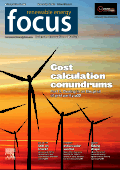
Renewable Energy Focus
Empowering Sustainable Solutions for a Greener TomorrowRenewable Energy Focus is a premier journal published by Elsevier, dedicated to advancing the field of renewable energy and sustainability. With an ISSN of 1755-0084 and an E-ISSN of 1878-0229, this journal serves as a vital platform for researchers, professionals, and students interested in innovative solutions to energy challenges. Established in 2007, the journal has evolved to become a recognized authority in the subject area, currently ranked in the Q2 quartile of its category for 2023, emphasizing its significance in promoting impactful research. The journal encompasses a wide range of topics, including solar, wind, bioenergy, and sustainable practices that contribute to environmental conservation and energy efficiency. As part of Elsevier's commitment to disseminating high-quality research, Renewable Energy Focus is indexed in Scopus, currently holding a rank of #92/270 in the energy sector, positioning it in the 66th percentile of its field. This journal offers an essential resource for those dedicated to fostering sustainable energy solutions.
INTERNATIONAL JOURNAL OF GLOBAL ENERGY ISSUES
Transforming Energy Policies Through Scholarly InsightsThe INTERNATIONAL JOURNAL OF GLOBAL ENERGY ISSUES, published by INDERSCIENCE ENTERPRISES LTD, stands as a vital platform for disseminating innovative research in the fields of energy engineering, nuclear energy, and renewable sustainability. With ISSN 0954-7118 and E-ISSN 1741-5128, this journal has been catering to the energy sector since 1989, advancing scholarly dialogue through critical analyses and discussions of emerging energy technologies and policies. Though currently categorized in the fourth quartile across various energy-related disciplines, the journal aims to bridge knowledge gaps and offer insights that challenge the status quo. Operating from its headquarters in the United Kingdom and accessible to a global audience, the journal encourages submissions that drive interdisciplinary research and provide solutions for pressing global energy challenges. Researchers, professionals, and students alike are invited to contribute and engage with this prestigious journal to influence the future of energy practices.

Advances in Energy Research
Shaping the Future of Energy with Groundbreaking Research.Advances in Energy Research is a prominent journal dedicated to the exploration and advancement of energy technologies and sustainable practices. Published by TECHNO-PRESS, this journal serves as a vital platform for researchers, professionals, and students in the energy field, featuring innovative studies and reviews that contribute to the body of knowledge surrounding energy efficiency, renewable resources, and the integration of new technologies. The journal holds a significant position in energy research and aims to facilitate the dissemination of groundbreaking findings and ideas that are pivotal for the transition toward a more sustainable energy future. Located in South Korea, with an ISSN of 2287-6316, it embraces an open access philosophy that ensures widespread availability of its content, further enhancing its impact in the academic community.

Progress in Energy
Transforming Energy Research into Real-World SolutionsProgress in Energy, published by IOP Publishing Ltd, is an esteemed open-access journal that focuses on cutting-edge research in the field of energy. With its e-ISSN 2516-1083, this journal stands out for its commitment to disseminating high-quality articles that aim to advance the understanding and application of energy technologies and policies. Juggling respectably in the academic arena, it proudly holds a Q1 classification in the energy (miscellaneous) category and ranks 6th out of 73 in the general energy sector, placing it in the top 92nd percentile among its peers, according to Scopus metrics. The journal's scope encompasses a wide range of topics, including renewable energy, energy efficiency, and policy analysis, making it a vital resource for researchers, industry professionals, and students alike. With a publication horizon extending from 2019 to 2024, Progress in Energy invites contributions that push the boundaries of knowledge in energy fundamentals and innovations.

MRS Energy & Sustainability
Innovating Materials for a Greener TomorrowMRS Energy & Sustainability is a premier interdisciplinary journal published by SpringerNature, focusing on advancing the understanding of energy systems and sustainability within the context of materials science and engineering. Since its inception in 2014, this journal has rapidly gained recognition in the academic landscape, achieving impressive rankings including Q1 in Electronic, Optical and Magnetic Materials and Mechanics of Materials, and Q2 in Energy Engineering and Power Technology as well as Renewable Energy, Sustainability and the Environment, as of 2023. The journal's ISSN is 2329-2229 and E-ISSN is 2329-2237. With a commitment to open access, it provides researchers and professionals with the latest findings and insights essential for guiding innovations in energy solutions and sustainable practices. The journal's global reach and high-impact reputation make it an invaluable resource for scientists, engineers, and policymakers dedicated to addressing the contemporary challenges of energy and sustainability. With a diverse scope and high Scopus rankings, MRS Energy & Sustainability continues to be at the forefront of research that shapes our energy future.

Economics of Energy & Environmental Policy
Shaping Policies Through Economic Perspectives on Energy.Economics of Energy & Environmental Policy is a prestigious journal published by the International Association for Energy Economics, focusing on the intersection of economic principles and energy/environmental policy. Since its inception in 2012, this journal has provided a critical platform for researchers, professionals, and students interested in the multifaceted impacts of energy economics on society and the environment. With an impressive performance reflected in its 2023 Scopus rankings—Q2 in key areas such as Economics and Econometrics, Energy, and Management, Monitoring, Policy and Law—this journal not only contributes to academic discourse but also informs policymaking and industry practices. Although published as a traditional journal, its contents are vital for addressing contemporary challenges in energy management and environmental sustainability. Located in Cleveland, Ohio, the journal is committed to fostering innovation in energy economics, enhancing our understanding of the socio-economic dimensions of energy use, and promoting effective environmental policymaking.
Journal of Sustainable Development of Energy Water and Environment Systems-JSDEWES
Transforming Knowledge into Action for Our Planet’s ResourcesJournal of Sustainable Development of Energy Water and Environment Systems (JSDEWES), published by the International Centre for Sustainable Development of Energy, Water, and Environment Systems, is a premier Open Access journal that has been shaping the discourse surrounding sustainable energy, water management, and environmental systems since its inception in 2013. Based in Croatia, this esteemed journal, bearing the ISSN 1848-9257, emphasizes an interdisciplinary approach, making significant strides within its converged years from 2013 to 2024. With impressive rankings in 2023—Q3 in Energy Engineering and Power Technology, Q2 in Environmental Science (miscellaneous), and noteworthy positions in Renewable Energy, Sustainability and the Environment, and Water Science and Technology—JSDEWES showcases its commitment to advancing knowledge and innovation in crucial areas affecting our planet's sustainability. Designed for an audience of researchers, professionals, and students alike, this journal is pivotal in fostering research that enhances our understanding and implementation of sustainable practices, while its esteemed Scopus rankings further underline its impact and contribution to the field.