
EPIDEMIOLOGIE MIKROBIOLOGIE IMUNOLOGIE
Scope & Guideline
Illuminating the Complexities of Epidemiology and Immunology
Introduction
Aims and Scopes
- Epidemiological Studies:
The journal emphasizes the importance of epidemiological research, including surveillance and analysis of disease outbreaks, trends in infection rates, and risk factors associated with various infectious diseases. - Microbial Pathogenesis:
Research on the mechanisms by which pathogens cause disease is a core focus, including studies on specific bacteria, viruses, and their interactions with human hosts. - Immunological Responses:
The journal covers studies that explore immune responses to infections, including vaccine efficacy, antibody production, and immune evasion strategies employed by pathogens. - Molecular Microbiology:
Whole genome sequencing and molecular characterization of pathogens are highlighted, showcasing advances in diagnostic techniques and understanding genetic diversity among microbial strains. - Public Health and Preventive Medicine:
There is a consistent focus on public health implications of infectious diseases, including prevention strategies, vaccination campaigns, and health behavior studies.
Trending and Emerging
- COVID-19 Research:
Significant attention is being given to SARS-CoV-2 and its variants, focusing on epidemiological trends, vaccination responses, and the long-term impacts of the pandemic on public health. - Whole Genome Sequencing Applications:
There is a growing trend towards the application of whole genome sequencing in understanding microbial diversity, resistance mechanisms, and tracking outbreaks, indicating a shift towards precision medicine. - Impact of Climate on Infectious Diseases:
Emerging studies are increasingly exploring the relationship between climate change and the dynamics of infectious diseases, particularly vector-borne illnesses, which is critical for future public health preparedness. - Microbiome Research:
Research on the human microbiome and its implications for health and disease is gaining traction, highlighting its role in immune responses and disease susceptibility. - Health Behavior and Risk Analysis:
Emerging themes focus on the behaviors and risk factors associated with infectious diseases, particularly among specific populations, such as university students, which is crucial for targeted public health interventions.
Declining or Waning
- Traditional Infectious Disease Management:
There is a noticeable reduction in studies focused on conventional approaches to managing infectious diseases, such as standard treatment protocols, which may be overshadowed by emerging research on molecular and immunological aspects. - Non-infectious Disease Studies:
Research articles that previously addressed chronic non-infectious diseases or conditions indirectly related to infectious diseases seem to be less frequent, indicating a shift toward a more focused infectious disease perspective. - Historical Epidemiological Data:
While historical data remains important, there seems to be a waning interest in retrospective studies that do not incorporate new methodologies or technologies, such as genomic analysis.
Similar Journals

INFECTION AND IMMUNITY
Exploring the Nexus of Infection and Immune ResponsesINFECTION AND IMMUNITY is a distinguished peer-reviewed journal published by the American Society for Microbiology, focusing on groundbreaking research in the fields of infection, immunology, microbiology, and parasitology. Established in 1971, this journal has built a robust legacy, converging years of scientific discovery with a vision towards 2024 and beyond. With an impressive Impact Factor, the journal holds significant rankings in various categories; its Q1 status in both Infectious Diseases and Parasitology underscores its high relevance and quality within the scientific community. Researchers and professionals alike will benefit from its content, as it promotes the latest advances in understanding immune responses and infectious agents, further legitimizing its place among the top quartiles of its respective fields. Access options are provided through traditional subscription models, ensuring a broad charitable dissemination of knowledge. As a pivotal resource for scholars and practitioners alike, INFECTION AND IMMUNITY stands at the forefront of microbiological and immunological research, fostering essential discourse that is crucial for advancing public health and scientific insight.
Infectious Diseases
Empowering Researchers to Combat Infectious ThreatsInfectious Diseases, published by TAYLOR & FRANCIS LTD, is a leading academic journal dedicated to advancing research in the field of infectious diseases and microbiology. With an impressive impact factor and categorized in Q1 in multiple areas including Immunology and Microbiology, this journal serves as a critical platform for researchers, practitioners, and students to disseminate their findings and stay abreast of current advancements. The journal is recognized for its rigorous peer-review process and aims to foster innovation and collaboration across disciplines from 2015 to 2024. It boasts a robust Scopus ranking, positioning it favorably among the top-tier of journals in the relevant fields, making it an essential resource for anyone involved in infectious disease research. Access options are available, ensuring that the latest research is accessible to a global audience, thus emphasizing the journal's commitment to promoting knowledge and understanding in the ever-evolving landscape of infectious diseases.

Emerging Microbes & Infections
Fostering collaboration to tackle microbial threats.Emerging Microbes & Infections is a premier open access journal, published by Taylor & Francis Ltd since 2012, dedicated to advancing the understanding of microbial infections and their implications in human health. With an impressive Q1 ranking across multiple categories—including Drug Discovery, Epidemiology, Immunology, and Infectious Diseases—this journal is at the forefront of research in the microbiological sciences. Covering a diverse range of topics, it serves as a vital resource for researchers, healthcare professionals, and students alike. The journal's commitment to open access ensures worldwide dissemination of cutting-edge findings, fostering collaboration and innovation in tackling challenges posed by emerging infections. As part of the thriving academic community in the United Kingdom, Emerging Microbes & Infections plays a crucial role in shaping the future of infectious disease research and public health.
INTERNATIONAL JOURNAL OF MEDICAL MICROBIOLOGY
Advancing the Frontiers of Microbial ResearchWelcome to the International Journal of Medical Microbiology, a leading publication in the field of microbiological research and infectious diseases, offered by Elsevier GmbH. Established in 2000, this esteemed journal provides a scholarly platform for the presentation of high-quality research, reviews, and innovations that bridge medical microbiology and clinical applications. With an impressive impact factor positioning it within the Q1 category across multiple disciplines, including Infectious Diseases, Microbiology, and Medicine, the journal is recognized for its rigorous peer-review process and significant contributions to advancing our understanding of microbial pathogenesis, diagnostics, and therapeutics. The International Journal of Medical Microbiology is committed to open access, promoting the dissemination of knowledge and accessibility for researchers, professionals, and students worldwide. Based in Munich, Germany, the journal continues to play a vital role in the global scientific community, fostering collaborations and inspiring future innovations in the fight against infectious diseases.
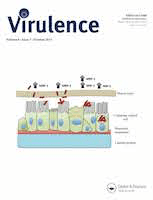
Virulence
Innovating Solutions for Global Health ChallengesVirulence, a leading academic journal published by Taylor & Francis Inc, is dedicated to advancing the understanding of virulence mechanisms in pathogens across various infectious diseases. Since becoming an Open Access publication in 2018, it has broadened the accessibility of cutting-edge research for a global audience, promoting collaboration and knowledge-sharing among researchers, professionals, and students alike. With a significant impact within its field, the journal boasts impressive 2023 quartile rankings: Q2 in Immunology and Q1 in both Infectious Diseases and Microbiology, alongside notable standings in Parasitology. The current Scopus rankings reinforce its prominence, with high percentiles indicating its influence and relevance in advancing scientific inquiry. Covering a period from 2010 to 2024, Virulence serves as an essential platform for innovative research that not only addresses the critical challenges in understanding pathogen behavior but also contributes towards global health solutions, establishing it as a vital resource in the rapidly evolving fields of immunology, microbiology, and parasitology.

Klimik Journal
Catalyzing Discussions in Infectious Disease Science.Klimik Journal is a pivotal publication in the fields of Infectious Diseases and Medical Microbiology, serving as a platform for researchers, clinicians, and academics to disseminate groundbreaking findings and improve health outcomes. Established in 2010 and published by DOC DESIGN INFORMATICS CO LTD, this journal is dedicated to advancing knowledge and fostering discussions around critical issues in infectious diseases and microbial research. With an ISSN of 1301-143X and an E-ISSN of 1309-1484, Klimik Journal strives to maintain high academic standards despite currently ranking in the fourth quartile in both categories according to Scopus metrics, which highlights the need for continued contributions to the field. Operating from Turkey, the journal is committed to supporting open access options, thereby ensuring wide dissemination of research findings. As it continues to bridge the gap between theory and practice, Klimik Journal is poised to become an essential resource for those looking to stay at the forefront of infectious disease research and microbiological advancements.
MICROBES AND INFECTION
Innovating Solutions for Infectious Disease ChallengesMICROBES AND INFECTION is a premier academic journal published by Elsevier, dedicated to the dynamic fields of immunology, infectious diseases, and microbiology. With a notable impact factor reflective of its high-quality research contributions, the journal is categorized in the Q2 quartile across these fields as of 2023. Based in France and operating since 1999, MICROBES AND INFECTION offers a platform for researchers, professionals, and students to disseminate and access cutting-edge findings that drive innovation and knowledge in microbial and infectious disease research. The journal is ranked impressively within the Scopus database, securing ranks such as #16 in Microbiology and #33 in Infectious Diseases, underscoring its high relevance in the scientific community. Subscribers to the journal can expect an array of articles, reviews, and original research, all designed to advance understanding and improve clinical practices in the fight against infectious agents. With its ongoing commitment to open access options, MICROBES AND INFECTION continues to foster global collaboration and information sharing in the pursuit of addressing pressing microbiological challenges.
MICROBIOLOGY AND IMMUNOLOGY
Bridging Decades of Research in Microbiology and ImmunologyMICROBIOLOGY AND IMMUNOLOGY, an esteemed journal published by WILEY, serves as a vital resource for researchers and professionals in the fields of microbiology, immunology, and virology. With its ISSN 0385-5600 and E-ISSN 1348-0421, this journal has been a cornerstone in scientific literature since its inception in 1977, bridging decades of research and innovation through its comprehensive coverage of emerging trends and discoveries. Although this journal operates without open access, it maintains a commendable presence in academic circles, reflected in its 2023 Quartile rankings of Q3 across the categories of Immunology, Microbiology, and Virology. As part of an important discourse in these disciplines, MICROBIOLOGY AND IMMUNOLOGY ensures its scholarly contributions are relevant to both seasoned researchers and emerging scholars. Positioned in a competitive journal landscape, with Scopus ranks indicating a median percentile across its fields, it remains committed to advancing knowledge through peer-reviewed articles, thereby supporting the continuous evolution of its focus areas. The journal's current scope encompasses topics critical for understanding pathogen-host interactions and the immune response, making it a crucial publication for any academic library or individual scholar dedicated to the biological sciences.
Tuberculosis
Fostering collaboration in the realm of immunology and microbiology.Tuberculosis is an esteemed peer-reviewed journal specializing in the fields of Infectious Diseases, Immunology, and Microbiology, published by Churchill Livingstone since 1974. With a scope aimed at advancing the understanding and management of tuberculosis and related infectious diseases, the journal provides a platform for innovative research findings, clinical practices, and policy discussions. It is ranked in the Q2 category for both Infectious Diseases and Microbiology (medical), reflecting its significance in the academic community and the impact of its published work. The journal's commitment to openness is evident in its access options, fostering wider dissemination of knowledge. With an impact factor that underscores its relevance, Tuberculosis serves as a crucial resource for researchers, healthcare professionals, and students dedicated to combatting these pressing health challenges. The journal operates from its production headquarters in Edinburgh, Scotland, ensuring a strong connection to the international research community.
INTERNATIONAL JOURNAL OF INFECTIOUS DISEASES
Empowering public health through open access research.INTERNATIONAL JOURNAL OF INFECTIOUS DISEASES, published by ELSEVIER SCI LTD, stands as a leading platform in the realm of infectious diseases, contributing significantly to the global understanding of this critical field. With an impressive impact factor, the journal maintains a distinguished Q1 ranking across various categories, including Infectious Diseases, Medicine (miscellaneous), and Medical Microbiology, demonstrating its high relevance and influence among contemporary research. Since its inception in 1996, it has embraced an Open Access model, allowing for wider dissemination of essential research findings that can inform public health policies and clinical practices. With a commitment to advancing scientific knowledge, this journal is not only a vital resource for researchers and professionals but also serves as an invaluable educational tool for students interested in the complexities of infectious diseases and their management. For those looking to stay at the forefront of research and innovation in this field, the INTERNATIONAL JOURNAL OF INFECTIOUS DISEASES is an indispensable resource.