Epidemiology and Psychiatric Sciences
Scope & Guideline
Bridging gaps between epidemiology and psychiatric sciences.
Introduction
Aims and Scopes
- Epidemiological Studies on Mental Health Disorders:
The journal focuses on the prevalence, incidence, and risk factors associated with various mental health disorders, utilizing large-scale epidemiological data to inform public health strategies. - Interventions and Treatment Effectiveness:
Research on the effectiveness of psychological and pharmacological interventions for mental health conditions, including analyses of cost-effectiveness and implementation strategies in diverse populations. - Social Determinants of Mental Health:
Exploration of how social, economic, and environmental factors influence mental health outcomes, with a particular emphasis on vulnerable populations such as refugees and minority groups. - Longitudinal and Cross-Sectional Studies:
The journal publishes both longitudinal and cross-sectional studies to understand mental health trajectories over time and the immediate factors affecting mental health. - Innovative Methodologies:
Utilization of advanced statistical methods, including machine learning and Bayesian approaches, to analyze complex data sets and derive meaningful conclusions related to mental health. - Global and Cultural Perspectives:
The journal emphasizes research that considers cultural contexts and global variations in mental health, providing a comprehensive view of psychiatric epidemiology across different regions.
Trending and Emerging
- Impact of COVID-19 on Mental Health:
A significant increase in studies examining the mental health consequences of the COVID-19 pandemic, including the effects on various populations and the long-term implications for mental health services. - Intersectionality in Mental Health:
Growing interest in how intersecting identities (e.g., race, gender, sexual orientation) affect mental health outcomes and access to care, highlighting the need for tailored interventions. - Community-Based Interventions:
An emerging focus on community-driven mental health interventions, emphasizing participatory research methods and the importance of local context in designing effective programs. - Mental Health in Refugee and Displaced Populations:
Heightened attention to the mental health needs of refugees and displaced individuals, with studies addressing the unique stressors they face and the effectiveness of targeted interventions. - Technology and Mental Health:
Increasing exploration of digital health solutions, including teletherapy and mental health apps, as tools for improving access to care and treatment adherence. - Longitudinal Mental Health Research:
A rise in longitudinal studies that track mental health changes over time, providing insights into the dynamics of mental health disorders and the factors influencing recovery.
Declining or Waning
- Traditional Psychiatric Diagnoses:
There seems to be a decreasing focus on conventional psychiatric diagnoses and classifications, as researchers increasingly explore broader mental health constructs and their contextual influences. - Single-Country Studies:
Research that focuses solely on specific countries without comparative or global perspectives is becoming less common, reflecting a trend towards more internationally relevant studies. - Pharmacological Interventions in Isolation:
There is a waning emphasis on the efficacy of pharmacological treatments in isolation, as the field shifts towards integrated approaches that combine medication with psychosocial interventions. - Descriptive Epidemiology without Intervention Focus:
Studies that primarily describe the epidemiology of mental health disorders without proposing interventions or solutions are becoming less frequent, as there is a growing demand for actionable insights. - Focus on Historical Perspectives:
Research centered on historical analyses of mental health trends and treatments appears to be declining, possibly as the field prioritizes contemporary and future-oriented studies.
Similar Journals
Psychiatry Investigation
Driving Progress in Psychiatry and Mental WellnessPsychiatry Investigation is a prominent, peer-reviewed journal published by the Korean Neuropsychiatric Association, focusing on advancements in the fields of psychiatry and mental health. With an ISSN of 1738-3684 and an E-ISSN of 1976-3026, this journal has steadily gained recognition within the academic community since its inception in 2006. Spanning a dynamic spectrum of research topics, it aims to disseminate innovative findings and facilitate discussions that contribute to the understanding and treatment of psychiatric disorders. As evidenced by its current Scopus rankings—positioned in the Q2 category for Psychiatry and Mental Health and the Q3 category for Biological Psychiatry—the journal is committed to maintaining high scholarly standards and impactful research contributions. Although fully open access is not available, the relevance of its content ensures that it remains a critical resource for researchers, clinicians, and students alike, furthering knowledge and practices in the field of mental health.
WORLD JOURNAL OF BIOLOGICAL PSYCHIATRY
Advancing Understanding in Biological Psychiatry.WORLD JOURNAL OF BIOLOGICAL PSYCHIATRY, a premier academic journal published by TAYLOR & FRANCIS LTD, stands at the forefront of interdisciplinary research in the fields of Biological Psychiatry, Psychiatry, and Mental Health. Based in the United Kingdom, this esteemed journal (ISSN: 1562-2975; E-ISSN: 1814-1412) has become increasingly influential since its inception in 2000, with a remarkable impact factor that reflects its high-quality research contributions. The journal is consistently ranked in the Q1 and Q2 categories across various relevant indices, demonstrating its reputation for excellence within the academic community. With Scopus rankings placing it in the top 20th percentile for Psychiatry and Mental Health, the WORLD JOURNAL OF BIOLOGICAL PSYCHIATRY serves as a vital resource for researchers, professionals, and students seeking to further their understanding of the intricate relationship between biological processes and psychiatric phenomena. Despite being a traditional access journal, it possesses a robust scope that encompasses groundbreaking studies, reviews, and advancements in the understanding of mental health disorders, underlining its importance as a key reference in the advancement of psychiatric science and therapeutic practices.

Annals of Clinical Psychiatry
Cultivating Scholarly Excellence in Clinical Psychiatry.Annals of Clinical Psychiatry, published by QUADRANT HEALTHCOM INC, is a leading journal in the fields of Medicine and Psychiatry & Mental Health. With its longstanding commitment to advancing clinical knowledge since 1989, this esteemed journal contributes invaluable insights into current psychiatric practices and mental health research. The journal is recognized in the Scopus ranking with a position in the 34th percentile, reflective of its focused scope and substantial academic contributions. While access to the journal is tailored for professionals and researchers, the absence of Open Access highlights the journal's dedication to maintaining quality and rigorous peer-reviewed standards. As part of the Q3 quartile for both Medicine and Psychiatry categories in 2023, Annals of Clinical Psychiatry serves as an essential resource for those dedicated to improving mental health outcomes, making it a vital platform for practitioners, researchers, and students alike. Situated in Parsippany, New Jersey, the journal remains a pivotal entity that fosters scholarly dialogue and exploration in clinical psychiatry.
Asia-Pacific Psychiatry
Shaping the Future of Psychiatry with Impactful ResearchAsia-Pacific Psychiatry is a leading academic journal published by WILEY, focused on the diverse and rapidly evolving fields of psychiatry and mental health within the Asia-Pacific region. With an ISSN of 1758-5864 and an E-ISSN of 1758-5872, this journal has been recognized for its significant impact, holding a Q1 ranking in Medicine (miscellaneous) and a Q2 ranking in Psychiatry and Mental Health as of 2023. Its commendable Scopus ranking places it at Rank #83 out of 567 in its category, highlighting its influence and relevance in contemporary research. The journal aims to facilitate the dissemination of high-quality research, reviews, and clinical insights that address mental health challenges, promote global understanding, and encourage collaboration among professionals and academics. Although it is not an open-access journal, the high impact factor underscores its value in the scholarly community, making it an essential resource for researchers, clinicians, and students dedicated to enhancing mental health practices and policies in the region and beyond.
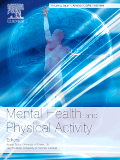
Mental Health and Physical Activity
Bridging the Gap: Where Mental Health Meets Physical ActivityMental Health and Physical Activity, published by Elsevier Science LTD, is an esteemed journal in the realm of Applied Psychology and Psychiatry and Mental Health, thriving since 2008 and continuing its valuable contribution through 2024. With an impressive impact factor showcased by its ranking in the Q2 category for Applied Psychology and Q1 for Psychiatry and Mental Health, the journal supports the dissemination of innovative research that explores the intricate connections between mental well-being and physical activity. Positioned in the Netherlands, the journal offers a robust platform for researchers, clinicians, and students to share insights and develop new interventions that foster better mental health outcomes through physical engagement. While the journal currently does not provide open access options, its commitment to high-quality peer-reviewed content makes it a critical resource for those dedicated to advancing knowledge in the fields of psychology and mental health. With rankings placing it in the top fraction of its peer group, Mental Health and Physical Activity remains an essential cerebral space for impactful dialogue and research in the study of mental health promotion.
INTERNATIONAL JOURNAL OF METHODS IN PSYCHIATRIC RESEARCH
Unlocking insights through advanced research methods in psychiatry.The International Journal of Methods in Psychiatric Research, published by Wiley, stands as a vital resource within the field of Psychiatry and Mental Health. Since its inception in 1996, this journal has been dedicated to advancing the methodologies employed in psychiatric research, making a significant scholarly contribution that resonates within the academic community. With an impact factor reflective of its prestigious standing and a Q2 ranking in the 2023 Scopus category for Psychiatry and Mental Health, the journal garners attention for its rigorous peer-reviewed articles. It transitioned to Open Access in 2020, enhancing accessibility for a global audience of researchers, professionals, and students who seek to stay abreast of the latest advances and innovative methodologies in psychiatric research. The convergence of research discourse from 1996 to 2024 showcases its enduring relevance and commitment to the challenges and developments that shape mental health practices today. Situated in the United States at 111 River St, Hoboken, NJ, this journal is poised to continue facilitating critical discussions and promoting excellence in psychiatric research.
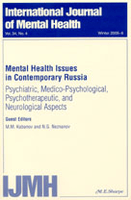
INTERNATIONAL JOURNAL OF MENTAL HEALTH
Transforming Mental Health Through Rigorous ResearchInternational Journal of Mental Health is a premier academic publication dedicated to the exploration of mental health issues and interventions, encompassing a wide array of disciplines within health policy, psychiatry, and public health. Published by Routledge Journals, Taylor & Francis Ltd, this journal has been contributing significantly to the field since its inception in 1974. With a solid Q2 ranking in various categories including Health Policy, Psychiatry and Mental Health, and Public Health, Environmental and Occupational Health, the journal boasts an impactful platform for scholars and practitioners to disseminate innovative research and contemporary discussions. Although it does not offer open access, readers can access these vital contributions through institutional subscriptions. As the journal continues to address the evolving challenges in mental health, it serves as an essential resource for researchers, healthcare professionals, and policymakers seeking to advance knowledge and improve practices in the mental health arena.
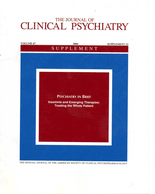
JOURNAL OF CLINICAL PSYCHIATRY
Empowering mental health professionals through innovative research.The JOURNAL OF CLINICAL PSYCHIATRY is a premier publication dedicated to advancing the understanding and treatment of psychiatric disorders. Established in 1978 and published by Physicians Postgraduate Press, this esteemed journal provides a vital platform for researchers, clinicians, and mental health professionals to share innovative findings and evidence-based practices in psychiatry. With an impressive impact factor and recognized as a Q1 journal in both Medicine (miscellaneous) and Psychiatry and Mental Health, the journal ranks among the top in its field, sitting at 96th out of 567 in Scopus rankings, placing it in the 83rd percentile. The journal's commitment to high-quality, peer-reviewed articles facilitates the dissemination of knowledge crucial for advancing clinical practices and improving patient outcomes. Access to its latest research is offered through institutional subscriptions, making it an essential resource for anyone involved in the mental health sector, from seasoned practitioners to aspiring students.
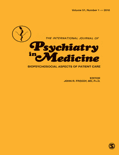
INTERNATIONAL JOURNAL OF PSYCHIATRY IN MEDICINE
Transforming Understanding of Psychiatry in Medical ContextsINTERNATIONAL JOURNAL OF PSYCHIATRY IN MEDICINE is a distinguished publication dedicated to advancing the understanding of psychiatric practice and mental health issues within a medical framework. Published by SAGE PUBLICATIONS INC, this journal has been a trusted source in the field since its inception, with its archives dating back to 1973. It offers a comprehensive exploration of psychiatric research, clinical studies, and theoretical advancements that seek to bridge the gap between psychiatry and general medicine. With an impact factor reflective of its quality and relevance, categorized in the Q3 quartile in Psychiatry and Mental Health, this journal stands as a vital resource for researchers, clinicians, and students alike. Although operating on a traditional subscription model, the extensive knowledge shared within its pages contributes significantly to ongoing discussions in psychiatric and mental health education and practice. As the field continually evolves, the INTERNATIONAL JOURNAL OF PSYCHIATRY IN MEDICINE remains committed to fostering innovative and impactful scholarship that resonates with professionals navigating the complexities of mental health in clinical contexts.
Poblacion y Salud en Mesoamerica
Fostering Collaboration for Better Health OutcomesPoblacion y Salud en Mesoamerica is a pivotal open-access journal published by the University of Costa Rica's Centro Centroamericano Poblacion. With an ISSN of 1659-0201 and an E-ISSN of the same, this journal has been dedicated since 2003 to advancing the fields of demography, epidemiology, health informatics, and public health within the Mesoamerican region. Addressing critical health and population issues, it aims to foster a deeper understanding of demographic trends and their implications on health policies. As of 2023, the journal ranks in the Q4 quartile across several categories, reflecting its commitment to publishing quality research while serving as a platform for emerging scholars and seasoned professionals alike. Although it is currently in the lower quartile ranks, the journal seeks to establish itself as a vital resource in the context of Mesoamerican social sciences and health, making it an essential tool for researchers and practitioners interested in regional population health dynamics. Its editorial board is comprised of experts dedicated to enhancing the scholarly conversation surrounding population health and policy in Central America.