
Epohi
Scope & Guideline
Connecting History with Contemporary Thought.
Introduction
Aims and Scopes
- Historical Analysis of Bulgaria and the Balkans:
The journal consistently publishes research that delves into the historical narratives of Bulgaria and its neighboring countries, exploring events from antiquity through modern times. - Cultural and Linguistic Studies:
It also emphasizes the importance of cultural heritage and linguistic evolution, examining the socio-linguistic dynamics within the Bulgarian territories and their historical influences. - Legal History and International Relations:
The journal features studies on the evolution of legal frameworks in Bulgaria and their implications in the context of international law, particularly during significant historical events like the Balkan Wars. - Ethnological and Sociological Perspectives:
Research in "Epohi" often incorporates ethnological and sociological viewpoints, analyzing demographic changes, social structures, and cultural practices from a historical perspective. - Interdisciplinary Approaches:
The journal encourages interdisciplinary methodologies, integrating history with anthropology, archaeology, and political science to provide a comprehensive understanding of past events and their legacies.
Trending and Emerging
- Impact of International Law on Historical Events:
There is an increasing trend towards analyzing how international law has shaped historical conflicts and resolutions, particularly in the context of the Balkan Wars and their aftermath. - Cultural Heritage and Identity:
Research focusing on cultural heritage and identity is gaining traction, emphasizing how historical narratives influence modern societal constructs and national identities. - Historical Demography and Migration Studies:
Emerging themes include detailed studies on demographic changes and migration patterns, particularly in relation to the Ottoman Empire's administrative changes and their long-term impacts. - Interdisciplinary Historical Methodologies:
A noticeable trend is the adoption of interdisciplinary approaches that combine history with fields such as anthropology, sociology, and linguistics, allowing for richer analyses of historical phenomena. - Environmental and Material Culture Studies:
There is a growing interest in exploring the relationship between material culture and environmental contexts, particularly how these elements interacted in historical settings.
Declining or Waning
- Studies on Medieval Military History:
There has been a noticeable reduction in publications specifically focusing on military history during the medieval period, suggesting a shift towards more socio-political and cultural analyses. - Research on Early Modern Economic Systems:
The exploration of the economic systems during the early modern period appears to be less prominent, as recent publications have gravitated towards cultural and legal studies. - Focus on Religious History:
Although religious influences remain a theme, specific studies concentrating on the detailed historical development of religious practices have decreased, indicating a possible shift towards broader cultural discussions. - Narrow Localized Studies:
There seems to be a decline in highly localized studies that focus on specific villages or towns, as the journal increasingly embraces broader regional analyses. - Traditional Archaeological Reports:
The journal has seen fewer contributions centered solely on archaeological findings, suggesting a move towards integrating these findings into larger historical narratives.
Similar Journals
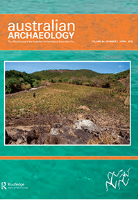
AUSTRALIAN ARCHAEOLOGY
Illuminating Australia’s Archaeological Treasures.AUSTRAILIAN ARCHAEOLOGY, published by Taylor & Francis Ltd, is a leading academic journal dedicated to the field of archaeology. With a strong reputation as evidenced by its Q1 ranking in both the Arts and Humanities and Social Sciences categories, this journal fosters the growth and dissemination of pioneering research from diverse archaeological contexts. The journal has been a vital resource for scholars and practitioners since its convergence in 2002, supporting the collective advancement of knowledge in the archaeological discipline. By offering a platform for rigorous analysis and critical discussions, AUSTRAILIAN ARCHAEOLOGY appeals to a wide audience, from established researchers to students beginning their journey in archaeology. Although it is not an Open Access journal, the insights provided are invaluable for enhancing understanding and appreciation of Australia’s rich archaeological heritage. With a Scopus ranking that places it among the top contenders in its field, this journal continues to contribute significantly to outstanding archaeological scholarship and professional practice.
South Asian History and Culture
Connecting Global Scholars through South Asian PerspectivesSouth Asian History and Culture, published by Routledge Journals, Taylor & Francis Ltd, is an essential academic platform aimed at advancing the understanding of the historical and cultural dimensions of South Asia. With an ISSN of 1947-2498 and an E-ISSN of 1947-2501, this journal has established itself as a key resource for researchers and professionals in the fields of Arts and Humanities, Cultural Studies, Sociology, and Political Science. The journal occupies a significant standing in academia, reflected by its categorization in Q2 across multiple disciplines, highlighting its impact and relevance. Its Scopus rankings further emphasize its influence, ranking 31/173 in General Arts and Humanities and maintaining an 82nd percentile. Additionally, South Asian History and Culture provides a unique forum for scholarly discourse, ensuring the latest research is accessible to a global audience, thereby enriching the academic community's understanding of South Asian dynamics. By delving into themes ranging from social structures to cultural identities, the journal invites contributions that can drive forward innovative discussions and establish new paradigms in South Asian studies.

South African Journal of Art History
Connecting Local Insights to Global Art ConversationsSouth African Journal of Art History is a premier academic publication dedicated to the exploration and critical analysis of art history within the South African context. Published by the Art Historical Work Group South Africa (AHWG), this journal serves as a vital platform for researchers, professionals, and students alike to disseminate innovative research and engage with diverse perspectives on visual culture. With an ISSN of 0258-3542, the journal aims to elevate the study of art history, contributing significantly to the scholarly community's understanding of both local and international art narratives. Although currently not an open access journal, it is committed to high academic standards and in-depth scholarship, ensuring that each article published meets rigorous criteria. As South Africa continues to position itself at the forefront of global art discourse, the South African Journal of Art History stands out as a critical resource for anyone interested in the intersections of art, culture, and history within this dynamic region.

Novye Issledovaniya Tuvy-New Research of Tuva
Advancing Knowledge in Anthropology and Cultural StudiesNovye Issledovaniya Tuvy-New Research of Tuva is a prominent open-access journal published by CH K LAMAZHAA since 2009, dedicated to advancing the fields of Anthropology, Cultural Studies, and History. With an impressive Q1 ranking in these disciplines and a robust presence in the Scopus database—ranking 65th in History and achieving a 96th percentile in Anthropology—it serves as an essential platform for researchers and scholars seeking to explore and disseminate new insights regarding the diverse cultural heritage and historical context of the Tuva region in the Russian Federation. The journal is committed to providing accessible, high-quality research, ensuring that vital information reaches a wide audience without barriers. By spanning the years 2016 to 2024, Novye Issledovaniya Tuvy not only reflects contemporary developments but also contributes significantly to the global discourse on cultural identity and historical narratives.
Anthropology Southern Africa
Fostering interdisciplinary dialogue in the heart of Southern Africa.Anthropology Southern Africa is a prestigious journal published by Routledge Journals, Taylor & Francis Ltd, and is dedicated to advancing the field of anthropology through rigorous scholarship and critical discourse. Established in 2013 and converging through 2024, this journal sets a high standard in its category, currently holding a Q2 classification in Anthropology and a Q1 ranking in Cultural Studies for the year 2023, ensuring its position as a significant contributor to social science research. With a robust Scopus ranking that places it in the 82nd percentile for Cultural Studies and the 67th percentile for Anthropology, Anthropology Southern Africa serves as an essential platform for researchers, professionals, and students engaged in anthropological inquiry and cultural analysis. Although it is not openly accessible, the publication prides itself on high-quality submissions that explore diverse cultural phenomena and anthropological perspectives, thereby inviting interdisciplinary engagement and fostering a global academic dialogue.
HERALD OF THE RUSSIAN ACADEMY OF SCIENCES
Fostering Scholarly Dialogue on Social Science IssuesHERALD OF THE RUSSIAN ACADEMY OF SCIENCES is a prominent interdisciplinary journal published by MAIK NAUKA/INTERPERIODICA/SPRINGER, specializing in the fields of cultural studies and political science. With an ISSN of 1019-3316 and an E-ISSN of 1555-6492, this journal features a robust platform for disseminating high-quality research that informs contemporary debates in social sciences. Over its converged years from 2005 to 2024, it has established itself as an influential source of scholarly articles, achieving a Q2 ranking in Cultural Studies and a Q3 ranking in Political Science and International Relations for 2023. The journal is recognized for its valuable contributions, with Scopus ranks reflecting a strong presence in both cultural studies (Rank #444/1304, 65th percentile) and political science (Rank #450/706, 36th percentile). Researchers, professionals, and students seeking to advance their understanding of the societal dynamics at play are encouraged to explore the insightful perspectives offered by this esteemed publication.

PONTE
Advancing Knowledge in Literature, Sociology, and BeyondPONTE is a distinguished academic journal published by IL PONTE EDITORE, focusing on the interdisciplinary fields of Arts and Humanities as well as Social Sciences, specifically within Literature and Literary Theory and Sociology and Political Science. Despite its recent coverage discontinuation in Scopus, PONTE remains an essential platform for scholarly discourse, aiming to enrich the academic community with critical insights and diverse perspectives. Established in Italy, this journal offers a unique forum for researchers, professionals, and students to engage with contemporary issues, promote innovative research, and contribute to the evolving dialogue in the humanities and social sciences. While it does not provide Open Access options, the journal's content is pivotal for those seeking to deepen their knowledge and foster collaboration across disciplines. As the field continues to grow, PONTE's commitment to high-quality research ensures its historical significance and ongoing relevance in academic inquiry.

Universum-Revista de Humanidades y Ciencias Sociales
Exploring Innovative Ideas for a Better TomorrowUniversum - Revista de Humanidades y Ciencias Sociales is a pivotal academic journal published by UNIV TALCA, INST ESTUDIOS HUMANISTICOS JUAN IGNACIO MOLINA in Chile, dedicated to advancing scholarly discourse in the fields of humanities and social sciences. With an Open Access model implemented since 1986, the journal facilitates widespread access to research outputs, enabling greater engagement from researchers, students, and professionals alike. As of 2023, Universum holds a Q2 classification in the Arts and Humanities and a Q3 classification in Social Sciences, showcasing its commitment to excellence in scholarly contributions. The journal ranks #74/173 in General Arts and Humanities and #212/275 in General Social Sciences within Scopus, reflecting its impact and relevance in these disciplines. With a publication scope converging from 2008 to 2024, Universum is an essential resource for those seeking to explore innovative ideas and the latest research trends in the human and social sciences.

Tuna-Ajalookultuuri Ajakiri
Empowering Emerging Scholars in Cultural StudiesTuna-Ajalookultuuri Ajakiri, published by RAHVUSARHIV-NATL ARCH ESTONIA, is a prominent Estonian journal focusing on History and Library and Information Sciences. With an ISSN of 1406-4030, this journal aims to disseminate valuable insights and scholarly research that contributes to the understanding of cultural history and information management practices, particularly within the Estonian context. Despite its recent classification in the Q4 quartile for both domains in 2023, it serves as a crucial platform for emerging scholars and seasoned researchers alike, fostering dialogue and collaboration in its fields. Covering publications from 2011-2014 and then resuming from 2017-2022, the journal seeks to bridge gaps in historical narratives and enhance the academic discourse surrounding library sciences. While it currently does not offer an open access model, it remains a key reference point for those pursuing in-depth studies in these crucial areas of academia.

Scandia is a distinguished academic journal dedicated to the field of history, published by SCANDIA in Sweden. With its origins dating back to 1976, the journal offers a platform for scholarly discourse, focusing on various historical perspectives and methodologies. Although currently not recognized as an Open Access journal, it fosters a rich exchange of ideas and original research, appealing to historians, researchers, and students alike. Operating within the Q4 quartile of its category for 2023, Scandia holds a significant position in the history landscape, ranking at #1627 out of 1760 in Scopus, representing the 7th percentile. With a commitment to quality scholarship, Scandia encourages contributions that challenge existing narratives and contribute to the broader understanding of historical contexts.
Please send your submissions or inquiries to the editorial office at Historiska Inst, Box 2074, Lund 220 02, Sweden.