
European Journal of Korean Studies
Scope & Guideline
Fostering Interdisciplinary Insights on Korea
Introduction
Aims and Scopes
- Korean History and Politics:
The journal extensively covers historical narratives and political developments in Korea, including the Korean War, North and South Korea's political dynamics, and the impact of colonial histories. - Cultural Studies and Identity:
It explores cultural phenomena, identity formation, and the representation of Koreans in various contexts, particularly through media, art, and migration. - Diaspora and Migration Studies:
The journal examines the experiences and contributions of the Korean diaspora, particularly focusing on migration patterns and the cultural exchanges between Koreans and other communities. - Social Issues and Contemporary Challenges:
Research published often addresses contemporary social issues in Korea, including healthcare, gender dynamics, and the impact of neoliberal policies on society. - International Relations and Diplomacy:
The journal provides insights into Korea's international relations, particularly regarding its diplomatic engagements and soft power strategies in Europe and Central Asia.
Trending and Emerging
- North Korean Studies:
There is a marked increase in research related to North Korea, especially regarding its nuclear program and socio-political dynamics, indicating a heightened interest in understanding this isolated regime's impact on regional and global stability. - LGBTQ+ Studies in Korea:
The exploration of LGBTQ+ issues, particularly through the lens of homoregionalism, reflects a growing recognition of diverse identities and social movements within Korean society. - Digital and Media Culture:
Emerging themes related to digital culture, including the impact of social media and digital activism, highlight the changing landscape of cultural production and consumption in contemporary Korea. - Healthcare and Gender Studies:
Research focusing on healthcare practices and maternal roles in diaspora communities has gained traction, showcasing an intersectional approach to understanding health and gender in different cultural contexts. - Memory and Historical Narratives:
The examination of memory construction and historical narratives is increasingly prevalent, as scholars seek to understand how past events are interpreted and represented in contemporary Korean society.
Declining or Waning
- Colonial Studies:
Though still a relevant topic, there has been a noticeable decrease in papers focusing explicitly on colonial studies, particularly regarding the Japanese occupation of Korea, suggesting a potential shift towards contemporary issues. - Traditional Arts and Literature:
The exploration of traditional Korean arts and literature, while foundational, appears less frequently in recent issues, possibly overshadowed by contemporary cultural discourse and issues. - Islam in Korea:
Research on the historical and contemporary interactions between Islam and Korea has diminished, indicating a waning interest or a narrowing of the thematic focus in favor of more pressing socio-political issues. - Historical Figures and Biographies:
Papers centered on specific historical figures or biographical studies have become less prevalent, which may reflect a growing preference for thematic or collective analyses over individual narratives. - Environmental Studies:
While environmental issues are crucial, there seems to be a decline in focused studies within the journal, possibly due to the increasing emphasis on socio-political and cultural themes.
Similar Journals

Japan Review
Fostering Scholarly Discourse on Japan's Social DynamicsJapan Review, published by the International Research Center for Japanese Studies, is an esteemed academic journal that serves as a significant platform for exploring a diverse array of topics related to Japan within the fields of Arts and Humanities and Social Sciences. With an ISSN of 0915-0986 and an E-ISSN of 2434-3129, this journal endeavors to enrich scholarly discourse from 2019 to 2023, encompassing interdisciplinary studies that shed light on cultural, historical, and societal aspects of Japan. Though not an open-access journal, it is recognized for its contributions to the academic community, evidenced by its ranking in the Q3 quartile in Arts and Humanities and Q4 in Social Sciences. Its Scopus rankings indicate its growing influence, with a 36th percentile rank in the arts category, making it a valuable resource for researchers, professionals, and students aiming to deepen their understanding of Japanese studies. The journal's commitment to promoting high-quality research underlines its crucial role in advancing knowledge within its field.

INTERNATIONAL JOURNAL OF IBERIAN STUDIES
Connecting Cultures: A Forum for Iberian InsightsINTERNATIONAL JOURNAL OF IBERIAN STUDIES (ISSN 1364-971X; E-ISSN 1758-9150), published by INTELLECT LTD, stands as a pivotal forum for interdisciplinary research on the Iberian Peninsula, engaging with complex cultural, historical, and political narratives. Established in 2012, this journal highlights diverse perspectives and fosters scholarly dialogue within its scope bridging Cultural Studies, History, and Political Science, reflected in its 2023 Scopus rankings which place it within the Q3 and Q4 quartiles across various categories. Although currently not an open-access journal, it provides critical insights and original research essential for students, researchers, and professionals alike. The journal's commitment to exploring the multifaceted dimensions of Iberian studies makes it a significant contributor to the field, encouraging submissions that deepen understanding and promote scholarly excellence.

Caucasus Survey
Exploring the Depths of Caucasian ScholarshipCaucasus Survey is a prominent interdisciplinary journal published by BRILL, specializing in the multifaceted studies of the Caucasus region. With an ISSN of 2376-1199 and E-ISSN of 2376-1202, this journal has been a vital platform since its inception in 2013, continuing to evolve until 2024. Recognized for its rigorous scholarly contributions, it proudly ranks in the Q2 category in Anthropology and Cultural Studies, alongside commendable positions in History and other related social sciences as per the latest 2023 metrics. Positioned in the Netherlands, its academic rigor plays a crucial role in shaping research narratives and perspectives about the socio-political and cultural dynamics of the Caucasus. Caucasus Survey offers valuable insights for researchers, professionals, and students alike, fostering an understanding that bridges local issues with global relevance and contributing significantly to existing literatures in fields such as Demography, Geography, Sociology, and Political Science. For those seeking to explore the complexities of this vibrant region, Caucasus Survey serves as an essential resource.

Si Somos Americanos-Revista de Estudios Transfronterizos
Advancing Knowledge in Transnational Cultural DynamicsSi Somos Americanos - Revista de Estudios Transfronterizos, published by UNIV ARTURO PRAT, is a distinguished open-access journal that has been serving the academic community since 2012. Based in Chile, this journal provides a platform for groundbreaking research in the fields of Cultural Studies, History, and Social Sciences, achieving remarkable rankings with a Q1 classification in both Cultural Studies and History as of 2023. Its contributions have garnered a notable presence, sitting in the 86th percentile in Arts and Humanities and maintaining strong engagement within its field. Spanning a converged period from 2019 to 2024, the journal aims to foster interdisciplinary dialogue that challenges traditional boundaries and promotes understanding of transborder issues. The journal's commitment to open access ensures that its research is readily accessible, allowing for greater dissemination of knowledge among students, researchers, and professionals alike. With an ISSN of 0718-2910 and an E-ISSN of 0719-0948, Si Somos Americanos stands as a crucial resource for anyone invested in the dynamics of cultural and historical studies in a transnational context.
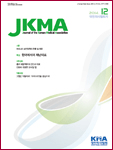
Journal of the Korean Medical Association
Fostering Collaboration in Medical AdvancementsJournal of the Korean Medical Association, published by the Korean Medical Association, serves as a significant platform for disseminating valuable research and insights in the field of medicine, particularly within the context of South Korea. Established as an open-access journal since 1997, it ensures that critical medical knowledge is freely available to researchers, healthcare professionals, and students alike. With an ISSN of 1975-8456 and an E-ISSN of 2093-5951, this journal emphasizes its commitment to accessibility, transparency, and the sharing of scientific advancements. The journal's scope encompasses a wide range of topics in medicine, with a notable focus on the continuous evolution of medical practices and policies in Korea. As of 2023, it is positioned in the Q4 quartile in the category of General Medicine, highlighting its role in contributing to the comprehensive understanding of medical issues. With a respectable Scopus rank of #442 out of 636, the journal reflects a growing interest in its publications. Researchers and practitioners will find Journal of the Korean Medical Association an essential resource for staying informed about current discoveries and developments in the medical field.

KOREA JOURNAL
Advancing Knowledge Through Interdisciplinary InsightsKOREA JOURNAL, published by the Academy of Korean Studies, stands as a significant scholarly resource in the fields of Cultural Studies, History, Literature and Literary Theory, and Visual Arts and Performing Arts. With an impressive impact factor highlighted by its Q1 and Q2 quartile rankings across multiple categories, the journal facilitates the dissemination of innovative research that contributes to the understanding of Korean society and culture, offering a platform for both local and international scholars. Open Access since 2020, ensures that its articles are readily available to a wide audience, thereby promoting broader academic engagement. By featuring diverse interdisciplinary studies, the journal aims to bridge gaps across various fields and foster dialogue among researchers, practitioners, and students alike. Located in Seongnam-si, Gyeonggi-do, South Korea, it continues to play an essential role in advancing scholarship related to Korean studies while maintaining academic rigor and quality.

Korean Economic Review
Elevating the conversation in economics and finance.Korean Economic Review is a distinguished academic journal published by the Korean Economic Association, dedicated to advancing the field of economics with a focus on both theoretical and empirical research. With an ISSN of 0254-3737, this journal serves as a vital platform for scholars and practitioners to disseminate innovative ideas and findings that enrich our understanding of economic phenomena. Operating in South Korea, the journal enjoys recognition within the academic community as evidenced by its Q3 ranking in the Economics, Econometrics and Finance categories as of 2023, placing it in a respectable position among its peers. While it does not currently offer open access options, its commitment to rigorous peer review ensures the publication of high-quality research. As the journal converges from 2012 to 2024, it continues to contribute to the global discourse on economic issues, making it an essential resource for researchers, students, and professionals striving to stay at the forefront of economic scholarship.
History and Sociology of South Asia
Unveiling the Complexities of South Asia's Past and PresentHistory and Sociology of South Asia, published by SAGE Publications Inc, is a critical academic journal dedicated to exploring the intricate tapestry of historical and sociological dynamics within the South Asian context. Established in 2011, this journal provides an essential platform for scholars and researchers to disseminate their findings and engage in discourse about the region's cultural, social, and political complexities. Although it currently ranks in the fourth quartile for Cultural Studies and Sociology & Political Science, and third quartile for History, the journal offers invaluable insights that contribute to the ongoing evaluation of South Asian societal structures and historical narratives. With an HIndex currently not specified, the journal's future aims to elevate its academic influence through rigorous peer-reviewed publications. As researchers, professionals, and students delve into its pages, they will find a wealth of interdisciplinary perspectives crucial for understanding South Asia’s past and present in an increasingly globalized world.
AFRICAN STUDIES
Unveiling the Rich Tapestry of African ScholarshipAFRICAN STUDIES, published by Routledge Journals, Taylor & Francis Ltd, is a leading academic journal that has been at the forefront of African research since its inception in 1942. With an impressive convergence of interdisciplinary insights covering Anthropology, Cultural Studies, History, and Political Science, this journal serves as an essential resource for scholars and practitioners alike. It boasts a notable impact within its field, ranking in the Q1 quartile for Cultural Studies and History and achieving a commendable Q2 for Anthropology, and Political Science and International Relations according to the 2023 category quartiles. Researchers can benefit from the journal's rigorous peer-review process, which ensures high-quality and impactful research dissemination. While it is not an open-access journal, it offers various subscription options for accessing its wealth of scholarly articles. With a commitment to advancing understanding of African contexts and perspectives, AFRICAN STUDIES plays a crucial role in shaping contemporary debates and fostering intellectual engagement within the academic community.
Israel Affairs
Exploring Israel's Dynamic NarrativeIsrael Affairs is an esteemed academic journal published by Routledge Journals, Taylor & Francis Ltd, focusing on the multifaceted socio-political landscape of Israel and its dynamic relationships within the global context. Since its inception in 1994, the journal has become a crucial resource for scholars, practitioners, and students interested in cultural studies, history, and political science, evidenced by its commendable rankings in various categories—Q2 in Cultural Studies, Q1 in History, and Q3 in Political Science and International Relations. With an ISSN of 1353-7121 and an E-ISSN of 1743-9086, this journal encompasses a diverse range of topics addressing both historical and contemporary issues facing Israel, thus contributing to an informed discourse. Although it operates on a subscription basis, its rigorous peer-reviewed articles and comprehensive studies make it an invaluable asset for any library or research institution. The journal not only reflects the current trends in Israeli affairs but also sets the stage for future scholarship, aiming to enhance understanding and generate insightful dialogue among researchers and policy makers alike.