
EUROPEAN JOURNAL OF MASS SPECTROMETRY
metrics 2024
Transforming Complex Data into Clear Discoveries
Introduction
European Journal of Mass Spectrometry, published by SAGE Publications Ltd, is a premier academic journal dedicated to advancing the field of mass spectrometry and its applications in atomic, molecular physics, and medical sciences. With an ISSN of 1469-0667 and an E-ISSN of 1751-6838, this journal serves as a vital platform for disseminating innovative research findings and methodologies that enhance our understanding of complex molecular structures and interactions. Operating from the United Kingdom, it has established itself within the academia by achieving a Q3 ranking in several categories, including Atomic and Molecular Physics and Spectroscopy, as per the 2023 category quartiles. Researchers and professionals can access a diverse range of articles that not only address theoretical aspects but also practical applications in various scientific disciplines. As the field continues to evolve, the European Journal of Mass Spectrometry plays a crucial role in fostering collaboration and knowledge sharing among experts, making it an indispensable resource for anyone invested in mass spectrometry and its interdisciplinary connections.
Metrics 2024
 0.311.101.0048
Metrics History
Rank 2024
Scopus
IF (Web Of Science)
JCI (Web Of Science)
Quartile History
Similar Journals
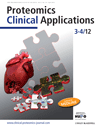
Proteomics Clinical Applications
Exploring Proteomics for Enhanced Clinical ApplicationsProteomics Clinical Applications, published by Wiley-VCH Verlag GmbH, is a pivotal journal in the realm of Clinical Biochemistry, with an impressive track record since its inception in 2007, continuing its impactful contributions to 2024. With an ISSN of 1862-8346 and an E-ISSN of 1862-8354, this prestigious journal currently holds a commendable Q2 ranking in Clinical Biochemistry, situated at the 54th percentile among its peers within Scopus rankings. Dedicated to the advancement of proteomics and its applications in clinical settings, Proteomics Clinical Applications serves as a bastion for innovative research, fostering knowledge exchange among scientists, healthcare professionals, and students alike. Through its focus on novel methodologies and translational research, the journal aims to bridge the gap between laboratory findings and clinical practice, significantly impacting patient care and outcomes. Although not open access, its content is accessible through various academic databases, ensuring that vital research reaches its intended audience.

CHINESE JOURNAL OF ANALYTICAL CHEMISTRY
Unveiling New Horizons in Chemical AnalysisCHINESE JOURNAL OF ANALYTICAL CHEMISTRY, published by SCIENCE PRESS in China, stands as a prominent platform in the field of analytical chemistry since its inception in 1989. With its ISSN 0253-3820 and E-ISSN 1872-2040, the journal maintains a vital role in disseminating empirical research and innovative methodologies, contributing to the advancement of analytical techniques and their applications. The 2023 Scopus ranking positions the journal in the third quartile (Q3) within its category, reflecting a respectable standing among its peers. Researchers, professionals, and students alike engage with a broad range of topics, from instrumental analysis to environmental monitoring, each aiming to foster further scientific inquiry. Although it does not currently offer Open Access, the journal's rich repository of knowledge continues to be an essential resource for those in the analytical chemistry community, with an enduring commitment to scientific excellence and collaboration.
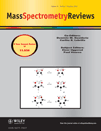
MASS SPECTROMETRY REVIEWS
Pioneering Discoveries in Biochemistry and BeyondMASS SPECTROMETRY REVIEWS, published by Wiley, is a premier academic journal dedicated to advancing the field of mass spectrometry and its applications across a multitude of scientific disciplines. With an ISSN of 0277-7037 and an E-ISSN of 1098-2787, the journal has established itself as a vital resource within the realms of Analytical Chemistry, Biochemistry, Genetics, Condensed Matter Physics, and Spectroscopy, achieving Q1 status across these categories in 2023. As a testament to its significant contribution to scholarly research, it boasts impressive Scopus rankings, including a rank of #2 out of 76 in Chemistry - Spectroscopy and #4 out of 156 in Chemistry - Analytical Chemistry, placing it in the 97th percentile and above. Emphasizing high-quality, peer-reviewed research, MASS SPECTROMETRY REVIEWS serves as an essential platform for researchers, professionals, and students aiming to stay abreast of cutting-edge developments and methodologies in mass spectrometry. The journal is committed to fostering a deeper understanding of mass spectrometric techniques while also contributing to interdisciplinary advancements, making it a valuable addition to any academic library. Authors seeking to disseminate their work in a journal with a strong reputation and impact in the scientific community will find MASS SPECTROMETRY REVIEWS an ideal venue.
BUNSEKI KAGAKU
Empowering the Next Generation of ChemistsBUNSEKI KAGAKU, published by the Japan Society Analytical Chemistry, is a reputable journal dedicated to the field of analytical chemistry. With an ISSN of 0525-1931, this journal has been a crucial outlet for scholarly communication since its inception in 1952, converging its publication years from 1954 to 1957 and from 1959 to 2024. Although it holds a Q4 category ranking in the most recent 2023 quartiles of analytical chemistry and ranks 153/156 in Scopus, it continues to serve as a platform for quality research, fostering advancements in the field. BUNSEKI KAGAKU is based in Tokyo, Japan, and emphasizes the critical importance of analytical techniques in scientific inquiry. With a commitment to professionalism and rigor, the journal provides a vital resource for researchers, students, and professionals seeking to explore innovative methodologies and contribute to the ongoing dialogue in analytical chemistry.
Current Pharmaceutical Analysis
Unlocking Innovations in Drug DevelopmentCurrent Pharmaceutical Analysis, published by Bentham Science Publishers Ltd, is a vital resource for professionals and researchers in the fields of Pharmaceutical Science, Biochemistry, and Molecular Medicine. Established in 2006, this peer-reviewed journal aims to provide a platform for the latest advancements and analytical methodologies in pharmaceutical research and drug development. Over the years, it has garnered attention for its rigorous scrutiny and contributions to the landscape of pharmacology, evidenced by its quartile placements in various categories, most notably Q3 in Pharmaceutical Science. Despite its current rankings placing it in the lower quartile in several disciplines, the journal remains an essential venue for both emerging and established researchers seeking to disseminate their findings. With the widespread accessibility of its articles, researchers, professionals, and students can engage with cutting-edge studies to foster innovation in pharmaceutical analysis. For access to the latest research contributions, readers can explore the digital archive and stay updated on pivotal discussions shaping the future of the pharmaceutical sciences.

Separation Science Plus
Fostering knowledge exchange in analytical advancements.Separation Science Plus is an emerging academic journal dedicated to advancing the field of analytical chemistry and separation science. Published by WILEY-VCH Verlag GmbH, this journal provides a platform for researchers to disseminate high-quality studies and reviews that address innovative techniques and breakthroughs in separation methodologies. With its ISSN 2573-1815, the journal has made significant inroads since its inception in 2018, encompassing a convergence period until 2024. Despite currently holding a Q3 ranking in Analytical Chemistry and a Q4 ranking in Filtration and Separation, its dedication to publishing impactful research makes it a vital resource for professionals and students alike. The journal operates under the robust scholarly reputation of WILEY, which is known for its commitment to excellence in scientific communication. Researchers interested in the latest advancements in separation techniques will find Separation Science Plus an essential read, fostering the exchange of knowledge and facilitating greater understanding within this specialized field.
SPECTROCHIMICA ACTA PART B-ATOMIC SPECTROSCOPY
Illuminating the Future of Spectroscopy with Innovative Discoveries.SPECTROCHIMICA ACTA PART B-ATOMIC SPECTROSCOPY, published by PERGAMON-ELSEVIER SCIENCE LTD, is a leading peer-reviewed journal dedicated to advancing the field of atomic spectroscopy. With a respectable impact within its category—achieving Q2 quartile rankings in Analytical Chemistry, Atomic and Molecular Physics, Instrumentation, and Spectroscopy according to the 2023 metrics—this journal plays a pivotal role in disseminating high-quality research findings. Over its impressive publication history since 1967, the journal has continuously provided a platform for researchers to present innovative methodologies, theoretical advancements, and practical applications related to atomic spectroscopy. The journal is recognized for its rigorous peer-review process and aims to foster scholarly dialogue among professionals and students alike, reinforcing its significance in the scientific community. Although it does not offer open access options, its strong presence in notable databases ensures that the research reaches a broad audience. As a part of the ongoing dialogue in atomic and molecular sciences, SPECTROCHIMICA ACTA PART B is an essential resource for those at the forefront of related research.
JOURNAL OF ANALYTICAL CHEMISTRY
Advancing the Frontiers of Analytical KnowledgeJOURNAL OF ANALYTICAL CHEMISTRY, published by PLEIADES PUBLISHING INC, stands as a pivotal resource in the field of analytical chemistry, offering an innovative platform for researchers, professionals, and students to advance their knowledge and contribute to the discourse within the discipline. With an ISSN of 1061-9348 and an E-ISSN of 1608-3199, this journal features a focused exploration of analytical methodologies, instrumentation developments, and applications across various domains, contributing to practical and theoretical advancements in the field. Currently ranked in the Q3 category in Analytical Chemistry with a Scopus rank of #111 out of 156, it provides critical insights and innovation strategies for professionals aiming to enhance their analytical capabilities. Access to the journal is through standard subscription models, and it covers an extensive range of topics pertinent to the discipline from 1996 to 2024. Engage with the JOURNAL OF ANALYTICAL CHEMISTRY to be part of a vibrant research community dedicated to push the boundaries of analytical practices.
Annual Review of Analytical Chemistry
Navigating the Landscape of Analytical AdvancementsAnnual Review of Analytical Chemistry, published by Annual Reviews, is a premier journal that serves as a critical resource in the field of analytical chemistry, providing comprehensive and cutting-edge reviews that synthesize recent advancements and pivotal research findings. With an impressive impact factor and ranked Q1 in both Analytical Chemistry and Miscellaneous Medicine, it stands as a leader in disseminating knowledge that spans the intricacies of chemical analysis, enhancing the scientific discourse within the community. Available in both print (ISSN: 1936-1327) and online (E-ISSN: 1936-1335), the journal is accessible to a wide audience, fostering innovation and collaboration among researchers, professionals, and students alike. Its scope includes the converged years from 2008 to 2024, showcasing its commitment to providing relevant and timely insights that impact practice and education in analytical techniques, methodologies, and applications. The Scopus rank of #6 out of 156 in Analytical Chemistry, placing it in the 96th percentile, underscores its significance and the high regard in which it is held. As you explore the journal's offerings, you will find a wealth of knowledge that not only informs but inspires future discoveries in the realm of analytical chemistry.
REVIEWS IN ANALYTICAL CHEMISTRY
Unlocking Insights in Analytical MethodologiesREVIEWS IN ANALYTICAL CHEMISTRY, published by De Gruyter Poland Sp. z o.o., serves as a pivotal resource in the field of analytical chemistry, with a notable impact factor indicative of its scholarly significance. As an Open Access journal since 2020, it ensures widespread dissemination of high-quality research articles, facilitating knowledge sharing among researchers, professionals, and students alike. With its origins tracing back to 1980, the journal has adeptly adapted over the years to encompass emerging trends and innovations within analytical methodologies, maintaining its relevance and authority in the discipline. The journal is ranked in the Q2 category of analytical chemistry in 2023 and holds a commendable Scopus rank of #32 out of 156, reflecting its strong performance and the quality of the studies published. Researchers looking for cutting-edge reviews and insights will find this journal an invaluable platform for advancing their knowledge and research in analytical chemistry.