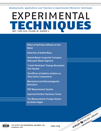
EXPERIMENTAL TECHNIQUES
metrics 2024
Transforming Ideas into Experimental Excellence
Introduction
EXPERIMENTAL TECHNIQUES, an esteemed journal published by Springer, serves as a crucial platform for fostering innovation and research in the fields of Mechanical Engineering and Mechanics of Materials. Established in 1975 and continuing its legacy through to 2024, it aggregates a wealth of studies that exemplify rigorous experimental methodologies and emerging technologies. With its remarkable standing as a Q2 journal in Mechanical Engineering and Q3 in Mechanics of Materials, it ranks in the top half of its categories on Scopus, indicating its relevance and impact in the academic community. While the journal is not open access, it ensures accessibility to high-quality research findings essential for advancing knowledge and expertise among researchers, professionals, and students alike. EXPERIMENTAL TECHNIQUES continues to be a vital resource for those involved in the dynamic landscape of experimental mechanics, aiming to push boundaries and explore new frontiers in engineering.
Metrics 2024
 0.381.501.5042
Metrics History
Rank 2024
Scopus
IF (Web Of Science)
JCI (Web Of Science)
Quartile History
Similar Journals
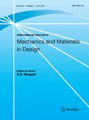
International Journal of Mechanics and Materials in Design
Transforming Ideas into Engineering ExcellenceInternational Journal of Mechanics and Materials in Design is a leading publication in the field of mechanical engineering and materials science, published by Springer Heidelberg. With an impressive impact factor, it holds esteemed rankings as Q1 in both Mechanical Engineering and Mechanics of Materials, and Q2 in Materials Science for the year 2023, solidifying its reputation as a significant contributor to the advancement of design methodologies. The journal focuses on the intersection of mechanics and materials, encouraging innovative research that addresses contemporary challenges faced in engineering disciplines. Researchers and professionals alike can benefit from accessing cutting-edge studies contributing to various applications, making it an invaluable resource for staying informed in this dynamic field. While the journal operates under a subscription model, its comprehensive reviews and high-quality original research foster a deeper understanding of material behavior and design principles, thus supporting the academic growth and professional development of its readers.
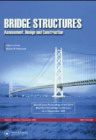
Bridge Structures
Connecting Theory and Practice in Bridge DesignBridge Structures is an esteemed academic journal dedicated to the field of structural engineering, particularly focusing on the design, analysis, and maintenance of bridge systems. Published by IOS PRESS, a reputable publisher known for its contributions to various scientific fields, the journal serves as an integral platform for disseminating innovative research and advancements within the domain. With an ISSN of 1573-2487 and an E-ISSN of 1744-8999, Bridge Structures has established itself over the years—covering contributions from 2005 to 2024. The journal has attained a commendable ranking within the Q3 category in Building and Construction and holds a position within the 28th percentile among its peers according to the Scopus rankings. Though the journal operates on a subscription basis, its commitment to advancing engineering knowledge is paramount, making it essential reading for researchers, practitioners, and students eager to deepen their understanding of bridge engineering. The journal not only explores theoretical advancements but also emphasizes practical applications, providing a well-rounded perspective on current challenges and solutions in the field of bridge structures.

Journal of Materials and Engineering Structures
Exploring Cutting-Edge Research in Engineering StructuresJournal of Materials and Engineering Structures is a pioneering Open Access journal published by MOULOUD MAMMERI UNIVERSITY OF TIZI-OUZOU, dedicated to advancing the field of materials science and engineering. Since its inception in 2014, the journal has aimed to provide researchers, professionals, and students with a platform for sharing cutting-edge research and innovative applications in materials engineering and construction structures. Although the HIndex and Scopus ranking data are not specified, the journal plays a crucial role in disseminating knowledge that contributes to the development of sustainable and efficient engineering practices. With its commitment to accessibility and knowledge sharing in the heart of Algeria, the Journal of Materials and Engineering Structures is poised to make a significant impact on both local and global academic communities.
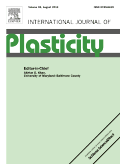
INTERNATIONAL JOURNAL OF PLASTICITY
Transforming Understanding in Materials EngineeringINTERNATIONAL JOURNAL OF PLASTICITY, published by Pergamon-Elsevier Science Ltd, stands as a pivotal forum in the field of materials science and engineering, exploring the nuances of plastic behavior in materials. With its ISSN 0749-6419 and E-ISSN 1879-2154, this esteemed journal has been a cornerstone of academic research since its inception in 1985, continuing to hold significant relevance as it converges towards 2024. Ranking in the Q1 quartile across multiple categories, including Materials Science (Miscellaneous), Mechanical Engineering, and Mechanics of Materials, it is recognized for its high impact, evidenced by its competitive Scopus rankings that place it in the 97th percentile among mechanical engineering journals. Although it does not offer open access, the journal remains committed to disseminating cutting-edge research findings that advance understanding in plasticity, providing researchers, professionals, and students with vital insights into contemporary issues and innovations in the field.

Composites and Advanced Materials
Unveiling the Potential of Advanced CompositesComposites and Advanced Materials, published by SAGE Publications Ltd, is a pioneering open access journal launched in 2021 that provides a dedicated platform for disseminating cutting-edge research in the field of composite materials and their advanced applications. With a growing global emphasis on sustainability and technology innovation, this journal serves as an essential resource for researchers, professionals, and students keen to explore the latest advancements in material science. Featuring rigorous peer-reviewed articles, the journal not only aims to enhance the scientific dialogue around composite materials but also facilitates the exchange of ideas that propel the field forward. The journal is easily accessible, catering to a wide audience interested in the future of materials engineering, and it strives to uphold its mission of fostering collaborative research and dialogue across disciplines.

Journal of Structural Fire Engineering
Pioneering research for a safer built environment.The Journal of Structural Fire Engineering is a premier academic publication dedicated to advancing the field of fire safety and structural engineering. Published by Emerald Group Publishing Ltd, this journal features high-quality research and innovative solutions addressing crucial aspects of safety, risk, reliability, and the mechanics of materials. With an impact factor that reflects its growing influence in the academic community and a classification in the Q3 quartile across several engineering categories, the journal plays a vital role in disseminating knowledge that bridges theoretical concepts and practical applications. With coverage spanning from 2010 to 2024, researchers, professionals, and students can access a wealth of studies that explore the intersection of structural integrity and fire safety. While it currently operates under a subscription model, the journal remains committed to sharing pivotal insights that drive forward the discipline. Join the community of experts striving to enhance engineering practices and resilience against fire-related hazards.

Structural Integrity and Life-Integritet I Vek Konstrukcija
Unveiling Insights for Structural Performance.Structural Integrity and Life - Integritet I Vek Konstrukcija is a prominent open-access journal dedicated to advancing the fields of Civil and Structural Engineering, Mechanics of Materials, and Safety, Risk, Reliability, and Quality. Published by the SOC STRUCTURAL INTEGRITY & LIFE, this journal has been disseminating high-quality research since 2001 from its base in Belgrade, Serbia. The journal's commitment to open access ensures that vital research is freely accessible to a global audience, fostering collaboration and innovation within the academic community. With an impressive categorization in the 2023 quartiles, including Q2 in Metals and Alloys and Q3 in related fields, Structural Integrity and Life stands as a vital resource for researchers, professionals, and students striving to enhance understanding and applications in structural integrity and material performance. The journal invites contributions that address critical issues in the field, pushing the boundaries of knowledge and practical applications, and welcomes both empirical studies and theoretical discussions that can drive forward the next generation of engineering solutions.
MECHANICS OF ADVANCED MATERIALS AND STRUCTURES
Advancing the frontiers of materials science and structural engineering.Mechanics of Advanced Materials and Structures is a distinguished journal published by Taylor & Francis Inc, focusing on the innovative fields of Civil and Structural Engineering, Materials Science, Mechanical Engineering, and Mechanics of Materials. With ISSN 1537-6494 and E-ISSN 1537-6532, this journal is positioned within the Q2 quartile rankings of its categories, demonstrating its significant scholarly impact. It has been a pivotal platform since its inception in 1997, providing researchers and professionals with comprehensive insights and the latest findings, until the expected closure in 2024. Situated in the United Kingdom, the journal is dedicated to enhancing the understanding of complex materials and structural behavior through rigorous peer-reviewed articles. Its high visibility in Scopus rankings further underscores its importance, making it an essential resource for those engaged in advanced materials research and structural analysis. With options for open access, the journal ensures broad dissemination of knowledge, fostering a collaborative environment for researchers, practitioners, and students alike.
RUSSIAN JOURNAL OF NONDESTRUCTIVE TESTING
Exploring Cutting-Edge Techniques in Material IntegrityRUSSIAN JOURNAL OF NONDESTRUCTIVE TESTING, published by PLEIADES PUBLISHING INC, is a respected academic journal that has been contributing significantly to the fields of Condensed Matter Physics, Materials Science, Mechanical Engineering, and Mechanics of Materials since its inception in 1996. With a concentrated focus on the latest advancements in nondestructive testing techniques, it serves as a vital resource for researchers, engineers, and practitioners seeking to improve material integrity and safety across various applications. Despite its classification in the Q3 quartile categories, the journal continues to foster scholarly dialogue and innovation in non-destructive research methodologies. Although it does not currently offer open access, the journal remains committed to disseminating high-quality research that influences both theoretical and practical landscapes. With an emphasis on quality, the journal seeks to connect academics and industry experts alike, thus enhancing the relevance and application of nondestructive testing in real-world contexts.

Journal of Dynamic Behavior of Materials
Advancing Research in Material MechanicsThe Journal of Dynamic Behavior of Materials, published by SpringerNature, serves as a premier platform for the dissemination of innovative research in the fields of materials science and mechanics of materials. With its ISSN 2199-7446 and E-ISSN 2199-7454, this international journal has established itself since its inception in 2015, showcasing groundbreaking insights into the dynamic properties and behaviors of various materials. Operating from Switzerland and headquartered in London, this journal embraces an open-access philosophy, albeit not entirely, to enhance research visibility. According to the Scopus rankings, it is positioned in the Q3 quartile for both materials science and mechanics of materials, indicating its growing prominence in the academic landscape. Researchers and professionals alike benefit from its wide-ranging contributions that address contemporary challenges and advancements, making it a critical resource for advancing knowledge and innovation in these crucial fields.