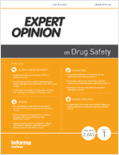
Expert Opinion On Drug Safety
Scope & Guideline
Championing Excellence in Drug Safety Practices
Introduction
Aims and Scopes
- Pharmacovigilance and Drug Safety Analysis:
The journal emphasizes the importance of pharmacovigilance, aiming to monitor, assess, and understand adverse drug reactions and safety signals associated with various medications. - Clinical Safety Evaluations:
It provides comprehensive evaluations of drug safety through systematic reviews, meta-analyses, and real-world studies, offering insights into the efficacy and safety of drugs across multiple therapeutic areas. - Risk-Benefit Assessments:
The journal focuses on the balance between the therapeutic benefits of drugs and their potential risks, providing guidance for clinicians in making informed treatment decisions. - Emerging Drug Safety Concerns:
It addresses new and emerging safety concerns related to drugs, particularly in the context of novel therapies and changing treatment paradigms. - Real-World Evidence Integration:
The journal integrates real-world evidence to enhance understanding of drug safety in diverse populations and clinical settings, ensuring that findings are applicable to everyday medical practice.
Trending and Emerging
- Real-World Evidence and Data Mining:
There is a growing emphasis on utilizing real-world evidence and advanced data mining techniques to uncover adverse drug reactions and safety signals, reflecting a shift towards more data-driven approaches in pharmacovigilance. - Machine Learning and Artificial Intelligence in Drug Safety:
The integration of machine learning and AI technologies in pharmacovigilance is trending, with studies focusing on their potential to improve signal detection and risk assessment in drug safety. - Patient-Centric Pharmacovigilance:
An emerging focus on incorporating patient perspectives, experiences, and reported outcomes into drug safety evaluations is evident, aiming to enhance the relevance and applicability of findings. - Safety of Novel Therapeutics and Biologics:
Research is increasingly directed towards the safety profiles of novel therapeutics, including biologics and targeted therapies, particularly in oncology and immunology, reflecting the rapid advancement of these treatment modalities. - Long-Term Safety and Post-Marketing Surveillance:
There is a heightened interest in long-term safety studies and post-marketing surveillance, emphasizing the need to monitor drugs after they have been approved and widely prescribed.
Declining or Waning
- Traditional Pharmacovigilance Methods:
There is a noticeable decline in studies focusing solely on traditional pharmacovigilance methods, as the field shifts towards more innovative and technology-driven approaches such as machine learning and big data analytics. - Generalized Drug Safety Reviews:
The trend towards more specialized and targeted safety evaluations has led to a decrease in broad, generalized reviews of drug safety, which may have been more common in earlier publications. - Historical Drug Safety Studies:
Research focusing on historical data or older medications is becoming less prevalent, as the journal increasingly prioritizes contemporary drugs and therapies. - Single-Agent Safety Studies:
There is a waning interest in studies examining the safety of single-agent therapies, with a growing focus on combination therapies and polypharmacy, especially in complex patient populations. - Pharmacovigilance in Non-Pharmaceutical Contexts:
The journal has seen a reduction in articles addressing pharmacovigilance in non-pharmaceutical contexts, such as dietary supplements or herbal products, which were previously more common.
Similar Journals

Therapeutics and Clinical Risk Management
Navigating the complexities of risk in modern therapeutics.Therapeutics and Clinical Risk Management is a pioneering journal published by DOVE MEDICAL PRESS LTD, dedicated to advancing the fields of medication safety, pharmacology, and clinical risk management through rigorous research and comprehensive reviews. With an impact factor that demonstrates its significance within various disciplines, this Open Access journal has been instrumental since its inception in 2006, promoting the dissemination of knowledge to a global audience without barriers. With its reach spanning categories such as Pharmacology, Medicine, and Chemical Health and Safety, it champions innovative practices and risk assessment methodologies. The journal is recognized in the Q2 quartile for multiple related categories and excels in rank within its field, highlighting its influential contributions to safety and therapeutic practices. By prioritizing the sharing of impactful research, Therapeutics and Clinical Risk Management serves as an indispensable resource for researchers, professionals, and students aiming to enhance clinical outcomes and mitigate risks in therapeutic paradigms.
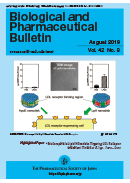
BIOLOGICAL & PHARMACEUTICAL BULLETIN
Bridging the Gap Between Science and HealthcareBIOLOGICAL & PHARMACEUTICAL BULLETIN, published by the PHARMACEUTICAL SOC JAPAN, is a prominent peer-reviewed journal that serves the fields of medicine, pharmaceutical science, and pharmacology. With an ISSN of 0918-6158 and an E-ISSN of 1347-5215, this publication has been crucial in disseminating innovative research since its inception in 1993, and it continues to contribute significantly to the body of knowledge as it converges towards 2024. Despite being classified as a non-open access journal, it maintains a respectable Q3 ranking in Medicine (miscellaneous) and Q2 in Pharmaceutical Science, highlighting its critical role in advancing scientific discourse in these areas. With Scopus rankings placing it in the 51st percentile for Pharmaceutical Science and 38th percentile for Pharmacology, BIOLOGICAL & PHARMACEUTICAL BULLETIN is an essential resource for researchers, professionals, and students looking to stay abreast of cutting-edge developments and trends in biomedicine and drug development.
BMC Pharmacology & Toxicology
Shaping the landscape of toxicological research.Welcome to BMC Pharmacology & Toxicology, a premier open-access journal dedicated to advancing the fields of pharmacology and toxicology. Published by BMC since 2012, this esteemed journal offers a platform for researchers, professionals, and students to disseminate cutting-edge research and innovative findings that explore the intricate interactions between drugs and biological systems. With its robust Q2 ranking in both general medicine and pharmacology categories for 2023, BMC Pharmacology & Toxicology is recognized for its significant contributions to the academic community, reflected in its strategic positioning within the 61st and 49th percentiles in Scopus rankings for related disciplines. The journal's commitment to open access ensures that vital research is accessible to a global audience, fostering collaboration and informed discussions. We invite you to engage with the latest studies, reviews, and innovative methodologies that shape the future of pharmacological and toxicological sciences.

Drug Healthcare and Patient Safety
Exploring the intersection of pharmacology and policy.Drug Healthcare and Patient Safety is a premier Open Access journal, published by DOVE MEDICAL PRESS LTD since 2009, dedicated to advancing the understanding and practices surrounding medication safety and healthcare delivery. With its ISSN 1179-1365 and E-ISSN matching, this New Zealand-based journal not only fosters global discourse but also prioritizes the dissemination of research that intersects both health policy and pharmacology. Categorized as Q2 in Health Policy and Q3 in Pharmacology for the year 2023, it occupies a notable position within the academic community, as reflected by its Scopus rankings, which place it in the 66th and 45th percentiles of its respective categories. Drug Healthcare and Patient Safety aims to provide a platform for researchers, practitioners, and students to share innovative findings, promote safe medication practices, and explore the implications of health policy on patient outcomes. As an Open Access journal, it ensures that vital research is accessible to a wider audience, making significant contributions to the ongoing dialogue in the fields of healthcare and pharmacovigilance.
DRUGS & THERAPY PERSPECTIVES
Fostering Excellence in Drug Research and Clinical ApplicationsDRUGS & THERAPY PERSPECTIVES is an esteemed journal published by SpringerNature, dedicated to advancing knowledge in the field of pharmacology and therapeutic studies. With an ISSN of 1172-0360 and an E-ISSN of 1179-1977, this journal has been providing valuable insights since its inception in 1993 and continues to publish until 2024. Ranked in the Q3 category for Pharmacology (medical) and positioned within the 25th percentile according to Scopus rankings, it serves as a vital resource for researchers, practitioners, and students alike. Although it is not an open-access journal, it offers a comprehensive platform for innovative research, clinical practices, and evolving therapeutic strategies, reflecting the critical developments in drug therapy landscape. With its strategic emphasis on bridging academic studies and clinical applications, DRUGS & THERAPY PERSPECTIVES remains essential for those committed to enhancing drug efficacy and patient outcomes in the ever-evolving medical field.
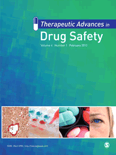
Therapeutic Advances in Drug Safety
Bridging Pharmacological Innovation and Clinical ExcellenceTherapeutic Advances in Drug Safety is a prestigious open-access journal published by SAGE Publications Ltd that has made significant strides in the field of pharmacology since its inception in 2010. With an impressive impact factor that places it in the Q1 category for Pharmacology (medical), this journal ranks 61st out of 272 in Scopus, showcasing its global influence and commitment to advancing drug safety research. Based in the United Kingdom, it aims to bridge the critical gap between pharmacological innovation and clinical application, offering a platform for the dissemination of groundbreaking research, case studies, and expert reviews. Since adopting an Open Access model in 2019, the journal has significantly increased its reach, ensuring that vital findings in drug safety are accessible to researchers, healthcare professionals, and educators worldwide. As the field of drug safety continues to evolve, Therapeutic Advances in Drug Safety remains an essential resource for those dedicated to enhancing safe therapeutic practices and patient outcomes.
BRITISH JOURNAL OF CLINICAL PHARMACOLOGY
Transforming Pharmacology Through Rigorous ResearchBritish Journal of Clinical Pharmacology, published by Wiley, is a premier peer-reviewed journal that has been at the forefront of pharmacology research since its inception in 1974. Renowned for its high academic rigor, it stands out with an impressive impact factor that places it in the Q1 quartile within both the general pharmacology and medical pharmacology categories. With a Scopus ranking reflecting its esteemed status—ranked #68 out of 272 in medical pharmacology and #109 out of 313 in pharmacology, toxicology, and pharmaceutics—the journal serves as a critical resource for researchers, clinicians, and students who are keen to explore innovations and advancements in drug therapy. The journal's scope encompasses a wide array of topics, including clinical trials, drug safety, and pharmacokinetics, making it an essential platform for disseminating cutting-edge pharmacological findings. Although it does not offer open access, the stringent selection of articles ensures that only the highest-quality research is published, further contributing to the ongoing discourse in clinical pharmacology.
INTERNATIONAL JOURNAL OF RISK & SAFETY IN MEDICINE
Bridging the gap between theory and practice in health safety.INTERNATIONAL JOURNAL OF RISK & SAFETY IN MEDICINE, published by IOS Press, serves as an essential platform for advancing the understanding of risk and safety within the medical domain. With an ISSN of 0924-6479 and E-ISSN of 1878-6847, this journal has been dedicated to fostering critical discourse since its inception in 1990, reflecting a continuous commitment to the field through 2024. Positioned within the Q4 category in Health Policy and Q3 in Medicine (miscellaneous) and Public Health, Environmental and Occupational Health, the journal provides valuable insights, empirical research, and theoretical analyses that speak to the diverse challenges faced in medical safety and risk management. Although it operates under a subscription model, the journal remains a vital resource for researchers, healthcare professionals, and students alike, facilitating the exchange of innovative ideas and best practices in health risk assessment. With Scopus ranks indicating its role as a key contributor in its categories, the INTERNATIONAL JOURNAL OF RISK & SAFETY IN MEDICINE continues to shape the landscape of medical safety and policy discussions around the globe.
International Journal of Clinical Pharmacy
Pioneering Research in Clinical Pharmacy for AllThe International Journal of Clinical Pharmacy, published by Springer, serves as a pivotal platform for advancing research in the fields of Pharmaceutical Science and Pharmacology. This esteemed journal, recognized for its significant impact with an impressive Q1 ranking in Pharmacy and multiple Q2 designations, provides a dedicated space for scholars and practitioners to share innovative findings and methodologies that enhance clinical pharmacy practices. With an international reach and publication spanning from 2011 to 2024, the journal aims to facilitate knowledge exchange among researchers, professionals, and students, ultimately contributing to improved therapeutic outcomes. As an open-access journal, it promotes widespread dissemination of vital research, ensuring that cutting-edge clinical pharmacy knowledge is accessible to all stakeholders in the healthcare continuum.
CLINICAL THERAPEUTICS
Empowering clinicians with evidence-based therapeutic advancements.Clinical Therapeutics, published by Elsevier, is a highly esteemed peer-reviewed journal that has been pivotal in advancing the field of pharmacology since its inception in 1977. With an impressive impact factor and recognition as Q2 in Pharmacology and Q1 in Medical Pharmacology for 2023, it stands at the forefront of research and discussions on innovative therapeutic strategies and pharmacological advancements. This journal not only caters to a broad audience of researchers and clinicians but also plays a vital role in disseminating critical information that supports the enhancement of patient care and safety. As a repository of high-quality, evidence-based articles, Clinical Therapeutics is a crucial resource for those involved in drug development, medical research, and clinical practice, making it an essential read for anyone dedicated to improving health outcomes through pharmaceutical sciences.