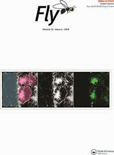
FLY
metrics 2024
Innovating Research in Insect Ecology and Management
Introduction
FLY, an esteemed journal published by Taylor & Francis Inc, is a leading resource in the field of Insect Science, offering cutting-edge research and insights into the biology, ecology, and management of flies and related insect species. With an impressive Impact Factor reflecting its high citation and publication standards, FLY serves as a vital platform for researchers and practitioners aiming to advance their understanding of this diverse and crucial group of organisms. The journal, which has been publishing since 2007 and is set to continue until 2024, is recognized as a Q1 category journal in its discipline, ranked 58 out of 181 in Agricultural and Biological Sciences, placing it in the 68th percentile of the field. Although currently non-open access, the journal is committed to disseminating valuable knowledge and fostering collaboration among scientists, offering unparalleled opportunities for professionals, researchers, and students to engage with transformative science in the insect realm.
Metrics 2024
 0.592.40-37
Metrics History
Rank 2024
Scopus
IF (Web Of Science)
JCI (Web Of Science)
Quartile History
Similar Journals
Cold Spring Harbor Perspectives in Biology
Unlocking the Frontiers of Biochemistry and GeneticsCold Spring Harbor Perspectives in Biology is a prestigious academic journal published by COLD SPRING HARBOR LAB PRESS that serves as a vital resource in the fields of Biochemistry, Genetics, and Molecular Biology. With an impressive impact factor and categorized in the Q1 quartile for its contributions, this journal is renowned for curating comprehensive reviews that synthesize the latest advancements and ongoing research in these dynamic and interconnected disciplines. Since its inception in 2009, the journal has played a pivotal role in advancing scientific knowledge through high-quality articles that cater to researchers, professionals, and students alike. Although it operates on a traditional subscription model, its contributions are indispensable for those seeking to remain at the forefront of biological research and its myriad applications. With a commendable ranking of #19 out of 221 in general biochemistry, genetics, and molecular biology on Scopus, this journal ensures that its readers have access to cutting-edge insights and a rigorous academic discourse.
DEVELOPMENTAL BIOLOGY
Connecting Research to the Heart of DevelopmentDEVELOPMENTAL BIOLOGY, published by Academic Press Inc., Elsevier Science, stands as a pivotal journal in the fields of cell biology, developmental biology, and molecular biology since its inception in 1959. Renowned for its rigorous peer-review process, this journal serves as a platform for publishing cutting-edge research, reviews, and insights that drive forward our understanding of developmental processes at the cellular and molecular levels. With an impressive track record, it is classified in the Q2 quartile across multiple categories, reflecting its significant impact and relevance in academia and research communities. Although the journal does not provide Open Access options, it remains accessible via numerous academic databases, ensuring a wide reach for researchers, professionals, and students alike. With a commitment to advancing the field, DEVELOPMENTAL BIOLOGY continues to be essential reading for those looking to stay at the forefront of developmental research and its applications.

EvoDevo
Pioneering Insights in Evolution, Development, and BeyondEvoDevo, published by BMC, is a premier open-access journal dedicated to the fields of Developmental Biology, Ecology, Evolution, Behavior and Systematics, and Genetics. With an impressive Q1 ranking in its category for 2023, EvoDevo stands out as a significant resource for researchers, professionals, and students seeking to explore the intricate relationships between evolutionary processes and developmental mechanisms. Since its inception in 2010, this UK-based journal has provided a platform for innovative research and insights, boasting rigorous peer-review standards that ensure high-quality publications. With the E-ISSN of 2041-9139 and a commitment to freely accessible research, EvoDevo is positioned at the forefront of scientific discourse, making vital contributions to our understanding of biological complexities. As the journal converges years from 2010 to 2024, it serves as a cornerstone for knowledge dissemination, inspiring future research trajectories in evolutionary developmental biology.
INSECT MOLECULAR BIOLOGY
Innovating Insect Science with Molecular PerspectivesInsect Molecular Biology, published by Wiley, is a leading journal dedicated to advancing the field of insect biology through molecular perspectives. With a prominent ISSN of 0962-1075 and an E-ISSN of 1365-2583, this journal has gained a significant reputation since its inception in 1992, showcasing a diverse array of research that spans across genetics, molecular biology, and specific aspects of insect science. As of 2023, it has achieved a remarkable categorization, recognized as Q1 in Insect Science and Q3 in Genetics and Molecular Biology, underscoring its pivotal role in fostering academic discourse at the intersection of biology and technology. The journal is indexed in esteemed databases with strong rankings, sitting at the 82nd percentile in Insect Science, which highlights the impactful research it publishes. While it currently does not offer open access, Insect Molecular Biology remains an essential resource for researchers, students, and professionals eager to explore the complexities of insect life at the molecular level. By disseminating innovative findings and methodologies, the journal significantly contributes to both theoretical and applied entomological research, making it a cornerstone for anyone passionate about the intricate world of insects.
INTERNATIONAL JOURNAL OF ODONATOLOGY
Advancing Research in Dragonfly and Damselfly EcologyINTERNATIONAL JOURNAL OF ODONATOLOGY, published by Wachholtz Verlag GmbH, is a vital resource for researchers and professionals in the fields of Ecology, Evolution, Behavior, and Insect Science. Established in 1998, this journal provides a platform for the dissemination of innovative research pertaining to odonatology, encompassing the ecological and biological interactions of dragonflies and damselflies. With its focus on advancing knowledge within these scientific disciplines, the journal holds a commendable Q3 ranking in Ecology, Evolution, Behavior and Systematics and a Q2 ranking in Insect Science for 2023, reflecting its significance in academic circles. Although it operates without open access, its articles are accessible through institutional subscriptions, allowing for wide dissemination among scholars and practitioners. The journal's commitment to publishing high-quality, peer-reviewed research makes it an authoritative source of information that enriches the study of odonates and their broader ecological contexts. For inquiries, the journal's editorial team can be reached at C/O Fleet7, Fleethorn 7, Kiel 24103, Germany.
Insect Systematics and Diversity
Connecting the Dots in Insect Evolutionary StudiesInsect Systematics and Diversity, published by Oxford University Press Inc., stands as a leading journal in the realm of entomological research, boasting an impressive impact factor driven by its rigorous peer-review process and high-quality publications. With a focus on animal science, zoology, developmental biology, and insect science, the journal is expertly positioned to address the complexities of insect evolution, behavior, and ecological interactions. Since its inception in 2017, the journal has rapidly gained recognition, achieving Q1 quartile ranks in multiple categories, including Insect Science and Ecology, Evolution, Behavior, and Systematics, indicating its relevance and prestige within the academic community. Researchers, professionals, and students alike will find invaluable insights, methodologies, and discussions that propel the understanding of insect diversity and systematics, ensuring the journal is an essential resource for advancing knowledge in this dynamic field. The journal provides access to a wealth of information, fostering collaboration and engagement within the global scientific community.

DEVELOPMENT GROWTH & DIFFERENTIATION
Advancing the Frontiers of Biological DevelopmentDEVELOPMENT GROWTH & DIFFERENTIATION, published by Wiley, stands as a vital journal in the realms of Cell Biology, Developmental Biology, and Medicine. With an ISSN of 0012-1592 and E-ISSN of 1440-169X, this esteemed journal has been a key player in the scientific community since its inception in 1969, continuing to contribute significantly to the understanding of developmental processes and mechanisms underlying growth and differentiation. Ranked Q3 in Cell Biology and Developmental Biology, and Q2 in miscellaneous aspects of Medicine as of 2023, the journal provides a platform for high-quality research articles, reviews, and critical insights that foster academic discourse in these vital fields. Although currently not available as open access, the journal ensures the availability of essential research to its global readership, facilitating collaboration and innovation. Researchers, professionals, and students alike will find DEVELOPMENT GROWTH & DIFFERENTIATION to be an invaluable resource for advancing knowledge and driving forward the scientific inquiry into the intricacies of biological development.
Journal of Genetics and Genomics
Bridging Theory and Practice in GeneticsThe Journal of Genetics and Genomics, published by SCIENCE PRESS in China, stands as a significant contributor to the fields of Genetics and Molecular Biology. With an ISSN of 1673-8527 and E-ISSN 1873-5533, this esteemed journal has achieved a remarkable reputation, holding a prestigious Q1 ranking in both Genetics and Molecular Biology as of 2023. This journal not only showcases pioneering research but also fosters vital discussions on contemporary challenges and innovations within genomic sciences. As part of its commitment to facilitating scientific advancement, the journal encompasses a range of research articles, reviews, and short communications, all aiming to illuminate the complexities of genetic structures and functions from 2007 to 2024. Researchers, professionals, and students alike are encouraged to engage with its content, which ranks favorably in Scopus—placing it within the top tier of its categories. Join the community of academic excellence and explore the latest findings that shape our understanding of genomics.

MOLECULAR REPRODUCTION AND DEVELOPMENT
Exploring the intricacies of life at the molecular level.MOLECULAR REPRODUCTION AND DEVELOPMENT is a prestigious peer-reviewed journal published by WILEY, specializing in the intricate domains of Cell Biology, Developmental Biology, and Genetics. Since its inception in 1988, this journal has been a vital platform for disseminating pioneering research and innovative methodologies that advance our understanding of molecular mechanisms driving reproduction and development. With a current impact factor reflective of its significance in the field, MOLECULAR REPRODUCTION AND DEVELOPMENT is ranked Q3 in both Cell Biology and Developmental Biology, and Q2 in Genetics, underscoring its relevance and scholarly contribution. Catering to a diverse audience of researchers, professionals, and students, this journal not only showcases cutting-edge findings but also aims to foster interdisciplinary exchanges that enhance scientific collaboration. By exploring critical biological processes, it ultimately contributes to the broader understanding of health and disease in various organisms, making it an essential resource for anyone dedicated to the life sciences.
DIFFERENTIATION
Fostering Innovation in Cancer and Cell BiologyDIFFERENTIATION is a respected peer-reviewed journal published by Elsevier Science Ltd, dedicated to advancing knowledge in the fields of Cancer Research, Cell Biology, Developmental Biology, and Molecular Biology. With an established history since 1973, the journal continuously explores the intricacies of cellular and molecular processes that govern differentiation in biological systems, thus playing a pivotal role in shaping contemporary research directions. Currently indexed in the Q3 quartile across multiple relevant categories, it provides a crucial platform for researchers to disseminate their findings and engage with the scientific community. DIFFERENTIATION does not offer open access, but it remains a valuable resource for academics seeking to enhance their understanding of the fundamental mechanisms that underpin life sciences. By fostering a rigorous dialogue among scientists, it contributes significantly to the ever-evolving landscape of biochemistry and genetics.