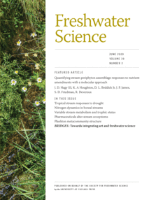
Freshwater Science
metrics 2024
Advancing the Science of Freshwater Ecosystems
Introduction
Freshwater Science is a pivotal journal published by the University of Chicago Press, dedicated to advancing the understanding of freshwater ecosystems and their biodiversity. With an ISSN of 2161-9549 and an E-ISSN of 2161-9565, this journal has been a vital resource in the fields of Aquatic Science and Ecology, consistently ranked in the Q2 quartile across multiple categories in 2023. The journal encapsulates rigorous research and innovative studies aimed at addressing the ecological dynamics of freshwater environments from 2012 to 2024. Researchers and practitioners benefit from its open access options, which enhance the dissemination of knowledge while contributing to a better understanding of aquatic systems. With Scopus rankings that place it in the top 30% of its fields, Freshwater Science plays an influential role in fostering scientific dialogue and collaboration among professionals, making it an essential publication for anyone invested in freshwater conservation, management, and ecological impact.
Metrics 2024
 0.611.701.90126
Metrics History
Rank 2024
Scopus
IF (Web Of Science)
JCI (Web Of Science)
Quartile History
Similar Journals

LIMNETICA
Exploring the depths of freshwater ecosystems.LIMNETICA is a prestigious academic journal dedicated to advancing the field of Aquatic Science, Ecology, and Water Science and Technology. Published by the Asociación Española de Limnología in Spain, this journal serves as a vital platform for researchers and professionals seeking to share their findings and insights from 1996 to 2024. With a commendable Q2 ranking in Ecology and notable Q3 rankings in Aquatic Science and Water Science and Technology, LIMNETICA emphasizes high-quality, peer-reviewed research that contributes to our understanding of freshwater ecosystems. Although currently not classified under Open Access, its rigorous indexing and Scopus rankings—positioning it in the top 64th percentile for Environmental Science—illustrate its impact in the scientific community. Researchers, students, and professionals are encouraged to engage with LIMNETICA to stay abreast of key developments and foster collaborative efforts in aquatic research.
GLOBAL CHANGE BIOLOGY
Connecting Science to Policy in a Changing WorldGLOBAL CHANGE BIOLOGY, published by Wiley, is a leading journal dedicated to advancing the scientific understanding of the relationships between biological systems and global environmental changes. With an impressive impact factor placing it in the Q1 category across multiple disciplines—including Ecology, Environmental Chemistry, and Global and Planetary Change—this journal is essential for researchers, professionals, and students aiming to stay at the forefront of this dynamic field. The journal has a rich history since its inception in 1995, continually providing a platform for high-quality research that informs policy and management practices worldwide. Although it is not open access, the journal remains a valuable resource for those committed to exploring the complexities of ecological and environmental change. With a Scopus ranking of #3 in Global and Planetary Change and #6 in both Ecology and Environmental Chemistry, GLOBAL CHANGE BIOLOGY continues to shape the dialogue on the pressing environmental challenges of our time.
ECOHYDROLOGY & HYDROBIOLOGY
Elevating knowledge for a sustainable future in aquatic environments.ECOHYDROLOGY & HYDROBIOLOGY, published by the European Regional Centre Ecohydrology Polish Academy of Sciences, is a leading journal in the field of Aquatic Sciences, recognized for its impactful contributions with a 2023 Scopus ranking placing it in the top 20% of its category. Established in 2001 and converging scholarly insight until 2024, this journal aims to advance knowledge on the interactions between hydrological cycles and biological communities, providing a platform for innovative research that addresses critical environmental challenges. With a Q1 quartile classification, it is an essential resource for researchers, professionals, and students dedicated to exploring sustainable aquatic ecosystems. Although it follows a traditional subscription model, the journal maintains a commitment to disseminating high-quality research that informs policy and practice in the field. Located in Portugal and operating out of Lodz, the journal invites a diverse global readership to engage with its comprehensive range of articles and studies.
FRESHWATER BIOLOGY
Championing Research in Aquatic BiodiversityFreshwater Biology is a premier academic journal dedicated to advancing the study of freshwater ecosystems and their biological diversity. Published by Wiley, this highly esteemed journal features an impact factor that reflects its influence within the field of aquatic science, maintaining a distinguished Q1 rank as per the 2023 standards. The journal is recognized for its comprehensive coverage of original research articles, review papers, and methodological advancements that address a range of topics from ecological interactions to conservation strategies in freshwater environments. With its extensive archive dating from 1971 to 2024, Freshwater Biology serves as an invaluable resource for researchers, professionals, and students looking to deepen their understanding of aquatic systems. Though it does not currently offer Open Access options, readers can access vital findings and contribute to the ongoing discourse in this critical area of study. Based in the United Kingdom, with its commitment to rigorous peer-review and high publication standards, Freshwater Biology continues to be a cornerstone publication in the field, enhancing our understanding of freshwater ecosystems and their management.
JOURNAL OF FRESHWATER ECOLOGY
Connecting researchers with the pulse of freshwater ecology.JOURNAL OF FRESHWATER ECOLOGY, published by Taylor & Francis Inc, is an esteemed source of research dedicated to advancing the understanding of freshwater ecosystems. Established in 1981, this Open Access journal has provided a platform for innovative studies and groundbreaking articles relevant to the fields of Aquatic Science and Ecology. With its HIndex reflecting a commitment to quality scholarship, the journal is currently classified in the Q3 category for both Aquatic Science and Ecology, Evolution, Behavior and Systematics, indicating its respectable impact within these disciplines. The journal ranks within the 45th percentile in Ecology and the 41st percentile in Aquatic Science on Scopus, highlighting its relevance to a global audience of researchers and practitioners. By facilitating unrestricted access to research findings since 2017, JOURNAL OF FRESHWATER ECOLOGY aims to enrich our understanding of freshwater systems and their conservation, making it an essential resource for those invested in ecological research and environmental sustainability.
ACTA OCEANOLOGICA SINICA
Illuminating the Complexities of Aquatic EnvironmentsACTA OCEANOLOGICA SINICA, published by SPRINGER, stands as a significant voice in the fields of Aquatic Science and Oceanography, contributing vital research and insights since its inception in 1985. With an ISSN of 0253-505X and an E-ISSN of 1869-1099, this journal maintains a strong international focus, delivering high-quality peer-reviewed articles that address pressing marine and freshwater environmental issues. Although it operates under a subscription model, its Q3 ranking in both Aquatic Science and Oceanography demonstrates its solid standing within Scopus, placing it in the 48th and 44th percentiles respectively. The journal aims to foster knowledge exchange and collaboration among researchers, professionals, and students by providing a platform for innovative studies and comprehensive reviews. With a dedicated editorial board and a commitment to advancing scientific understanding, ACTA OCEANOLOGICA SINICA serves as an essential resource for anyone engaged in the study of oceanographic phenomena and aquatic ecosystems.
Inland Water Biology
Exploring the Depths of Freshwater EcosystemsInland Water Biology is a distinguished peer-reviewed journal published by MAIK NAUKA/INTERPERIODICA/SPRINGER, focusing on the intricate interactions within freshwater ecosystems. With its ISSN (1995-0829) and E-ISSN (1995-0837), this journal has established itself as an essential resource for researchers and professionals in the fields of Aquatic Science and Ecology, evidenced by its consistent ranking in the Q3 category for both disciplines in 2023. Covering a wide array of topics related to the biology of inland waters, the journal aims to disseminate cutting-edge research findings and theoretical advancements that contribute to the understanding of aquatic environments and their ecological significance. Although it does not offer open access, its impact in the academic community is noteworthy, ensuring that published works undergo rigorous peer review. Researchers, professionals, and students alike will find valuable insights and innovative approaches within its pages, making Inland Water Biology a vital addition to their academic endeavors.
LIMNOLOGY AND OCEANOGRAPHY
Charting New Waters in Aquatic ResearchLimnology and Oceanography is a premier peer-reviewed journal published by Wiley that has been at the forefront of aquatic sciences since its inception in 1956. With an impressive impact factor placing it in Q1 in both Aquatic Science and Oceanography categories, this journal showcases cutting-edge research and studies relevant to the dynamics of freshwater and marine ecosystems. Limnology and Oceanography serves as a vital platform for researchers, professionals, and students to disseminate their findings and foster a deeper understanding of aquatic environments. The journal does not currently offer open access, but it provides a unique opportunity for scholars to contribute to a body of work that influences policy, conservation efforts, and the scientific community at large. With its substantial ranking in Scopus as #12 in Aquatic Science and #9 in Oceanography, Limnology and Oceanography remains a critical resource for advancing knowledge in these vital fields.

International Journal of Limnology
Unveiling the Mysteries of LimnologyThe International Journal of Limnology, published by EDP SCIENCES S A, is a cutting-edge journal dedicated to the field of aquatic sciences, with a strong emphasis on limnology—the study of inland waters. Headquartered in France, the journal serves as a vital resource for scholars and practitioners alike, aiming to advance the understanding of freshwater ecosystems and their management. With an e-ISSN of 2823-1465 and classified within the Q3 category of the 2023 Aquatic Science quartiles, it occupies a significant niche in academic research, ranking 150 out of 247 in Scopus listings. The journal’s open access policy ensures that research findings are widely disseminated, facilitating collaboration and innovation across global aquatic science communities. Published continuously from 2022 to 2024, the International Journal of Limnology aspires to contribute to sustainable practices and enhance ecological understanding, making it an essential publication for researchers, professionals, and students committed to the stewardship of aquatic resources.
ECOLOGY OF FRESHWATER FISH
Illuminating the science of aquatic life.ECOLOGY OF FRESHWATER FISH is a premier academic journal dedicated to advancing the understanding of freshwater fish ecology, published by Wiley in Denmark. With an ISSN of 0906-6691 and an E-ISSN of 1600-0633, the journal has been a critical platform for researchers since its inception in 1992, and will continue through 2024. It holds an impressive Q2 ranking in multiple categories including Aquatic Science and Ecology according to the latest quartiles, reflecting its significance and impact in these fields. The journal is well-regarded with Scopus rankings placing it in the top percentiles for ecology-related disciplines, showcasing its contributions to the understanding of aquatic ecosystems. Although it does not offer open access, the journal is highly valued for its rigorous peer-review process and its commitment to publishing original research that informs policy and conservation efforts. By bridging the gap between theory and practice, ECOLOGY OF FRESHWATER FISH remains a vital resource for students, professionals, and researchers engaged in the study of freshwater environments.