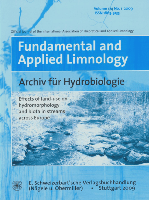
Fundamental and Applied Limnology
metrics 2024
Empowering Ecological Innovation: The Journal for Aquatic Excellence
Introduction
Fundamental and Applied Limnology is an esteemed academic journal dedicated to the exploration of freshwater ecosystems, bridging the gap between fundamental research and practical applications. Published by E Schweizerbart'sche Verlagsbuchhandlung in Germany, this journal has been a vital resource in the fields of aquatic science and ecology since its inception in 2007. With its ISSN 1863-9135 and E-ISSN 1863-9135, it provides a platform for researchers to disseminate significant findings related to limnology, contributing to a rich understanding of freshwater biodiversity, water quality, and ecological interactions. Although currently rated in the Q3 quartile for aquatic sciences and ecology as per the 2023 rankings, it remains a valuable outlet for interdisciplinary research and practical insights, facilitating critical advancements in environmental management. Open access options enhance its visibility and accessibility, making it indispensable for researchers, professionals, and students alike who are committed to advancing the scholarship in freshwater studies. Engaging with this journal not only opens doors to the latest research findings but also fosters collaboration and innovation in the ecological community.
Metrics 2024
 0.280.900.8070
Metrics History
Rank 2024
Scopus
IF (Web Of Science)
JCI (Web Of Science)
Quartile History
Similar Journals
LIMNOLOGICA
Exploring the Depths of Aquatic ScienceLIMNOLOGICA is a prestigious academic journal dedicated to the field of aquatic sciences, published by Elsevier GmbH, a leading global publisher known for its commitment to disseminating high-quality research. With an ISSN of 0075-9511 and an E-ISSN of 1873-5851, the journal has established itself as a vital source of scholarly articles, reviews, and case studies since its inception in 1974. Operating from its base in Munich, Germany, LIMNOLOGICA provides a forum for researchers and professionals to explore contemporary issues in limnology, ensuring important contributions to the understanding of freshwater ecosystems. Recognized in the 2023 rankings, the journal boasts a respectable Q2 quartile in Aquatic Science, ranking #98 out of 247 in Scopus, placing it in the 60th percentile among its peers. While currently not an open-access journal, it continues to attract a wide readership by providing insights into ecological processes, conservation strategies, and the impacts of anthropogenic changes on freshwater environments. This makes LIMNOLOGICA an essential resource for anyone engaged in aquatic research, conservation efforts, and environmental policy development.
MARINE AND FRESHWATER RESEARCH
Pioneering insights into aquatic ecology and sustainability.Marine and Freshwater Research is a prestigious journal published by CSIRO PUBLISHING that serves as a key platform for the dissemination of cutting-edge research in the fields of Aquatic Science, Ecology, and Oceanography. With an impactful presence since its inception in 1948, the journal provides critical insights into the dynamics of freshwater and marine ecosystems, promoting interdisciplinary approaches that contribute to our understanding of biodiversity and sustainability. Currently ranked in the Q2 category across major scientific domains, including Ecology and Aquatic Science, it enjoys a robust academic reputation supported by impressive Scopus rankings, such as Rank #66/247 in Aquatic Science and Rank #44/145 in Oceanography, reflecting its high citation impact and relevance. While offering a subscription-based access model, the journal remains dedicated to fostering dialogue and innovation within the scientific community, aiming to bridge the gap between research findings and practical applications in environmental management. Located in Australia, Marine and Freshwater Research is an essential resource for researchers, professionals, and students dedicated to exploring the complexities of aquatic ecosystems and advocating for their preservation.
ECOLOGY OF FRESHWATER FISH
Shaping the future of freshwater conservation.ECOLOGY OF FRESHWATER FISH is a premier academic journal dedicated to advancing the understanding of freshwater fish ecology, published by Wiley in Denmark. With an ISSN of 0906-6691 and an E-ISSN of 1600-0633, the journal has been a critical platform for researchers since its inception in 1992, and will continue through 2024. It holds an impressive Q2 ranking in multiple categories including Aquatic Science and Ecology according to the latest quartiles, reflecting its significance and impact in these fields. The journal is well-regarded with Scopus rankings placing it in the top percentiles for ecology-related disciplines, showcasing its contributions to the understanding of aquatic ecosystems. Although it does not offer open access, the journal is highly valued for its rigorous peer-review process and its commitment to publishing original research that informs policy and conservation efforts. By bridging the gap between theory and practice, ECOLOGY OF FRESHWATER FISH remains a vital resource for students, professionals, and researchers engaged in the study of freshwater environments.
GLOBAL CHANGE BIOLOGY
Navigating the Complexities of Global Environmental ChangeGLOBAL CHANGE BIOLOGY, published by Wiley, is a leading journal dedicated to advancing the scientific understanding of the relationships between biological systems and global environmental changes. With an impressive impact factor placing it in the Q1 category across multiple disciplines—including Ecology, Environmental Chemistry, and Global and Planetary Change—this journal is essential for researchers, professionals, and students aiming to stay at the forefront of this dynamic field. The journal has a rich history since its inception in 1995, continually providing a platform for high-quality research that informs policy and management practices worldwide. Although it is not open access, the journal remains a valuable resource for those committed to exploring the complexities of ecological and environmental change. With a Scopus ranking of #3 in Global and Planetary Change and #6 in both Ecology and Environmental Chemistry, GLOBAL CHANGE BIOLOGY continues to shape the dialogue on the pressing environmental challenges of our time.
ANNALES DE LIMNOLOGIE-INTERNATIONAL JOURNAL OF LIMNOLOGY
Nurturing the Future of Limnological StudiesANNALES DE LIMNOLOGIE-INTERNATIONAL JOURNAL OF LIMNOLOGY is a distinguished scientific journal dedicated to the field of limnology, focusing on freshwater ecosystems and their ecological dynamics. Published by EDP SCIENCES S A, this journal has been a vital resource for researchers and professionals since 1965, fostering a deep understanding of aquatic environments through quality research and scholarly discussions. The journal was indexed in Scopus, where it ranked in the 37th percentile within the Agricultural and Biological Sciences category, emphasizing its contribution to aquatic science. While its coverage has been discontinued in Scopus since 2021, the journal continues to engage its readership with critical insights and reviews in limnology. ANNALES DE LIMNOLOGIE promotes open access to facilitate the dissemination of valuable knowledge, making it an essential platform for students, researchers, and professionals who strive to advance our understanding of freshwater systems.

Journal of Oceanology and Limnology
Diving Deep into Aquatic Science DiscoveriesJournal of Oceanology and Limnology, published by SCIENCE PRESS, is a premier academic journal dedicated to advancing the fields of oceanography and limnology. With an ISSN of 2096-5508 and E-ISSN 2523-3521, this journal has emerged as a vital resource since its inception, aiming to disseminate cutting-edge research and comprehensive studies on aquatic environments. Based in China and indexed with notable rankings in Scopus, including a Q2 category in Oceanography and a Q3 category in Water Science and Technology, this journal significantly contributes to knowledge in these crucial scientific disciplines. The H-index for the journal is currently being established, reflecting its evolving impact within the academic community. Moreover, the open access model promotes wider dissemination, ensuring that research findings are accessible to a global audience. Covering a diverse range of topics from ecosystem health to climate impact on water bodies, the Journal of Oceanology and Limnology aspires to foster interdisciplinary dialogue and innovation among researchers, professionals, and students engaged in understanding and preserving aquatic life.

International Journal of Limnology
Championing Research in Aquatic EcosystemsThe International Journal of Limnology, published by EDP SCIENCES S A, is a cutting-edge journal dedicated to the field of aquatic sciences, with a strong emphasis on limnology—the study of inland waters. Headquartered in France, the journal serves as a vital resource for scholars and practitioners alike, aiming to advance the understanding of freshwater ecosystems and their management. With an e-ISSN of 2823-1465 and classified within the Q3 category of the 2023 Aquatic Science quartiles, it occupies a significant niche in academic research, ranking 150 out of 247 in Scopus listings. The journal’s open access policy ensures that research findings are widely disseminated, facilitating collaboration and innovation across global aquatic science communities. Published continuously from 2022 to 2024, the International Journal of Limnology aspires to contribute to sustainable practices and enhance ecological understanding, making it an essential publication for researchers, professionals, and students committed to the stewardship of aquatic resources.
Plankton & Benthos Research
Pioneering Discoveries in Plankton and Benthic ResearchPlankton & Benthos Research, published by the Plankton Society of Japan, serves as a pivotal platform in the fields of Aquatic Science, Ecology, and Oceanography. With its inception in 2006 and ongoing publication until 2024, this esteemed journal focuses on the complex interactions within aquatic ecosystems, emphasizing the significance of plankton and benthic organisms in maintaining ecological balance. Although it is categorized in the Q3 quartile across several disciplines, it continues to provide valuable insights and a forum for researchers to share innovative findings and methodologies. The journal is not currently open access, which ensures a layer of curator-driven content quality. Its impact, measured through Scopus rankings, showcases its role in fostering knowledge exchange among academics and professionals engaged in ecological and environmental studies. With an ISSN of 1880-8247 and E-ISSN 1882-627X, Plankton & Benthos Research invites contributions that enhance our understanding of the aquatic realm, establishing itself as a crucial resource for ongoing research and advancement in these essential fields.
AFRICAN JOURNAL OF AQUATIC SCIENCE
Exploring the depths of biodiversity and conservation.AFRICAN JOURNAL OF AQUATIC SCIENCE, published by TAYLOR & FRANCIS LTD, is a premier scholarly journal dedicated to the field of aquatic science, ecology, and environmental management, playing a crucial role in advancing research and knowledge in these vital areas. With an impressive Q2 ranking in both Aquatic Science and Ecology, Evolution, Behavior and Systematics, the journal seeks to publish high-quality research encompassing a wide range of topics related to freshwater and marine ecosystems, including biodiversity, conservation strategies, and the impacts of climate change. Featuring a rich history of publication from 2000 to 2024, the journal not only embraces rigorous peer review but also aims to foster collaboration and dialogue among researchers, practitioners, and students interested in aquatic environments. Readers will find that the journal’s commitment to impactful scientific communication is reflected in its notable rankings within the Scopus database, making it an essential resource for those engaged in aquatic research and management.
LIMNOLOGY
Pioneering Research for Ecological ResilienceLIMNOLOGY, published by SPRINGER JAPAN KK, serves as a premier platform for the dissemination of high-quality research in the fields of aquatic science, ecology, and water science and technology. With an ISSN of 1439-8621 and an E-ISSN of 1439-863X, this respected journal has consistently maintained a Q2 ranking in its respective categories as of 2023, reflecting its impact and relevance in the academic community. Operating from its base in Tokyo, Japan, LIMNOLOGY engages a diverse audience of researchers, professionals, and students who are focused on advancing knowledge related to freshwater systems and their ecological health. This journal covers a wide range of topics within its scope from the year 2000 to 2024, highlighting essential studies that contribute to both theoretical and applied aspects of limnology. Although this journal is not open access, its rigorous peer-reviewed articles are crucial for driving innovation and fostering dialogue among scientists and environmentalists dedicated to understanding and preserving water ecosystems.