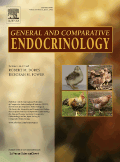
GENERAL AND COMPARATIVE ENDOCRINOLOGY
metrics 2024
Pioneering insights into the endocrine landscape since 1961.
Introduction
GENERAL AND COMPARATIVE ENDOCRINOLOGY, published by Academic Press Inc Elsevier Science, is a distinguished journal that has been at the forefront of endocrine research since its inception in 1961. With an ISSN of 0016-6480 and an E-ISSN of 1095-6840, this journal caters to a diverse audience, including researchers, professionals, and students in the fields of animal science, zoology, and endocrinology. It holds a prestigious Q1 ranking in Animal Science and Zoology and is recognized in the Q3 quartile for Endocrinology, indicating its significant contribution to advancing scientific knowledge. The journal is also well-regarded within the Scopus rankings, with impressive placements in multiple categories, highlighting its impact and relevance in the academic community. By focusing on comparative analyses and fostering a deeper understanding of hormone function and regulation across species, GENERAL AND COMPARATIVE ENDOCRINOLOGY aims to bridge gaps in knowledge and stimulate innovative research paradigms. While it does not currently offer Open Access, the journal remains committed to high-quality peer-reviewed content, making it an essential resource for anyone engaged in this vital field of study.
Metrics 2024
 0.622.102.20133
Metrics History
Rank 2024
Scopus
IF (Web Of Science)
JCI (Web Of Science)
Quartile History
Similar Journals
MOLECULAR AND CELLULAR ENDOCRINOLOGY
Leading the way in impactful endocrinology research since 1974.MOLECULAR AND CELLULAR ENDOCRINOLOGY, published by Elsevier Ireland Ltd, stands as a pivotal resource in the fields of biochemistry, endocrinology, and molecular biology. With an ISSN of 0303-7207 and E-ISSN of 1872-8057, this esteemed journal has been disseminating significant findings since its inception in 1974 and continues to do so through 2024. Ranked in the Q1 quartile for Biochemistry and Q2 for both Endocrinology and Molecular Biology, it is recognized for its impactful contributions to research, holding impressive Scopus rankings that place it at the forefront of its category. The journal's wide-reaching influence is underscored by its commitment to quality, ensuring that only the most impactful articles advance the understanding of cellular mechanisms and hormonal regulation. Although not open-access, its relevance and rigorous peer-review process make it an essential read for researchers, professionals, and students eager to explore the complexities of endocrinology and biochemistry.
NEUROENDOCRINOLOGY
Exploring the Interplay of Mind and BodyNEUROENDOCRINOLOGY is a prestigious interdisciplinary journal published by KARGER, serving the vibrant fields of cellular and molecular neuroscience, endocrine systems, and metabolism. With an ISSN of 0028-3835 and an E-ISSN of 1423-0194, this journal stands at the forefront of neuroendocrinology research, boasting an impactful position in the academic community, as highlighted by its 2023 Scopus rankings placing it in the top quartiles across multiple relevant categories. Since its inception in 1965, NEUROENDOCRINOLOGY has consistently contributed to the advancement of knowledge and understanding in the interplay between the nervous system and endocrine functions. Although it does not currently offer Open Access, the journal aims to disseminate groundbreaking studies, reviews, and clinical insights that address critical issues in neuroendocrine interactions. With its headquarters in Basel, Switzerland, NEUROENDOCRINOLOGY remains a vital resource for researchers, professionals, and students eager to explore the complexities of neuroendocrine dynamics and their implications for health and disease.
DOMESTIC ANIMAL ENDOCRINOLOGY
Innovating Solutions for Animal Production and Well-beingDOMESTIC ANIMAL ENDOCRINOLOGY, published by Elsevier Science Inc., is a leading academic journal dedicated to advancing the field of endocrinology as it pertains to domestic animals. With an ISSN of 0739-7240 and an E-ISSN of 1879-0054, this journal serves a crucial role in disseminating high-quality research and insights that bridge veterinary science and animal physiology. The journal is recognized for its impactful contributions, boasting an impressive Q1 ranking in Animal Science and Zoology, further solidified by its prominent positioning in related fields such as Veterinary Science and Food Animals. Covering research from 1984 to 2025, DOMESTIC ANIMAL ENDOCRINOLOGY is an essential resource for researchers, professionals, and students seeking to deepen their understanding of hormonal functions and their implications in animal health and production. Despite not being an Open Access publication, it provides vital access options for institutions and individuals, ensuring that groundbreaking studies reach practitioners and scholars alike.
Pituitary
Innovating Endocrine Research for Tomorrow's SolutionsPituitary is a prominent academic journal dedicated to advancing the understanding of pituitary gland functions, disorders, and treatments within the sphere of Endocrinology, Diabetes, and Metabolism. Published by Springer in the Netherlands, this journal has established itself as a crucial resource for researchers and clinicians alike, as evidenced by its 2023 Category Quartiles ranking in Q2 and Q1, and a commendable Scopus ranking in both Medicine and Biochemistry. With a focus on innovative research and clinical advances, Pituitary covers a wide range of topics including hormone regulation, pituitary tumors, and endocrine therapies. While it does not currently offer Open Access options, the journal's rigorous peer-review process ensures that each article published contributes significantly to the scientific community's knowledge base. Researchers, professionals, and students will find Pituitary an invaluable resource for both current insights and ongoing developments in endocrine health.
HORMONE AND METABOLIC RESEARCH
Illuminating the Science of Hormones and MetabolismHORMONE AND METABOLIC RESEARCH, published by GEORG THIEME VERLAG KG, stands as a reputable platform in the fields of biochemistry, endocrinology, and metabolism since its establishment in 1969. This peer-reviewed journal provides critical insights and advancements in the intricate relationships between hormones and metabolic processes, catering to researchers, healthcare professionals, and students alike. With an impressive convergence of knowledge spanning over five decades, it maintains a commendable Q3 ranking in multiple categories, including Biochemistry, Clinical Biochemistry, and Endocrinology, highlighting its contribution to cutting-edge scientific discourse. Although not an open-access journal, it offers a plethora of access options for readers and institutions, ensuring that vital research reaches those who need it most. Located in Stuttgart, Germany, the journal is positioned at the forefront of influential research in hormone and metabolic studies, emphasizing its importance for ongoing investigations into health and disease.
AMERICAN JOURNAL OF PHYSIOLOGY-ENDOCRINOLOGY AND METABOLISM
Advancing insights into endocrinology and metabolism.American Journal of Physiology-Endocrinology and Metabolism, published by the American Physiological Society, stands as a leading platform for disseminating high-quality research in the fields of endocrinology, diabetes, and metabolism, as well as general physiology. With an impressive impact factor placing it within the Q1 category across multiple relevant disciplines (Endocrinology, Diabetes and Metabolism; Physiology; and Medical Physiology), this journal reflects its authoritative position in the scientific community. Spanning from 1980 to 2024, the journal consistently publishes groundbreaking studies and significant findings that advance our understanding of hormonal regulation and metabolic processes. Although it does not currently offer open access, it provides valuable resources for researchers, professionals, and students alike, eager to stay at the forefront of advancements in physiological sciences. Addressed in Rockville, Maryland, its commitment to excellence and rigorous peer review ensures that every article contributes essential insights to the field.

Archives of Endocrinology Metabolism
Exploring the intricacies of metabolism and endocrine health.Archives of Endocrinology Metabolism is a distinguished open-access journal dedicated to advancing the field of endocrinology and metabolism. Published by SBEM-SOC BRASIL ENDOCRINOLOGIA & METABOLOGIA, this journal has established itself as a vital platform for researchers, clinicians, and scholars since its inception in 2008. With an ISSN of 2359-3997 and E-ISSN of 2359-4292, it aims to disseminate high-quality research articles that explore the latest advancements in endocrinology, diabetes, and metabolism. As of 2023, it has achieved a commendable Q3 ranking in its field, demonstrating its relevancy and increasing visibility among peers. The journal's focus spans various sub-disciplines, including hormonal regulation, metabolic disorders, and innovative therapies, making it an essential resource for both emerging professionals and seasoned experts alike. With a rich repository of research from Brazil and beyond, Archives of Endocrinology Metabolism continuously seeks to contribute to the ongoing dialogue and collaboration within the global scientific community.
FISH PHYSIOLOGY AND BIOCHEMISTRY
Illuminating Biochemical Pathways in Aquatic LifeFISH PHYSIOLOGY AND BIOCHEMISTRY, published by Springer, is a leading journal in the fields of aquatic science, biochemistry, and physiology, with an impressive trajectory since its inception in 1986 and continuing through 2024. Operating from the Netherlands, this journal serves as a vital platform for researchers, professionals, and students alike, showcasing innovative studies that explore the physiological and biochemical aspects of fish, contributing significantly to our understanding of aquatic ecosystems and their inhabitants. With a robust impact factor reflected in its Q1 status in Aquatic Science and notable rankings in other relevant categories, FISH PHYSIOLOGY AND BIOCHEMISTRY maintains a strong scholarly influence, evidenced by its Scopus ranking within the top quartiles of various biological sciences disciplines. While the journal does not currently offer open access options, it remains a cornerstone for advancing knowledge and fostering collaboration within the community dedicated to aquatic biology and related fields.

JOURNAL OF BIOLOGICAL REGULATORS AND HOMEOSTATIC AGENTS
Bridging Gaps in Biomedical Knowledge since 1987.JOURNAL OF BIOLOGICAL REGULATORS AND HOMEOSTATIC AGENTS, published by BIOLIFE SAS, is a pivotal platform in the fields of Cancer Research, Endocrinology, Immunology, and Physiology, addressing fundamental aspects of biological regulation and homeostasis. Since its inception in 1987, this journal has consistently contributed to the advancement of knowledge, showcasing innovative research and breakthroughs that are instrumental for professionals, researchers, and students alike. Although categorized in the Q4 quartile across multiple disciplines, the journal offers a unique perspective that encourages exploration into underrepresented areas, underscoring its role in fostering scientific dialogue and collaboration. With ISSN 0393-974X and E-ISSN 1724-6083, the journal remains a crucial resource for those invested in understanding the complexities of homeostatic agents and their implications in health and disease. Based in Silva Marina, Italy, it invites contributions that broaden the horizons of contemporary biomedical research.
JOURNAL OF ENDOCRINOLOGY
Elevating Understanding of Endocrine SystemsJOURNAL OF ENDOCRINOLOGY, established in 1946 and published by BIOSCIENTIFICA LTD, stands as a premier scholarly outlet in the field of endocrinology, diabetes, and metabolism. With an impressive H-Index reflecting its significant contribution to the literature, this journal maintains a strong presence in academic circles, evidenced by its Q1 ranking in the 2023 Scopus categories for both Endocrinology and Diabetes and Metabolism. With its targeted scope serving a global audience of researchers, professionals, and students, it provides a vital platform for disseminating innovative research findings and advancing the scientific understanding of endocrine systems. As we approach its convergence year of 2024, JOURNAL OF ENDOCRINOLOGY remains committed to publishing high-quality, peer-reviewed articles that explore cutting-edge developments in the field, thereby impacting clinical practices and guiding future research directions.