
Geopersia
Scope & Guideline
Innovating Insights into Geological Phenomena.
Introduction
Aims and Scopes
- Geological and Petrological Studies:
The journal covers in-depth investigations into the petrology and geochemistry of various rock formations, including intrusive, metamorphic, and sedimentary rocks, with a focus on their origins, mineral compositions, and tectonic implications. - Hydrogeology and Water Resources:
Research related to groundwater resources, hydrochemical evaluations, aquifer recharge, and the impact of geological formations on water quality and availability is a significant aspect of the journal's scope. - Paleoclimate and Paleoenvironmental Research:
Geopersia publishes studies that explore paleoclimate conditions and the evolution of environments through geological time, often utilizing various dating methods and biostratigraphic analyses. - Geotourism and Environmental Geology:
The journal also emphasizes the importance of geotourism and ecotourism, focusing on the geological attractions of regions such as Iran, and their implications for conservation and tourism development. - Geophysical and Geostatistical Modeling:
Advanced modeling techniques, such as geophysical surveys, geostatistical analysis, and machine learning applications, are utilized to assess mineral resources and geological hazards.
Trending and Emerging
- Geochemical Prospectivity and Mineral Exploration:
An increasing number of studies are focused on geochemical methods for mineral exploration, particularly involving gold and other mineralizations, highlighting the importance of advanced analytical techniques. - Impact of Climate Change on Geological Processes:
Research exploring the influence of paleoclimate on geological formations and processes, as well as the implications for current climate change, has become more prominent, indicating a growing interdisciplinary approach. - Artificial Intelligence and Machine Learning Applications:
The adoption of AI and machine learning techniques for geological modeling and data analysis is on the rise, showcasing innovative approaches to traditional geological problems. - Integrated Hydrogeological Studies:
There is a noticeable trend towards integrated studies that combine hydrogeology with geochemistry and environmental assessments, reflecting a holistic understanding of groundwater systems. - Geophysical Methods in Resource Assessment:
The application of geophysical methods for resource assessment and geological characterization has gained traction, indicating a trend towards utilizing technology for enhanced data collection and interpretation.
Declining or Waning
- Volcanology and Igneous Petrology:
Research specifically focused on volcanic processes and igneous rock formations has seen a decrease in frequency, possibly due to a broader focus on sedimentary and metamorphic studies. - Sedimentology of Non-Marine Deposits:
Although sedimentological studies are still present, there has been a noticeable decline in research dedicated to non-marine sedimentary environments, indicating a potential shift towards marine and coastal sediment studies. - Geological Hazards and Risk Assessment:
While the journal includes studies on geological hazards, the frequency of papers specifically addressing risk assessment methodologies has diminished, suggesting a potential gap in this critical area. - Traditional Biostratigraphy:
The emphasis on classical biostratigraphic methods seems to be waning, as more researchers adopt integrated approaches that combine geochemical and isotopic analyses.
Similar Journals

Turkiye Jeoloji Bulteni-Geological Bulletin of Turkey
Illuminating the path of geological discovery in Turkey and beyond.Turkiye Jeoloji Bulteni-Geological Bulletin of Turkey (ISSN: 1016-9164) is a prominent scholarly journal published by the TMMOB JEOLOJI MUHENDISLERI ODASI in Türkiye, dedicated to advancing the field of geology through high-quality research and dissemination of significant scientific findings. With an emphasis on geological studies pertinent to the region and its global implications, the journal serves as a crucial platform for researchers, professionals, and students aiming to share and explore innovative theories, methodologies, and case studies. Although the journal operates under a traditional access model, its rich content provides valuable insights into varied topics including but not limited to mineralogy, geophysics, petrology, and environmental geology. Furthermore, the journal's commitment to exhibiting originality and relevance ensures its vital role in shaping geological research, fostering collaboration among academics and practitioners alike.
JOURNAL OF GEOLOGY
Innovative Research Shaping Our Understanding of Geology.The JOURNAL OF GEOLOGY, published by University of Chicago Press, serves as a premier platform for disseminating groundbreaking research in the field of geology. Established in 1973, this esteemed journal has consistently ranked in the Q2 category in geology, further solidified by its Scopus ranking, where it is positioned at 99 out of 321 in Earth and Planetary Sciences, marking it in the 69th percentile of its category. With an emphasis on innovative and interdisciplinary studies, the journal features peer-reviewed articles that contribute to the understanding of geological processes, earth materials, and environmental interactions. Although it does not currently offer open access, it facilitates broad access through academic institutions to reach a global audience of researchers, professionals, and students striving to advance the knowledge of Earth's history and dynamics. As a vital resource for the geology community, the JOURNAL OF GEOLOGY plays an essential role in fostering scholarly dialogue and advancing both academic inquiry and practical applications in geology.
JOURNAL OF SOUTH AMERICAN EARTH SCIENCES
Exploring the Depths of South American GeologyJOURNAL OF SOUTH AMERICAN EARTH SCIENCES is a premier interdisciplinary journal dedicated to publishing high-quality research in the fields of Earth-Surface Processes, Geology, and Paleontology, making it an essential resource for scientists and researchers focused on South American geology and its diverse geological phenomena. Published by Pergamon-Elsevier Science Ltd in the United Kingdom, this journal has been instrumental in disseminating groundbreaking studies since 1988, showcasing contributions that push the boundaries of knowledge in Earth and Planetary Sciences. With an impressive Scopus ranking—positioning it in the 74th percentile for Paleontology and 71st for Geology—this journal not only reflects robust academic quality but also its commitment to addressing critical geological challenges in South America. Researchers will appreciate its objective of advancing understanding of geological processes while providing insights into past, present, and future Earth environments. Although available through traditional subscription models, the journal's vast repository of articles enriches the academic landscape, facilitating the sharing of vital research among professionals, students, and geological practitioners.
ACTA GEOLOGICA SINICA-ENGLISH EDITION
Connecting Scholars to the Heart of Earth SciencesACTA GEOLOGICA SINICA-ENGLISH EDITION is a distinguished academic journal published by Wiley, providing a platform for cutting-edge research in the field of geology. With an ISSN of 1000-9515 and E-ISSN 1755-6724, this journal has been a pivotal resource since its inception in 1988, catering to scholars and professionals until 2024. The journal is recognized for its high-quality articles, achieving a Q2 ranking in the field of Geology according to the 2023 category quartiles, and ranks #122 out of 321 in the Scopus Earth and Planetary Sciences sector, placing it within the 62nd percentile among its peers. Although currently not available as an open access publication, it remains a significant repository of knowledge that supports ongoing geological research and exploration. For researchers, students, and professionals looking to deepen their understanding of geological sciences, ACTA GEOLOGICA SINICA-ENGLISH EDITION stands as an essential journal, promoting collaboration and innovation in the earth sciences.

GEOLOGICA BELGICA
Advancing Earth Sciences through Open Access InnovationGEOLOGICA BELGICA is a distinguished open access journal dedicated to advancing the field of Earth and Planetary Sciences, published by Geologica Belgica Luxemburga Scientia & Professionis. With an ISSN of 1374-8505 and E-ISSN of 2034-1954, the journal has been a beacon of knowledge since its establishment in 1998, ensuring the broad accessibility of crucial research findings. Based in Brussels, Belgium, the journal is recognized for its impactful contributions and has achieved a commendable Q2 ranking in the Earth and Planetary Sciences category for 2023. This makes it a vital resource for researchers, professionals, and students alike, encouraging the dissemination of cutting-edge research. Spanning a diverse range of topics within its scope and converging from 2007 to 2024, GEOLOGICA BELGICA remains committed to fostering dialogue and collaboration among earth scientists globally, further enhancing its relevance and influence in this essential field of study.
Moscow University Geology Bulletin
Shaping Understanding of Our Planet, One Article at a TimeMoscow University Geology Bulletin, published by SPRINGER INT PUBL AG, is a prominent platform for disseminating critical research in the field of Earth and Planetary Sciences. With an ISSN of 0145-8752 and an E-ISSN of 1934-8436, this journal is well-regarded for its contributions to diverse geological studies and interdisciplinary advancements that shape our understanding of the planet. The journal has established itself in the academic community, particularly noted for its ranking in the Q3 category within Earth and Planetary Sciences as of 2023. Despite its limited open-access options, the Moscow University Geology Bulletin remains an essential resource for researchers, professionals, and students through its well-curated articles and synthesis of geoscientific knowledge. With annual volumes converging from various years, including significant years like 2012 to 2024, it aims to uphold its mission of fostering scholarly dialogue and innovation in the geosciences.

Boletin de Geologia
Fostering Collaboration in the Heart of Geology.Boletin de Geologia is a prominent open-access journal published by UNIV INDUSTRIAL SANTANDER, dedicated to advancing the field of Earth and Planetary Sciences. Since its transition to open access in 2000, this journal has provided a platform for researchers to disseminate their findings and engage with the global scientific community. With an ISSN of 0120-0283 and an E-ISSN of 2145-8553, it is indexed in Scopus and has secured a notable Q3 ranking in the category of miscellaneous Earth and Planetary Sciences as of 2023, reflecting the impact and relevance of its published articles. The journal's geographical scope, rooted in Colombia, allows it to highlight significant geological research pertinent to the region while also contributing to global discussions. Scholars and practitioners interested in innovative research within this field will find Boletin de Geologia an invaluable resource for unlocking knowledge and fostering collaboration in the geological sciences.
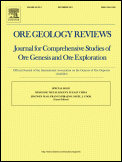
ORE GEOLOGY REVIEWS
Unlocking Insights in Economic GeologyORE GEOLOGY REVIEWS is a premier academic journal published by Elsevier, renowned for its influential contributions to the fields of Economic Geology, Geochemistry, and Petrology, and Geology. With its esteemed Q1 ranking across these disciplines in 2023, it occupies a leading position in shaping scholarly discussions and advancements within the geological sciences. With an impressive Scopus ranking—47th in Earth and Planetary Sciences for Geology, and among the top 40 in Geochemistry and Petrology—this journal serves as an essential resource for researchers, professionals, and students committed to advancing knowledge in ore geology. Having transitioned to an Open Access model in 2022, ORE GEOLOGY REVIEWS enhances the accessibility of high-quality research, promoting wider dissemination and engagement with cutting-edge findings from 1986 to 2024. As a valued publication addressing the intricacies of ore deposits and geochemical processes, it aims to foster interdisciplinary collaboration and innovation in the field.
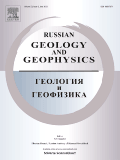
Russian Geology and Geophysics
Elevating Research Standards in Geology and GeophysicsRussian Geology and Geophysics is a seminal journal published by GEOSCIENCEWORLD that plays a pivotal role in the dissemination of vital research within the realms of Earth-Surface Processes, Geology, and Geophysics. With an ISSN of 1068-7971 and an E-ISSN of 1878-030X, this journal has witnessed a continuous evolution since its convergence in 2007 and is poised to thrive through 2024. While it is not an Open Access journal, it is recognized for its significant contributions to the academic community, holding a respectable Q2 ranking in Earth-Surface Processes and Q3 rankings in both Geology and Geophysics as of 2023. The journal’s impact factors align it within competitive quartiles, marking it as an essential resource for researchers and professionals seeking to stay at the forefront of geological and geophysical sciences. By publishing high-quality peer-reviewed articles, the journal fosters an environment of knowledge sharing and innovation, making it indispensable for students, practitioners, and scholars alike who are dedicated to advancing our understanding of Earth's complex systems.
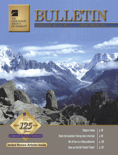
GEOLOGICAL SOCIETY OF AMERICA BULLETIN
Innovative Research Shaping the Geosciences LandscapeThe Geological Society of America Bulletin (GSA Bulletin), with ISSN 0016-7606 and E-ISSN 1943-2674, is a premier scholarly journal published by Geological Society of America, Inc. Based in the United States, this journal has been a cornerstone of geological research since its inception in 1890, making significant contributions to the understanding of Earth sciences over more than a century. Recognized for its rigorous peer-review process, the GSA Bulletin currently holds a prestigious Q1 ranking in Geology, positioning it among the top 14 journals in Earth and Planetary Sciences in terms of Scopus ranking, reflecting the high quality and impact of the research it publishes. Researchers, professionals, and students alike benefit from its comprehensive coverage of geological topics, including sedimentology, volcanology, and paleontology, which supports the advancement of knowledge in the geosciences. While the journal is not open access, it continues to provide a vital platform for innovative research and critical discussions that shape the future of geology.