German History
Scope & Guideline
Advancing Scholarship in German Historical Studies
Introduction
Aims and Scopes
- Interdisciplinary Historical Research:
The journal emphasizes the importance of interdisciplinary approaches, integrating methodologies from fields such as sociology, cultural studies, and political science to deepen the analysis of historical events and themes. - Focus on Social and Cultural History:
There is a consistent focus on social and cultural history, examining how cultural practices, social movements, and identities have shaped and been shaped by historical developments in Germany. - Political History and Memory Studies:
The journal frequently addresses political history, including the study of regimes, governance, and resistance movements, while also engaging with memory studies to explore how historical narratives are constructed and remembered. - Global and Transnational Perspectives:
A unique contribution of the journal is its emphasis on global and transnational contexts, examining Germany's interactions with other nations and cultures, especially in the context of colonialism and post-colonialism. - Gender and Sexuality Studies:
The journal increasingly incorporates gender and sexuality studies, offering insights into how these aspects influence historical narratives and experiences in Germany.
Trending and Emerging
- Queer History and Sexuality Studies:
There is a growing emphasis on queer history and sexuality studies, reflecting a broader societal recognition of LGBTQ+ issues, which is evidenced by numerous recent articles exploring queer identities in various historical contexts. - Environmental History:
Emerging themes in environmental history reveal a significant trend towards examining the relationship between Germany's past and ecological issues, including the impact of industrialization and policy on the environment. - Digital Humanities and Historical Methodologies:
The incorporation of digital humanities in historical research is on the rise, with scholars utilizing digital tools to analyze and present historical data, thus expanding the scope and reach of historical inquiry. - Postcolonial Studies:
An increasing focus on postcolonial studies highlights the effects of colonialism on German history and identity, as well as the legacies of colonialism in contemporary society. - Memory and Trauma Studies:
The exploration of memory and trauma, particularly in relation to the Holocaust and World War II, continues to gain traction, reflecting ongoing societal dialogues about these pivotal historical events.
Declining or Waning
- Traditional Military History:
There has been a noticeable decrease in publications focusing solely on traditional military history, as scholars increasingly seek to contextualize military events within broader social and cultural frameworks. - Nationalist Narratives:
Studies that promote nationalist narratives or glorify German imperialism are waning, as contemporary scholarship tends to critique and deconstruct such perspectives in favor of more nuanced and critical analyses. - Monographic Studies on Individual Figures:
The focus on individual historical figures, such as monarchs or military leaders, appears to be declining in favor of collective studies that examine broader societal trends and movements.
Similar Journals

Cadernos de Historia
Empowering Researchers with Open Access InsightsCadernos de Historia, published by the Pontifícia Universidade Católica de Minas Gerais, is a pivotal open-access journal that has been enriching the field of historical studies since its inception in 2010. With an ISSN of 2237-8871, this journal provides a platform for innovative research and critical discourse in history, appealing to an audience of academics, researchers, and students alike. Located in Belo Horizonte, Brazil, the journal fosters international collaboration and dissemination of knowledge, ensuring that the latest findings in historical research are accessible to a global community. While the journal’s HIndex is currently not specified, its commitment to scholarly excellence is evident through its rigorous peer-review process. Cadernos de Historia stands out as a vital resource for those engaged in the study of historical narratives, methodologies, and interdisciplinary approaches, making it an essential addition to any historian's collection.
GERMAN STUDIES REVIEW
Illuminating Contemporary German Culture through ScholarshipGERMAN STUDIES REVIEW, published by Johns Hopkins University Press, is a premier academic journal dedicated to the interdisciplinary study of German culture and society, merging literary, historical, and cultural studies. With a commitment to advancing scholarship since its inception in 1982, this journal serves as an essential platform for researchers, professionals, and students interested in Germanic studies, boasting an ISSN of 0149-7952 and an E-ISSN of 2164-8646. While it is presently classified in the Q4 quartile of both the Arts and Humanities (miscellaneous) and Cultural Studies categories by Scopus, its wide-ranging scope includes not just traditional literary analysis, but also contemporary cultural phenomena, making it relevant to various fields. Although the journal is not open access, its contributions are vital for fostering critical dialogue and scholarly research that explores the complexities of German culture in a global context. The GERMAN STUDIES REVIEW is an invaluable resource for anyone eager to deepen their understanding of German studies and engage with cutting-edge academic discussions.
JOURNAL OF CONTEMPORARY HISTORY
Championing Academic Excellence in Contemporary HistoryJOURNAL OF CONTEMPORARY HISTORY, published by SAGE PUBLICATIONS LTD, is a premier academic journal dedicated to the exploration of modern historical narratives and contemporary societal issues. Established in 1966, this journal has influenced scholarly discourse through a rich repository of research, analyses, and critical reflections, providing invaluable insights into cultural studies, sociology, and political science. With an impressive Q1 ranking in History and a notable Q2 ranking in Cultural Studies for 2023, it stands out in the academic community, ensuring rigorous peer-reviewed content that meets the highest scholarly standards. The journal is accessible through conventional subscriptions, reflecting its long-standing commitment to academic excellence. Based in the United Kingdom, it continues to serve as an indispensable resource for researchers, professionals, and students alike, bridging the gap between historical context and contemporary relevance.
Turkish Historical Review
Exploring Turkey's Rich Historical TapestryTurkish Historical Review is a prestigious journal published by BRILL, located in the Netherlands, that specializes in the dynamic field of history, focusing on the historical narrative and developments related to Turkey and the broader Ottoman Empire. With an ISSN of 1877-5454 and an E-ISSN of 1877-5462, the journal has established itself as a vital resource for both emerging and established scholars from around the globe, contributing significantly to historical discourse and research methodologies since its inception in 2010. As a recognized publication within the Q2 category in History (2023), it ranks #1039 out of 1760 in Scopus' Arts and Humanities History rankings, placing it within the top percentile of its field. Researchers, professionals, and students can expect to find rigorous peer-reviewed articles that explore a diverse array of historical topics, reflecting the journal's commitment to advancing knowledge and understanding of Turkey's rich historical tapestry. This makes Turkish Historical Review an essential tool for anyone engaged in historical studies, enhancing scholarly communication and fostering academic dialogue.

ZEITGESCHICHTE
Decoding Contemporary Issues Through a Historical LensZEITGESCHICHTE, published by VANDENHOECK & RUPRECHT GMBH & CO KG, is a leading academic journal in the fields of Cultural Studies and History, distinguished by its Q2 ranking within the respective categories as of 2023. Based in Austria and serving a global audience, ZEITGESCHICHTE encompasses a broad range of interdisciplinary scholarly articles that examine historical context and cultural dynamics from various perspectives, contributing to a deeper understanding of contemporary issues rooted in the past. With a publication history dating back to 1976, the journal has evolved significantly, currently offering vital insights from 2006 to 2023, although it is not an open-access platform, ensuring that each piece maintains rigorous peer-review standards. This esteemed journal serves as an essential resource for researchers, students, and professionals seeking to navigate the intricate intersections of history and culture, reinforcing its importance in academic discourse.
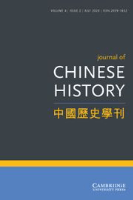
Journal of Chinese History
Advancing Scholarly Discourse in Chinese Historical StudiesThe Journal of Chinese History, published by Cambridge University Press, is a leading scholarly journal that has established itself as a premier source for research on Chinese history, offering a platform for rigorous academic discourse and innovative analyses. With an ISSN of 2059-1632 and an E-ISSN of 2059-1640, this journal has been dedicated to the exploration of historical methodologies, cultural studies, and interdisciplinary approaches since its launch in 2017. As evidenced by its impressive Q1 ranking in History and Q2 in Cultural Studies for 2023, the journal maintains a high academic standard, ranking in the 89th and 79th percentiles respectively within Scopus rankings. The journal is committed to providing an open and critical forum for researchers, professionals, and students alike, ensuring that contributions reflect a diverse range of perspectives on China’s rich historical landscape. Its location in the United Kingdom bolsters its international outreach, attracting contributions and readership from around the globe. With objectives centered on fostering scholarly communication and critical engagement with Chinese history, the journal stands as an essential resource for those eager to delve into the complexities of China's past.
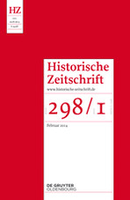
Historische Zeitschrift
Illuminating Historical Contexts for a Deeper UnderstandingHistorische Zeitschrift is a prestigious academic journal dedicated to the field of history, published by WALTER DE GRUYTER GMBH. Established in 1859, the journal has a long-standing legacy of promoting scholarly discourse and research that spans pivotal eras from the 19th century to contemporary times. With an ISSN of 0018-2613 and an E-ISSN of 2196-680X, it is well-recognized in the academic community for its rigorous standards and contributions to historical scholarship. This journal is currently positioned in Quartile 3 of its category for 2023 and holds a respectable rank of #762 out of 1760 in Scopus, placing it in the 56th percentile for Arts and Humanities – History. Though not available in an open access format, Historische Zeitschrift continues to attract submissions from both emerging and established historians eager to contribute to an understanding of historical contexts and narratives. Its scope includes extensive historical analysis, discussions on methodology, and explorations of sources, making it an invaluable resource for researchers, professionals, and students alike who seek to deepen their insights into historical developments.
AMERICAS
Exploring the Rich Tapestry of the Americas.AMERICAS, published by CAMBRIDGE UNIVERSITY PRESS, is a prestigious academic journal dedicated to the interdisciplinary study of the Americas, encompassing a broad range of cultural and historical perspectives. With an ISSN of 0003-1615 and an E-ISSN of 1533-6247, this journal serves as a pivotal platform for scholars and researchers aiming to explore the complexities and nuances of life in the Americas. It holds a commendable impact factor with a notable classification in the Q3 category for Cultural Studies and Q2 for History as of 2023, ranking it at #571/1760 and #574/1304 in respective fields according to Scopus. This journal's effective convergence of diverse historical timelines, particularly from 1969 through 2024, showcases its enduring commitment to scholarship. While open access options are not available, the journal remains an invaluable resource for researchers, professionals, and students looking to deepen their understanding of the cultural and historical dynamics of the Americas, thus facilitating academic discourse and furthering knowledge in the field.
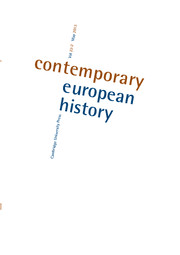
Contemporary European History
Connecting Past and Present in European StudiesContemporary European History is a leading academic journal dedicated to the exploration of significant historical events across Europe from 1992 to the present, published by Cambridge University Press. As a Q1 rated journal in the field of History, it boasts a robust impact factor, reflecting its high citation frequency and prominence among scholars. The journal serves as an essential platform for researchers, professionals, and students interested in contemporary issues and trends affecting Europe, promoting interdisciplinary dialogue and the exchange of ideas. With its commitment to high-quality scholarship, Contemporary European History provides insightful analyses that shape our understanding of recent historical dynamics, making it a vital resource for anyone looking to delve into the complexities of modern European history.
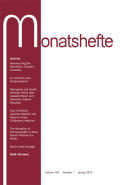
Monatshefte
Elevating Academic Dialogue in German StudiesMonatshefte is a prestigious academic journal published by the University of Wisconsin Press, dedicated to fostering scholarly discourse in the field of German Studies. With its ISSN 0026-9271 and E-ISSN 1934-2810, Monatshefte serves as a vital platform for researchers and students, offering peer-reviewed articles that delve into literature, culture, and linguistics. The journal plays an essential role in advancing knowledge and understanding of German intellectual traditions, making it indispensable for anyone interested in the dynamics of German culture. Although it is not an Open Access publication, its rigorous selection of high-quality research articles ensures its impact within the academic community. For researchers aiming to stay at the forefront of German Studies, Monatshefte provides a wealth of insights and critical analyses, fostering enhanced academic dialogue and innovation.