
GLOBAL CHALLENGES
Scope & Guideline
Fostering Open Access to Transformative Insights.
Introduction
Aims and Scopes
- Sustainable Development and Environmental Science:
Research that explores innovative solutions for sustainability, including renewable energy, waste management, and the ecological impacts of various practices. - Advanced Materials and Nanotechnology:
Studies focusing on the synthesis, characterization, and application of advanced materials, particularly nanomaterials, for environmental remediation, energy storage, and agricultural enhancements. - Health and Biomedicine:
Investigations into the implications of environmental changes on health, as well as the development of new biomedical technologies, including diagnostics and therapeutics. - Agriculture and Food Security:
Research on sustainable agricultural practices, food waste management, and the role of biotechnology in enhancing food production and safety. - Technological Innovations and Policy Implications:
Exploration of the intersection between technology and public policy, particularly in the context of climate change, energy transitions, and global health.
Trending and Emerging
- Circular Economy and Resource Recovery:
An increasing focus on circular economy principles, highlighting the importance of resource recovery, recycling, and sustainable waste management practices. - Green Chemistry and Sustainable Materials:
Emerging research on green synthesis methods and the development of environmentally friendly materials that minimize ecological footprints. - Climate Change Mitigation Technologies:
A growing emphasis on technologies aimed at mitigating climate change impacts, including carbon capture and storage, renewable energy advancements, and eco-efficient practices. - Integrated Health and Environmental Strategies:
Research that integrates public health with environmental sustainability, emphasizing the interconnectedness of ecological health and human well-being. - Smart Technologies for Sustainability:
Increasing interest in the application of smart technologies, such as IoT and data analytics, to enhance sustainability in various sectors including energy, agriculture, and urban planning.
Declining or Waning
- Traditional Energy Sources:
Research focused on fossil fuels and their applications has decreased as the journal pivots more towards renewable energy sources and sustainable alternatives. - Conventional Agriculture Practices:
There has been a noticeable decline in studies promoting traditional agricultural practices, with a shift towards sustainable and innovative agricultural techniques. - Single-Domain Environmental Studies:
Research that isolates environmental factors without considering socio-economic or technological contexts is becoming less prevalent, indicating a move towards more integrated approaches.
Similar Journals

ACTA SCIENTIARUM-TECHNOLOGY
Nurturing Scientific Excellence in Every FieldACTA SCIENTIARUM-TECHNOLOGY is an esteemed open-access journal published by the Universidade Estadual de Maringá, specializing in a wide array of interdisciplinary fields, including Chemistry, Computer Science, Earth and Planetary Sciences, Engineering, Mathematics, and Physics. Since its inception in 1998, the journal has dedicated itself to promoting innovative research and technological advancements, facilitating the dissemination of knowledge for researchers and professionals alike. Although currently ranked in the Q4 category across multiple disciplines, ACTA SCIENTIARUM-TECHNOLOGY actively encourages submissions that contribute to the scholarly community and address emerging challenges in science and technology. The journal's commitment to open access ensures that its published articles are readily available, fostering collaborative exploration and cutting-edge developments in Brazil and beyond. For scholars and students looking to engage with contemporary research trends, ACTA SCIENTIARUM-TECHNOLOGY serves as a vital resource, encouraging the exchange of ideas and the evolution of scientific thought.
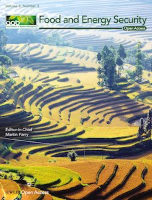
Food and Energy Security
Innovating the Future of Food Systems and Renewable EnergyFood and Energy Security, an esteemed journal published by WILEY, is dedicated to advancing the fields of food science, agriculture, and renewable energy. Since its inception in 2012, this open-access journal has provided a platform for groundbreaking research and innovative practices that address global challenges related to food production and energy sustainability. With an impressive impact factor reflected in its Q1 quartile rankings across notable categories such as Agronomy and Crop Science and Food Science, this journal is instrumental for researchers and practitioners alike who are focused on enhancing food security and promoting sustainable energy solutions. The journal's scope encompasses multidisciplinary approaches and encourages submissions that explore the intersection of food systems and energy dynamics, ensuring relevance in the evolving landscape of environmental science and policy. By offering open access to its publications, Food and Energy Security commits to making vital research accessible, fostering informed dialogue and collaboration among scholars, policymakers, and the agrifood industry worldwide.

Scientific African
Unlocking African Insights for Global ImpactScientific African is a leading open-access multidisciplinary journal published by Elsevier, dedicated to enhancing the visibility and accessibility of scientific research primarily conducted in Africa. Since its inception in 2018, the journal has quickly ascended to Q1 status in the 2023 category rankings, reflecting its robust influence and commitment to high-quality research dissemination. With an impressive Scopus ranking of 22 out of 171 in the multidisciplinary category and a strong percentile ranking of 87th, Scientific African serves as a pivotal platform for innovative findings across a broad range of scientific disciplines. The journal aims to foster collaboration among researchers, practitioners, and policymakers to tackle pressing global issues, making it an essential resource for students, researchers, and professionals interested in African scientific advancement. With its open-access model, Scientific African ensures that groundbreaking research is freely available, empowering a wider audience to engage with and build upon the scientific knowledge produced on the continent.

Green Energy & Environment
Driving Change Through Cutting-edge Environmental Research.Green Energy & Environment, published by KEAI PUBLISHING LTD, stands as a pioneering journal dedicated to the dynamic fields of renewable energy, sustainability, and environmental science. With its ISSN 2096-2797 and E-ISSN 2468-0257, this Q1 journal holds a noteworthy presence in academic discourse, reflecting its high-quality contributions within these critical areas of research. Launched in 2016, it has consistently embraced an Open Access model, facilitating unhindered access to research findings and fostering collaboration across global communities. Based in Beijing, China, this journal is dedicated to disseminating innovative insights that are essential for addressing urgent global challenges related to energy and environmental sustainability. Researchers, professionals, and students alike benefit from a platform that not only showcases pioneering research but also encourages interdisciplinary dialogue and knowledge exchange in the pursuit of a sustainable future.
Sustainable Environment Research
Pioneering solutions for a cleaner, greener planet.Sustainable Environment Research, an esteemed journal published by BMC, serves as a pivotal platform for disseminating innovative research in the fields of Environmental Engineering, Pollution, and Renewable Energy. Established in 2016 as an Open Access journal, it facilitates the widespread sharing of knowledge and advancements across the globe, reflecting its commitment to enhancing environmental sustainability. With an impressive Q1 ranking in multiple categories, including Water Science and Technology and Pollution, the journal is recognized for its significant impact, currently holding a rank of 31st in Environmental Science - Water Science and Technology. The journal actively invites researchers, professionals, and students to contribute to crucial discussions around sustainable practices and technologies, thus addressing worldwide environmental challenges. Based in Taiwan but accessible internationally, Sustainable Environment Research provides a valuable resource for those dedicated to advancing the science of sustainability.
Open Agriculture
Connecting Researchers to Transform Agricultural PracticesOpen Agriculture, published by DE GRUYTER POLAND SP Z O O, is an innovative open-access journal dedicated to advancing research in the Agricultural and Biological Sciences. Since its inception in 2016, this journal has been committed to disseminating knowledge and facilitating collaboration among researchers, professionals, and enthusiasts in the agricultural sector. With an impressive Q2 ranking in the Agricultural and Biological Sciences category, it holds a prestigious position, ranking #65 out of 221 in its field, placing it in the 70th percentile. Open Agriculture offers a platform for high-quality research across a diverse range of topics, ensuring that crucial findings are readily accessible to the global scientific community. The journal continues to uphold its mission of promoting sustainable agricultural practices and innovations that address contemporary challenges in food security and environmental sustainability. With its strong commitment to open access principles, researchers and students alike can easily engage with cutting-edge research and contribute to the vibrant discourse surrounding modern agriculture.
International Journal of Environmental Science and Technology
Pioneering research at the intersection of science and technology.International Journal of Environmental Science and Technology, published by SPRINGER, stands as a premier platform for the dissemination of cutting-edge research in the fields of environmental science, technology, and engineering. With an impressive scope spanning from 2005 to 2024, this journal serves as a vital resource for academic and professional communities engaged in tackling pressing environmental challenges. It boasts a strong reputation, evidenced by its Q1 ranking in Agricultural and Biological Sciences and solid placements in Environmental Chemistry and Engineering. Researchers searching for high-impact studies will find the journal's contributions significant, as reflected in its rankings within Scopus: 34th percentile in Agricultural and Biological Sciences and notable standings in Environmental Engineering and Chemistry. Although the journal is not currently an Open Access resource, it maintains a commitment to academic rigor and innovation, making it indispensable for those devoted to advancing knowledge in environmental sustainability and technology.
Energy & Environmental Materials
Exploring the Nexus of Energy Efficiency and Environmental StewardshipEnergy & Environmental Materials, published by WILEY, is an esteemed academic journal dedicated to pioneering research in the multifaceted domains of energy, environmental science, and materials science. Since its inception in 2018, this journal has rapidly established itself as a leading platform, holding a prestigious Q1 ranking across multiple categories including Renewable Energy, Sustainability, and Waste Management, reflecting its significant contributions to advancing knowledge in these critical areas. With a robust Scopus ranking that positions it in the top percentile for Environmental Science and Materials Science, it caters to a diverse audience of researchers, professionals, and students seeking cutting-edge findings and practical applications in energy efficiency and sustainable materials. This open-access journal facilitates the dissemination of innovative research and aims to bridge the gap between scientific exploration and real-world solutions for a sustainable future. The editorial team encourages submissions that explore both theoretical and practical aspects, ensuring that every publication not only contributes to the academic landscape but also drives impactful change in energy and environmental practices.

Pertanika Journal of Science and Technology
Transforming ideas into impactful discoveries.Pertanika Journal of Science and Technology, published by UNIV PUTRA MALAYSIA PRESS, stands as a significant platform in the fields of Agricultural and Biological Sciences, Chemical Engineering, Computer Science, and Environmental Science. With an ISSN of 0128-7680, this esteemed journal aims to foster high-quality research and knowledge sharing by presenting novel studies and advancements from 2010 onwards, with expectations of convergence until 2024. Recognized as a Q3 journal in multiple categories, including miscellaneous fields of the aforementioned domains, it offers a valuable resource for researchers, students, and industry professionals seeking to push the boundaries of science and technology. Though access options are currently limited, the journal's commitment to disseminating essential findings contributes to its credibility and relevance in the academic community, making it an essential read for those invested in cutting-edge scientific research and development. Based in Serdang, Selangor, Malaysia, the journal not only caters to a global audience but also emphasizes the significance of local research advancements in a broader context.
Innovation
Driving Progress with Cutting-Edge InsightsInnovation is an esteemed open-access journal published by CELL PRESS that has emerged as a leading platform for multidisciplinary research since its inception in 2020. With an impressive Scopus rank of #3 out of 171 in the multidisciplinary category and a notable impact factor placing it in the 98th percentile, the journal has quickly established itself as a crucial resource for researchers and professionals seeking to disseminate groundbreaking ideas and developments across various fields. Located in the United States, at 50 Hampshire St, Floor 5, Cambridge, MA, Innovation aims to foster collaboration and innovation by providing unrestricted access to advanced research. Its commitment to excellence is reflected in its categorization as Q1 in 2023, indicating its high citation and influence within the academic community. The journal invites submissions that push the boundaries of knowledge and encourages scholarly discourse, making it an indispensable resource for students, researchers, and practitioners committed to making impactful contributions to their respective fields.