
Global Health Research and Policy
Scope & Guideline
Empowering policy for a healthier tomorrow.
Introduction
Aims and Scopes
- Global Health Equity:
The journal prioritizes research that addresses health disparities and promotes equity in access to healthcare services, especially in low- and middle-income countries. - Health Systems Strengthening:
A significant focus is on evaluating and improving health systems through policy analysis, capacity building, and integrated health service delivery. - Infectious and Non-communicable Diseases:
Research on the burden, prevention, and management of both infectious diseases and non-communicable diseases is central, reflecting the dual health challenges faced globally. - Public Health Policy and Implementation:
The journal emphasizes studies that inform public health policy and implementation strategies, particularly in response to emerging health challenges such as pandemics. - Community and Population Health:
There is a strong emphasis on community health interventions and understanding the social determinants of health that impact population health outcomes. - Innovative Research Methodologies:
The journal encourages the use of diverse research methodologies, including qualitative, quantitative, and mixed methods, to address complex health issues.
Trending and Emerging
- Health System Resilience:
Recent studies emphasize building resilient health systems capable of withstanding shocks, such as pandemics, highlighting the importance of adaptability in health policy. - Mental Health Integration:
There is an increasing focus on integrating mental health into public health strategies, reflecting a growing awareness of its critical role in overall health outcomes. - Impact of Climate Change on Health:
Emerging research explores the effects of climate change on health, including environmental determinants and strategies for adaptation and mitigation in health policy. - Community-Based Interventions:
A trend towards community-based health interventions has emerged, emphasizing the role of local engagement and empowerment in improving health outcomes. - Digital Health Innovations:
The use of digital technologies in health research and practice is gaining traction, particularly in the context of remote health delivery and monitoring during crises like COVID-19. - Intersectionality in Health Research:
There is a growing emphasis on intersectionality, examining how various social identities and inequalities impact health outcomes and access to care.
Declining or Waning
- Traditional Infectious Disease Focus:
There has been a noticeable decline in studies solely focused on traditional infectious diseases without considering their interactions with non-communicable diseases or broader health systems. - Health Economics in Isolation:
Research that examines health economics as a standalone topic has decreased, suggesting a shift towards integrating economic considerations with broader health policy and outcomes. - Single-Disease Strategies:
The focus on single-disease interventions has waned in favor of integrated approaches that consider multi-disease contexts, particularly in resource-limited settings. - Descriptive Epidemiological Studies:
There has been a reduction in purely descriptive epidemiological studies, indicating a move towards research that emphasizes intervention and policy impact. - Local Case Studies Without Broader Context:
Publications that focus solely on local case studies without drawing broader implications for global health practice have become less common.
Similar Journals
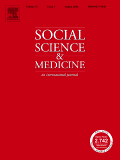
SOCIAL SCIENCE & MEDICINE
Fostering Collaboration Between Social Sciences and MedicineSOCIAL SCIENCE & MEDICINE, published by Pergamon-Elsevier Science Ltd, is a premier international journal dedicated to advancing knowledge in the interconnected realms of social sciences and medicine. With an impressive impact factor and categorized in the Q1 quartile across Health (social science), History and Philosophy of Science, and Miscellaneous Medicine, this journal is instrumental for researchers and practitioners striving to understand the social dynamics impacting health and well-being. Since its inception in 1967, the journal has maintained rigorous scholarly standards, providing a platform for innovative research, critical reviews, and interdisciplinary collaboration. By focusing on the socio-political determinants of health, it serves as a valuable resource for academics, professionals, and students alike, fostering a holistic understanding of health-related issues in contemporary society. Access options are tailored for a wide audience, ensuring the dissemination of essential findings and insights to aid in policy-making, healthcare practice, and public health initiatives.
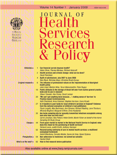
Journal of Health Services Research & Policy
Advancing Health Through Research and PolicyJournal of Health Services Research & Policy, published by SAGE Publications Inc., is a leading academic journal dedicated to advancing the field of health services research and policy. With a focus on promoting evidence-based practices and innovative approaches, the journal has been an essential resource for researchers, policymakers, and practitioners since its inception in 1995. The journal is indexed under ISSN 1355-8196 and E-ISSN 1758-1060, reflecting its commitment to accessibility and relevance in the field. As of 2023, it holds a distinguished position in the top quartile in both Health Policy (Q2) and Public Health, Environmental and Occupational Health (Q2), underscoring its contribution to the academic community. With its strong Scopus ranking—placed #88 out of 310 in Health Policy and #222 out of 665 in Public Health—the journal is recognized for publishing impactful research that shapes healthcare landscapes globally. Although it does not operate under an open access model, the Journal of Health Services Research & Policy remains a vital platform for fostering dialogue on pressing health issues and influencing policy decisions, making it a must-read for those looking to stay at the forefront of health services research.
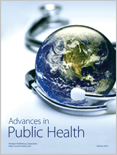
Advances in Public Health
Uniting voices for improved health outcomes worldwide.Advances in Public Health is a distinguished open access journal dedicated to the dissemination of cutting-edge research in the field of public health, published by HINDAWI LTD. Since its inception in 2014, this journal has aimed to foster innovation and facilitate critical discourse on public health challenges, policies, and practices across the globe. With an ISSN of 2356-6868 and an E-ISSN of 2314-7784, it maintains a robust presence in the academic community, featuring prominently with a Scopus rank of #213/665 and proudly residing in the Q2 category within Public Health, Environmental, and Occupational Health as of 2023. Based in Egypt, and serving an international readership, Advances in Public Health provides a platform for researchers, professionals, and students to share their findings and insights, ultimately contributing to the improvement of health outcomes worldwide. Its open access format ensures that valuable research is available to a broader audience, promoting collaboration and knowledge sharing within the public health domain.
Journal of Global Health
Driving interdisciplinary collaboration for a healthier world.The Journal of Global Health, published by the International Society for Global Health, is a premier open-access journal that has been advancing the field of global health since its inception in 2011. With ISSN 2047-2978 and E-ISSN 2047-2986, this notable journal resides in the United Kingdom and serves as a vital platform for disseminating cutting-edge research and innovative practices in health policy and public health. Recognized for its impact, it holds a prestigious Q1 ranking in both Health Policy and Public Health, Environmental and Occupational Health as of 2023, and boasts impressive Scopus rankings, positioning it among the top journals in its categories. The journal's commitment to open access promotes widespread dissemination of knowledge, making vital research accessible to practitioners, policymakers, and scholars worldwide. With a keen focus on global health challenges, the Journal of Global Health aims to foster interdisciplinary collaboration and contribute to the development of effective strategies that enhance health equity and sustainable health systems across various populations.
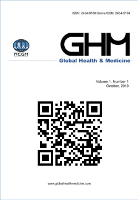
Global Health & Medicine
Championing the future of global health and medicine.Global Health & Medicine is a leading journal published by the National Center for Global Health and Medicine (NCGM), dedicated to advancing the fields of public health, epidemiology, and medical research. With the increasing importance of global health issues, this journal serves as a vital resource for researchers, healthcare professionals, and students alike, providing a platform for the dissemination of groundbreaking studies and innovative solutions to health challenges worldwide. Although specific metrics such as HIndex and category quartiles are yet to be established, the journal's commitment to open access ensures that vital information is accessible to a global audience, promoting knowledge sharing across borders. The journal's ISSN and E-ISSN number, 2434-9186 and 2434-9194 respectively, represent its dedication to maintaining high standards in academic publishing. As global health continues to evolve, Global Health & Medicine stands at the forefront, addressing the complexities of health systems, disease prevention, and health promotion essential for fostering a healthier world.
Gaceta Sanitaria
Bridging research and practice in public health.Gaceta Sanitaria is a leading open-access journal published by ELSEVIER focusing on the vital fields of public health, environmental health, and occupational health. Since its inception in 1987, the journal has been dedicated to disseminating high-quality research and insights that contribute significantly to the advancement of public health knowledge and practices. With an impressive Scopus rank of #243 out of 665 in its category and a 63rd percentile ranking, Gaceta Sanitaria maintains a strong impact within its discipline, reflected in its Category Quartile of Q3. The journal warmly welcomes submissions from researchers, professionals, and students alike, encouraging a diverse exchange of ideas and innovations that can shape future public health strategies. Operating under an open-access model, Gaceta Sanitaria ensures that research is readily available to the global community, further enhancing its commitment to public education and health promotion. Located in beautiful Spain, the journal serves as a pivotal platform for those invested in the ongoing dialogue and research in health-related fields.
TROPICAL MEDICINE & INTERNATIONAL HEALTH
Uniting voices in the fight against tropical diseases.Tropical Medicine & International Health is a distinguished journal published by Wiley, dedicated to the exploration and dissemination of cutting-edge research in the fields of infectious diseases, parasitology, and public health. With a robust open-access option, the journal facilitates the widespread sharing of information critical to addressing health issues in tropical and international settings. Since its inception in 1996, it has established a significant presence in the academic community, as indicated by its impressive ranking in various Scopus categories, notably positioned in the Q1 quartile for Parasitology and Q2 for both Infectious Diseases and Public Health, reflecting its high influence within these domains. The journal's commitment to advancing knowledge on health challenges prevalent in tropical environments makes it an invaluable resource for researchers, healthcare professionals, and students alike who are dedicated to improving global health outcomes.

Lancet Global Health
Championing research that matters to global health.Lancet Global Health (ISSN: 2214-109X) is a leading open-access journal published by Elsevier, renowned for its commitment to disseminating high-quality research in the field of global health. Established in 2013, this esteemed journal has quickly ascended to become one of the top-ranked publications in its category, achieving a remarkable Q1 ranking in Medicine (Miscellaneous) and placing in the 98th percentile of general medicine according to Scopus. With a focus on innovative research and impactful studies, the Lancet Global Health aims to foster dialogue and dissemination of knowledge across disciplines, addressing pressing health issues effectively. The journal provides open access to its content, ensuring that vital information reaches a broad audience, including researchers, health professionals, and policy-makers. As it continues to bridge gaps in global health research and practice through its rigorous peer-reviewed articles, Lancet Global Health plays a crucial role in shaping the future of health equity and social justice worldwide.
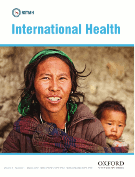
International Health
Advancing Global Health InsightsInternational Health, published by Oxford University Press, is a leading peer-reviewed journal dedicated to the exploration and advancement of health and healthcare practices across the globe. With its ISSN 1876-3413 and E-ISSN 1876-3405, the journal focuses on a wide variety of topics within the realm of international health, catering to a diverse audience of researchers, professionals, and students. It currently holds a prestigious position in the 2023 quartile rankings, being categorized as Q1 in Health (Social Science) and Q2 in both Medicine (Miscellaneous) and Public Health, Environmental and Occupational Health, reflecting its significant impact within these fields. Although the journal is not open access, it remains a valuable resource, providing crucial insights and fostering discussion around health systems, public policy, and global health challenges from 2009 to 2024. With a strong emphasis on empirical research and innovative practices, International Health serves as a vital platform for knowledge dissemination and scholarly discourse, making substantial contributions to the field of public health worldwide.

Public Health in Practice
Bridging research gaps for impactful public health solutions.Public Health in Practice is an influential open-access journal published by ELSEVIER, dedicated to advancing knowledge in the fields of health policy and public health. Since its inception in 2020, this journal has quickly established itself within the academic community, with notable rankings including Q2 in both Health Policy and Public Health, Environmental and Occupational Health, reflecting its commitment to publishing high-quality research. The journal operates out of the Netherlands and has adopted an open-access model to ensure that research is freely available to professionals, researchers, and students alike, facilitating knowledge sharing and impactful discussions. With a Scopus rank of #164 in Health Policy and #352 in Public Health, the journal aims to bridge gaps in research while fostering innovative solutions to contemporary public health challenges. Highly relevant to today's dynamic healthcare landscape, Public Health in Practice encourages submissions that contribute to evidence-based practices and advocate for effective public health policies.