GPS SOLUTIONS
metrics 2024
Connecting Research with Real-World Applications
Introduction
GPS SOLUTIONS, published by SPRINGER HEIDELBERG, is a premier journal in the field of earth and planetary sciences, recognized for its contribution to advancing the understanding of global positioning system technologies and their applications. With an impressive Q1 ranking in Earth and Planetary Sciences and a notable Scopus rank of #18 out of 195, this journal caters to a broad audience of researchers, professionals, and students passionate about geospatial science. Published continuously since 1995, GPS SOLUTIONS features cutting-edge research that addresses the critical issues related to positioning systems, satellite navigation, and geodesy. Although it does not offer open access, the journal ensures wide visibility and accessibility through its robust publishing platform. The unique insights and innovative methodologies presented within its pages make GPS SOLUTIONS an essential resource for anyone seeking to explore the complexities of positional accuracy and its implications for various fields, including environmental studies, engineering, and disaster management.
Metrics 2024
 1.424.504.7093
Metrics History
Rank 2024
Scopus
IF (Web Of Science)
JCI (Web Of Science)
Quartile History
Similar Journals
JOURNAL OF GEODESY
Elevating Geodesy: Where Innovation Meets AcademiaJOURNAL OF GEODESY, published by SPRINGER, is a premier academic journal dedicated to advancing the field of geodesy and its related disciplines. With an impact factor reflecting its high citation rate and rigorous peer-review process, this journal occupies a distinguished place in the academic community, categorized within the Q1 quartiles for Computers in Earth Sciences, Geochemistry and Petrology, and Geophysics as of 2023. The journal addresses various critical topics affecting our understanding of Earth’s shape, gravity field, and rotational dynamics, thus providing vital insights for researchers, professionals, and students alike. Derived from a legacy that spans from 1995 to 2024, the journal continues to publish significant contributions that foster growth in Earth and planetary sciences, with rankings that place it within the top tier of its categories: 10th in Geophysics, 13th in Geochemistry and Petrology, and 9th in Computers in Earth Sciences, all reflecting percentile rankings above 88%. Although Open Access options are not currently available, the journal remains an essential resource for advancing geodetic research across the globe. Explore the latest findings and connect with leading experts in the field through this highly regarded platform.
DIGITAL SIGNAL PROCESSING
Innovating Insights in Signal Processing and BeyondDIGITAL SIGNAL PROCESSING is a leading academic journal published by Academic Press Inc Elsevier Science, serving as a vital resource in the fields of applied mathematics, artificial intelligence, signal processing, and electrical engineering. With an impressive set of rankings, including a Q2 designation in multiple categories such as Applied Mathematics and Computer Vision and Pattern Recognition, this journal aims to disseminate high-quality research that addresses both theoretical and practical aspects of digital signal processing. Its rigorous peer-review process ensures the publication of original articles, review papers, and innovative applications, making it an essential platform for researchers and professionals dedicated to advancing this dynamic field. While currently not an open-access journal, it maintains a significant impact factor, reflecting its esteemed position within the academic community. The journal's ongoing commitment to exploring new trends and methodologies positions it at the forefront of digital signal processing research, driving both scholarly inquiry and practical application from 1991 to 2024.

Satellite Navigation
Bridging Knowledge Gaps in Aerospace and Signal ProcessingSatellite Navigation, an esteemed journal published by SpringerNature, serves as a pivotal platform for advancing research in the fields of Aerospace Engineering, Electrical and Electronic Engineering, and Signal Processing. Since becoming an Open Access journal in 2020, it has allowed researchers worldwide to freely disseminate their findings, fostering a collaborative academic environment. With remarkable rankings, including the Q1 designation in three prestigious categories and a top percentile placement in Scopus—#2 in Aerospace Engineering and #4 in Computer Science Signal Processing—this journal is committed to publishing high-quality research that drives innovation in satellite navigation technology. As we move forward into the converged years of 2020 to 2024, Satellite Navigation aims to bridge theoretical and practical knowledge, making significant contributions to this vital area of study. Researchers, professionals, and students will find a wealth of valuable insights and advances, solidifying the journal’s status as a cornerstone in the navigation research community.

CANADIAN JOURNAL OF REMOTE SENSING
Innovating Insights Through Satellite ImageryCanadian Journal of Remote Sensing is a prestigious, peer-reviewed journal published by Taylor & Francis Inc., based in the United Kingdom. With an impressive impact factor and a Scopus ranking placing it in the 76th percentile among general Earth and Planetary Sciences, this journal is integral for researchers and professionals exploring the dynamic field of remote sensing. Since its inception in 1975 and now continuing through to 2024, it has been a platform for disseminating cutting-edge research and advancements in both methodologies and applications across diverse environments. As of 2023, it has transitioned to Open Access, ensuring wider access to its scholarly articles, which cover a broad spectrum of topics including satellite imagery, data interpretation, and environmental monitoring. This journal is not only crucial for fostering innovation and collaboration within Earth sciences but also serves as a critical resource for students and academics alike, eager to stay abreast of the latest developments in remote sensing technology and methodology.
INTERNATIONAL JOURNAL OF REMOTE SENSING
Unveiling the Secrets of Our Planet from AboveInternational Journal of Remote Sensing, published by Taylor & Francis Ltd, stands at the forefront of Earth and Planetary Sciences, providing a critical platform for disseminating pioneering research since its inception in 1980. With an impressive ranking of #25 out of 195 in general Earth and Planetary Sciences and a notable 87th percentile on Scopus, this journal is recognized for its high-quality contributions that span diverse topics including satellite imagery analysis, geospatial technologies, and environmental monitoring. As a Q1 journal in its field for 2023, it offers invaluable insights and methodologies that are essential for researchers, professionals, and students alike. Although not Open Access, the journal facilitates a comprehensive understanding of remote sensing sciences, ensuring that the scholarly community remains updated with the latest advancements, trends, and applications that impact global challenges.

Navigation-Journal of the Institute of Navigation
Pioneering Research in Navigation and Engineering ExcellenceNavigation - Journal of the Institute of Navigation (ISSN: 0028-1522, E-ISSN: 2161-4296) is a prestigious academic journal published by the Institute of Navigation (ION) based in the United States. Since its inception in 1946, the journal has aimed to advance and disseminate research in navigation, covering critical topics within the realms of Aerospace Engineering and Electrical and Electronic Engineering. With an impressive Q2 ranking in both fields for 2023 and a notable Scopus rank positioning it within the top quartile of Aerospace Engineering, it serves as an essential resource for researchers, professionals, and students interested in cutting-edge navigation technologies and methodologies. Embracing the Open Access model since 2022, the journal ensures that its high-quality content is readily accessible to a global audience. With a commitment to fostering innovation and collaboration, Navigation plays a pivotal role in shaping the future of navigation science and engineering.
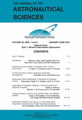
JOURNAL OF THE ASTRONAUTICAL SCIENCES
Connecting Ideas and Discoveries in AstronauticsJOURNAL OF THE ASTRONAUTICAL SCIENCES, published by Springer Heidelberg, serves as a leading platform dedicated to advancing the fields of aerospace engineering and planetary science. With an ISSN of 0021-9142 and an E-ISSN of 2195-0571, this journal has established a significant presence within the academic community, evidenced by its categorization in the Q2 and Q3 quartiles for 2023, positioning it among the top publications in its field. The journal encompasses a spectrum of research that spans from innovative aerospace technologies to the exploration of planetary systems, reflecting its rich scope developed since its inception in 1969. Although not Open Access, it provides vital contributions to ongoing discussions in aerospace research, appealing to researchers, professionals, and students eager to deepen their understanding of astronautics. With a notable impact factor and rankings in Scopus—66th in Aerospace Engineering and 64th in Space and Planetary Science—this journal continues to be a pivotal resource for those engaged in the exploration and utilization of space.
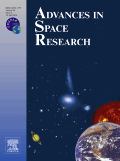
ADVANCES IN SPACE RESEARCH
Advancing Understanding of the Universe.ADVANCES IN SPACE RESEARCH, published by Elsevier Science Ltd, is a leading journal in the fields of Aerospace Engineering, Astronomy and Astrophysics, Atmospheric Science, and more. Since its inception in 1981, this journal has dedicated itself to the dissemination of high-quality research contributing to the understanding of space and planetary sciences through a multidisciplinary lens. With an impressive impact factor reflected in its positioning within the Q1 and Q2 quartiles across various categories, it serves as an essential resource for researchers and professionals alike. The journal's rigorous peer review process ensures that only the most relevant and groundbreaking studies are published, making it a cornerstone for those navigating the complexities of space research. The journal is accessible by subscription, inviting a global readership to engage with trailblazing research that influences future advancements and fosters collaborations across the scientific community. With a reputation for excellence, ADVANCES IN SPACE RESEARCH remains committed to pushing the boundaries of knowledge in the ever-evolving field of space exploration.
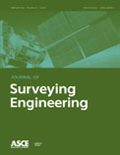
JOURNAL OF SURVEYING ENGINEERING
Empowering Engineers with Cutting-Edge Surveying InsightsJOURNAL OF SURVEYING ENGINEERING, published by the ASCE-Amercian Society of Civil Engineers, is a pivotal resource in the field of Civil and Structural Engineering, specifically focusing on the advancements and methodologies within surveying practices. Established in 1980, this journal has established itself as a reliable source of high-quality research, boasting an impressive 2023 Q2 ranking in its category, demonstrating its impact and relevance in the engineering community. The journal features rigorously peer-reviewed articles that encourage innovative approaches and solutions in surveying engineering, maintaining a consistent publication schedule through 2024. Although it operates under a traditional access model, the journal remains an influential platform for disseminating essential findings and methodologies. By fostering knowledge exchange among researchers, professionals, and students, the JOURNAL OF SURVEYING ENGINEERING continues to play a critical role in shaping the future of civil engineering research and practice.

Chinese Space Science and Technology
Pioneering Research for Tomorrow's Space TechnologyChinese Space Science and Technology is a pivotal journal dedicated to advancing the field of space engineering and technology, published by the esteemed Chinese Academy of Space Technology. With an ISSN of 1000-758X, this publication serves as a significant platform for cutting-edge research from China and around the globe, spanning vital intersections of Aerospace Engineering, Electrical and Electronic Engineering, and Materials Science. As evidenced by its Q3 ranking in 2023 across these categories, the journal consistently showcases innovative studies that contribute to the development of space technology, thereby impacting both theoretical frameworks and practical applications in the industry. Researchers and professionals will find valuable insights within its pages, while students can enrich their educational journey through its wealth of knowledge. Though primarily published in print, the journal continues to foster collaboration and engagement among the academic community, offering a glimpse into the future of space exploration and technological advancements through its relevant and timely content.