Health Care Management Science
Scope & Guideline
Exploring contemporary challenges in health care management.
Introduction
Aims and Scopes
- Health Care Operations Management:
Research in this area includes optimization models for scheduling, resource allocation, and patient flow management, aiming to enhance the operational efficiency of healthcare facilities. - Data Analytics and Machine Learning:
The journal publishes studies that employ statistical methods and machine learning techniques to predict patient outcomes, optimize processes, and inform decision-making in healthcare settings. - Resource Management and Allocation:
This focus area covers the strategic allocation of healthcare resources, including personnel, equipment, and facilities, often under constraints such as budget limitations and demand fluctuations. - Simulation and Modeling:
The use of simulation techniques to model healthcare processes, evaluate system performance, and analyze the impact of different management strategies is a significant aspect of the journal's contributions. - Public Health and Policy:
The journal addresses broader public health challenges and healthcare policies, including pandemic preparedness, healthcare accessibility, and efficiency in public health interventions. - Patient-Centered Care:
Research that emphasizes improving patient care experiences, managing chronic diseases, and tailoring healthcare services to meet diverse patient needs is also a core area of focus.
Trending and Emerging
- Artificial Intelligence in Healthcare:
The integration of AI and machine learning into healthcare practices is increasingly prevalent, with studies focusing on predictive analytics, patient management, and operational efficiencies. - Pandemic Response and Preparedness:
Given the recent global health crises, there has been a surge in research addressing pandemic preparedness, resource allocation during crises, and the impact of COVID-19 on healthcare systems. - Telehealth and Virtual Care Models:
Emerging research on telehealth solutions and virtual care models reflects the growing importance of remote healthcare delivery, especially in response to the COVID-19 pandemic. - Patient-Centric Optimization:
A focus on optimizing healthcare delivery from the patient's perspective, including personalized care pathways and improved patient experiences, is becoming more prominent. - Sustainability in Healthcare Operations:
Research on sustainable practices within healthcare operations, including waste reduction and resource efficiency, is gaining traction as healthcare systems seek to improve their environmental impact.
Declining or Waning
- Traditional Statistical Methods:
There appears to be a decreasing emphasis on traditional statistical methods for healthcare analysis, as more studies adopt advanced machine learning techniques for predictive analytics. - Generalized Health Economics:
Research focused solely on broad economic analyses of healthcare systems is less prevalent, as the journal increasingly emphasizes operational and management science applications. - Basic Quality Assurance Studies:
The focus on basic quality assurance measures without integrative approaches has diminished, with more papers seeking comprehensive, systems-based solutions to healthcare quality issues. - Non-Quantitative Approaches:
There is a noticeable decline in non-quantitative studies that do not utilize modeling or data analysis, as the journal's scope has gravitated towards more data-driven, analytical frameworks.
Similar Journals
HOME HEALTH CARE SERVICES QUARTERLY
Elevating Standards in Home Health ResearchHOME HEALTH CARE SERVICES QUARTERLY, an esteemed publication by Taylor & Francis Ltd, has been a cornerstone of scholarly discourse in the fields of community and home care since its inception in 1979. With ISSN 0162-1424 and E-ISSN 1545-0856, this quarterly journal promotes rigorous research and innovative practices in home health care services, significantly impacting health policy and public health discussions. The journal enjoys a respectable Impact Factor, reflecting its contributions to the field, and currently ranks Q2 in Community and Home Care, along with Q3 status in both Health Policy and Public Health. Researchers, professionals, and students alike can benefit from the diverse range of articles that address practical challenges and emerging trends within the home health care industry. Although not an open-access journal, it continues to provide a vital platform for advancing knowledge and disseminating best practices essential for improving health outcomes. As it embarks on its journey towards 2024, it remains committed to fostering an inclusive dialogue that shapes the future of home health care.
Medicina de Familia-SEMERGEN
Championing quality research in the heart of family healthcare.Medicina de Familia-SEMERGEN is a pivotal Spanish journal focused on the field of family medicine and public health, published by the esteemed Elsevier. With an ISSN of 1138-3593 and an E-ISSN of 1578-8865, this journal provides a platform for researchers and practitioners to disseminate innovative studies, clinical practices, and case reports that advance the understanding of family healthcare dynamics. As of 2023, it is categorized in Q3 in Family Practice and Q4 in Public Health, reflecting its significant contributions to the respective fields. The journal is indexed in Scopus, holding ranks of 31/56 and 473/665 for family practice and public health respectively, showcasing its relevance in academic discourse. While maintaining a commitment to quality research, Medicina de Familia-SEMERGEN remains accessible for professionals seeking to improve patient outcomes in family medicine, making it an essential resource for anyone in the health domain.
JOURNAL OF MEDICAL INTERNET RESEARCH
Empowering Research at the Intersection of Medicine and the InternetJOURNAL OF MEDICAL INTERNET RESEARCH, published by JMIR PUBLICATIONS, INC, stands as a pivotal resource in the field of Health Informatics, with an esteemed ranking of #7 out of 138 in the Scopus database, placing it in the top 95th percentile. Since its inception in 1999, this Open Access journal has been committed to disseminating high-quality, peer-reviewed research that explores the intersection of healthcare and internet technologies. With its headquarters in Toronto, Canada, the journal encompasses a broad range of topics, including eHealth, telemedicine, and mobile health innovations. The impact factor and its Q1 quartile ranking highlight the journal's significant influence and prevalence in advancing the understanding of digital health landscapes. Researchers, professionals, and students alike benefit from its valuable insights, making the JOURNAL OF MEDICAL INTERNET RESEARCH an essential tool for fostering informed practices and policy-making in the rapidly evolving domain of health informatics.
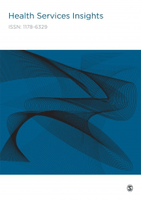
Health Services Insights
Bridging gaps in health knowledge for all.Health Services Insights is a prestigious, open-access journal published by SAGE Publications Inc. Based in the United Kingdom, this journal has become a vital resource for researchers and professionals in the fields of Health Policy and Public Health. Since its inception in 2008, Health Services Insights has consistently aimed to disseminate high-quality, peer-reviewed research that informs practice and policy in health service delivery and management. With an impressive Q1 ranking in both its categories as of 2023, and a respectable Scopus ranking positioning it within the upper percentiles of its fields, the journal continues to attract influential contributions from global experts. Its open-access format, established in 2013, ensures that vital insights on health services are accessible to all, facilitating knowledge sharing and collaboration among researchers, practitioners, and students alike. By focusing on impactful research and innovation, Health Services Insights plays a crucial role in addressing contemporary challenges in health services and improving health outcomes worldwide.

AMERICAN JOURNAL OF MANAGED CARE
Advancing managed care knowledge for improved outcomes.AMERICAN JOURNAL OF MANAGED CARE is a premier peer-reviewed journal dedicated to the dissemination of research and insights in the fields of health policy and managed care. Published by Managed Care & Healthcare Communications LLC, this esteemed journal has been instrumental in shaping discussions on healthcare management and policy since its inception in 1996. With a 2023 classification in the first quartile (Q1) for both Health Policy and Medicine (miscellaneous), it stands as a significant resource for researchers, professionals, and students seeking to stay at the forefront of healthcare advancements. While this journal does not offer open access, it provides essential content that influences policy formulation and clinical practices across the United States and beyond. With a robust impact factor and a strategic focus on evidence-based methodologies, the AMERICAN JOURNAL OF MANAGED CARE remains committed to fostering a deeper understanding of managed care systems and improving healthcare delivery.

Journal of Patient Experience
Advancing knowledge, enhancing patient care.Journal of Patient Experience, published by SAGE Publications Inc, serves as a vital resource in the realms of Health Policy, Health (Social Science), and Leadership and Management. This open-access journal, established in 2014, is dedicated to enhancing the understanding of patient experiences and its implications on healthcare delivery and outcomes. With an impressive impact factor indicative of its scholarly significance and a current category quartile ranking of Q2 across multiple disciplines, it plays a crucial role in disseminating innovative research that informs policy and practice. The journal is indexed in Scopus, further affirming its contributions within the social sciences and healthcare sectors. It aims to foster interdisciplinary collaboration among researchers, healthcare professionals, and students, driving the conversation toward meaningful improvements in patient care. Its continued commitment to excellence makes it an essential read for anyone invested in the future of healthcare.
CIN-COMPUTERS INFORMATICS NURSING
Elevating Nursing Practice with Evidence-Based InformaticsCIN-COMPUTERS INFORMATICS NURSING is a distinguished journal that publishes cutting-edge research at the intersection of nursing and information technology. Published by Lippincott Williams & Wilkins, the journal has been a pivotal platform since 2002, catering to the needs of health informatics professionals and nursing researchers. With an impressive impact factor and ranked within Q2 in Nursing (miscellaneous) and other relevant categories, it serves as a key resource for advancing knowledge and best practices in the field. The journal's inclusion in important databases ensures broad visibility and access to the latest findings that influence healthcare delivery. CIN-COMPUTERS INFORMATICS NURSING welcomes a diverse range of articles, including empirical studies, reviews, and innovative methodology approaches, making it an invaluable asset for clinicians, educators, and scholars dedicated to enhancing nursing informatics and improving patient outcomes.
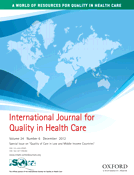
INTERNATIONAL JOURNAL FOR QUALITY IN HEALTH CARE
Transforming public health with cutting-edge insights.INTERNATIONAL JOURNAL FOR QUALITY IN HEALTH CARE, published by Oxford University Press, stands as a pivotal resource in the domains of Health Policy, Medicine, and Public Health. With an ISSN of 1353-4505 and an E-ISSN of 1464-3677, this journal has been a cornerstone for quality assessment in healthcare since its inception in 1989, evolving through to 2024. Holding a respected position in the academic community, it is classified in the Q2 category across multiple fields including Health Policy and Environmental Health, reflecting its significant impact as evidenced by its Scopus rankings (Rank #74/310 in Health Policy, Percentile 76th). Though it operates under a subscription model, the journal aims to disseminate pioneering research aimed at improving healthcare quality globally, providing insights that are invaluable for researchers, practitioners, and policymakers alike. With a commitment to enhancing public health landscapes, the journal continues to influence practices and outcomes in a rapidly changing health environment.

BMC Primary Care
Advancing the Future of Primary Care ResearchBMC Primary Care is a leading peer-reviewed journal published by BMC that provides a vital platform for the dissemination of research and developments in the field of primary care. Established in 2022 as an open access journal, it allows for greater accessibility and visibility of research findings. Operating from the United Kingdom, BMC Primary Care has rapidly assumed an esteemed position within the academic community, currently ranked in the Q1 category for both Family Practice and Medicine (miscellaneous) based on 2023 metrics. With a Scopus rank of #9 out of 56 in Family Practice, positioned in the 84th percentile, this journal serves as an essential resource for researchers, healthcare practitioners, and students seeking to enhance their understanding of primary care dynamics. Through a commitment to high-quality research, BMC Primary Care aims to foster innovation and effective practices that ultimately improve patient care and health outcomes.
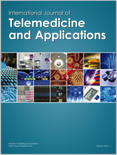
International Journal of Telemedicine and Applications
Transforming healthcare through innovative telemedicine solutions.International Journal of Telemedicine and Applications is a premier open-access journal published by HINDAWI LTD, focused on the rapidly evolving field of telemedicine and health informatics. With an ISSN of 1687-6415 and E-ISSN of 1687-6423, this journal has been a key resource for researchers, healthcare professionals, and students since its inception in 2007. Based in Egypt, the journal has established a global presence, reflected in its diverse range of articles that cover topics from computer networks to health information management. Its impact is underscored by its impressive rankings in Scopus, including notable positions such as 34th in Health Informatics and 15th in Health Information Management. The journal is classified in Q2 quartiles for four influential categories, showcasing its relevance and contribution to the field. With an ongoing publication timeline from 2008 to 2024, International Journal of Telemedicine and Applications is crucial for advancing knowledge and practice in telemedicine, offering researchers and practitioners the opportunity to explore innovative solutions in healthcare delivery.