
Hesperis-Tamuda
Scope & Guideline
Championing Diverse Voices in Academic Discourse
Introduction
Aims and Scopes
- Historical Analysis of the Maghreb:
The journal emphasizes the historical development of the Maghreb, examining various periods, including ancient, medieval, and modern times, through a variety of methodologies, including archival research, textual analysis, and archaeological studies. - Cultural Interactions and Identities:
Hesperis-Tamuda explores the complex cultural interactions between different groups within Morocco and across the Mediterranean, including the influences of colonialism, migration, and transnational movements on local identities. - Archaeological Research and Heritage Studies:
The journal prioritizes archaeological findings and heritage studies, showcasing excavations, material culture, and the preservation of heritage sites, contributing to the understanding of Morocco's historical landscape. - Sufism and Religious Practices:
A significant focus on the role of Sufism and other religious practices in shaping Moroccan society, politics, and culture, reflecting the spiritual dimensions of historical narratives. - Socio-Political Dynamics:
The exploration of socio-political themes, including governance, resistance, and the role of various social groups in shaping the political landscape of Morocco, particularly during colonial and post-colonial periods.
Trending and Emerging
- Interdisciplinary Approaches to Urban Studies:
An increasing number of papers are exploring urban studies through interdisciplinary lenses, examining the historical evolution of cities, urban resilience, and the impact of globalization on Moroccan urban landscapes. - Cultural Heritage and Memory Studies:
There is a growing emphasis on cultural heritage and memory studies, focusing on how historical narratives and collective memories shape contemporary identities and cultural practices in Morocco. - Transnational and Global Perspectives:
Recent publications reflect an emerging trend towards transnational studies, investigating the connections and exchanges between Morocco and other regions, particularly in the context of migration and diasporic communities. - Environmental History and Sustainability:
A notable increase in research related to environmental history and sustainability practices, highlighting the relationship between historical processes and contemporary environmental challenges in the Maghreb. - Digital Humanities and Archival Research:
The application of digital humanities methodologies is on the rise, with scholars utilizing digital tools for archival research, data analysis, and the visualization of historical data, enhancing accessibility and engagement with historical sources.
Declining or Waning
- Colonial Narratives:
There has been a noticeable decrease in research specifically focusing on colonial narratives and their direct impacts, possibly indicating a shift towards post-colonial studies and more nuanced analyses of cultural interactions. - Traditional Gender Roles in Historical Contexts:
While gender studies remains a vital area, traditional explorations of gender roles in historical contexts have become less frequent, suggesting a move towards more intersectional and contemporary discussions surrounding gender. - Focus on Medieval Studies:
Although medieval studies have historically been a stronghold of the journal, there appears to be a decline in papers centered exclusively on this period, with a growing interest in contemporary issues overshadowing earlier historical analyses.
Similar Journals

Universum-Revista de Humanidades y Ciencias Sociales
Championing Access to Transformative ResearchUniversum - Revista de Humanidades y Ciencias Sociales is a pivotal academic journal published by UNIV TALCA, INST ESTUDIOS HUMANISTICOS JUAN IGNACIO MOLINA in Chile, dedicated to advancing scholarly discourse in the fields of humanities and social sciences. With an Open Access model implemented since 1986, the journal facilitates widespread access to research outputs, enabling greater engagement from researchers, students, and professionals alike. As of 2023, Universum holds a Q2 classification in the Arts and Humanities and a Q3 classification in Social Sciences, showcasing its commitment to excellence in scholarly contributions. The journal ranks #74/173 in General Arts and Humanities and #212/275 in General Social Sciences within Scopus, reflecting its impact and relevance in these disciplines. With a publication scope converging from 2008 to 2024, Universum is an essential resource for those seeking to explore innovative ideas and the latest research trends in the human and social sciences.
NWIG-New West Indian Guide-Nieuwe West-Indische Gids
Connecting Cultures: Where Caribbean Scholarship Meets Global Discourse.NWIG-New West Indian Guide-Nieuwe West-Indische Gids is a prestigious academic journal published by KITLV PRESS in the Netherlands, dedicated to advancing knowledge in the realms of history, cultural studies, and social sciences. Established in 1977, the journal has consistently provided a platform for scholarly discourse, focusing on the Caribbean and its multifaceted histories, cultures, and societies. With an Open Access model adopted since 2013, it ensures widespread dissemination of critical research that appeals to a diverse academic audience. In 2023, the journal has been recognized with notable quartiles, ranking in Q2 for both cultural studies and history, underscoring its significance in the field. Researchers and students alike can benefit from its vast collection of articles exploring important themes relevant to the Caribbean context and beyond, fostering a deeper understanding of the region's impact on global narratives. For a comprehensive and enriching scholarly experience, NWIG invites submissions that push the boundaries of current knowledge and encourage interdisciplinary engagement.

Social Analysis
Charting New Territories in Social AnalysisSocial Analysis, an esteemed academic journal published by BERGHAHN JOURNALS, is at the forefront of interdisciplinary research, focusing on the dynamic intersections of anthropology, cultural studies, sociology, and the arts and humanities. Since its inception in 2002 and having transitioned to an Open Access model in 2020, the journal ensures that critical social research is widely accessible to scholars and the public alike. With an impressive Q1 ranking in Anthropology and cultural studies and holding a notable Q2 in Sociology and Political Science, it garners attention from a large academic audience, as evidenced by its high Scopus rankings: 10th in general arts and humanities and 153rd in cultural studies. This signifies its influential role in shaping contemporary discourse and providing a platform for innovative ideas and methodologies in understanding social phenomena. Based in Brooklyn, NY, the journal is dedicated to fostering scholarly dialogue and advancing the field, making it an essential resource for researchers, professionals, and students eager to engage with and contribute to the field of social analysis.
Cogent Arts & Humanities
Cultivating Knowledge Across Creative LandscapesCogent Arts & Humanities, published by Taylor & Francis AS, is a prominent Open Access journal that has been serving the arts and humanities community since its inception in 2014. With an impressive Scopus rank of 16 out of 173 in the field and a 2023 category quartile of Q2, it stands out as a significant platform for disseminating high-quality research. The journal covers a diverse range of topics within the arts and humanities, fostering interdisciplinary dialogue and innovation. Its commitment to accessibility makes cutting-edge research available to a global audience, contributing to the advancement of knowledge and practice in this vital field. With an impact factor that continues to grow, Cogent Arts & Humanities is an essential resource for researchers, professionals, and students dedicated to exploring the complexities of human culture and creative expression.

Spal
Advancing Knowledge in Archaeology and History.Spal is a distinguished academic journal dedicated to the fields of Archaeology and History, published by the University of Seville, Editorial. With an ISSN of 1133-4525 and an E-ISSN of 2255-3924, it has established a prominent reputation within the scholarly community, currently enjoying an impressive Q1 ranking in Archeology (Arts and Humanities) and History, alongside a Q2 ranking in Archeology for 2023. The journal serves as a critical platform for researchers, professionals, and students alike, promoting the dissemination of cutting-edge research and innovative methodologies in these vital disciplines. Spal's Scopus Ranks place it in the 84th percentile for Arts and Humanities - History and the 72nd for Archeology within the field, emphasizing its impact and relevance in contemporary scholarship. Although it operates under a traditional access model, its commitment to advancing knowledge and discourse in archaeological and historical studies remains unwavering. The journal's coverage spans from 2015 to 2024, positioning it well to contribute to ongoing academic conversations and foster collaborations within the global research community.
AFRICA
Advancing Knowledge, Shaping PerspectivesAFRICA is a premier journal published by Cambridge University Press, dedicated to advancing scholarly research and discourse within the realms of Anthropology, Arts and Humanities, and Geography. Established in 1928, this journal has demonstrated an unwavering commitment to excellence, consistently achieving Q1 status in its respective fields as of 2023, demonstrating its impact and prestige in the academic community. With Scopus rankings highlighting it among the top 80th percentile in Social Sciences and 72nd percentile in Arts and Humanities, AFRICA serves as a vital resource for researchers, professionals, and students seeking to explore the complexities of African societies and cultures. The journal promotes a multidisciplinary approach, encouraging contributions that address contemporary challenges and opportunities within Africa. Although access is not open, AFRICA remains an essential asset for anyone aiming to deepen their understanding of the continent's diverse narratives and dynamics, publishing high-quality, peer-reviewed articles that shape the future of African studies.

Kunstiteaduslikke Uurimusi
Fostering Dialogue in Cultural StudiesKunstiteaduslikke Uurimusi is a notable academic journal published by the Estonian Society Art Historians, dedicated to the exploration and analysis of art and cultural studies within the vibrant context of Estonia and beyond. With an ISSN of 1406-2860, this journal offers a platform for researchers, professionals, and students to disseminate their findings and engage in meaningful discourse in the fields of Arts and Humanities and Cultural Studies. Although it occupies a fourth quartile ranking in both fields, the journal's commitment to fostering scholarly dialogue is evident through its open access provision, facilitating the sharing of knowledge across disciplines. Covering a broad spectrum of art historical themes since its inception, Kunstiteaduslikke Uurimusi aims to contribute to the understanding of artistic practices and cultural phenomena, making it an essential resource for those interested in the intersections of art, culture, and society. The journal continues to evolve, with coverage extending from 2011 to 2024, reflecting the dynamic nature of the arts and cultural sectors.
International Journal of Asian Studies
Engaging with the Dynamics of Asian SocietiesThe International Journal of Asian Studies, published by Cambridge University Press, stands as a pivotal platform for scholars exploring the complexities and dynamics of Asian societies. With an ISSN of 1479-5914 and an E-ISSN of 1479-5922, this journal began its journey in 1996 and has actively contributed to the field through a range of multidisciplinary research articles, fostering engagement in both the Arts and Humanities and Social Sciences. Holding a respectable Q2 category in Arts and Humanities and a Q3 category in Social Sciences for the year 2023, it is recognized for its critical insights and scholarly contributions, earning a rank of 40/173 in Arts and Humanities and 174/275 in Social Sciences within Scopus metrics. Researchers seeking to address contemporary issues in Asian studies will find invaluable access to this forum, which not only presents rigorous academic discourse but also aims to bridge cultural and social narratives across the Asian continent.

Asian and African Studies
Exploring the rich tapestry of Asian and African cultures.Asian and African Studies, published by the Slovak Academy of Sciences, Institute of Oriental & African Studies, is a pivotal open-access journal that has been disseminating critical research since its inception in 1987. With its commitment to scholarly excellence and accessibility, this journal has been recognized as a Q3 journal in both Arts and Humanities and Cultural Studies, and holds a significant standing within Sociology and Political Science. The journal serves as an essential platform for researchers, professionals, and students interested in the cultural, social, and political dynamics of Asian and African regions. With its ISSN 1335-1257 and E-ISSN 2585-8793, the journal's rich content offers valuable insights into diverse interdisciplinary topics, and since transitioning to an open-access model in 2015, it has broadened its reach, engaging a wider audience and facilitating the exchange of ideas. The journal is based in Bratislava, Slovakia, and is proud to feature works that contribute meaningfully to the understanding of complex intercultural relations.
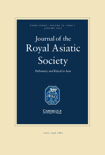
JOURNAL OF THE ROYAL ASIATIC SOCIETY
Bridging Cultures Through Scholarly ExplorationJournal of the Royal Asiatic Society, published by Cambridge University Press, stands as a pivotal resource in the fields of Arts and Humanities, particularly in Cultural Studies. With an impressive Q1 ranking in Cultural Studies and a Q2 ranking in Arts and Humanities (miscellaneous), it serves a diverse readership, including researchers, professionals, and students keen on exploring the rich tapestry of Asian cultures and their global interactions. The journal covers a wide spectrum of topics from historical perspectives to contemporary cultural phenomena, making it essential for those interested in the complexities of Asian societies. Though it does not offer open access, the journal's thought-provoking articles are invaluable, backed by rigorous academic standards and a robust editorial team. Operating from the heart of the United Kingdom, it has established a commendable Scopus ranking, asserting its influence with a 67th percentile in general Arts and Humanities and a 62nd percentile in Social Sciences. The journal has been diligently publishing scholarly work since 1991 and continues to shape the discourse in Asian studies, fostering an environment where knowledge thrives and evolves unto 2024 and beyond.