
HISTORY TODAY
Scope & Guideline
Bridging Eras with Critical Analysis
Introduction
Aims and Scopes
- Exploration of Historical Narratives:
The journal emphasizes storytelling in history, using vivid accounts to bring past events and figures to life, thereby enhancing reader engagement. - Interdisciplinary Approaches:
HISTORY TODAY incorporates methodologies from various disciplines, including sociology, anthropology, and political science, to provide a well-rounded understanding of historical events. - Focus on Underrepresented Histories:
The journal highlights narratives from marginalized groups and lesser-known events, aiming to give voice to diverse perspectives often overlooked in traditional historical discourse. - Critical Analysis of Historical Events:
Articles frequently delve into the implications and consequences of historical events, encouraging readers to reflect on their relevance to contemporary issues. - Global Historical Context:
The journal covers a wide array of global histories, connecting local events to broader international trends, thus providing a comprehensive view of historical development.
Trending and Emerging
- Social Justice and Activism:
There is a growing focus on social movements, activism, and the fight for justice throughout history, reflecting contemporary societal issues and the importance of historical context in understanding current events. - Cultural and Gender Histories:
Increasing attention is being paid to cultural histories and the roles of gender in historical narratives, highlighting the contributions and experiences of women and marginalized communities. - Environmental History:
The journal is beginning to explore the intersections of history and environmental studies, examining how historical events have shaped and been affected by environmental changes. - Digital Humanities:
The incorporation of technology and digital tools in historical research is on the rise, with articles exploring how digital resources are transforming the way history is studied and presented. - Globalization and Transnational Histories:
There is an emerging trend towards analyzing histories that transcend national boundaries, highlighting interconnectedness and the impact of globalization on historical events.
Declining or Waning
- Traditional Military History:
There has been a noticeable decline in articles focused solely on military history, indicating a shift towards more nuanced explorations of social, cultural, and economic factors in historical narratives. - Eurocentric Perspectives:
While European history remains significant, the journal has increasingly moved away from Eurocentric narratives, focusing more on global and inclusive histories that reflect a wider range of experiences. - Biographical Studies of Prominent Figures:
There appears to be a waning interest in biographical studies of well-known historical figures, as the journal shifts towards collective histories and thematic explorations. - Chronological Historical Accounts:
The emphasis on strictly chronological accounts of history has diminished, with a preference for thematic and analytical approaches that connect different time periods. - Conventional Historical Methods:
The use of traditional historiographical methods is declining, as the journal embraces innovative and interdisciplinary approaches to historical research.
Similar Journals

Musicology Today
Connecting Scholars and Trends in Music ResearchMusicology Today, published by SCIENDO, is a pivotal journal in the field of musicology, presenting a platform for scholars, researchers, and practitioners to disseminate their findings and engage with current trends in music research. With its ISSN 1734-1663 and E-ISSN 2353-5733, the journal aims to provide a comprehensive overview of various aspects of music, including theory, history, and ethnomusicology, fostering a multidisciplinary dialogue among its contributors. Located in Warsaw, Mazovia, Poland, this journal is not only committed to high academic standards but also to promoting open access to knowledge, thereby enhancing accessibility for a global audience. As it continues to bolster its reputation in the academic community, Musicology Today plays an essential role in shaping the future of music scholarship and invites the engagement of seasoned researchers and emerging voices alike.
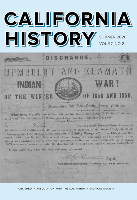
CALIFORNIA HISTORY
A Scholarly Voyage through California's Historical LandscapeCalifornia History, published by the California Historical Society, is a prominent journal dedicated to the exploration and documentation of the rich historical tapestry of California from its early days to the modern era. With an ISSN of 0162-2897 and an E-ISSN of 2327-1485, this journal serves as a critical resource for researchers, historians, and students interested in the socio-cultural, political, and economic developments of the Golden State. Though not classified as Open Access, its extensive archive and curated articles offer valuable insights into California's diverse heritage. Operating from 678 Mission St, San Francisco, CA, California History has transitioned through various phases since its inception in 1978, with a commitment to presenting comprehensive historical narratives and scholarly discourse. The journal is indexed in Scopus, reflecting its academic significance, ranking 1068 among a pool of 1760 in the Arts and Humanities category for History. By bridging the past and the present, California History remains an essential platform for fostering understanding and appreciation of California's unique place in American history.
JOURNAL OF INTERDISCIPLINARY HISTORY
Advancing Historical Discourse Across DisciplinesThe JOURNAL OF INTERDISCIPLINARY HISTORY, published by MIT PRESS, serves as a pivotal platform for scholarly discourse at the intersection of history and various interdisciplinary fields. With a rich publication history dating back to 1970, the journal has continually provided a critical forum for exploring innovative historical methodologies and themes that resonate across diverse academic domains. Although it is not an Open Access journal, it remains invaluable for researchers dedicated to advancing the understanding of historical narratives and their implications within contemporary contexts. As reflected in its impressive Scopus ranks, the journal occupies a respectable position within its quartiles, holding Q3 in History and Q4 in History and Philosophy of Science. This suggests a growing recognition of its contributions among scholars in the field. Located in Cambridge, MA, USA, the journal is accessible to a global audience, fostering collaboration and dialogue among professionals, historians, and students alike. Whether you are a seasoned researcher or a budding student, the JOURNAL OF INTERDISCIPLINARY HISTORY stands as an essential resource for navigating the complexities of historical inquiry.

AMERICAN HISTORY
Revealing Insights into America's Influential Figures and EventsAMERICAN HISTORY is a pivotal journal published by HISTORYNET, dedicated to the exploration and analysis of historical narratives, events, and figures that have shaped the United States. With an ISSN of 1076-8866, this journal offers a comprehensive platform for historians, scholars, and students to publish and access critical research and discussions in the field. Although categorized in the Q4 quartile in the history domain according to 2023 metrics, its targeted scope from 2009 to 2023 ensures a rich reservoir of contemporary and historical research articles. Positioned at Rank #1711 out of 1760 in the Scopus database, AMERICAN HISTORY caters to a niche audience passionate about uncovering the complexities of American past. While it does not offer open access, its printed contributions are invaluable for those aiming to deepen their understanding of historical context in modern society. AMERICAN HISTORY stands as an essential resource for anyone engaged in detailed historical research and discourse.

Topoi-Revista de Historia
Exploring Diverse Narratives in Historical ResearchTopoi-Revista de Historia is a distinguished journal dedicated to advancing the field of historical studies. Published by the Programa Pos-Graduacao Historia - Universidade do Estado do Rio de Janeiro, this Open Access journal has been serving the academic community since 2000, fostering the dissemination of knowledge on diverse historical topics. With its ISSN 2237-101X, Topoi stands out in the field, holding a Q2 ranking in History (2023) and positioned in the 34th percentile of its discipline according to Scopus. The journal is committed to promoting high-quality research through a rigorous peer-review process, making it an invaluable resource for researchers, professionals, and students alike. The editorial team is dedicated to publishing innovative studies from both Brazilian and international scholars, ensuring a rich and comprehensive dialogue within the global historical landscape. Reach out to explore its latest contributions to the understanding of history, available to scholars around the world.
KRITIKA-EXPLORATIONS IN RUSSIAN AND EURASIAN HISTORY
Unveiling the Tapestry of Russian and Eurasian HistoriesKRITIKA-EXPLORATIONS IN RUSSIAN AND EURASIAN HISTORY is a premier academic journal published by SLAVICA PUBLISHERS, specializing in the rich and complex narratives of Russian and Eurasian history. With its Open Access model since 2020, the journal aims to democratize knowledge and facilitate comprehensive research sharing among scholars, professionals, and students. The journal boasts an impressive ISSN of 1531-023X and an E-ISSN of 1538-5000, highlighting its commitment to accessible scholarship. Recognized within the Q2 category for both Cultural Studies and History in 2023, it ranks in the top quartile of its field on platforms like Scopus, underscoring its influential contribution to the academic discourse. Covering a wide array of topics from the early 2000s through 2024, KRITIKA serves as a vital platform for critical debate and research, engaging scholars in exploration and inquiry about the past's impact on contemporary issues in Russia and Eurasia. Home to a diverse array of articles, the journal invites submissions that push the boundaries of understanding in these pivotal areas of study, making it an essential resource for those dedicated to advancing knowledge in the human narrative.
European Review of History-Revue Europeenne d Histoire
Showcasing Cutting-edge Research in Historical StudiesEuropean Review of History-Revue Europeenne d'Histoire, published by Routledge Journals, Taylor & Francis Ltd, is a prestigious, peer-reviewed journal that has been a leading forum for scholarship in the field of history since its inception. With an impressive 2023 Q1 ranking in the History category and a Scopus Rank of #304 out of 1760, the journal attracts a diverse audience of researchers, professionals, and students eager to engage with cutting-edge historical analysis. The journal publishes articles that bridge various historiographical traditions and methodologies, encouraging interdisciplinary dialogue and showcasing research from a European perspective and beyond. While not an open-access journal, the European Review of History offers rich content catering to those seeking to expand their understanding of historical discourse and promote innovative scholarship. The journal's consistent commitment to quality and relevance ensures its vital role in shaping the future of historical studies.
HISTORY WORKSHOP JOURNAL
Unveiling the complexities of history through scholarly engagement.Welcome to the History Workshop Journal, a premier academic publication housed under the esteemed Oxford University Press. With a rich history dating back to 1976 and converging through 2024, this journal is dedicated to enhancing discourse in the field of history, featuring cutting-edge research that offers fresh perspectives and innovative methodologies. Recognized for its exceptional quality, the journal is ranked in the Q1 category for History and Q2 for History and Philosophy of Science as of 2023, making it a vital resource for scholars aiming to explore interdisciplinary connections within the humanities. The Scopus rankings reinforce its significance, with a notable 88th percentile placement in History. By publishing rigorous peer-reviewed articles, the History Workshop Journal aims to foster scholarly engagement and critical dialogue, making it an indispensable tool for researchers, professionals, and students seeking profound insights into historical narratives and methodologies.

REVUE HISTORIQUE
Advancing Historical Scholarship, One Article at a TimeREVUE HISTORIQUE is a distinguished scholarly journal dedicated to the field of history, published by PRESSES UNIV FRANCE. With an ISSN of 0035-3264 and an E-ISSN of 2104-3825, this journal has been a vital resource for historians and academics since its inception, exploring various dimensions of historical research and discourse. The journal is currently categorized in the Q3 quartile for history according to the 2023 metrics, highlighting its significance and academic rigor, although it is rated in the 19th percentile in the Scopus Ranks among Arts and Humanities journals. Based in France, the journal encompasses a wide range of historical topics and serves as a platform for innovative research, critical analysis, and scholarly discourse, making it an essential read for anyone looking to deepen their understanding of the past. Researchers, professionals, and students alike will benefit from its comprehensive articles, which reflect the latest trends and developments in historical research. As a non-open access journal, subscribers and institutional access are essential to engage with its rich content.
SAECULUM
Advancing Critical Analysis in HistorySAECULUM is a distinguished academic journal published by BOEHLAU VERLAG GMBH & CIE that focuses on the field of History. With an ISSN of 0080-5319 and an E-ISSN of 2194-4075, this journal serves as a platform for rigorous scholarly research, exploring significant historical themes and contributions that have shaped our understanding of the past. Despite the coverage being discontinued in Scopus, it has achieved a respectable Q3 ranking in the Arts and Humanities category for History in 2023, indicating its relevance within the academic community. Although there is currently no Open Access option available, the journal continues to serve as a valuable resource for historians and researchers interested in fostering a deeper appreciation for historical narratives. The content within SAECULUM encourages scholarly dialogue and critical analysis, making it an essential read for students, professionals, and researchers alike.