Hormigon y Acero
Scope & Guideline
Advancing the Future of Structural Engineering
Introduction
Aims and Scopes
- Shear Behavior of Concrete Structures:
A significant emphasis is placed on understanding the shear behavior of reinforced concrete elements, including the effects of shear reinforcement and the distribution of shear forces in concrete structures. - Material Innovations in Concrete Engineering:
The journal explores innovative materials such as fiber-reinforced polymers and steel fibers, assessing their impact on the mechanical properties and performance of concrete structures. - Structural Analysis and Modeling Techniques:
There is a consistent focus on developing and applying numerical modeling techniques and mechanical models to predict the behavior of concrete structures under various loading conditions. - Durability and Long-term Performance of Concrete:
Research often addresses the long-term durability of concrete, including the effects of environmental factors such as corrosion and fire, and how these factors influence structural integrity. - Eurocode Compliance and Design Guidelines:
The journal frequently publishes articles related to the Eurocode standards, providing insights into design guidelines for concrete structures and updates on regulatory changes.
Trending and Emerging
- Performance-Based Design Approaches:
There is a rising trend towards performance-based design in concrete structures, emphasizing the need for models that predict structural behavior under real-world conditions and performance criteria. - Sustainability and Eco-Friendly Materials:
Emerging research is increasingly focusing on sustainability, including the use of eco-friendly materials and methods to enhance the environmental performance of concrete structures. - Advanced Numerical Modeling Techniques:
A growing interest in sophisticated numerical modeling techniques is evident, particularly in simulating complex loading scenarios and the dynamic behavior of structures. - Impact of Environmental Factors on Concrete Durability:
Research on the impact of environmental factors, such as climate change and pollution, on the durability and longevity of concrete structures is becoming more prominent, reflecting broader concerns about infrastructure resilience. - Innovations in Shear and Flexural Design:
Recent publications indicate a surge in interest in innovative approaches to shear and flexural design, including new theories and mechanical models that enhance understanding and application in engineering practice.
Declining or Waning
- Historical Studies on Concrete Structures:
There has been a noticeable decline in papers focusing on historical analyses of existing concrete structures. The journal's recent issues show a preference for contemporary applications and innovations rather than historical perspectives. - General Inspections and Maintenance of Structures:
Research on general inspection and maintenance strategies for concrete structures seems to be waning, possibly due to a shift towards more specialized studies on durability and advanced monitoring techniques. - Traditional Reinforcement Techniques:
The exploration of conventional reinforcement methods appears to be decreasing, as the focus is shifting towards modern materials and innovative reinforcement solutions, such as fiber-reinforced polymers.
Similar Journals

Proceedings of the Institution of Civil Engineers-Construction Materials
Unveiling New Horizons in Civil Engineering MaterialsProceedings of the Institution of Civil Engineers - Construction Materials is a leading journal dedicated to advancing the field of civil engineering, with a specific focus on construction materials. Published by Emerald Group Publishing Ltd in the United Kingdom, this journal serves as a critical platform for disseminating innovative research and practical applications in material science and structural engineering. With an ISSN of 1747-650X and E-ISSN 1747-6518, it spans an impressive timeline from 2006 to 2024, encapsulating pivotal studies that influence contemporary engineering practices. As a Q3 journal in the categories of Civil and Structural Engineering, Materials Science, and Mechanics of Materials, it reflects a solid academic standing, holding ranks of 152 out of 379 in Civil Engineering and 171 out of 398 in Mechanics of Materials, positioning itself within the esteemed scholarly community. The journal's objectives include promoting innovative material applications and fostering collaboration among professionals and researchers in the field. Although it does not currently offer open access, its comprehensive insights and findings are invaluable for researchers, professionals, and students striving for excellence in civil engineering and materials science.
Structural Concrete
Transforming Construction Practices Through ResearchStructural Concrete, published by ERNST & SOHN, is a premier journal dedicated to the field of Civil and Structural Engineering, focusing on innovative research and advancements in concrete materials and technologies. With an impressive impact factor and a consistent ranking in the Q1 category of both Building and Construction and Civil and Structural Engineering, the journal stands as a vital resource for researchers, professionals, and students alike. It is indexed with notable Scopus ranks, underscoring its significance within the academic community. The journal spans a comprehensive scope (from 2001 to the present) that encompasses diverse topics related to the behavior, design, and application of structural concrete. Although not an open access publication, it offers valuable insights and cutting-edge knowledge that contribute to the ongoing evolution of construction practices and materials science. Structural Concrete is an essential platform for sharing pioneering findings and fostering collaboration within this dynamic field.

Cement Wapno Beton
Elevating Knowledge in Construction MaterialsCement Wapno Beton is a renowned academic journal published by STOWARZYSZENIE PRODUCENTOW CEMENTU, focusing on the intricate fields of building and construction, as well as materials science. With the ISSN number 1425-8129, this publication has been committed to advancing knowledge and fostering innovation since its inception in 2007, and it will continue until 2024. The journal operates within a competitive landscape, as reflected in its 2023 Scopus rankings, placing it in the third quartile (Q3) in both Building and Construction and Materials Science categories. Although it currently does not offer open access options, Cement Wapno Beton remains an essential resource for researchers, professionals, and students seeking valuable insights into the latest developments and technologies in construction materials. Its scope encompasses a wide range of topics, including architectural advancements, sustainable building practices, and innovative material applications, making it an indispensable tool for those dedicated to the evolution of construction science.
Beton- und Stahlbetonbau
Shaping the Future of Concrete ConstructionBeton- und Stahlbetonbau is a renowned journal published by ERNST & SOHN, dedicated to advancing knowledge in the field of building and construction, particularly focusing on concrete and reinforced concrete engineering. Established in 1969, this peer-reviewed publication encompasses a broad range of topics, including innovative construction methods, structural analysis, and material performance, making it a crucial resource for researchers, scholars, and industry professionals alike. With an impact factor ranking it within the Q2 category in the Building and Construction field, this journal holds significant influence, evidenced by its Scopus rank of #112/223. Importantly, Beton- und Stahlbetonbau is committed to providing high-quality content that meets the academic rigor demanded by its audience, ensuring that readers remain at the forefront of technological advancements and research in concrete construction.
International Journal of Concrete Structures and Materials
Driving Progress in Durable and Resilient EngineeringThe International Journal of Concrete Structures and Materials, published by SPRINGER, is a premier open-access journal dedicated to the field of civil and structural engineering, with a strong emphasis on concrete materials and their diverse applications. With an ISSN of 1976-0485 and E-ISSN of 2234-1315, this journal has established itself as a crucial resource since its inception in 2012, addressing pressing challenges in structural integrity and durability. With a remarkable impact factor and ranking in the Q1 category for both Civil and Structural Engineering and Ocean Engineering, this journal has garnered recognition and respect, ranking #18 out of 105 in Ocean Engineering and #81 out of 379 in Civil and Structural Engineering as per Scopus metrics. The journal’s open-access policy enhances the dissemination of knowledge, making cutting-edge research readily available to a global audience. Aimed at researchers, practitioners, and students alike, the International Journal of Concrete Structures and Materials strives to promote advancements in concrete technology and foster innovative solutions for contemporary engineering problems.

R Journal
Advancing the Frontiers of Statistical ComputingR Journal, published by the R Foundation for Statistical Computing, is a premier academic journal dedicated to advancing the fields of numerical analysis and statistical methodologies. With an ISSN of 2073-4859, the journal has established itself as a significant platform for high-quality research since its inception in 2009. It operates under a Q2 category ranking in respective fields, including Statistics and Probability, among others, highlighting its influence and relevance in the academic community. Researchers are encouraged to contribute their findings, as the journal appeals broadly to statisticians, mathematicians, and data scientists alike. Although not an open-access journal, its commitment to rigorous peer review ensures that published works maintain high standards of scientific integrity. The R Journal's vision is to foster innovative approaches within statistical computing, making it an invaluable resource for those seeking to deepen their understanding or stay abreast of developments in the discipline.
TUNNELLING AND UNDERGROUND SPACE TECHNOLOGY
Elevating Standards in Tunnelling and Geotechnical Engineering.TUNNELLING AND UNDERGROUND SPACE TECHNOLOGY, published by Pergamon-Elsevier Science Ltd, stands at the forefront of research in the fields of tunnelling, underground construction, and geotechnical engineering. With the high reputation reflected in its prestigious Q1 status in both Building and Construction and Geotechnical Engineering and Engineering Geology quartiles, this journal serves as an essential platform for pioneering studies and innovative practices. The journal has demonstrated a notable impact in the academic community, evidenced by its impressive Scopus rankings, with an esteemed rank of #7 in Geotechnical Engineering out of 229 journals, placing it in the 97th percentile. This positions it as a vital resource for researchers and professionals seeking the latest advancements in underground space technology. Published since 1986 and continuing through 2024, the journal aims to disseminate cutting-edge research that enhances both the science and practice of tunnelling, providing a significant repository for students and experts eager to advance their understanding and expertise in this critical area of engineering.

ACI STRUCTURAL JOURNAL
Advancing Concrete Innovation for Tomorrow's StructuresThe ACI Structural Journal, published by the American Concrete Institute, serves as a premier platform for scholarly articles and research findings in the fields of building and construction and civil and structural engineering. With a commitment to advancing concrete technology and its applications, this journal has amassed an impressive reputation, holding a Q2 ranking in both Building and Construction and Civil and Structural Engineering categories as of 2023. The journal’s focus on innovative research and practical applications enables professionals, researchers, and students to stay at the forefront of industry developments. Although it does not offer open access, the content bears significant impact, ensuring that readers engage with high-quality research. As the journal converges its years of publication from 1987 to 2024, it continues to enrich the academic and professional discussions surrounding structural engineering and concrete science.
Archives of Civil and Mechanical Engineering
Unveiling Innovations for a Sustainable TomorrowArchives of Civil and Mechanical Engineering is a distinguished peer-reviewed journal published by SpringerNature, focusing on advancing the fields of civil and mechanical engineering. With an impressive Q1 ranking in both categories in 2023, this journal caters to a global audience, addressing the evolving challenges and innovations within these vital engineering disciplines. The journal has been a pivotal platform since its inception in 2006, and it continues to be essential for researchers and practitioners seeking to publish and access high-quality research. The absence of an Open Access option ensures that published works maintain rigorous academic standards, thereby enhancing their value within institutional repositories. With a robust impact factor and high visibility on Scopus—ranking #122 out of 672 in Mechanical Engineering and #74 out of 379 in Civil and Structural Engineering—this journal is an ideal venue for professionals, researchers, and students dedicated to advancing their knowledge and contributing to cutting-edge engineering practices. Based in Germany and operating internationally, the Archives of Civil and Mechanical Engineering invites submissions that address critical issues and solutions in contemporary engineering.
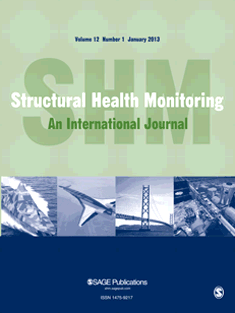
STRUCTURAL HEALTH MONITORING-AN INTERNATIONAL JOURNAL
Innovating Safety and Sustainability in EngineeringSTRUCTURAL HEALTH MONITORING-AN INTERNATIONAL JOURNAL, published by SAGE PUBLICATIONS LTD, stands at the forefront of interdisciplinary research in the fields of Biophysics and Mechanical Engineering, with an impressive 2023 ranking of Q1 in both categories. Since its inception in 2002, this journal has provided a critical platform for scholars and practitioners to disseminate innovative methodologies and findings concerning the assessment, monitoring, and management of structural integrity across various applications. With a robust Scopus ranking of #28 out of 672 in Mechanical Engineering and #8 out of 152 in Biophysics, the journal underscores its commitment to excellence and relevancy in advancing the science of structural health monitoring. Dedicated to fostering collaboration and knowledge sharing, the journal welcomes contributions that push the boundaries of conventional systems, enhancing safety, efficiency, and sustainability in engineering practices. Researchers, professionals, and students are encouraged to explore the wealth of knowledge this journal offers, as it continues to shape the future of structural health monitoring up to 2024 and beyond.