
Indian Journal of Pharmaceutical Education and Research
Scope & Guideline
Transforming the landscape of pharmaceutical sciences through research.
Introduction
Aims and Scopes
- Pharmaceutical Education and Training:
Focus on improving pharmacy education through innovative teaching methodologies, curriculum development, and assessment strategies to better prepare students for professional practice. - Drug Development and Formulation:
Emphasis on the design, formulation, and evaluation of new drug delivery systems, including nanoparticles, liposomes, and other innovative technologies to enhance therapeutic efficacy. - Clinical and Preclinical Research:
In-depth studies on the pharmacological effects of various compounds, including natural products, with a focus on their therapeutic potential and mechanisms of action in clinical and preclinical settings. - Quality Control and Analytical Techniques:
Development and validation of analytical methodologies for the quantification and quality control of pharmaceutical products, ensuring compliance with regulatory standards. - Pharmacology and Toxicology:
Research into the pharmacological effects of drugs and natural products, including their efficacy, safety, and potential toxicological effects. - Public Health and Community Pharmacy:
Studies addressing the role of pharmacists in public health, medication management, and the impact of pharmaceutical care on community health outcomes.
Trending and Emerging
- Nanotechnology in Drug Delivery:
Research related to the application of nanotechnology in drug delivery systems is growing, highlighting advancements in drug formulation and targeted therapy. - Artificial Intelligence and Machine Learning:
There is an increasing trend in the exploration of AI and machine learning applications in pharmaceutical research, particularly in drug discovery and personalized medicine. - Sustainable and Green Chemistry:
Emerging interest in sustainable practices and green chemistry principles in drug formulation and manufacturing processes reflects a growing awareness of environmental impact. - Pharmacogenomics and Personalized Medicine:
A rising focus on pharmacogenomics indicates a shift toward personalized medicine, where genetic factors are considered in drug therapy and development. - Digital Health and Telepharmacy:
The impact of digital health technologies and telepharmacy services has gained attention, especially in light of the COVID-19 pandemic, emphasizing the role of pharmacists in remote patient care.
Declining or Waning
- Traditional Herbal Medicine:
Research on traditional herbal remedies has decreased, possibly due to a growing preference for modern pharmaceuticals and the need for more rigorous clinical validation of herbal products. - Basic Pharmacological Studies:
There seems to be a decline in studies focused solely on basic pharmacology without translational implications, as there is a stronger emphasis on clinical relevance and application. - Animal Models in Drug Testing:
The use of animal models for initial drug testing appears to be waning, likely due to ethical concerns and the push for alternative methods that reduce animal testing. - Pharmaceutical Marketing Strategies:
Papers focusing on traditional pharmaceutical marketing strategies and business models are less frequent, possibly due to an increased focus on patient-centered care and outcomes. - Regulatory Framework Studies:
There is a noticeable decrease in articles exclusively addressing regulatory frameworks, as these topics may be integrated into broader discussions of drug development and education.
Similar Journals

Advances in Pharmacology and Pharmacy
Driving Collaboration in the Pharmaceutical LandscapeAdvances in Pharmacology and Pharmacy is a pioneering journal devoted to the dissemination of cutting-edge research in the fields of pharmacology and pharmaceutical sciences. Published by Horizon Research Publishing, this peer-reviewed journal boasts a commitment to advancing knowledge and innovation, making it an essential resource for researchers, industry professionals, and students alike. With an ISSN of 2332-0036 and an E-ISSN of 2332-0044, it provides a platform for high-quality research articles that explore new therapeutic approaches, drug development strategies, and the regulatory aspects of pharmaceutical science. Although currently lacking a formal impact factor, the journal's emphasis on open access ensures that articles are widely available, promoting the sharing of valuable insights and collaborative efforts in the scientific community. Located at 506 N Garfield Ave, Ste 210, Alhambra, CA 91801, the journal welcomes contributions from diverse areas within pharmacology and pharmacy, reinforcing its significance as a vital resource in the ever-evolving landscape of pharmaceutical research.

PHARMACIA
Bridging the gap between research and real-world pharmacy applications.PHARMACIA is a distinguished open-access journal, published by PENSOFT PUBLISHERS, that has been a pivotal platform for advancing the field of pharmaceutical sciences since 2007. This journal, with ISSN 0428-0296 and E-ISSN 2603-557X, is based in Bulgaria and continues to publish high-quality research and reviews relevant to pharmacy, pharmacology, and toxicology. Recognized in the Q3 category for Pharmaceutical Sciences and Pharmacology (medical), as well as Q2 in Pharmacy according to the latest rankings, PHARMACIA is celebrated for its commitment to fostering knowledge dissemination and innovation in drug development, therapeutic approaches, and pharmacological research. With a Scopus rank of #17 in Pharmacy and recognition in various health professions, the journal attracts contributions from researchers, professionals, and students seeking to impact the pharmaceutical landscape. Its convenient open-access format ensures that articles are readily available to a global audience, encouraging collaboration and advancement in the life sciences.

Journal of Reports in Pharmaceutical Sciences
Bridging Research and Practice in Pharmaceutical Sciences.Journal of Reports in Pharmaceutical Sciences is a pivotal publication in the realm of pharmaceutical research, disseminating innovative findings that cater to the evolving landscape of pharmacology, toxicology, and biomedical engineering. Published by Wolters Kluwer Medknow Publications, the journal serves as a bridge for scholars and practitioners aiming to enhance their understanding of drug development, therapeutic advances, and biopharmaceutical technologies. With an ISSN of 2322-1232 and E-ISSN 2322-5106, it has established its relevance from 2012 to 2022, occupying notable quartile rankings, including Q3 in Pharmacology, Toxicology, and Pharmaceutics. Despite being categorized in Q4 in some areas, the journal's commitment to quality research ensures it remains a respected platform for disseminating significant insights. Researchers, professionals, and students alike will find this journal an indispensable resource for staying updated on critical advancements in pharmaceutical sciences, making it a go-to source for impactful studies that shape industry practices and academic inquiries.

Asian Journal of Pharmaceutical Research and Health Care
Empowering Healthcare Through Innovative ResearchAsian Journal of Pharmaceutical Research and Health Care, published by Wolters Kluwer Medknow Publications, serves as a vital platform for disseminating cutting-edge research in the fields of pharmacology, toxicology, and healthcare. With an ISSN of 2250-1444 and an E-ISSN of 2250-1460, this journal aims to provide valuable insights and advancements in pharmaceutical sciences, targeting researchers, practitioners, and students dedicated to improving health outcomes. Although its coverage in Scopus was discontinued in 2016, the journal maintains importance within the academic community by fostering discourse and sharing knowledge on emerging topics. Despite its challenges reflected in the low Scopus ranking within its category, the Asian Journal of Pharmaceutical Research and Health Care remains committed to enhancing access to critical research and publishing high-quality work that bridges the gap between theory and practice in health care. Researchers and professionals engaged in the pharmaceutical field are encouraged to contribute and leverage this journal as a means to advance their work and elevate healthcare standards in Asia and beyond.
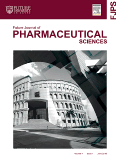
Future Journal of Pharmaceutical Sciences
Transforming Research into Real-World Pharmaceutical ApplicationsThe Future Journal of Pharmaceutical Sciences, published by Springer, stands as a vital resource in the realm of pharmaceutical research and innovation. Recognized for its open access initiative since 2015, this journal promotes extensive dissemination of cutting-edge discoveries, fostering collaboration among researchers, industry professionals, and students alike. With an ISSN of 2314-7245 and an E-ISSN of 2314-7253, it aims to bridge the gap between laboratory research and practical applications in the pharmaceutical sciences. Although specific metrics like HIndex and Scopus ranks are currently unavailable, the journal's commitment to high-quality, peer-reviewed content positions it as a promising platform for advancing pharmaceutical science. By engaging with this journal, contributors and readers can participate in the vibrant discourse shaping the future of drug development, therapeutic strategies, and healthcare solutions.
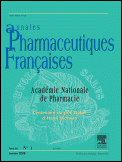
Annales Pharmaceutiques Francaises
Empowering the Pharmaceutical Community Through KnowledgeAnnales Pharmaceutiques Francaises, an esteemed journal published by MASSON EDITEUR, serves as a pivotal platform in the field of Pharmaceutical Science and Pharmacology. Established in 1945 and continuing through 2024, this journal showcases significant contributions to the advancement of pharmaceutical sciences, bridging the gap between research, development, and practical applications. Although it currently does not offer open access, its established reputation and Q3 ranking in both Pharmaceutical Science and Pharmacology highlight its role in disseminating impactful studies. With an ISSN of 0003-4509, the journal is indexed in Scopus, boasting a respectable percentile ranking for both domains, and remains a vital resource for researchers, professionals, and students dedicated to exploring the latest advancements in the pharmaceutical field. Based in France, at 21 Street Camille Desmoulins, Issy, 92789 Moulinais Cedex 9, it aims to foster a deeper understanding of pharmacological innovations and therapeutic agents among its diverse readership.
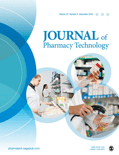
JOURNAL OF PHARMACY TECHNOLOGY
Exploring the forefront of pharmacy technology and application.JOURNAL OF PHARMACY TECHNOLOGY is a premier publication in the field of Pharmaceutical Science, established in 1989 and published by SAGE PUBLICATIONS INC. This journal serves as an essential resource for professionals, researchers, and students dedicated to the advancements in pharmacy technology and the application of innovative solutions in pharmaceutical practices. With an ISSN of 8755-1225 and an E-ISSN of 1549-4810, the journal provides a rigorous peer-reviewed platform for disseminating cutting-edge research and case studies. As of 2023, it is ranked Q3 in the Scopus categories of Pharmacology, Toxicology, and Pharmaceutics, highlighting its relevance in the field. Although it currently does not offer an Open Access option, JOURNAL OF PHARMACY TECHNOLOGY aims to remain a critical avenue for scholarly communication and knowledge dissemination among practitioners in the pharmaceutical sector, ensuring they stay informed of the latest trends and findings that impact their work.
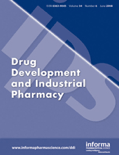
DRUG DEVELOPMENT AND INDUSTRIAL PHARMACY
Pioneering Research in Industrial PharmacyDrug Development and Industrial Pharmacy is a prestigious journal published by Taylor & Francis Ltd, focusing on the critical field of pharmaceutical sciences. With an ISSN of 0363-9045 and an E-ISSN of 1520-5762, the journal has been an essential resource for researchers and professionals since its inception in 1974. It occupies a crucial niche within Drug Discovery, Organic Chemistry, and Pharmaceutical Science, currently ranked in the second and third quartiles, reflecting its solid contribution to the field. The journal encompasses a wide array of topics, including drug development processes, formulation, and industrial manufacturing alongside cutting-edge research in pharmacology and toxicology. With a commendable Scopus ranking demonstrating high relevance—ranked #44 in Pharmaceutical Science—it serves as a vital forum for academia and industry to share innovative findings and methodologies. While it does not offer open access, the journal remains an invaluable resource for those seeking to advance their knowledge and enhance their research in pharmaceutical development.
FARMACIA
Exploring the Frontiers of Pharmacology and Toxicology.FARMACIA is a renowned academic journal published by the SOC STIINTE FARMACEUTICE ROMANIA, specializing in the field of pharmacology, toxicology, and pharmaceutics. With a rich history dating back to its initial publication years of 1945 to 1946, and ongoing contributions since 2008, the journal has established itself as a significant platform for disseminating cutting-edge research in the pharmaceutical sciences. Indexed in Scopus, it holds a commendable Q2 ranking in the Pharmacology, Toxicology and Pharmaceutics category, reflecting its importance in the field. The journal aims to foster knowledge sharing and innovation among researchers, professionals, and students alike, making it an essential resource for advancing pharmaceutical research. Although it does not currently offer Open Access, the content is accessible to a broad academic audience, ensuring valuable insights into current trends and discoveries in pharmacotherapy and drug development. For those seeking a deeper understanding of the evolving landscape of pharmaceutical sciences, FARMACIA provides a critical lens through which to explore and engage with the latest scientific advancements.

Journal of Research in Pharmacy
Exploring New Horizons in Pharmacy and ToxicologyJournal of Research in Pharmacy, published by Marmara University, serves as a pivotal platform for the dissemination of innovative research in the field of pharmacology and pharmaceutical sciences. With an ISSN of 2630-6344 and an E-ISSN of the same, this journal is dedicated to publishing high-quality research spanning various aspects of pharmacology, toxicology, and pharmaceutics. The journal, categorized in Q3 for both pharmacology (medical) and miscellaneous pharmacology, toxicology, and pharmaceutics in 2023, showcases the ongoing evolution of these disciplines amid growing scientific inquiry. As of now, it ranks #56/80 in general pharmacology, toxicology and pharmaceutics, spotlighting its relevance within the academic community. Although it operates under a traditional access model, the journal is committed to providing researchers, professionals, and students with a comprehensive understanding of contemporary challenges and innovations in pharmacy research. Established in 2019, it continues to foster academic dialogue and contribute significantly to the advancement of pharmacological sciences until at least 2024. For all interested in cutting-edge pharmaceutical research, this journal presents an invaluable resource from its base in Istanbul, Turkey.