INDIAN PEDIATRICS
Scope & Guideline
Inspiring excellence in pediatric healthcare.
Introduction
Aims and Scopes
- Child Health and Development:
Focus on the physical, mental, and emotional development of children from infancy through adolescence, including growth patterns, developmental milestones, and interventions to support healthy growth. - Infectious Diseases and Vaccination:
Emphasis on the prevention, diagnosis, and management of infectious diseases affecting children, including vaccine development and immunization strategies against common childhood illnesses. - Chronic Conditions and Disabilities:
Research and clinical practices addressing chronic health conditions prevalent in childhood, such as asthma, diabetes, and obesity, alongside the management of disabilities and their impact on child health. - Neonatology:
A significant focus on neonatal care practices, including management of preterm infants, neonatal intensive care, and interventions for common neonatal conditions. - Pediatric Emergencies and Critical Care:
Coverage of urgent health issues and acute care practices in pediatrics, including trauma, resuscitation, and management of critically ill children. - Community and Public Health Initiatives:
Exploration of community-based health programs and policies aimed at improving pediatric health outcomes, particularly in underserved populations. - Ethics and Medical Education:
Discussion of ethical considerations in pediatric practice and advancements in medical education for health professionals specializing in pediatrics.
Trending and Emerging
- Impact of COVID-19 on Child Health:
An increasing number of studies addressing the effects of the COVID-19 pandemic on children's health, including mental health impacts, vaccination strategies, and the management of COVID-related conditions. - Telemedicine and Digital Health Solutions:
A rise in research exploring the use of telemedicine and digital tools for pediatric care, particularly in response to the challenges posed by the pandemic, emphasizing accessibility and remote care. - Mental Health and Psychosocial Support:
Growing recognition of the importance of mental health in children, with an emphasis on interventions and support systems to address anxiety, depression, and behavioral issues. - Nutrition and Obesity Prevention:
Increased focus on nutritional interventions, dietary patterns, and obesity prevention strategies, reflecting the rising concern over childhood obesity as a public health issue. - Genetic and Rare Diseases:
Emerging interest in the diagnosis and management of genetic disorders and rare diseases in children, highlighting advancements in genetic testing and personalized medicine. - Environmental Health and Child Wellbeing:
Research addressing the impact of environmental factors, such as air quality and climate change, on child health, leading to a broader understanding of public health implications.
Declining or Waning
- Traditional Infectious Disease Management:
As vaccination rates improve and new therapies are developed, the focus on traditional management of infectious diseases is becoming less prevalent compared to emerging infectious threats and chronic disease management. - General Pediatric Practice Studies:
There seems to be a decline in studies focused on general pediatric practices without a specific research angle, as the journal shifts towards more targeted and innovative topics. - Non-communicable Diseases in Isolation:
Research specifically focusing on non-communicable diseases, such as obesity and diabetes, without integrating community health perspectives or preventive strategies appears to be less frequent. - Historical Perspectives in Pediatric Care:
The journal's emphasis on historical analyses of pediatric practices seems to be waning as more emphasis is placed on current evidence-based practices and future directions.
Similar Journals

BMJ Paediatrics Open
Exploring innovative solutions in pediatrics and perinatology.BMJ Paediatrics Open is a distinguished open access journal published by the BMJ PUBLISHING GROUP, focusing on the field of pediatrics, perinatology, and child health. Since its inception in 2017, the journal has made significant strides in disseminating high-quality research, achieving a commendable Q1 ranking in its category for 2023, which underscores its impact and relevance in the medical community. With a Scopus ranking of #89 out of 330 in Pediatrics and a notable 73rd percentile, it serves as a crucial platform for clinicians, researchers, and students alike to share and access cutting-edge findings that influence pediatric practice and policy. Located in the heart of London, this journal is committed to advancing pediatric health through rigorous peer-reviewed research, aiming to address the critical challenges faced in child health today. As an open access journal, it ensures that its high-quality content is freely accessible, fostering a collaborative environment for knowledge exchange across the globe.
ACTA PAEDIATRICA
Empowering Healthcare Through Cutting-Edge ResearchACTA PAEDIATRICA is a prestigious journal in the field of pediatrics, published by Wiley. With its ISSN 0803-5253 and E-ISSN 1651-2227, this journal has been a vital resource for researchers, healthcare professionals, and students since its inception in 1921, aiming to disseminate high-quality research and advancements in child health and development. Recognized for its impact, ACTA PAEDIATRICA boasts an impressive Q1 ranking in Pediatrics, Perinatology and Child Health and Q2 in Medicine (miscellaneous) for 2023, positioning it within the top-tier of medical journals, as evidenced by its Scopus ranking of #35/330 within its category. The journal covers a wide array of topics relevant to pediatric medicine, thus serving as an essential platform for innovative research and practice. Although it does not offer Open Access options, the journal continues to uphold a commitment to enhancing pediatric knowledge and influencing clinical outcomes. Aimed at contributing significantly to the field, ACTA PAEDIATRICA encourages submissions that enhance our understanding of child health, from basic science to clinical applications.
BMC Pediatrics
Connecting researchers to elevate child well-being.BMC Pediatrics is a premier open access journal published by BMC, dedicated to advancing the field of pediatric research. Established in 2001, this journal provides a vital platform for researchers, healthcare professionals, and students to share innovative findings, clinical insights, and studies that focus on child health, development, and well-being. With a commendable position in the second quartile (Q2) of its category for 2023, ranked #103 out of 330 in the Scopus Medicine - Pediatrics, Perinatology, and Child Health category, BMC Pediatrics maintains a strong reputation within the academic community. The journal’s commitment to open access ensures that its high-quality content is readily available to a global audience, fostering collaboration and dialogue among experts. With coverage extending from 2001 to 2024, BMC Pediatrics represents a comprehensive resource for those seeking to stay informed on the latest advancements in pediatrics.
JOURNAL OF PAEDIATRICS AND CHILD HEALTH
Transforming pediatric health through scholarly discourse.JOURNAL OF PAEDIATRICS AND CHILD HEALTH, published by WILEY, stands as a prominent peer-reviewed journal in the field of pediatrics, perinatology, and child health. Established in 1965 and currently converging until 2024, this journal has consistently contributed to the academic discourse through rigorous research and innovative approaches to child health. With an ISSN of 1034-4810 and an E-ISSN of 1440-1754, it is accessible to a global audience, although not open access. The journal's esteemed position is reflected in its Q2 ranking within the Pediatrics, Perinatology and Child Health category for 2023. Holding a Scopus rank of 145 out of 330, it appeals to both established researchers and emerging scholars seeking to disseminate their findings and engage with current trends in child health care. The platform is vital for fostering collaborations and sharing critical advancements, making it an essential resource for professionals dedicated to improving pediatric health outcomes.
Clinical and Experimental Pediatrics
Exploring the frontiers of pediatric medicine and care.Clinical and Experimental Pediatrics, published by the Korean Pediatric Society, is a leading open-access journal dedicated to the ever-evolving field of pediatrics. Since its inception in 2011, this esteemed journal has carved out a significant niche in the academic community, being recognized in the top quartile (Q1) of both Pediatrics and Pediatrics, Perinatology and Child Health categories as of 2023. With its publication based in South Korea, the journal aims to disseminate high-quality research and clinical studies that drive advancements in child health and pediatric care. The impact of its contributions is evidenced by its impressive Scopus rankings, being placed first in Nursing – Pediatrics and within the top 20 in Medicine – Pediatrics, Perinatology and Child Health, thereby positioning it as a critical resource for researchers, healthcare professionals, and students alike. Offering open access since 2011, Clinical and Experimental Pediatrics is committed to ensuring that innovative and vital pediatric research reaches a global audience, promoting knowledge and collaboration across borders. For anyone invested in pediatrics, this journal is an invaluable resource that shapes the future of child health.
Jornal de Pediatria
Advancing pediatric research for a healthier tomorrow.Jornal de Pediatria, published by the Sociedade Brasileira de Pediatria, stands as a premier platform for research and advancements in the field of pediatrics, perinatology, and child health. With an impressive Q1 category ranking in the 2023 metrics, this journal emphasizes the highest standards of scholarly excellence, evident in its Scopus rank of 51 out of 330 in its category, placing it in the 84th percentile. Since its establishment in 1945, its commitment to disseminating crucial research has evolved as it transitioned to an Open Access format in 2013, thereby enhancing the accessibility of vital pediatric knowledge to researchers, healthcare professionals, and students globally. Based in Brazil, the journal continues to foster an informed community around pediatric health issues, ensuring that findings lead to improved health outcomes for children and adolescents worldwide.
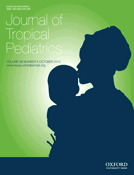
JOURNAL OF TROPICAL PEDIATRICS
Empowering research to combat pediatric health issues.JOURNAL OF TROPICAL PEDIATRICS, published by Oxford University Press, stands as a critical platform for the dissemination of research and clinical advancements in the field of tropical pediatrics. With a rich history dating back to 1955, this journal serves as a significant contributor to our understanding of health issues affecting children in tropical and subtropical regions, focusing on infectious diseases, pediatric care, and child health. It currently holds an impressive Q2 ranking in three categories: Infectious Diseases, Medicine (miscellaneous), and Pediatrics, Perinatology and Child Health, placing it among the top journals in its field. Featuring both formative research and applied studies, the journal aims to address the unique challenges posed by pediatric care in tropical environments. Its inclusion in an esteemed database ensures a broad dissemination of critical knowledge to researchers, healthcare professionals, and students alike, promoting a collaborative approach to improving child health outcomes globally.
ARCHIVES OF DISEASE IN CHILDHOOD
Empowering Clinicians with High-Impact Pediatric ResearchArchives of Disease in Childhood is a premier, peer-reviewed journal published by the BMJ Publishing Group, dedicated to advancing the field of Pediatrics, Perinatology, and Child Health. With a rich history dating back to 1930, this journal has become an essential resource for clinicians, researchers, and policy-makers, providing critical insights and evidence-based information that shape pediatric care. With an impressive ranking of #49 out of 330 in its category on Scopus and positioned in the top 15th percentile, the journal consistently features high-impact studies, comprehensive reviews, and innovative research contributions aimed at improving child health outcomes. Although it does not currently offer Open Access options, its rigorous selection process ensures that every article meets the highest standards of scientific quality. Researchers, health professionals, and students alike rely on the Archives of Disease in Childhood to stay at the forefront of pediatric research, making it an indispensable tool for enhancing child health and wellbeing.
Global Pediatric Health
Fostering a global dialogue on pediatric health advancements.Global Pediatric Health is an esteemed academic journal dedicated to advancing knowledge and research in the field of pediatrics. Published by SAGE Publications Inc, this open-access journal has been providing a platform for high-quality research since its inception in 2014. With a significant focus on areas pertinent to child health, perinatology, and the broader spectrum of pediatric care, it has secured a notable position within the academic community, evidenced by its classification in the Q2 category in Pediatrics and Pediatrics, Perinatology and Child Health for 2023. Global Pediatric Health aims to disseminate innovative findings that inform policy and practice worldwide, ensuring that critical advances in pediatric medicine reach healthcare professionals, researchers, and students alike. By facilitating access to vital research, the journal plays an essential role in shaping the future of child health, making it a valuable resource for anyone invested in improving pediatric outcomes.
Andes Pediatrica
Empowering child health through innovative research.Andes Pediatrica is an esteemed open-access journal published by the SOC CHILENA PEDIATRIA that has been at the forefront of pediatric research since its inception in 2021. Based in Chile, the journal aims to enhance knowledge and dissemination of innovative findings in the fields of pediatrics, perinatology, and child health, making significant contributions to the wellbeing of young populations. With a commitment to open access, it facilitates widespread availability of research, ensuring that crucial information reaches clinicians, researchers, and policymakers globally. Despite its recent launch, Andes Pediatrica has already secured a respectable position within the academic community, reflecting its rank in the Q3 category for 2023 in Pediatrics as per Scopus rankings. By fostering a collaborative environment for sharing cutting-edge research, the journal plays a vital role in addressing contemporary challenges in child health, ultimately striving to improve health outcomes for children both in Chile and beyond.