
INDIANA LAW JOURNAL
metrics 2024
Connecting Established and Emerging Voices in Law
Introduction
INDIANA LAW JOURNAL, a premier publication in the field of law, serves as a vital platform for scholarly discourse and legal scholarship. Established in 1973 and originating from the Indiana University School of Law in Bloomington, this esteemed journal publishes a diverse range of articles, essays, and commentary from both established and emerging legal scholars. With an impressive Scopus Rank of #350 out of 1025 in the Social Sciences domain, placing it in the 65th percentile, the journal is recognized for its contributions to the legal academic community. Its 2023 category quartile ranking of Q2 underscores its significance and relevance, ensuring that published works are widely acknowledged and cited. Although not an open access journal, the INDIANA LAW JOURNAL is committed to fostering robust academic exchanges and enhancing understanding in various legal fields, making it an indispensable resource for researchers, professionals, and students alike. With a history of convergence in publication timelines, it continues to evolve in response to the continually changing legal landscape.
Metrics 2024
 0.361.501.4032
Metrics History
Rank 2024
Scopus
IF (Web Of Science)
JCI (Web Of Science)
Quartile History
Similar Journals

SOUTHERN CALIFORNIA LAW REVIEW
Fostering Critical Analysis in Legal StudiesSouthern California Law Review is a prestigious academic journal published by the University of Southern California, focusing on the expansive field of law. With an ISSN of 0038-3910 and a continuous publication record since 1973, this journal has established itself as a vital platform for legal scholarship and discourse. It holds an impressive Q1 ranking in the law category for 2023 among academic journals, reflecting its significant impact and reputation within the legal community. The journal encompasses a wide array of topics designed to foster rigorous debate and critical analysis, making it a crucial resource for researchers, practitioners, and students alike. Although currently not open access, it consistently aims to provide in-depth scholarly articles that contribute to the development and understanding of law across various dimensions. As it continues to evolve until 2024, Southern California Law Review remains an essential resource for anyone committed to exploring the nuances of legal theory and practice.

Rutgers University Law Review
Engaging minds, transforming legal landscapes.Rutgers University Law Review is a premier legal journal published by Rutgers University, dedicated to advancing scholarly discourse in the field of law. Established to serve as a platform for legal practitioners, academics, and students, this journal showcases a rich tapestry of articles, notes, and commentaries that critically engage with contemporary and historical legal challenges. The journal, indexed with an ISSN of 2374-3859, provides open access options, ensuring that its valuable insights are readily available to the global legal community. The Scopus ranking places it at a commendable 61st percentile within the domain of Social Sciences and Law, highlighting its significance and impact in the legal scholarship landscape. By fostering an environment of rigorous academic inquiry, the Rutgers University Law Review continues to play an essential role in shaping future legal frameworks and discussions.

GEORGE WASHINGTON LAW REVIEW
Advancing Legal Scholarship with ImpactThe George Washington Law Review, ISSN 0016-8076, published by George Washington University, stands as a leading academic journal in the field of law, distinguished by its prestigious Q1 category ranking in Law for 2023. Established as a pivotal platform for legal scholarship, the journal reflects a deep commitment to advancing legal discourse through the publication of rigorous, thought-provoking articles and analyses. The journal's impact is further underscored by its Scopus ranking, placing it in the 72nd percentile within the Social Sciences category for law, showcasing its relevance and influence in legal academia. While not an open-access journal, it contributes significantly to legal research and education, making it invaluable for scholars, practitioners, and students seeking to engage with contemporary legal issues. Its comprehensive coverage since 1976 ensures a wealth of resources dedicated to evolving legal thought and practice, solidifying its role as an essential resource within the legal community.

UNIVERSITY OF ILLINOIS LAW REVIEW
Fostering Intellectual Engagement in Legal DiscourseUNIVERSITY OF ILLINOIS LAW REVIEW, published by the esteemed University of Illinois, stands as a pivotal forum for legal scholarship since its inception. With an ISSN of 0276-9948 and an E-ISSN of 1942-9231, this journal serves the legal community by offering rigorous analyses and innovative insights into contemporary legal issues, making it an essential resource for researchers, legal practitioners, and students alike. Although not an open-access journal, it operates within the United States, with contributions stemming from a rich academic tradition. Notably, it holds a respectable Q3 category ranking in Law according to the 2023 category quartiles and ranks 360th out of 1025 in the Scopus Social Sciences Law rankings, placing it in the 64th percentile, affirming its significance in the legal discourse. The journal's scope encompasses a broad range of legal topics, from constitutional law to international legal studies, thus catering to a diverse readership keen on advancing their understanding of the law. In an era marked by evolving legal landscapes, the UNIVERSITY OF ILLINOIS LAW REVIEW remains committed to fostering intellectual engagement and promoting scholarly exchange among all members of the legal field.
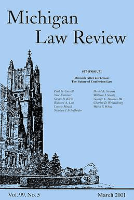
MICHIGAN LAW REVIEW
Exploring the Intersection of Law and SocietyMICHIGAN LAW REVIEW, published by the Michigan Law Review Association, stands as a prestigious journal in the field of law, offering an influential platform for critical legal scholarship and discussion. With an ISSN of 0026-2234 and an E-ISSN of 1939-8557, this journal features a longstanding commitment to analyzing contemporary legal issues and contributing to academic dialogue. Situated in the United States, the journal reflects a rich historical legacy, with converged publication years stretching from 1974 to present, thereby preserving its position as a key resource for legal researchers and practitioners. Ranked in the Q1 category within its field for 2023, and holding a notable Scopus rank of 276 out of 1025 in the Social Sciences _ Law category, it plays a critical role in shaping legal thought and policy. Although not open access, its detailed articles and comprehensive reviews are instrumental for law students, academics, and legal professionals who seek to stay at the forefront of legal scholarship.

BOSTON UNIVERSITY LAW REVIEW
Fostering critical dialogue in the legal community.BOSTON UNIVERSITY LAW REVIEW, a premier legal journal based in the United States, is widely recognized for its contributions to the field of law. Since its inception in 1973, this esteemed publication, with ISSN 0006-8047, has provided a platform for rigorous scholarship and innovative discourse in legal theory and practice. Published by BOSTON UNIV LAW REVIEW, the journal is categorized in the top-tier Q1 of law journals as of 2023, reflecting its high impact and relevance in legal scholarship, backed by a solid Scopus ranking of #219 out of 1025 in Social Sciences _ Law, placing it in the 78th percentile. While not an open-access journal, it remains a vital resource for legal researchers, practitioners, and students, offering comprehensive analyses and insights that inform contemporary legal practices. With a commitment to advancing legal understanding, the BOSTON UNIVERSITY LAW REVIEW seeks to engage and inspire critical thought among its readership.

FORDHAM LAW REVIEW
Charting New Territories in Legal ResearchFORDHAM LAW REVIEW is a prestigious legal journal published by Fordham University, School of Law, based in the United States. Established to disseminate cutting-edge legal scholarship, this journal has consistently achieved an impactful standing within the field, evidenced by its category ranking as Q1 in Law for 2023 and its Scopus ranking of #428 out of 1025 in the Social Sciences Law category, placing it in the 58th percentile. The journal welcomes submissions across diverse legal topics, fostering discourse that advances both legal theory and practice. Although it does not currently offer open access options, the Fordham Law Review serves as a vital resource for scholars, practitioners, and students seeking insights into contemporary legal challenges and developments. With its rich publication history dating back to the converged years of 1973 through 2024, the journal continues to be a cornerstone for rigorous legal analysis and a platform for influencing the evolution of law.

WASHINGTON LAW REVIEW
Connecting Researchers, Practitioners, and StudentsWASHINGTON LAW REVIEW, published by the University of Washington School of Law, is a premier legal journal that plays an essential role in the dissemination of scholarly work in the field of law. With a longstanding commitment to excellence, this journal has been pivotal in shaping legal discourse since its inception. It is ranked in the Q2 quartile in Law, as per 2023 evaluations, and holds a notable position within the top 54th percentile of its category on Scopus. The journal’s extensive publication history, covering years from 1973 to 2024, provides a rich repository of legal scholarship, making it a valuable resource for researchers, practitioners, and students alike. While the journal does not currently offer open access, its authoritative articles cover a diverse array of topics within legal studies, ensuring that the most relevant and impactful discussions are accessible to the academic community and beyond. For those looking to stay informed about cutting-edge legal issues and advancements, WASHINGTON LAW REVIEW remains an indispensable asset in the pursuit of knowledge and advocacy in the realm of law.

COLUMBIA JOURNAL OF LAW AND SOCIAL PROBLEMS
Analyzing the Impact of Law on Social DynamicsCOLUMBIA JOURNAL OF LAW AND SOCIAL PROBLEMS is a distinguished academic journal published by the COLUMBIA JOURNAL TRANSNATIONAL LAW ASSOCIATION, dedicated to the intersection of law and social issues. Established in 1973, this journal serves as a platform for the exploration and analysis of socio-legal problems in the contemporary context. With its robust scope encompassing areas such as social justice, legal reform, and public policy, the journal appeals to researchers, professionals, and students alike who are engaged in critical examinations of the legal systems and their societal impacts. Although it is not an open-access journal, it maintains academic rigor as reflected in its Q4 ranking across various categories including Law and Sociology, indicating its commitment to disseminating scholarly work that contributes to ongoing discussions in these fields. The journal’s address at Columbia University School of Law in New York situates it within one of the leading centers for legal scholarship, making it an essential resource for those seeking to deepen their understanding of law's role in addressing social problems.

CATHOLIC UNIVERSITY LAW REVIEW
Innovating Legal Discourse at the Heart of D.C.CATHOLIC UNIVERSITY LAW REVIEW is a premier legal periodical published by the Catholic University of America Press, located in the heart of Washington, D.C. with a dedicated focus on the intersections of law, education, and religious studies. Since its establishment in 1973, the journal has served as a critical platform for scholarly discourse, presenting innovative legal analysis and thought-provoking research that caters to scholars, practitioners, and students alike. With an ISSN of 0008-8390, this non-open access journal holds a notable place in the academic community, reflected by its category quartiles in 2023, ranking Q4 in Education and Law, and Q3 in Religious Studies. The Catholic University Law Review is distinguished not only by its commitment to advancing legal scholarship but also by its dedication to exploring the implications of law through a distinctly Catholic lens. Its consistent output of high-quality articles contributes to ongoing debates and developments in these fields, making it an essential resource for those interested in the legal implications of contemporary issues.