International Journal of Advances in Engineering Sciences and Applied Mathematics
Scope & Guideline
Fostering Interdisciplinary Collaboration in Engineering
Introduction
Aims and Scopes
- Applied Mechanics and Structural Engineering:
The journal focuses on the mechanics of materials and structures, exploring concepts such as stress analysis, thermal effects, and mechanical properties of materials under various loading conditions. - Thermal and Fluid Dynamics:
Research in this area includes heat transfer mechanisms, fluid flow analysis, and thermal management solutions, particularly in complex systems involving nanofluids and turbulent flows. - Computational Modeling and Simulation:
The journal encourages studies utilizing computational techniques such as finite element analysis, machine learning, and numerical simulations to solve engineering problems and optimize designs. - Material Science and Engineering:
This encompasses the study of advanced materials, including composites and functionally graded materials, and their applications in engineering, particularly in biomedical and structural fields. - Seismic and Geotechnical Engineering:
Research related to seismic hazard analysis, soil-structure interaction, and the behavior of materials under seismic loading conditions is a significant focus, contributing to safer infrastructure design. - Statistical and Probabilistic Methods:
The journal promotes the use of statistical methods and probabilistic approaches in engineering to enhance reliability, performance prediction, and risk assessment in various applications.
Trending and Emerging
- Integration of Machine Learning in Engineering Applications:
There is a significant increase in studies applying machine learning and artificial intelligence techniques to solve engineering problems, optimize designs, and predict material behaviors, indicating a trend towards data-driven methodologies. - Nanofluid and Advanced Material Research:
Research involving nanofluids and functionally graded materials is gaining traction, highlighting their unique properties and applications in thermal management and structural engineering. - Multi-Scale and Multi-Physics Modeling:
Emerging studies focus on multi-scale modeling that integrates various physical phenomena, such as fluid dynamics and thermal effects, to provide more comprehensive insights into complex systems. - Sustainable and Green Engineering Practices:
There is an increasing emphasis on sustainability in engineering practices, with research exploring eco-friendly materials, energy-efficient designs, and the environmental impact of engineering solutions. - Advanced Computational Techniques:
The journal is seeing a rise in publications utilizing advanced computational methods, such as the lattice Boltzmann method and hybrid computational approaches, to address complex engineering challenges.
Declining or Waning
- Traditional Analytical Methods in Isolation:
There has been a noticeable decrease in the publication of papers solely focusing on classical analytical methods without integration with modern computational techniques, as researchers increasingly favor hybrid approaches. - Basic Theoretical Studies Without Application:
Papers that focus purely on theoretical constructs without practical applications or implications have become less prominent, reflecting a shift towards research that demonstrates tangible impacts or innovations. - Low-Impact Environmental Studies:
Research addressing low-impact environmental factors, particularly in engineering contexts, has been less frequently published, possibly due to a growing emphasis on more comprehensive and impactful environmental analyses. - Static Analysis of Materials:
Static analyses, especially those that do not incorporate dynamic or time-dependent factors, have decreased, as the field moves towards understanding materials and structures under varying operational conditions.
Similar Journals
MECCANICA
Pioneering Insights in Engineering and MaterialsMECCANICA, an esteemed journal published by Springer, stands at the forefront of research in the fields of Condensed Matter Physics, Mechanical Engineering, and Mechanics of Materials. Established in 1966 and continuing through 2024, this journal provides a robust platform for the dissemination of innovative research and advancements in these increasingly interconnected domains. With an impressive 2023 ranking placing it in the Q2 category across multiple fields, MECCANICA boasts a Scopus rank of #198 in Mechanical Engineering, #150 in Condensed Matter Physics, and #141 in Mechanics of Materials, highlighting its significance and influence within the scholarly community. The journal aims to foster dialogue among researchers, professionals, and students, facilitating the exchange of cutting-edge ideas and methodologies crucial for overcoming contemporary engineering and physics challenges. Readers can access a wealth of knowledge through its comprehensive articles, and while it does not currently offer open access, the journal remains instrumental in shaping the future of engineering and physical sciences.
COMPUTATIONAL MECHANICS
Elevating Research Standards in Computational MechanicsCOMPUTATIONAL MECHANICS, published by SPRINGER, is a premier international journal that focuses on the intersection of applied mathematics, engineering, and computational methods. With a commendable Q1 ranking in multiple categories, including Applied Mathematics and Mechanical Engineering, this journal is pivotal for disseminating groundbreaking research and innovative methodologies that advance the field. The journal has steadily contributed to the academic community since its inception in 1986 and continues to lead discussions and practices in computational mechanics and related disciplines. With a robust impact reflected in its Scopus rankings—placing it within the top percentiles across various categories—COMPUTATIONAL MECHANICS serves as a crucial platform for researchers, professionals, and students seeking to explore and contribute to significant advancements in computational theory and mathematical applications. Although it does not currently operate under an open access model, the journal ensures wide accessibility through libraries and institutional subscriptions, fostering a rich exchange of knowledge in the global scientific community.

Journal of the Serbian Society for Computational Mechanics
Bridging Theory and Application in MechanicsJournal of the Serbian Society for Computational Mechanics, published by the Serbian Society for Computational Mechanics, is a vital platform for advancing research and knowledge in the field of computational mechanics. Established in 2012, this journal serves the academic community by providing a forum for innovative studies, methodologies, and applications within computational mechanics, presenting valuable insights for researchers, professionals, and students alike. With an ISSN of 1820-6530 and a ranking of Q4 in Computational Mechanics, it carries an essential influence in the engineering realm, despite its current rank of 71 out of 89. The journal's commitment to scholarly excellence aims to foster collaboration and encourage interdisciplinary research, making it an important resource for those invested in the evolving landscape of computational methodologies. Although the journal currently does not offer Open Access options, it remains dedicated to disseminating knowledge that will resonate within the local and global scientific community.

Journal of Computational Applied Mechanics
Advancing the Frontiers of Computational MechanicsJournal of Computational Applied Mechanics, published by UNIV TEHRAN, DANISHGAH-I TIHRAN, is an influential open-access journal that has been disseminating significant research findings since its inception in 2012. With a dedicated focus on the fields of Computational Mechanics, Mechanical Engineering, and Mechanics of Materials, this journal has garnered a Q3 ranking in multiple relevant categories as of 2023, indicating its burgeoning impact within the academic community. Although precise HIndex scores are currently unavailable, the journal's recognition is underscored by its Scopus rankings, placing it in the middle tier among its peers. The journal invites researchers, professionals, and students to contribute to and engage with the continually evolving discourse in applied mechanics, fostering innovation through the dissemination of quality research. As an open-access journal, it ensures that findings are readily accessible to a global audience, thereby enhancing collaboration and knowledge sharing in the scientific community.
Applications of Mathematics
Innovating Solutions Through Mathematical ApplicationsApplications of Mathematics, published by SpringerNature, is a respected journal based in the Netherlands that provides a platform for innovative research in the field of applied mathematics. Since its inception in 1997 and with a convergence ongoing until 2024, the journal supports the dissemination of high-quality scholarship, although it currently holds a Q4 category ranking in the applied mathematics category, which reflects its niche importance in the academic community. Researchers and professionals in the field can access a diverse array of applied mathematical techniques and their practical applications, contributing to advancements across various disciplines. While the journal does not operate under an open access model, it is indexed and ranked in Scopus, where it holds a rank of 419 out of 635, placing it in the 34th percentile. This underscores its value and relevance in the global research landscape.
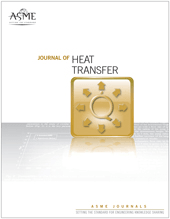
JOURNAL OF HEAT TRANSFER-TRANSACTIONS OF THE ASME
Elevating Heat Transfer Insights Since 1945.JOURNAL OF HEAT TRANSFER-TRANSACTIONS OF THE ASME, with ISSN 0022-1481 and E-ISSN 1528-8943, is a leading publication in the field of heat transfer, mechanical engineering, and related disciplines, published by the renowned American Society of Mechanical Engineers (ASME). This esteemed journal, which has been in circulation since 1945, provides a platform for novel research findings and reviews that the mechanical engineering community can rely upon, contributing significantly to the advancement of knowledge in heat transfer processes. The journal is recognized for maintaining a strong impact in several categories, attaining Q2 quartile rankings in Condensed Matter Physics, Mechanical Engineering, and Mechanics of Materials, reflecting its influential role in shaping scientific dialogues. With a commendable Scopus ranking, including a percentile of 63rd in Mechanical Engineering, it attracts submissions from leading researchers and industry professionals alike. Although access options are currently undergoing changes, the commitment to disseminating cutting-edge research remains steadfast. Gathering insights from historical and contemporary studies, the JOURNAL OF HEAT TRANSFER stands as a vital resource for those aiming to innovate in heat transfer technologies and methodologies.
Moscow University Mechanics Bulletin
Bridging Theory and Practice in MechanicsMoscow University Mechanics Bulletin, published by PLEIADES PUBLISHING INC, is a dedicated journal that has been influencing the fields of mechanical engineering and mechanics since its inception. With an ISSN of 0027-1330 and E-ISSN of 1934-8452, this journal serves as a crucial platform for advancing knowledge in mathematics, mechanical engineering, and mechanics of materials. Though currently indexed in the Q4 category across these disciplines, it offers a unique space for researchers and professionals to engage with emerging theories, experimental results, and practical applications. With a converged publication history spanning from 1973 to 1987, and continuing from 2007 to 2024, the journal remains relevant in today’s academic landscape. Though it operates under traditional access models, the journal's global reach aims to connect diverse voices in engineering research. Aspiring researchers and seasoned professionals alike will find valuable insights and a robust discourse that contribute to their respective fields.
Proceedings of the Institution of Mechanical Engineers Part N-Journal of Nanomaterials Nanoengineering and Nanosystems
Connecting Researchers and Practitioners in the World of NanoscienceProceedings of the Institution of Mechanical Engineers Part N - Journal of Nanomaterials Nanoengineering and Nanosystems is a premier journal published by SAGE Publications Ltd that focuses on advancing the field of nanotechnology through high-quality research and critical review articles. With an ISSN of 2397-7914 and an E-ISSN of 2397-7922, this journal serves as a vital platform for researchers and industry professionals exploring the interdisciplinary applications of nanomaterials and nanoengineering. The journal has achieved a significant standing in the academic community, reflected in its Q3 ranking across multiple categories including Condensed Matter Physics, Electrical and Electronic Engineering, and Materials Science for 2023, positioning it within the 75th percentile in relevant fields. Covering topics that range from fundamental research to practical applications, the journal aims to disseminate findings that push the boundaries of materials science and engineering. With open access options available, it ensures that groundbreaking research is accessible to a global audience. The proceedings are published from 2016 to 2024 and are vital for anyone involved in the rapidly evolving domain of nanoscience.
Journal of Applied Mechanics and Technical Physics
Innovating Insights in Applied Mechanics and Technical PhysicsJournal of Applied Mechanics and Technical Physics is a distinguished publication that serves as a vital resource for researchers and professionals in the realms of mechanical engineering, mechanics of materials, and condensed matter physics. Published by MAIK NAUKA/INTERPERIODICA/SPRINGER, this journal has been committed to disseminating high-quality research since its inception in 1965. With a noted presence in the academic community, it holds a respectable Q3 ranking in multiple categories as of 2023, indicating its relevance and contribution to the field. Although it does not currently offer open access, the journal provides valuable insights and advancements through its rigorous peer-review process. Covering a broad spectrum of topics in applied mechanics and technical physics, it aims to foster innovation and dialogue among scientists, engineers, and scholars alike. Located in the United States, the journal continues to make significant strides in bridging the gap between theoretical research and practical applications, making it an essential read for anyone engaged in these dynamic fields.
Lobachevskii Journal of Mathematics
Advancing the Frontiers of Mathematical ThoughtLobachevskii Journal of Mathematics is a distinguished academic journal published by MAIK NAUKA/INTERPERIODICA/SPRINGER, dedicated to advancing research in the diverse field of mathematics. With an ISSN of 1995-0802 and an E-ISSN of 1818-9962, it has been a vital resource for scholars since its inception in 1999. Recognized for its contributions to the field, the journal proudly holds a Q2 ranking in the 2023 Mathematics (miscellaneous) category, placing it among the top half of its peers in Scopus, with a rank of 174 out of 399 and a 56th percentile standing. While currently not classified as an open-access journal, it effectively reaches a global audience through comprehensive dissemination of innovative mathematical research until 2024. Researchers, professionals, and students alike will find the Lobachevskii Journal a significant platform for the latest developments and theories in general mathematics, fostering an environment of scholarly exchange and growth.