
International Journal of Biomathematics
Scope & Guideline
Innovating Solutions Through Mathematical Biology
Introduction
Aims and Scopes
- Mathematical Modeling of Biological Systems:
The journal publishes articles that develop and analyze mathematical models to understand complex biological processes, including disease dynamics, population interactions, and ecological systems. - Epidemiological Modeling:
A significant focus on the modeling of infectious diseases, utilizing different mathematical approaches to study transmission dynamics, control strategies, and the impact of interventions. - Control Theory Applications:
Research that applies optimal control theory to biological systems, particularly in the context of disease management, pest control, and resource allocation. - Stochastic Processes in Biology:
Incorporation of stochastic models to capture the inherent randomness in biological systems, which is essential for understanding phenomena such as disease spread and population dynamics. - Numerical Simulations and Computational Techniques:
The journal encourages the use of numerical methods and simulations to analyze and visualize the behavior of complex models, enhancing the understanding of theoretical predictions.
Trending and Emerging
- COVID-19 Related Research:
A significant increase in publications related to COVID-19 dynamics, modeling, and control strategies, highlighting the urgent need for mathematical insights during the pandemic. - Fractional Calculus in Biological Models:
There is a rising trend in utilizing fractional calculus to model biological processes, allowing for more accurate representations of memory and hereditary properties in various systems. - Integrated Multi-Scale Models:
Emerging interest in multi-scale models that integrate different biological levels (e.g., cellular, individual, population) to provide a comprehensive understanding of complex phenomena. - Impact of Environmental Factors on Disease Dynamics:
Growing research focus on how environmental variables (such as climate change and ecological interactions) influence disease transmission and population dynamics. - Machine Learning and Data-Driven Approaches:
An increasing incorporation of machine learning techniques and data-driven modeling approaches to enhance predictive capabilities and optimize control strategies in biological systems.
Declining or Waning
- Generalized Mathematical Approaches:
There has been a noticeable decrease in publications focusing on generalized mathematical theories that do not directly relate to specific biological applications, indicating a shift toward more applied research. - Non-Mathematical Approaches in Biomathematics:
Research that does not employ rigorous mathematical modeling, such as purely qualitative studies or those relying heavily on empirical data without mathematical backing, is becoming less common in the journal's recent issues. - Basic Mechanistic Models:
The focus on simplistic mechanistic models without consideration for more complex interactions and dynamics has diminished, reflecting a trend towards more sophisticated modeling techniques.
Similar Journals

IMA JOURNAL OF NUMERICAL ANALYSIS
Fostering Innovation in Numerical TechniquesIMA Journal of Numerical Analysis, published by Oxford University Press, stands as a premier platform for cutting-edge research in the field of numerical analysis, exemplifying the latest advancements and methodologies in applied, computational, and general mathematics. Since its inception in 1981, this esteemed journal has continually contributed to the academic community by publishing high-quality, peer-reviewed articles that foster innovation and collaboration among researchers. With an impressive Q1 ranking across multiple categories, including Applied Mathematics and Computational Mathematics, it plays a crucial role in disseminating knowledge, as indicated by its Scopus rankings which place it in the top 25% of journals within its field. Although the journal is not open access, it remains a vital resource for academics, professionals, and students eager to engage with the ongoing evolution of numerical methods. By serving as a conduit for novel ideas and rigorous research, the IMA Journal of Numerical Analysis ensures that its contributors and readers are at the forefront of this dynamic discipline.

JOURNAL OF BIOLOGICAL SYSTEMS
Advancing interdisciplinary insights in biological systems.Journal of Biological Systems is a prestigious journal published by World Scientific Publishing Co. Pte Ltd that serves as a vital platform for interdisciplinary research in the domains of agricultural and biological sciences, applied mathematics, and ecology. With its inception in 1996 and converging insightful contributions up to the present, the journal showcases innovative research that influences both theoretical and practical aspects within these critical fields. Its commendable Q2 category rankings in 2023 highlight its commitment to high-quality scholarship, achieving rankings of #62 in Agricultural and Biological Sciences, #243 in Applied Mathematics, and #204 in Ecology on the respected Scopus index. While the journal maintains a traditional publishing model, its rigorous peer-review process ensures that it meets the highest academic standards. The Journal of Biological Systems is essential reading for researchers, professionals, and students keen to keep abreast of the latest developments and methodologies impacting ecological systems, mathematical applications, and biological innovations.

Mathematics in Applied Sciences and Engineering
Connecting scholars to drive mathematical innovation.Mathematics in Applied Sciences and Engineering is a pioneering Open Access journal published by WESTERN LIBRARIES in Canada, dedicated to advancing the field of applied mathematics and its integration into engineering practices. With an E-ISSN of 2563-1926, this journal has been actively disseminating critical research since its inception in 2020, and aims to foster innovation and collaboration among researchers, professionals, and students alike. The journal excels in covering important topics within applied mathematics, modeling, and simulation, despite its current standing in the Q4 quartile for these categories according to the 2023 rankings, indicating significant opportunities for growth and contribution in these fields. Positioned in a competitive academic landscape—ranked #437 out of 635 in Applied Mathematics and #253 out of 324 in Modeling and Simulation—this outlet serves as an accessible platform for scholarly exchange, ensuring that emerging ideas and methodologies reach a broad audience while maintaining a commitment to academic integrity and quality.
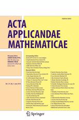
ACTA APPLICANDAE MATHEMATICAE
Advancing the Frontiers of Applied MathematicsACTA APPLICANDAE MATHEMATICAE is a prestigious journal in the field of Applied Mathematics, published by Springer in the Netherlands. Since its inception in 1983, it has consistently contributed to the advancement of mathematical theory and its applications across various domains, fostering a dialogue between theoretical foundations and practical implementations. The journal holds a commendable position in the academic community, being ranked in the Q2 category and achieving a Scopus rank of 246 out of 635 in Applied Mathematics, which places it in the 61st percentile, reflecting its significant impact and relevance. ACTA APPLICANDAE MATHEMATICAE seeks to disseminate high-quality research articles, review papers, and case studies that address contemporary challenges in applied mathematics, thus inviting submissions that enhance the understanding of both foundational concepts and innovative applications. While it retains a traditional subscription-based access model, the journal emphasizes the importance of broadening the reach of mathematical research. It serves as an invaluable resource for researchers, professionals, and students eager to engage with current advancements and contribute to this dynamic field.

JAPAN JOURNAL OF INDUSTRIAL AND APPLIED MATHEMATICS
Fostering Interdisciplinary Insights in Applied MathematicsThe Japan Journal of Industrial and Applied Mathematics, published by Springer Japan KK, is a pivotal platform for disseminating cutting-edge research in the fields of applied mathematics and engineering. With an ISSN of 0916-7005 and an E-ISSN of 1868-937X, this journal has been a cornerstone in the academic community since its inception in 1991 and will continue to contribute pivotal insights through 2024. Positioned in the Q3 category for both Applied Mathematics and Miscellaneous Engineering according to 2023 rankings, it is recognized for its diverse range of topics and interdisciplinary approaches. Despite its competitive ranking, the journal fosters valuable contributions that challenge conventional methodologies and inspire innovation. Researchers, professionals, and students alike will find the journal’s contents invaluable for advancing knowledge and exploring new methodologies in industrial and applied mathematics.

Journal of Biological Dynamics
Connecting scientists and ideas in biological dynamics.The Journal of Biological Dynamics is a pivotal open access publication, established in 2007 and published by Taylor & Francis Ltd, that caters to a broad field of inquiry within Ecology, Evolution, Behavior, and Systematics. With an ISSN of 1751-3758 and an E-ISSN of 1751-3766, this journal has garnered a respectable reputation, securing a Q2 ranking in both its primary categories according to the 2023 metrics. The journal aims to disseminate high-quality research that stimulates dialogue among ecological scientists, practitioners, and students while providing insightful analysis on biological dynamics. As part of its commitment to accessibility, it has been an open access publication since 2012, allowing free access to its rich repository of knowledge. Hailing from the United Kingdom, this journal not only provides a platform for original research but also contributes significantly to advancing ecological understanding through its innovative approach.
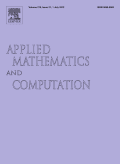
APPLIED MATHEMATICS AND COMPUTATION
Unveiling New Horizons in Applied MathematicsApplied Mathematics and Computation is a premier journal dedicated to the dissemination of high-quality research in the field of applied mathematics and computational methods. Published by Elsevier Science Inc, this influential journal has established itself as a key resource for researchers, professionals, and students interested in mathematical modeling, numerical analysis, computational algorithms, and their applications across various disciplines. With an impressive impact factor reflecting its scholarly credibility, it holds a distinguished position in the Q1 quartile for both applied and computational mathematics as of 2023, ranking #31/635 and #12/189 in Scopus categories respectively, thereby indicating its significant impact on the academic community. The journal encompasses a broad spectrum of topics, encouraging original research, critical reviews, and innovative methodologies that address real-world challenges. Although it currently does not offer open access options, it remains a cornerstone publication for those at the forefront of mathematical research, continuously bridging theory with practical computation since its inception in 1975.

NONLINEAR DYNAMICS
Connecting Researchers in the Realm of Nonlinear EngineeringNONLINEAR DYNAMICS is an esteemed academic journal published by SPRINGER, focusing on a diverse range of topics within the fields of Aerospace Engineering, Applied Mathematics, Control and Systems Engineering, Electrical and Electronic Engineering, Mechanical Engineering, and Ocean Engineering. Since its inception in 1990, this journal has become a premier platform for disseminating cutting-edge research and innovative methodologies from both theoretical and practical perspectives. With a high impact factor and ranked in the Q1 quartile across several engineering and mathematics categories, NONLINEAR DYNAMICS is recognized for its significant contribution to advancing knowledge and technology in nonlinear phenomena. Researchers and professionals are encouraged to engage with this journal to publish their findings and stay at the forefront of developments. Although it does not offer open access options, the journal ensures rigorous peer review, enhancing the credibility and visibility of published work.

Journal of Computational and Nonlinear Dynamics
Unraveling Complex Problems with Cutting-Edge Methodologies.Welcome to the Journal of Computational and Nonlinear Dynamics, a leading publication in the fields of applied mathematics, control and systems engineering, and mechanical engineering, published by the esteemed American Society of Mechanical Engineers (ASME). With an ISSN of 1555-1423 and an E-ISSN of 1555-1415, this journal has been a vital resource since its inception in 2006, promoting high-quality research and innovative methodologies aimed at solving complex engineering problems. With a commendable impact in academic circles, it ranks in the Q3 quartile for Applied Mathematics and Control and Systems Engineering, and Q2 for Mechanical Engineering as of 2023. The journal facilitates the dissemination of research findings, theoretical advancements, and practical applications, making it an essential platform for researchers, professionals, and students looking to advance their knowledge and engage with cutting-edge dynamics research. While currently not available as an open-access publication, subscribers benefit from a wealth of scholarly articles that contribute to the academic community's understanding of computational and nonlinear dynamics in various engineering disciplines.

BULLETIN OF MATHEMATICAL BIOLOGY
Pioneering Insights in Mathematical BiologyBulletin of Mathematical Biology, published by Springer, is a premier journal dedicated to advancing the field of mathematical biology. With an ISSN of 0092-8240 and an E-ISSN of 1522-9602, this journal has been at the forefront of interdisciplinary research since its inception in 1973, continuing to deliver high-quality contributions through 2024. Operating without an open-access model, the journal maintains robust academic rigor, reflected in its category quartiles for 2023, which positions it in Q1 and Q2 across several relevant fields, including Agricultural and Biological Sciences, Biochemistry, Genetics, and Mathematics, among others. Its impressive Scopus ranks further underscore its significance, placing it in the top tier of journals in general mathematics and agricultural sciences. Researchers, professionals, and students looking to deepen their understanding and contribute to the evolving landscape of mathematical biology will find this journal an essential resource for contemporary studies and advancements in the field.