International Journal of Computational Science and Engineering
Scope & Guideline
Pioneering Research in Computational Science and Engineering
Introduction
Aims and Scopes
- Computational Modeling and Simulation:
Research that involves developing, analyzing, and validating computational models and simulations to solve complex engineering problems. - Machine Learning and Artificial Intelligence:
Studies that explore novel algorithms, frameworks, and applications of machine learning and AI in various fields including healthcare, finance, and environmental science. - Data Science and Big Data Analytics:
Research focused on methodologies for managing, analyzing, and extracting insights from large datasets using advanced computational techniques. - Network Security and Cryptography:
Papers addressing issues related to cybersecurity, encryption methods, and secure data transmission in various computing environments. - Cloud Computing and Edge Computing:
Research on the development and optimization of cloud and edge computing architectures, including resource management and service provisioning. - Optimization Techniques:
Studies that apply mathematical and heuristic optimization methods to improve performance in engineering and computational tasks. - Remote Sensing and Image Processing:
Research related to the analysis and processing of remote sensing data and images, with applications in environmental monitoring and agriculture. - Internet of Things (IoT) Applications:
Exploration of IoT technologies and their applications in real-world scenarios, including smart cities, healthcare, and industrial automation.
Trending and Emerging
- Deep Learning Innovations:
There has been a significant rise in studies focusing on advanced deep learning techniques, particularly in applications such as image recognition, medical diagnosis, and natural language processing. - Quantum Computing Applications:
Emerging research into quantum algorithms and their applications suggests a growing interest in harnessing quantum computing for solving complex computational problems. - Sustainable Computing Solutions:
Research addressing sustainability in computing, including energy-efficient algorithms and green computing practices, is gaining traction as environmental concerns become more prominent. - Federated Learning and Privacy-Preserving Techniques:
An increasing focus on federated learning and other privacy-preserving methodologies reflects the growing importance of data privacy and security in machine learning applications. - Interdisciplinary Approaches:
There is a noticeable trend towards interdisciplinary research that combines computational techniques with fields such as biology, social sciences, and economics, fostering innovative solutions to complex problems.
Declining or Waning
- Traditional Software Engineering Practices:
There has been a noticeable decline in research centered around conventional software engineering methodologies, as the field shifts towards more agile, DevOps, and automated approaches. - Basic Algorithm Development:
Research focused on developing basic algorithms without substantial application or innovation has decreased, as there is a growing preference for applied and hybrid methodologies. - Static Network Protocols:
Research on static network protocols has waned, likely due to the increasing relevance of dynamic, adaptive networking solutions in modern computing environments. - Purely Theoretical Computer Science:
The focus on purely theoretical aspects of computer science is diminishing, with a growing emphasis on practical applications and interdisciplinary research. - Single-Domain Research:
Research papers that focus solely on one domain without interdisciplinary connections are becoming less frequent, as the trend moves towards integrated approaches that span multiple fields.
Similar Journals

International Journal of Innovative Computing Information and Control
Pioneering insights in software engineering and beyond.International Journal of Innovative Computing Information and Control, published by ICIC INT, is a prominent platform dedicated to advancing the fields of computational theory, information systems, software engineering, and theoretical computer science. Since its inception in 2007, the journal has garnered attention for its rigorous peer-reviewed research and has established itself within the academic community, attaining a notable Q3 quartile ranking across its categories as of 2023. With an impressive track record of convergence from 2007 to 2024, this journal offers a wealth of insights and innovations for researchers and professionals striving to push the boundaries of technology and computing. While it operates under a subscription model, the journal's commitment to enhancing knowledge in the ever-evolving landscape of computational sciences makes it an essential resource for academics, providing timely articles that address contemporary challenges in the field.

Journal of Internet Technology
Connecting Ideas, Empowering ResearchThe Journal of Internet Technology (ISSN: 1607-9264, E-ISSN: 2079-4029) is a leading academic publication, fostered by the LIBRARY & INFORMATION CENTER at National Dong Hwa University, Taiwan. Established in 2004, the journal has become an essential resource for researchers, professionals, and students in the fields of Computer Networks and Communications and Software Development, achieving a commendable Q3 ranking in both categories as of 2023. With an impressive track record extending to 2024, the journal offers a platform for disseminating high-quality research and innovative ideas. Notably, it ranks #212 out of 395 in Computer Networks and Communications and #251 out of 407 in Software as per Scopus metrics. The journal remains committed to advancing knowledge and fostering interdisciplinary collaboration in the rapidly evolving digital landscape, making it a vital tool for those looking to stay at the forefront of internet technology research.
JOURNAL OF SUPERCOMPUTING
Unraveling the Complexities of Theoretical Computer ScienceJOURNAL OF SUPERCOMPUTING is a premier academic journal published by SPRINGER, situated in the Netherlands, that has made significant contributions to the fields of computer science, particularly in hardware and architecture, information systems, software, and theoretical computer science. With a robust publication history spanning from 1987 to 2024, this journal has cultivated a strong reputation, evidenced by its Category Quartiles ranking in the Q2 category across multiple relevant domains in 2023. The journal's Scopus rankings further underscore its influence, boasting a 78th percentile in mathematics and theoretical computer science, revealing the high quality of research disseminated within its pages. As vital discourse unfolds in the realm of supercomputing—where innovative techniques and technologies rapidly evolve—this journal serves as a crucial platform for researchers, professionals, and students to explore cutting-edge studies and build upon the foundations of knowledge in this dynamic field.
NEW GENERATION COMPUTING
Driving Excellence in Dynamic Computing DisciplinesNEW GENERATION COMPUTING is a prominent academic journal published by SPRINGER, specializing in the dynamic fields of Computer Networks, Hardware and Architecture, Software Engineering, and Theoretical Computer Science. With a commitment to disseminating high-quality research since its inception in 1983 and extending its coverage to 2024, this journal occupies a vital role in advancing knowledge and innovation within these critical domains. Holding prestigious Q2 rankings in Computer Networks and Communications, Hardware and Architecture, and Software, as well as a Q3 ranking in Theoretical Computer Science for 2023, NEW GENERATION COMPUTING attracts significant contributions from scholars and professionals around the globe. Researchers will find its rigorous peer-review process ensures the publication of impactful studies, while students gain access to cutting-edge research that shapes contemporary computing practices. Though it does not offer open access, the journal remains an invaluable resource in the academic community, fostering collaboration and dialogue among experts aiming to push the boundaries of technology.
Frontiers of Computer Science
Fostering Dialogue that Shapes the Future of TechnologyFrontiers of Computer Science is a leading peer-reviewed journal dedicated to advancing the field of computer science through the publication of high-quality research articles, reviews, and theoretical discussions. Published by HIGHER EDUCATION PRESS, this journal has gained significant recognition, currently boasting a prestigious impact factor and ranking in the Q1 quartile for both Computer Science (miscellaneous) and Theoretical Computer Science categories in 2023. With a focus on the intersection of computational theory and practical applications, it serves as a vital platform for researchers, professionals, and students alike who are eager to contribute to and stay updated with groundbreaking developments. The journal’s scope encompasses a wide range of topics, reflecting the diverse nature of computer science today. Operating from Beijing, China, it emphasizes Open Access, ensuring that vital research is readily available to the global academic community. With its convergence period spanning from 2013 to 2024, Frontiers of Computer Science remains committed to fostering innovation and scholarly dialogue that drives the future of technology.

International Journal of Networked and Distributed Computing
Exploring the Dynamics of Distributed ComputingWelcome to the International Journal of Networked and Distributed Computing, published by SpringerNature, a premier outlet for cutting-edge research in the realms of computer networks and distributed computing systems. Established as an Open Access journal since 2013 and based in the Netherlands, this publication strives to disseminate high-quality, peer-reviewed studies that address the complexities of contemporary computing challenges. With an impact factor that reflects its growing influence—positioned in the Q3 category for both Computer Networks and Communications and Computer Science Applications—this journal serves as a pivotal resource for scholars and practitioners aiming to advance knowledge and innovation in this rapidly evolving field. The journal encompasses diverse topics, from network protocols to distributed algorithms, ensuring that researchers, professionals, and students can find relevant insights and methodologies to inform their work. Join us in exploring the depths of networked and distributed computing, contributing to a collaborative academic environment that shapes the future of technology.

Computer Science Journal of Moldova
Advancing Knowledge in Artificial Intelligence and BeyondComputer Science Journal of Moldova, published by the Institute of Mathematics and Computer Science Academy, serves as a pivotal platform for disseminating research in the field of computer science since its inception in 1993. With a focus on a diverse range of subjects, including Artificial Intelligence, Computational Mathematics, and Software Engineering, this open access journal aims to foster innovation and collaboration among researchers, students, and industry professionals. Despite its current positioning in the lower quartiles as per the latest Scopus rankings, the journal remains committed to enhancing the visibility of regional research and addressing contemporary challenges through scholarly contributions. The journal’s open access model ensures that knowledge is freely available, promoting broader readership and impact within the international academic community. As it moves through the converged years from 2019 to 2024, the Computer Science Journal of Moldova continues to aspire toward empowering the next generation of computer scientists while enriching the global dialogue in this rapidly evolving field.
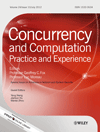
CONCURRENCY AND COMPUTATION-PRACTICE & EXPERIENCE
Advancing Knowledge in Computational InnovationCONCURRENCY AND COMPUTATION-PRACTICE & EXPERIENCE, published by Wiley in the United Kingdom, serves as a pivotal platform for advancing research and innovation in the fields of computational theory, computer networks, and practical applications of computer science. With an impressive impact factor and recognition in the Q2 category for disciplines such as Computational Theory and Mathematics, this journal attracts a diverse range of scholarly articles that address the current challenges and developments in these areas. It boasts a comprehensive viewership with options for Open Access, enabling wide dissemination of knowledge. Indexed by Scopus with notable rankings in multiple categories, including a remarkable position in Computational Theory and Mathematics (Rank #41/176), the journal not only elevates academic discourse but also fosters collaboration among researchers, professionals, and students alike. As it progresses toward its 2024 milestone, CONCURRENCY AND COMPUTATION-PRACTICE & EXPERIENCE remains dedicated to publishing high-quality research that prepares its readership for the evolving technological landscape.
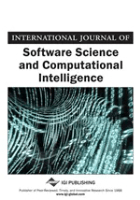
International Journal of Software Science and Computational Intelligence-IJSSCI
Pioneering Research in Software Science and Computational IntelligenceInternational Journal of Software Science and Computational Intelligence (IJSSCI) is a prominent academic journal published by IGI Global, dedicated to advancing the fields of software science and computational intelligence. With its ISSN 1942-9045 and E-ISSN 1942-9037, IJSSCI offers a platform for researchers, practitioners, and students to disseminate innovative research findings, theoretical advancements, and practical applications in areas such as algorithm development, machine learning, and software engineering. Although the journal currently does not operate under an open access model, its rigorous peer-review process ensures high-quality publications that contribute significantly to the academic discourse. Based in Hershey, PA, IJSSCI is recognized for its commitment to fostering collaboration among professionals in the technology and computer science fields, making it an essential resource for those looking to stay at the forefront of software science advancements.
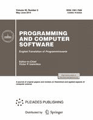
PROGRAMMING AND COMPUTER SOFTWARE
Fostering a Deeper Understanding of Software ComplexitiesPROGRAMMING AND COMPUTER SOFTWARE is a distinguished journal committed to advancing the field of software development and programming methodologies. Published by PLEIADES PUBLISHING INC, this journal has been a valuable resource since its inception in 1978, reaching out to researchers, professionals, and students alike. With an emphasis on rigorous peer-reviewed articles, the journal holds a Q3 ranking in the realm of Software according to the latest 2023 Category Quartiles. Though it does not offer open access, the journal ensures that high-quality research is disseminated to its audience, providing insights into evolving programming techniques, software engineering challenges, and innovative solutions. With its convergence of years extending to 2024, PROGRAMMING AND COMPUTER SOFTWARE remains a pivotal publication, fostering a deeper understanding of the complexities in computer programming while supporting the broader software community.