International Journal of Electrochemical Science
metrics 2024
Bridging theory and practice in electrochemical science.
Introduction
International Journal of Electrochemical Science is a peer-reviewed journal dedicated to disseminating cutting-edge research in the field of electrochemistry. Published by Elsevier in Serbia, this journal serves as a vital platform for scientists and researchers to explore innovative electrochemical techniques, processes, and applications. With an ISSN of 1452-3981, it has been a respected source of scholarly articles since its inception in 2006 and continues to bridge the gap between theoretical advancements and practical implementations up until 2024. Notably, it holds a Q4 quartile ranking in the field of electrochemistry and ranks 41 out of 60 in the Scopus database, situating it within the 32nd percentile among its peers. The journal champions open academic discourse, contributing significantly to the advancement of knowledge in electrochemical sciences, making it an essential resource for researchers, professionals, and students alike who are striving towards new discoveries and innovations.
Metrics 2024
 0.261.301.3099
Metrics History
Rank 2024
Scopus
IF (Web Of Science)
JCI (Web Of Science)
Quartile History
Similar Journals
Electrochemical Science Advances
Pioneering Discoveries in Electrochemical ResearchElectrochemical Science Advances, published by WILEY, is an esteemed Open Access journal that has been making significant contributions to the field of electrochemistry since its inception in 2021. With an ISSN of 2698-5977, this journal serves as a vital platform for researchers and practitioners looking to disseminate their findings on a diverse range of topics within the electrochemical sciences and related areas. The journal has achieved commendable rankings in the Scopus database, placing it in the 2nd quartile in Chemistry (miscellaneous) and the 3rd quartile in Electrochemistry, highlighting its relevance and growing influence in the academic community. As it converges from 2021 to 2024, Electrochemical Science Advances aims to foster collaboration and innovation, offering a vital resource for students, professionals, and researchers dedicated to advancing knowledge and technology in electrochemistry. Access to this cutting-edge research is straightforward, allowing for a comprehensive engagement with the latest advances in the field.
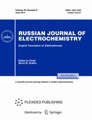
RUSSIAN JOURNAL OF ELECTROCHEMISTRY
Unveiling Innovations in Electrochemical ApplicationsThe Russian Journal of Electrochemistry, published by Pleiades Publishing Inc, is a reputable scientific resource that caters to the dynamic field of electrochemistry. Since its inception in 1996, this journal has become a platform for the dissemination of cutting-edge research, exploring both foundational studies and innovative applications within electrochemical science. Despite currently holding a Q4 categorization in its field, the journal is dedicated to enhancing its scholarly impact and visibility, reflecting its commitment to fostering advancements in electrochemical technologies. With its ISSN 1023-1935 and E-ISSN 1608-3342, the journal strives to reach a global audience of researchers, professionals, and students alike. Though the journal is not open access, its contents are crucial for anyone looking to stay at the forefront of electrochemical research and developments. The journal's editorial board includes well-respected experts, ensuring that published articles contribute significantly to the scientific community and pave the way for future innovations in the field.
Journal of the Korean Electrochemical Society
Pioneering Insights into Electrochemical Processes and MaterialsJournal of the Korean Electrochemical Society (ISSN: 1229-1935, E-ISSN: 1229-1935) stands as a prominent publication in the rapidly evolving field of electrochemistry. Published by the prestigious Korean Electrochemical Society, this journal serves as a vital platform for researchers, professionals, and students eager to disseminate and access cutting-edge studies related to electrochemical processes, materials, and technologies. With an emphasis on promoting innovative research and practical applications, the journal aims to foster collaboration and knowledge exchange within the global electrochemistry community. Although not an open access journal, it provides comprehensive and rigorous peer-reviewed content that ensures the highest scientific quality, making it a valuable resource for anyone involved in the field. Located in Seoul, South Korea, it continues to contribute significantly to the advancement of electrochemical sciences, addressing key challenges and developments that shape the future of technology and environmental sustainability.
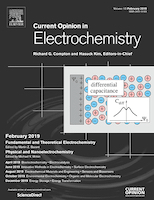
Current Opinion in Electrochemistry
Advancing Insights in Analytical Chemistry and ElectrochemistryCurrent Opinion in Electrochemistry, published by Elsevier, stands at the forefront of research in the fields of Analytical Chemistry and Electrochemistry. With an impressive Impact Factor reflected in its Q1 quartile rankings for both categories, this journal holds a significant place among its peers, ranking 9th in Analytical Chemistry and 8th in Electrochemistry according to Scopus metrics. Launched in 2017, it has rapidly become a vital platform for the dissemination of cutting-edge insights, reviews, and critical assessments that shape the future directions of electrochemical research and applications. As researchers, professionals, and students engage with its content, they find not only a repository of knowledge but also a source of inspiration for innovative experiments and applications. Readers can explore the wealth of information this journal provides to stay updated with contemporary trends and emerging technologies in electrochemistry. With a commitment to high-quality scholarly content, Current Opinion in Electrochemistry is your essential guide to the evolving landscape of electrochemical science.
JOURNAL OF THE ELECTROCHEMICAL SOCIETY
Advancing Electrochemical Innovation for a Sustainable FutureJOURNAL OF THE ELECTROCHEMICAL SOCIETY, published by the ELECTROCHEMICAL SOCIETY INC, is a leading peer-reviewed academic journal dedicated to advancing the field of electrochemistry and its myriad applications. With an ISSN of 0013-4651 and E-ISSN of 1945-7111, this esteemed journal has been a pivotal platform for research since its inception in 1948, with convergence periods allowing for a rich historical context of study through to 2024. Recognized for its high impact, it holds a noteworthy Q1 ranking in several categories including Condensed Matter Physics and Materials Chemistry, and it is Q2 ranked in both Electrochemistry and Renewable Energy. This journal features a range of articles that encompass both theoretical and experimental advancements, making it a crucial resource for researchers, professionals, and students keen on exploring cutting-edge developments in materials science, energy solutions, and sustainable technologies. Although it is not an open access journal, its rigorous standards ensure that published work significantly contributes to the body of knowledge within its fields, fostering innovative research and collaborative progress.
CORROSION ENGINEERING SCIENCE AND TECHNOLOGY
Advancing corrosion knowledge for a sustainable future.CORROSION ENGINEERING SCIENCE AND TECHNOLOGY is a pivotal journal dedicated to the exploration and advancement of corrosion knowledge and technologies, published by SAGE Publications Inc. This esteemed journal holds an ISSN of 1478-422X and an E-ISSN of 1743-2782, and is available for access in the United Kingdom and beyond. With a converged timeline from 2003 to 2024, it continues to publish high-quality research, fostering innovation in the fields of Chemical Engineering, Chemistry, and Materials Science, currently ranked in the Q3 quartile in these categories as of 2023. Additionally, the journal's Scopus rankings—211th in General Chemistry, 145th in General Chemical Engineering, and 266th in General Materials Science—underscore its commitment to disseminating impactful research. As an open-access journal, it invites researchers, professionals, and students to engage with cutting-edge developments in corrosion science, offering insights and solutions critical to numerous industries and enhancing collective academic understanding.
Journal of Electroanalytical Chemistry
Unveiling the Future of Electroanalytical ChemistryThe Journal of Electroanalytical Chemistry, published by Elsevier Science SA, stands as a leading platform for the dissemination of cutting-edge research in the field of electroanalytical science. With an impressive impact factor that reflects its esteemed reputation—ranking in the Q1 category for both Analytical Chemistry and Chemical Engineering, alongside a strong presence in Electrochemistry—this journal provides a vital resource for researchers, professionals, and students alike. Covering topics from fundamental electrochemical processes to innovative analytical techniques, the journal aims to foster an in-depth understanding and discussion of contemporary advancements in electroanalytical methodologies. Operating under a model that prioritizes quality and rigor, it facilitates access to high-quality manuscripts and reviews that contribute to the advancement of the field. For over six decades, from 1959 to 2024, it has played an intrinsic role in shaping the landscape of electrochemistry, continually driving forward the frontiers of knowledge and application.
Journal of Electrochemical Energy Conversion and Storage
Exploring Breakthroughs in Electrochemical ScienceThe Journal of Electrochemical Energy Conversion and Storage, published by ASME, is a premier platform for cutting-edge research in the fields of electrochemistry, energy engineering, and materials science. With an ISSN of 2381-6872 and an E-ISSN of 2381-6910, this journal aims to disseminate high-quality articles that contribute to the understanding and application of energy conversion and storage technologies. Notably recognized in the 2023 Category Quartiles as Q2 in multiple categories including Electronic, Optical and Magnetic Materials, Energy Engineering and Power Technology, and Mechanical Engineering, it reflects a strong academic impact within its field. The journal also boasts competitive Scopus rankings, highlighting its relevance and influence across disciplines. Operating under an open access model, the journal ensures that research findings are widely accessible, fostering collaboration and innovation among researchers, professionals, and students globally. As we move toward a more sustainable future, the Journal of Electrochemical Energy Conversion and Storage plays a critical role in advancing technologies that promise to reshape how we harness and utilize energy.
International Journal of Electrochemistry
Transforming knowledge into applications in electrochemistry.The International Journal of Electrochemistry, published by HINDAWI LTD, serves as a premier outlet for cutting-edge research in the expansive field of electrochemistry. With an ISSN of 2090-3529 and an E-ISSN of 2090-3537, this open-access journal has been contributing to the advancement of scientific knowledge since 2011, making its content freely available to researchers, industry professionals, and students around the globe. The journal aims to foster innovation by disseminating high-quality research articles, reviews, and technical notes that encompass a wide range of topics from fundamental electrochemical principles to practical applications in energy storage, sensors, and material development. With a focus on promoting interdisciplinary collaboration and advancing the understanding of electrochemical systems, the International Journal of Electrochemistry is a vital resource for anyone involved in electrochemical research and its applications.
Tungsten
Shaping the future of materials with tungsten expertise.Tungsten, published by SpringerNature, is a prestigious academic journal dedicated to advancing the field of materials science with a specific focus on tungsten and its diverse applications. Launched in 2019, the journal has quickly established itself as a leading resource in its domain, achieving a remarkable Q1 ranking across multiple categories including Materials Chemistry, Materials Science (miscellaneous), Metals and Alloys, and Surfaces, Coatings and Films. With robust performance reflected in its Scopus rankings—holding significant positions such as rank #20 in Metals and Alloys (88th percentile)—Tungsten serves as a vital platform for researchers and professionals seeking to disseminate innovative findings and foster collaboration in the materials science community. Although not an Open Access publication, this journal offers a well-curated collection of high-quality research articles, reviews, and technical notes aimed at driving forward the understanding and application of tungsten in various scientific sectors. Operating out of the United States, Tungsten is committed to providing an essential resource for academia and industry alike, making a significant contribution to the evolving landscape of materials research.