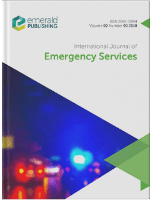
International Journal of Emergency Services
Scope & Guideline
Empowering professionals through innovative research.
Introduction
Aims and Scopes
- Emergency Response Operations:
Research in this area investigates the operational strategies, efficiencies, and innovations within emergency services, including ambulance services, fire departments, and disaster response teams. - Psychological and Mental Health Support:
This scope emphasizes the mental well-being of emergency responders and explores interventions and frameworks aimed at reducing mental distress and promoting resilience among those in high-stress roles. - Disaster Management and Preparedness:
The journal publishes studies on disaster readiness, risk assessment, and the effectiveness of emergency plans and responses to various types of incidents, including natural disasters and public health emergencies. - Technological Integration and Innovation:
Research examining the use of technology, data analytics, and social media in the management and delivery of emergency services is a core focus, highlighting how these tools can improve response times and communication. - Community Engagement and Resilience:
This area explores the role of community involvement in emergency services, including strategies for building resilience and preparedness at the community level.
Trending and Emerging
- Impact of COVID-19 on Emergency Services:
There has been a notable increase in research examining the effects of the COVID-19 pandemic on emergency services, including operational changes, mental health impacts, and adaptations in service delivery. - Use of Social Media in Emergency Management:
The integration of social media for communication and information dissemination during emergencies is gaining attention, reflecting its importance in modern emergency management strategies. - Mental Health and Well-being of Emergency Responders:
There is a growing body of research focused on the psychological health of emergency responders, addressing issues such as burnout, PTSD, and support systems that can enhance resilience. - Data-Driven Decision Making:
Emerging studies emphasize the use of data analytics and GIS technologies to optimize emergency responses and improve resource allocation, indicating a shift towards evidence-based practices. - Community-Centric Approaches to Emergency Management:
Research highlighting the role of community engagement and participatory approaches in emergency preparedness and resilience is on the rise, reflecting a paradigm shift towards collaborative emergency management.
Declining or Waning
- Traditional Firefighting Tactics:
Research focusing solely on conventional firefighting methods has seen a decrease, as the field shifts towards more integrated and innovative approaches that combine technology and community engagement. - General Emergency Services Training:
There appears to be a waning emphasis on generalized training programs for emergency responders, with a growing focus on specialized training tailored to specific incidents or populations. - Historical Perspectives on Emergency Services:
Studies that analyze historical practices or the evolution of emergency services are becoming less frequent, as contemporary issues and innovative practices take precedence.
Similar Journals

Eurasian Journal of Emergency Medicine
Bridging knowledge gaps in emergency medicine worldwide.Eurasian Journal of Emergency Medicine is a premier journal dedicated to advancing the field of emergency medicine. Published by GALENOS PUBL HOUSE, this renowned open-access journal has been at the forefront of disseminating critical research and innovative practices since its inception in 2003. With an ISSN of 2149-5807 and an E-ISSN of 2149-6048, it provides a platform for researchers, professionals, and students to share their findings and enhance their understanding of emergency medical practices. The journal's commitment to open access ensures that vital knowledge and research are available to a global audience, promoting collaboration and development within the field. As a valuable resource, the Eurasian Journal of Emergency Medicine plays a pivotal role in shaping contemporary emergency care, addressing pressing issues, and exploring advancements that benefit practitioners and patients alike.

Frontiers in Emergency Medicine
Championing open-access knowledge for emergency medicine.Frontiers in Emergency Medicine, published by Tehran University of Medical Sciences, stands as an essential open-access platform dedicated to advancing research and practice in the diverse fields of emergency medicine, nursing, and medical services. With a focus on publishing high-quality studies that address the emerging challenges in prehospital and emergency care settings, this journal has rapidly gained recognition since its inception in 2021. The journal's current Scopus rankings place it favorably within the top quartiles for emergency medical services and emergency nursing, making it a valuable resource for researchers and practitioners aiming to enhance patient care and operational efficiency in emergency contexts. The journal encourages submissions that explore innovative practices, clinical outcomes, and policy developments in emergency medicine, promising accessibility and visibility for authors through its open-access model. Located in Iran, Frontiers in Emergency Medicine not only serves the regional community but also aspires to impact the global discourse in emergency healthcare.

African Journal of Emergency Medicine
Empowering Healthcare Professionals with Open Access ResearchAfrican Journal of Emergency Medicine, published by ELSEVIER, serves as a pivotal platform for disseminating innovative research and advancements in emergency medicine and critical care nursing. Launched in 2011, this Open Access journal has quickly garnered attention for its commitment to enhancing healthcare delivery across Africa, catering to a diverse audience of researchers, practitioners, and students. With an impressive rank of #44/109 in Emergency Medicine and positioning itself in the Q2 category for Critical Care Nursing and Emergency Nursing in 2023, the journal has established itself as a significant contributor to the medical community. The journal encourages the submission of high-quality research, reviews, and case reports that can inform clinical practices and emergency protocols across the continent. Its accessibility, reflected by its open access model, ensures that vital findings are available to those who need it most, thus fostering greater collaboration and innovation in emergency healthcare. With a focus on improving patient outcomes and advancing the field, the African Journal of Emergency Medicine is an essential resource for all who are committed to emergency care and related disciplines.
JOURNAL OF EMERGENCY MEDICINE
Fostering innovation in urgent medical practices.The JOURNAL OF EMERGENCY MEDICINE, published by Elsevier Science Inc, is a premier peer-reviewed journal dedicated to advancing the field of emergency medicine. Since its inception in 1983, this journal has served as an essential resource for researchers, clinicians, and students, contributing significantly to evidence-based practices and innovations in the emergency medical landscape. With an impressive ranking of 43 out of 109 in the field of Emergency Medicine according to Scopus, and a current impact factor placing it in the Q2 quartile, this publication is recognized for its rigorous scholarly content and relevance in tackling contemporary issues in emergency care. Although it does not offer open access, the journal remains widely respected for its contribution to the global emergency medicine community, fostering new ideas and discussions that drive the field forward. For those seeking to stay at the forefront of emergency medical research, the JOURNAL OF EMERGENCY MEDICINE is an invaluable addition to your academic endeavors.
Australasian Emergency Care
Empowering Clinicians with Cutting-Edge Insights.Australasian Emergency Care, published by ELSEVIER SCI LTD, stands out as a premier journal in the field of Emergency Nursing, currently holding a prestigious Q1 ranking and positioned in the top 85th percentile according to Scopus metrics. With an E-ISSN of 2588-994X, this journal has been a vital platform for disseminating cutting-edge research since its inception in 2018. Focused on enhancing the practice, education, and research surrounding emergency nursing, Australasian Emergency Care serves as an essential resource for clinicians, educators, and researchers, offering access to a wide array of high-quality peer-reviewed articles. The importance of this journal lies in its commitment to improving patient outcomes through evidence-based practices and innovations in emergency care, making it a pivotal resource for anyone dedicated to advancing their knowledge and expertise in this critical field.
International Journal of Disaster Risk Science
Driving impactful discussions on disaster preparedness and resilience.The International Journal of Disaster Risk Science, with ISSN 2095-0055 and E-ISSN 2192-6395, is a premier, peer-reviewed open-access journal published by Springer. Since its inception in 2011, the journal has been dedicated to advancing knowledge and practice in the field of disaster risk science, facilitating critical discussions around disaster preparedness, response, and resilience across various regions of the globe. This journal holds impressive rankings, including Q1 in Geography, Planning and Development, and Q1 in Safety Research for 2023, confirming its high impact within the academic community. With converged publication years from 2010 to 2024 and being ranked in the top 10% in multiple categories, it serves as an essential resource for researchers, professionals, and students alike. As an open-access journal, it ensures that cutting-edge research is freely available, promoting wider dissemination and engagement with topical issues in disaster risk management.
Prehospital Emergency Care
Pioneering Research for Safer, More Effective Emergency Care.Prehospital Emergency Care is a leading journal in the fields of emergency medicine and nursing, published by Taylor & Francis Inc. With a significant impact on both disciplines and recognized in the first quartile (Q1) of Emergency Medicine and Emergency Nursing categories for 2023, this journal reflects the highest standards of scientific rigor and innovation. Each issue offers valuable insights into the latest research, clinical practices, and advancements in prehospital emergency care, making it an essential resource for researchers, healthcare professionals, and students alike. The journal covers a broad array of topics and aims to disseminate knowledge that enhances the field and improves patient outcomes. With its commitment to excellence, Prehospital Emergency Care plays a critical role in shaping the future of emergency services globally.

Open Access Emergency Medicine
Fostering innovation in emergency medicine and nursing.Open Access Emergency Medicine, published by DOVE MEDICAL PRESS LTD, is a premier journal dedicated to the dynamic fields of Emergency Medicine and Emergency Nursing. With its ISSN 1179-1500, this journal has established a notable presence since its inception as an Open Access platform in 2010, offering unrestricted access to high-quality research and innovative practices in the area. As one of the leading journals in its field, it holds a respectable Q2 ranking in both Emergency Medicine and Emergency Nursing categories as of 2023, reflecting its commitment to advancing knowledge and fostering impactful research. The journal is indexed in prestigious databases with solid Scopus rankings, placing it in the 65th percentile for Emergency Medicine and the 64th percentile for Emergency Nursing, ensuring that contributions reach a diverse audience of researchers, practitioners, and students worldwide. With its focus on contemporary issues, this journal serves as an essential resource for the continual growth and development of emergency health services.
Journal of Emergency Nursing
Empowering Nurses with Evidence-Based InsightsJournal of Emergency Nursing, published by Elsevier Science Inc, serves as a premier platform for advancing the field of emergency nursing. Since its inception in 1975, this peer-reviewed journal has established itself as a vital resource for researchers, practitioners, and educators alike, with a notable impact factor and current ranking of #8 out of 32 in the Emergency Nursing category, placing it in the 76th percentile. The journal's commitment to the dissemination of high-quality evidence, innovative practices, and essential insights makes it an indispensable tool for those seeking to excel in acute care settings. Although not open access, the Journal of Emergency Nursing is dedicated to fostering knowledge and improving patient outcomes through robust research and comprehensive reviews, aligning closely with its mission to enhance emergency nursing practices and education through every issue until 2024 and beyond. For professionals and students keen on staying at the forefront of emergency care advancements, this journal provides a wealth of knowledge and resources, reflecting the critical issues and developments shaping the future of healthcare.
Journal of the American College of Emergency Physicians Open
Unlocking Vital Insights for Emergency Care ProfessionalsJournal of the American College of Emergency Physicians Open is a prominent Open Access journal published by WILEY that has been committed to advancing the field of emergency medicine since its inception in 2020. As a vital resource for researchers, clinicians, and students, this journal aims to disseminate innovative research findings, clinical guidelines, and educational resources that support the rapidly evolving landscape of emergency care. With a solid Q1 ranking in the emergency medicine category and positioned within the top 25 ranks of Scopus’ emergency medicine listings, the journal ensures high visibility and accessibility for critical research. As an open-access publication, it provides unrestricted access to its content, facilitating knowledge sharing and collaboration among professionals globally. The journal's significant impact on the field is reflected in its growing influence, underlining its relevance as an essential platform for advancing emergency medicine practice and research.