INTERNATIONAL JOURNAL OF ENVIRONMENTAL ANALYTICAL CHEMISTRY
metrics 2024
Exploring the nexus of pollution and public health.
Introduction
INTERNATIONAL JOURNAL OF ENVIRONMENTAL ANALYTICAL CHEMISTRY, published by Taylor & Francis Ltd, stands as an essential resource in the interdisciplinary field of environmental science and analytical chemistry. With a history dating back to 1971 and a convergence period extending to 2024, this journal addresses urgent global challenges by providing a platform for high-quality research that encompasses pivotal aspects of environmental analysis, pollution, and public health. The journal’s significant impact is reflected in its 2023 rankings, placing it in the second and third quartiles across various relevant categories, including Analytical Chemistry, Environmental Chemistry, and Water Science and Technology. Researchers and practitioners are encouraged to contribute to its wealth of knowledge, making it a vital reference for emerging studies in Health, Toxicology and Mutagenesis and beyond. Although it is not an open-access journal, subscriptions provide unparalleled access to groundbreaking research that can influence both academia and industry practices.
Metrics 2024
 0.472.302.6051
Metrics History
Rank 2024
Scopus
IF (Web Of Science)
JCI (Web Of Science)
Quartile History
Similar Journals
ENVIRONMENTAL POLLUTION
Championing sustainable practices through rigorous research.Environmental Pollution, published by Elsevier Science Ltd, stands at the forefront of research related to environmental contaminants and their effects on health and ecosystems. With an impressive impact factor reflected in its Q1 rankings across various categories including Health, Toxicology, and Pollution, this journal is a pivotal resource for academics and professionals in the fields of environmental science and toxicology. The journal, established in 1973, continues to disseminate high-quality articles that explore the implications of pollution and advance knowledge on toxicological impacts and mitigation strategies. Although it is not an open-access journal, it offers robust visibility within the scientific community, ensuring vital research reaches those who need it most. Researchers, students, and professionals dedicated to understanding and addressing the challenges of environmental pollution will find Environmental Pollution to be an indispensable platform for their work, guiding the ongoing dialogue on sustainable practices and public health protection.
BUNSEKI KAGAKU
Illuminating the Path of Analytical DiscoveryBUNSEKI KAGAKU, published by the Japan Society Analytical Chemistry, is a reputable journal dedicated to the field of analytical chemistry. With an ISSN of 0525-1931, this journal has been a crucial outlet for scholarly communication since its inception in 1952, converging its publication years from 1954 to 1957 and from 1959 to 2024. Although it holds a Q4 category ranking in the most recent 2023 quartiles of analytical chemistry and ranks 153/156 in Scopus, it continues to serve as a platform for quality research, fostering advancements in the field. BUNSEKI KAGAKU is based in Tokyo, Japan, and emphasizes the critical importance of analytical techniques in scientific inquiry. With a commitment to professionalism and rigor, the journal provides a vital resource for researchers, students, and professionals seeking to explore innovative methodologies and contribute to the ongoing dialogue in analytical chemistry.
Trends in Environmental Analytical Chemistry
Bridging Science and Sustainability in Analytical ChemistryTrends in Environmental Analytical Chemistry, published by Elsevier, serves as a leading platform for scholars and professionals in the fields of analytical and environmental chemistry. With an impact factor that places it in the Q1 category for both analytical chemistry and environmental chemistry, this journal attracts cutting-edge research that addresses current challenges in environmental analysis from 2014 to 2024. The journal is dedicated to advancing the knowledge base through the publication of high-quality empirical studies, innovative methodologies, and comprehensive reviews that reflect the latest trends and technological advances in the field. Operating out of the Netherlands, the journal's commitment to excellence is evident in its impressive Scopus rankings, standing as the #1 journal in Analytical Chemistry and #7 in Environmental Chemistry by percentiles. This makes it an essential resource for academics, practitioners, and students alike who are eager to stay informed on impactful environmental research and analytical techniques.
Journal of Saudi Chemical Society
Leading the Charge in Cutting-edge Chemical Discoveries.The Journal of Saudi Chemical Society, published by ELSEVIER, stands as a premier platform for advancing knowledge in the field of chemistry. Since its inception in 2009, this Open Access journal has garnered significant attention, securing a prestigious Q1 ranking in the Chemistry (miscellaneous) category for 2023, reflecting its position among the top journals in the discipline. With an impressive Scopus ranking of #66 out of 408 in General Chemistry, this journal boasts a commendable 83rd percentile, underscoring its impact and relevance in the global research community. The journal aims to disseminate high-quality research articles, reviews, and case studies, fostering innovation and collaboration among chemists and allied professionals. By enabling widespread access to cutting-edge research, the Journal of Saudi Chemical Society plays a crucial role in supporting the educational and professional development of students, researchers, and practitioners alike, making it an essential resource for anyone invested in the dynamic field of chemistry.
ECOTOXICOLOGY AND ENVIRONMENTAL SAFETY
Bridging science and safety for a greener tomorrow.ECOTOXICOLOGY AND ENVIRONMENTAL SAFETY, published by Academic Press Inc. Elsevier Science, stands as a premier journal in the field of environmental science, specializing in the intricate relationships between toxic substances and ecological systems. With a commendable impact factor and recognized as a Q1 journal in various categories including Health, Toxicology and Mutagenesis, and Public Health, it consistently ranks among the top publications in Scopus, placing it in the 96th percentile for Medicine and Public Health. Established in 1977, this journal addresses critical issues related to environmental safety and pollution, making it an essential resource for researchers, professionals, and students alike. Although it does not offer an open access option, the journal’s commitment to publishing rigorous and impactful research makes it a vital platform for advancing the understanding of ecotoxicological risk assessments and environmental protection strategies. For those dedicated to the intersection of science and public health, ECOTOXICOLOGY AND ENVIRONMENTAL SAFETY serves as a beacon of knowledge and innovative research.
Emerging Contaminants
Leading the charge in contaminant research and remediation.Emerging Contaminants is a leading international journal dedicated to the exploration and analysis of novel pollutants, their effects, and the methodologies for their detection and remediation. Published by KEAI PUBLISHING LTD in China, this Open Access journal has been at the forefront of scientific discourse since its inception in 2015, allowing unrestricted access to cutting-edge research. With an impressive categorization in the top Q1 quartile across diverse fields, including Health, Toxicology and Mutagenesis, and Public Health, it ranks remarkably high—41st out of 665 in Public Health and 10th out of 133 in Toxicology according to Scopus metrics, demonstrating its vital role in advancing our understanding of environmental health risks. By bridging the gap between academia and practical applications, Emerging Contaminants not only enriches the scientific community but also serves as an essential resource for policymakers and industry leaders seeking effective solutions to environmental challenges. Researchers, professionals, and students alike are encouraged to engage with the journal’s comprehensive studies and findings, contributing to a sustainable future.
BULLETIN OF ENVIRONMENTAL CONTAMINATION AND TOXICOLOGY
Exploring the nexus of contamination and public safety.BULLETIN OF ENVIRONMENTAL CONTAMINATION AND TOXICOLOGY, published by SPRINGER, is a pivotal journal in the fields of Environmental Science, Toxicology, and Public Health. With a strong history of dissemination since its inception in 1966, the journal predominantly focuses on the latest advances in understanding environmental contaminants and their toxicological effects on health and ecosystems. It currently holds a respectable Q2 ranking across multiple categories including Health, Toxicology and Mutagenesis, Medicine (miscellaneous), and Pollution, as per the 2023 metrics. While the journal is not Open Access, it provides an invaluable platform for researchers, professionals, and students seeking to contribute to and stay informed on critical issues regarding environmental hazards and their implications. With an engaged community of scholars and practitioners, this journal continues to be an essential resource for addressing the pressing challenges of environmental contamination and its health impacts, guiding future research and policy decisions.
Pakistan Journal of Analytical & Environmental Chemistry
Unveiling Insights into Analytical MethodologiesPakistan Journal of Analytical & Environmental Chemistry, published by the University of Sindh, National Centre of Excellence Analytical Chemistry, is a distinguished platform that has been committed to promoting high-quality research in the fields of analytical and environmental chemistry since its inception. With an ISSN of 1996-918X and an E-ISSN of 2221-5255, this journal has established itself as an open-access resource since 2007, facilitating the dissemination of knowledge to a global audience. Acknowledged for its contributions, the journal currently holds a Q4 category ranking in both Analytical Chemistry and Environmental Chemistry as of 2023, with Scopus rankings placing it within the challenging competitive bracket. The journal aims to publish original research, reviews, and technical notes that elucidate contemporary challenges and advancements, making it an essential read for researchers, professionals, and students who are exploring innovative methodologies and solutions in chemical analysis and environmental monitoring. By fostering a collaborative research environment and encouraging multidisciplinary approaches, the Pakistan Journal of Analytical & Environmental Chemistry plays a crucial role in advancing the field and addressing environmental concerns in Pakistan and beyond.
JOURNAL OF THE CHEMICAL SOCIETY OF PAKISTAN
Pioneering Research for Tomorrow’s Chemical Challenges.JOURNAL OF THE CHEMICAL SOCIETY OF PAKISTAN is a premier academic journal published by the Chemical Society of Pakistan, focusing on advancing the field of chemistry through rigorous research and scholarship. Established in 1996, this journal aims to disseminate high-quality research articles, reviews, and insights pertaining to various subfields of chemistry, making substantial contributions to both local and international scientific communities. With a current impact factor placing it in the Q4 category, the journal continues to foster discussions on emerging trends and innovations within the discipline. Additionally, it holds a Scopus rank of #305 out of 408, highlighting its growing influence despite being positioned in the 25th percentile. Although it is not an open-access journal, it provides a crucial platform for researchers and professionals in Pakistan and worldwide. The JOURNAL OF THE CHEMICAL SOCIETY OF PAKISTAN serves as a valuable resource for students, educators, and industry professionals alike, facilitating the exchange of knowledge and promoting advancements in chemical sciences.
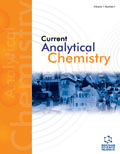
Current Analytical Chemistry
Exploring the forefront of analytical techniques.Current Analytical Chemistry is a pivotal journal in the field of analytical chemistry, published by Bentham Science Publishers Ltd. Established to bridge the gap between fundamental research and practical applications, this journal offers a platform for the dissemination of significant advancements and innovations from the realms of chemical analysis techniques and methodologies. With an impressive scope covering both theoretical and applied analyses, it has successfully secured a Q3 category ranking in the 2023 metrics of Analytical Chemistry, positioned at #75 out of 156 in the Scopus rankings. Researchers, professionals, and students can expect to engage with high-quality content that reflects the latest trends and issues within the discipline. Although it currently does not offer Open Access options, the journal continuously strives to maintain high editorial standards that contribute to its impactful presence in the academic community. The convergence of ideas from 2006 to 2024 promises to uphold its reputation as a reliable source for cutting-edge research in analytical chemistry.