
INTERNATIONAL JOURNAL OF HEAT AND FLUID FLOW
metrics 2024
Championing Rigorous Research in Heat Transfer and Fluid Dynamics
Introduction
Founded in 1979, the INTERNATIONAL JOURNAL OF HEAT AND FLUID FLOW is a premier publication in the fields of mechanical engineering, fluid dynamics, and heat transfer, published by Elsevier Science Inc. With an impressive impact factor and ranking in the Q1 category for Mechanical Engineering and Q2 for Condensed Matter Physics and Fluid Flow and Transfer Processes, this journal is highly regarded for its rigorous peer-reviewed articles that contribute significantly to the advancement of knowledge in these critical areas. Researchers, professionals, and students can access cutting-edge studies that explore the intricacies of thermal and fluid systems, ensuring they stay at the forefront of scientific exploration. The Scopus rankings further affirm its role as a leading source of impactful research, with significant placements in crucial academic categories. Join an active community of scholars committed to innovation and excellence in the exploration of heat and fluid flow phenomena.
Metrics 2024
 0.702.602.70126
Metrics History
Rank 2024
Scopus
IF (Web Of Science)
JCI (Web Of Science)
Quartile History
Similar Journals
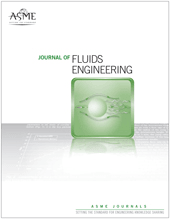
JOURNAL OF FLUIDS ENGINEERING-TRANSACTIONS OF THE ASME
Pioneering Innovations in Fluid MechanicsJOURNAL OF FLUIDS ENGINEERING-TRANSACTIONS OF THE ASME, published by the renowned American Society of Mechanical Engineers (ASME), stands as a pivotal platform for disseminating cutting-edge research in the field of mechanical engineering, specifically focusing on fluid mechanics and its diverse applications. With an established history dating back to 1897, this journal features research that pushes the boundaries of knowledge and technology in areas such as fluid dynamics, thermal engineering, and hydrodynamics. Although it is not an open-access journal, it maintains rigorous peer-review standards, ensuring the publication of high-quality scholarly articles that contribute to the academic and professional community. In the latest rankings, it holds a respectable position within the Q2 category of mechanical engineering journals, reflecting its significant impact, as evidenced by its Scopus rank of #204 out of 672, placing it in the 69th percentile. Researchers, professionals, and students alike will find this journal to be a vital resource for the latest developments and innovative insights in fluids engineering.

JOURNAL OF ENHANCED HEAT TRANSFER
Transforming Heat Transfer Knowledge into Practical ApplicationsThe JOURNAL OF ENHANCED HEAT TRANSFER, published by BEGELL HOUSE INC, is a prominent resource for researchers and professionals in the fields of mechanical engineering, fluid flow and transfer processes, and condensed matter physics. With a history spanning from 1993 to 2024, this journal offers a platform for disseminating cutting-edge research and innovations that enhance our understanding of heat transfer phenomena. Although it operates under a traditional subscription model, its impressive standing is underscored by its Scopus rankings—positioned within the 59th percentile for Mechanical Engineering and 58th percentile for Fluid Flow and Transfer Processes. Additionally, it holds Q2 and Q3 categorizations in relevant fields, reflecting its importance in advancing knowledge and applications in heat transfer technology. This journal effectively bridges the gap between theoretical insights and practical solutions, making it an indispensable tool for academics, industrial practitioners, and students eager to explore advancements in thermal management and efficiency.

International Journal of Heat and Technology
Advancing Thermal Innovation for a Sustainable FutureThe International Journal of Heat and Technology is a premier academic publication dedicated to the dissemination of innovative research in the fields of thermal engineering, fluid mechanics, and condensed matter physics. Published by the INT INFORMATION & ENGINEERING TECHNOLOGY ASSOCIATION and based in Italy, this journal has been a significant resource for researchers and professionals since its inception in 1983, with a commitment to advancing knowledge until 2024. With an impact factor that reflects its relevance, the journal encompasses diverse topics within its scope, bridging gaps between theoretical research and practical applications. Although currently not open access, the journal provides valuable insights into the nuances of heat transfer, flow dynamics, and material properties, making it a critical reference for academia and industry alike. The journal's Scopus rankings position it within the competitive landscape of chemical and mechanical engineering, highlighting its contribution to advancing these fields. We invite scholars, professionals, and students to engage with the rich content provided within its pages, to foster a deeper understanding of heat and technology in our rapidly evolving world.

THERMAL ENGINEERING
Advancing Energy Solutions for a Sustainable FutureTHERMAL ENGINEERING is a premier journal dedicated to advancing the field of thermal engineering, with particular importance in the domains of Energy Engineering, Nuclear Energy, and Power Technology. Published by PLEIADES PUBLISHING INC, this esteemed journal has been providing significant scholarly contributions since its inception, with its converged years spanning from 1970 to 2024. Though currently non-open access, the journal presents a unique avenue for researchers, professionals, and students to explore groundbreaking research and innovative solutions related to energy systems and thermal processes. With a notable impact factor and positioned in the Q3 quartile for both Energy Engineering and Nuclear Energy, THERMAL ENGINEERING ensures the dissemination of high-quality research with a global reach, making it an essential resource for those looking to stay at the forefront of essential energy technologies and engineering advancements.
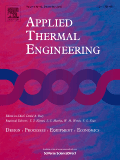
APPLIED THERMAL ENGINEERING
Driving excellence in energy and fluid dynamics research.Applied Thermal Engineering is a leading international journal dedicated to the field of thermal engineering, published by Pergamon-Elsevier Science Ltd. With an impressive impact factor indicating its significance in the academic community, this journal focuses on innovative research and developments related to energy engineering, fluid flow, and transfer processes, as well as manufacturing and mechanical engineering. Being indexed in top quartiles (Q1) across multiple categories, it ranks exceptionally well on platforms like Scopus, ensuring that contributors reach a wide and relevant audience. The journal supports both open access and subscription options, promoting the dissemination of vital research findings from 1996 to 2024. With its commitment to advancing the discipline and implementing rigorous peer-review processes, Applied Thermal Engineering serves as an essential resource for researchers, industry professionals, and students aiming to stay abreast of the latest advancements and applied methodologies in thermal science.

Transactions of the Korean Society of Mechanical Engineers B
Elevating the discourse in mechanical engineering research.Welcome to the Transactions of the Korean Society of Mechanical Engineers B, a pivotal journal dedicated to advancing the field of mechanical engineering. Published by the esteemed Korean Society of Mechanical Engineers, this journal serves as a platform for the dissemination of innovative research and practical applications in mechanical engineering and related disciplines. With a focus on fostering knowledge exchange and collaboration, the journal publishes original research articles, reviews, and technical notes that contribute to the understanding and evolution of mechanical systems and technologies. The Transactions of the Korean Society of Mechanical Engineers B, which has been in circulation since 2007 and spans through 2024, is categorized within the Q4 quartile of mechanical engineering rankings and is indexed by Scopus, making it a valuable resource for researchers and professionals aiming to stay abreast of the latest developments in the field. Although it is not open access, its rigorous peer-review process ensures the integrity and quality of the published work, making it essential reading for academics and practitioners alike.

Journal of Engineering Thermophysics
Connecting theory and practice in the realm of thermophysics.Journal of Engineering Thermophysics, published by PLEIADES PUBLISHING INC, is a premier academic journal dedicated to advancing the field of thermophysics and its applications across a variety of engineering disciplines. With an ISSN of 1810-2328 and an E-ISSN of 1990-5432, this journal offers an essential platform for researchers and professionals to disseminate cutting-edge findings on the interplay between thermal processes and engineering systems. As of 2023, it is recognized within the Q3 category in key fields such as Condensed Matter Physics, Energy Engineering and Power Technology, Environmental Engineering, and Modeling and Simulation. Moreover, the journal contributes to an important dialogue in the environmental sciences, ranking 111 out of 197 in Environmental Engineering, and positions itself prominently within the academic landscape from its establishment in 2007. Although currently not an open-access journal, it facilitates a selective yet impactful communication of research that drives innovation and knowledge in the thermal sciences. For those engaged in understanding the thermal dynamics essential for sustainable engineering solutions, the Journal of Engineering Thermophysics is the go-to resource for published research, reviews, and advancements in the field.

FDMP-Fluid Dynamics & Materials Processing
Advancing Knowledge in Fluid Dynamics and Materials ProcessingFDMP-Fluid Dynamics & Materials Processing, published by TECH SCIENCE PRESS, stands as a significant contribution to the field of materials science, specifically focusing on the intricate relationships between fluid dynamics and material processing. With an ISSN of 1555-256X and an E-ISSN of 1555-2578, this journal offers an open-access platform where researchers can disseminate their work broadly, promoting collaboration and innovation among professionals and students alike. Established in 2007 and continuously evolving through to 2024, the journal is classified in the Q4 category of materials science, ranking at #347 out of 463 in the Scopus database, signifying its niche yet crucial role in the academic community. By focusing on the dynamic interplay between fluid behavior and material properties, FDMP addresses contemporary challenges and advances in material processing techniques. The journal plays a pivotal role for academics and industry professionals seeking to push the boundaries of knowledge and application in materials science.
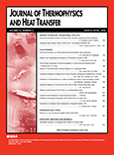
JOURNAL OF THERMOPHYSICS AND HEAT TRANSFER
Bridging Theory and Experiment in Heat TransferJOURNAL OF THERMOPHYSICS AND HEAT TRANSFER, published by the American Institute of Aeronautics and Astronautics, serves as a vital platform for the dissemination of cutting-edge research in the fields of thermophysics and heat transfer. With an ISSN of 0887-8722 and an E-ISSN of 1533-6808, this journal has been pivotal in enhancing our understanding of heat transfer mechanisms since its inception in 1987, continuing through 2024. It occupies a noteworthy position in various academic categories, boasting Q2 rankings in both Fluid Flow and Transfer Processes and Mechanical Engineering, reflecting its significant contribution to the engineering and physical sciences community. Although it currently does not offer Open Access options, the journal’s repository of rigorous peer-reviewed articles remains accessible to researchers, professionals, and students eager to expand their knowledge and apply innovative findings in aerospace, condensed matter physics, and planetary sciences. Emphasizing both theoretical and experimental approaches, the JOURNAL OF THERMOPHYSICS AND HEAT TRANSFER remains an indispensable resource for advancing the frontiers of engineering and applied sciences.

HEAT TRANSFER RESEARCH
Exploring the Dynamics of Heat and EngineeringHEAT TRANSFER RESEARCH is a leading academic journal published by Begell House Inc that focuses on the dynamic and evolving fields of heat transfer, fluid flow, and mechanical engineering. With an ISSN of 1064-2285 and an E-ISSN of 2162-6561, this journal serves as a critical platform for researchers and professionals seeking to disseminate innovative findings and advancements in these interrelated disciplines. Covering converged years from 1992 to 2024, HEAT TRANSFER RESEARCH has established its impact in the academic community, achieving a 2023 ranking of Q3 in Condensed Matter Physics and Q2 in Fluid Flow and Transfer Processes. It currently occupies a percentile rank ranging from 44th to 54th across several Scopus categories, underscoring its relevance and contribution to the scientific discourse. While Open Access options are not available, the journal remains committed to providing high-quality research and insights that shape the future of thermal sciences. Accessible to both seasoned professionals and aspiring students, HEAT TRANSFER RESEARCH is indispensable for anyone looking to stay ahead in the ever-changing landscape of engineering and applied physics.