
International Journal of Managerial Finance
Scope & Guideline
Elevating the discourse in global finance research.
Introduction
Aims and Scopes
- Corporate Governance and Performance:
Investigates the relationships between corporate governance structures and firm performance metrics, exploring how governance influences decision-making and financial outcomes. - Risk Management and Financial Strategies:
Focuses on the methodologies and frameworks for managing financial risks, including studies on capital structure, liquidity management, and the impact of economic uncertainties. - Sustainability and Corporate Social Responsibility (CSR):
Examines the integration of sustainability practices within corporate finance, exploring the financial implications of CSR initiatives and their effects on firm performance. - Behavioral Finance and Executive Decision-Making:
Analyzes how behavioral factors influence managerial decisions, including studies on executive compensation, risk-taking behavior, and the impact of CEO characteristics on corporate strategies. - Emerging Markets and Financial Dynamics:
Addresses financial issues specific to emerging economies, providing insights into capital markets, corporate finance practices, and the role of institutional investors. - Financial Innovation and Technology:
Explores the effects of technological advancements on financial practices, including studies on fintech, digital finance, and the implications of data analytics in managerial finance.
Trending and Emerging
- Impact of ESG Factors on Financial Performance:
There is a rising trend in exploring the relationship between environmental, social, and governance (ESG) factors and financial performance, as firms increasingly prioritize sustainability in their operations. - Political and Economic Uncertainty:
Research focusing on the implications of political risk and economic uncertainty on corporate finance decisions is gaining traction, reflecting the complexities firms face in today’s volatile environments. - Technological Disruption and Financial Innovation:
The influence of technological advancements, such as AI and blockchain, on financial practices is increasingly being studied, emphasizing the need for understanding how innovation reshapes managerial finance. - Diversity in Corporate Leadership:
There is a growing emphasis on the impact of diversity, particularly gender diversity, in corporate governance and its correlation with firm performance and decision-making processes. - Behavioral Insights in Financial Decision-Making:
Research that incorporates behavioral finance insights into executive decision-making processes is becoming increasingly popular, reflecting a shift towards understanding the psychological factors that influence financial choices.
Declining or Waning
- Traditional Financial Models:
There has been a noticeable decrease in publications focusing solely on traditional financial models and theories, as researchers are now more inclined to explore innovative approaches that incorporate behavioral and technological perspectives. - Static Corporate Financial Structures:
Research examining static corporate financial structures is becoming less prominent, as there is a growing interest in dynamic models that account for changing market conditions and corporate strategies. - Historical Analysis of Financial Practices:
Studies that concentrate exclusively on historical analyses of financial practices are waning, with a shift towards more contemporary and forward-looking research that addresses current financial challenges and practices.
Similar Journals

JOURNAL OF FINANCIAL ECONOMICS
Leading the way in financial research and academic excellence.Welcome to the JOURNAL OF FINANCIAL ECONOMICS, a premier publication in the realms of finance, economics, and accounting, published by Elsevier Science SA in the Netherlands. With its impactful contributions since 1974, this esteemed journal has earned an impressive impact factor and consistently ranks in the Q1 category across various fields, including Accounting, Economics and Econometrics, Finance, and Strategy and Management. Researchers can access cutting-edge studies that delve into both theoretical frameworks and empirical analyses, crucial for advancing financial literacy and economic policies globally. With remarkable Scopus rankings, notably placing #2 in Accounting and #6 in Finance, the journal serves not only as a reliable resource for academics but also as a vital tool for professionals seeking to stay abreast of the latest financial trends and insights. Engage with the latest research and contribute to the dialogue shaping the future of financial economics!
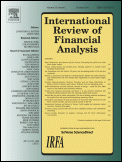
International Review of Financial Analysis
Connecting empirical studies to critical financial challenges.The International Review of Financial Analysis, published by Elsevier Science Inc, is a premier journal dedicated to advancing the fields of finance and economics. With an impressive impact factor and ranked in the top quartile (Q1) of both Economics and Econometrics and Finance categories, this journal is recognized for its high-quality research and significant contributions to the discipline. Since its inception in 1992, it has provided a platform for scholars to present innovative theories and empirical studies that address critical financial issues around the globe, making it a vital resource for researchers, professionals, and students alike. Although it does not offer open access, the journal actively engages with contemporary debates in financial analysis, ultimately empowering its readership to contribute to and benefit from the ongoing discourse. With its convergence of financial research and analytical methodologies through 2024, the International Review of Financial Analysis remains a cornerstone in the pursuit of knowledge within the ever-evolving landscape of finance.

Asian Academy of Management Journal of Accounting and Finance
Connecting Scholars and Practitioners in FinanceThe Asian Academy of Management Journal of Accounting and Finance, published by PENERBIT UNIVERSITI SAINS MALAYSIA, is a pivotal open-access platform that has been disseminating valuable insights in the field of accounting and finance since its inception in 2006. With an emphasis on the unique economic landscape of Asia, this journal provides a forum for researchers and practitioners to contribute innovative research and critical analyses. Hailing from Malaysia, it boasts an E-ISSN of 2180-4192 and continues to be a significant resource for academics, professionals, and students alike. Regularly updated and accessible since 2012, the journal offers an increasing repository of knowledge, as indicated by its Scopus rankings in both the Finance and Accounting segments, with respective ranks of 197/317 and 121/176. Despite its recent Q4 and Q3 quartile standings for 2023, the journal demonstrates a commitment to elevate research quality and influence within the respective disciplines. For those interested in expanding their understanding of contemporary issues in accounting and finance, the Asian Academy of Management Journal stands as an essential scholarly resource.
JOURNAL OF FINANCIAL INTERMEDIATION
Exploring the dynamics of finance and markets.JOURNAL OF FINANCIAL INTERMEDIATION, published by Academic Press Inc Elsevier Science, is a premier academic journal dedicated to the study of financial intermediation. First established in 1990, this esteemed journal has firmly positioned itself within the top quartile (Q1) of rankings in both Economics and Econometrics as well as Finance, reflecting its significant impact and relevance in the field. With an impressive Scopus ranking of #31 out of 317 in Finance and #74 out of 716 in Economics and Econometrics, it caters to a diverse audience, including researchers, professionals, and students interested in the intricate dynamics of financial markets and institutions. While the journal does not currently offer open access, it remains a vital resource for disseminating cutting-edge research and insights that drive innovation and inform policy-making in the financial sector. With a commitment to maintaining high academic standards, the JOURNAL OF FINANCIAL INTERMEDIATION continues to serve as an essential platform for advancing knowledge in financial theories and practices.

International Journal of Financial Studies
Empowering finance research through open access.The International Journal of Financial Studies is a premier publication dedicated to advancing the field of finance through open-access research. Published by MDPI based in Switzerland, this journal offers researchers, professionals, and students a platform to disseminate their findings in an accessible format since its establishment in 2013. With its ISSN of 2227-7072 and a commendable impact reflected in its Q2 ranking in finance, it occupies an influential position among finance-related journals, as evidenced by its 65th percentile rank in Scopus. The journal encompasses a wide array of topics in finance, making it essential reading for those seeking to stay abreast of current research trends and methodologies. As an open-access journal, all articles are freely available, significantly enhancing the visibility and reach of published studies, which is crucial for fostering collaboration and innovation within the global financial community. Published continuously until 2024, the International Journal of Financial Studies is not just a source of knowledge; it is a critical contributor to the progression of financial scholarship.
Revista de Contabilidad-Spanish Accounting Review
Exploring New Frontiers in Accounting Excellence.Revista de Contabilidad-Spanish Accounting Review, published by the Universidad de Murcia, is a prestigious open-access journal dedicated to advancing the field of accounting and finance. Since its inception in 1997, the journal has aimed to foster high-quality research and disseminate innovative findings that contribute significantly to the international accounting community. With an ISSN of 1138-4891 and an E-ISSN of 1988-4672, this journal proudly embodies a commitment to accessibility, allowing researchers, practitioners, and students to engage with a wealth of knowledge without financial barriers. As of 2023, it holds a respectable position in the Scopus rankings, being placed in the Q3 category within Accounting, with a ranking of #98/176 and a percentile standing at 44th. The Revista covers a wide array of topics including financial reporting, auditing, and managerial accounting, and is a pivotal platform for groundbreaking studies that shape the discipline. Located in the vibrant academic setting of Murcia, Spain, this journal is essential reading for those looking to stay abreast of contemporary developments in accounting research.
Journal of Corporate Accounting and Finance
Exploring the Nexus of Corporate Finance and AccountingJournal of Corporate Accounting and Finance, published by WILEY PERIODICALS, INC, is a leading interdisciplinary journal that addresses the intricate dynamics of accounting and finance in corporate settings. With its ISSN 1044-8136 and E-ISSN 1097-0053, this esteemed journal has been a significant platform for the dissemination of research since 1989, now influencing discussions and policy formulation until 2024. Holding a prominent position in Q3 in Accounting and Q2 in Economics, Econometrics and Finance as of 2023, it ranks within the 66th percentile for Economics and the 39th percentile for Accounting, reinforcing its credibility in the academic community. The Journal of Corporate Accounting and Finance not only offers unparalleled insights into financial reporting, corporate governance, and ethical financial practices but also aims to foster a deeper understanding of economic theories applied within corporate frameworks. As a subscription-based journal, it remains pivotal for researchers, professionals, and students eager to stay abreast of the evolving landscape of corporate finance and accounting.

Journal of Business Finance & Accounting
Uncovering New Dimensions in Business ManagementJournal of Business Finance & Accounting, published by WILEY, stands as a premier academic journal dedicated to the rigorous exploration of issues in accounting, finance, and business management. With an impressive Q1 ranking in key categories such as Accounting and Finance, this journal has cemented its reputation within the academic community since its inception in 1974. Operating from its headquarters in Hoboken, New Jersey, the journal provides valuable insights and analyses, making it essential reading for researchers, practitioners, and students eager to stay at the forefront of evolving financial theories and practices. Although it does not currently operate on an open-access basis, its impact factor highlights its significance and influence, ensuring that published works reach a broad audience engaged in the multifaceted world of business finance. As it converges towards 2024, the journal continues to foster scholarly discussion and innovation, making substantial contributions to the fields of finance and accounting.
Review of Pacific Basin Financial Markets and Policies
Charting the Future of Pacific Basin FinanceThe Review of Pacific Basin Financial Markets and Policies is a prominent academic journal dedicated to exploring the dynamic landscape of financial markets and policies within the Pacific Basin region. Published by World Scientific Publishing Co. Pte Ltd and based in Singapore, this journal serves as a vital platform for researchers, professionals, and students interested in the intricacies of finance and economics. With an ISSN of 0219-0915 and E-ISSN 1793-6705, it encompasses a broad scope addressing critical issues and emerging trends from 2003 to 2024. Despite its current positioning within the Q4 quartile for both Economics and Econometrics as well as Finance, the journal fosters invaluable contributions that encourage scholarly communication and innovation. Access to the journal is through various academic libraries and institutions, providing an essential resource for those seeking to enhance their understanding of the financial frameworks in the Pacific region.

Journal of Multinational Financial Management
Navigating the Global Financial LandscapeThe Journal of Multinational Financial Management, published by Elsevier, stands at the forefront of research in the fields of economics and finance, with a notable impact factor that underscores its significance in both academia and industry. With an ISSN of 1042-444X and E-ISSN of 1873-1309, this esteemed journal operates out of the Netherlands, specifically from its address at RADARWEG 29, 1043 NX AMSTERDAM. It has earned commendable rankings, including Q2 in Economics and Econometrics and Q1 in Finance for 2023, solidifying its reputation as a vital resource for researchers, professionals, and students interested in global financial management and the intricate dynamics of multinational corporations. Covering a wide scope of relevant topics from 1997 to 2024, the journal strives to foster advancements in financial theories and practices. While currently not an open access journal, it remains a critical repository for scholars aiming to explore and publish their work within a peer-reviewed platform that continues to make substantial contributions to the discipline.