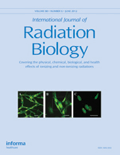
INTERNATIONAL JOURNAL OF RADIATION BIOLOGY
metrics 2024
Bridging Research and Clinical Excellence
Introduction
INTERNATIONAL JOURNAL OF RADIATION BIOLOGY, published by Taylor & Francis Ltd, has established itself as a premier forum for the dissemination of innovative research related to radiation biology, covering emerging topics that are crucial within the fields of radiology, nuclear medicine, and ultrasound technology. With an ISSN of 0955-3002 and an E-ISSN of 1362-3095, this journal spans over six decades, from its inception in 1959 to 2024, reflecting a rich history of scholarly contribution and a dynamic approach to addressing current challenges in the discipline. Its reputation is highlighted by its Q2 rankings in both Radiology, Nuclear Medicine and Imaging and Radiological and Ultrasound Technology for 2023, underscoring its relevance in a competitive academic landscape, with Scopus rankings placing it in the top tier of its category. While operating under a traditional access model, the journal aims to connect researchers, professionals, and students, facilitating the advancement of knowledge and fostering a deeper understanding of the impact of radiation in various medical applications. The journal plays an essential role in shaping future research directions and enhancing clinical practices globally.
Metrics 2024
 0.552.102.50102
Metrics History
Rank 2024
Scopus
IF (Web Of Science)
JCI (Web Of Science)
Quartile History
Similar Journals

QUARTERLY JOURNAL OF NUCLEAR MEDICINE AND MOLECULAR IMAGING
Fostering Collaboration in the Evolving Landscape of Nuclear Medicine.The Quarterly Journal of Nuclear Medicine and Molecular Imaging, published by Edizioni Minerva Medica in Italy, serves as a pivotal platform for researchers and practitioners in the fields of Nuclear Medicine and Molecular Imaging. With an ISSN of 1824-4785 and an E-ISSN of 1827-1936, this journal boasts a respectable impact factor and is positioned in the Q3 quartile of the Radiology, Nuclear Medicine and Imaging category, based on the latest 2023 evaluations. As the journal continues to converge from its inception in 2004 to its anticipated expansions through 2024, it aims to disseminate high-quality, peer-reviewed articles that advance the frontier of imaging technologies and their applications in clinical practice. Researchers, professionals, and students are encouraged to contribute to its diverse scope, which encompasses innovative research, clinical findings, and reviews that encapsulate cutting-edge advancements in the field, highlighting its importance as an essential resource for knowledge and collaboration.

Radiation Oncology
Elevating oncology knowledge for better patient outcomes.Radiation Oncology is a premier scholarly journal published by BMC, dedicated to advancing the field of oncology through innovative research and comprehensive reviews since its inception in 2005. With its Open Access model, the journal ensures that the latest findings in radiotherapy and cancer treatment are accessible to a global audience, fostering collaboration and knowledge sharing among researchers, clinicians, and healthcare professionals. The journal has garnered an impressive reputation with prestigious rankings, achieving Q1 status in Radiology, Nuclear Medicine and Imaging and Q2 in Oncology as of 2023, reflecting its significant impact on the scientific community. In the Scopus rankings, it stands proud at Rank #61 in Radiology, Nuclear Medicine and Imaging, placing it in the top 81st percentile, and Rank #112 in Oncology at the 72nd percentile. With a converged publication plan extending through 2024, Radiation Oncology remains a vital resource for those dedicated to enhancing cancer treatment methodologies and outcomes.
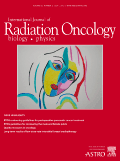
INTERNATIONAL JOURNAL OF RADIATION ONCOLOGY BIOLOGY PHYSICS
Unveiling Breakthroughs in Cancer Care and Research.International Journal of Radiation Oncology Biology Physics, published by Elsevier Science Inc, is a premier academic journal that has played a critical role in advancing the field of radiation oncology since its inception in 1975. With an impressive impact factor and recognition as a Q1 journal across multiple categories such as Cancer Research, Oncology, and Radiology, this journal serves as a vital resource for researchers, clinicians, and students dedicated to understanding and improving cancer treatment modalities. Its multifaceted scope encompasses original research, reviews, and innovative clinical studies, fostering a deeper understanding of the interplay between radiation, biology, and oncology. With a remarkable ranking in Scopus, including a top position in Radiation Physics and an elite percentile in Oncology, IJROBP remains at the forefront of scientific discovery and innovation in the management of cancer. A traditional subscription model ensures high-quality, peer-reviewed content, providing invaluable insights that continue to advance the standards of care and research in radiation oncology.
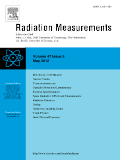
RADIATION MEASUREMENTS
Illuminating Innovations in Radiation Measurement.RADIATION MEASUREMENTS is a highly regarded academic journal published by Pergamon-Elsevier Science Ltd, focusing on the interdisciplinary field of radiation science and instrumentation. With an ISSN of 1350-4487 and an E-ISSN of 1879-0925, this journal aims to disseminate cutting-edge research and practical advancements from 1994 to 2024. It holds a commendable position in the Scopus rankings, being categorized in the top quartiles (Q2) for both Instrumentation and Radiation, reflecting its significance in the scientific community with a notable percentile of 64th and 59th, respectively. Although it does not offer Open Access options, the journal serves as a vital resource for researchers, professionals, and students seeking to explore innovations that shape the understanding and measurement of radiation phenomena. With a commitment to high-quality research, RADIATION MEASUREMENTS continues to contribute essential knowledge in the fields of physics and astronomy, positioning itself as a key publication for those dedicated to advancing radiation technology and its applications.
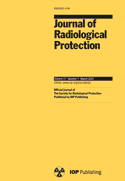
JOURNAL OF RADIOLOGICAL PROTECTION
Exploring the intersection of health and radiation.Journal of Radiological Protection, published by IOP Publishing Ltd, is a pivotal academic journal dedicated to advancing knowledge in the fields of radiology and radiation protection. Since its inception in 1988 and continuing through to 2024, this journal provides a platform for the dissemination of innovative research and critical reviews that explore the effects of radiation exposure on health and the environment. With an Impact Factor that places it among the Q3 category in Medicine, Public Health, Environmental and Occupational Health, as well as in Waste Management and Disposal, the journal is vital for professionals, researchers, and students keen on understanding the implications of radiological science. The Journal of Radiological Protection aims to contribute to improved practices and policies in radiation safety, making its findings essential for those involved in environmental health and public safety initiatives. Articles are accessible through various academic databases, ensuring widespread dissemination among the scientific community, thereby enhancing the journal's stature and influence in radiological research.
Journal of Radiotherapy in Practice
Bridging Theory and Practice in the Evolving Field of RadiotherapyJournal of Radiotherapy in Practice is a peer-reviewed journal published by Cambridge University Press, focusing on the evolving field of radiotherapy and its application in clinical practice. With ISSN 1460-3969 and E-ISSN 1467-1131, this journal serves as a critical platform for researchers, clinicians, and students in oncology and radiology, providing vital insights into treatment methodologies, patient care, and innovative practices. Although indexed in Q4 quartiles for both Oncology and Radiology, Nuclear Medicine and Imaging, the journal plays an essential role in disseminating clinical findings and advancing the science of radiotherapy since its inception in 1999. Authors are encouraged to contribute their research, case studies, and reviews that align with the journal's objectives, fostering a collaborative environment for sharing knowledge. Despite its current rankings, the journal aims to enhance its impact and visibility in the scientific community, thereby enriching professional practice and patient outcomes in the realm of radiotherapy.
RADIATION AND ENVIRONMENTAL BIOPHYSICS
Innovating Research at the Intersection of Biology and EnvironmentRADIATION AND ENVIRONMENTAL BIOPHYSICS, published by SPRINGER, is a premier journal dedicated to advancing the understanding of the interactions between radiation and biological systems within environmental contexts. With an ISSN of 0301-634X and an E-ISSN of 1432-2099, this journal has established itself as a vital source of innovative research across multiple disciplines, including Biophysics, Environmental Science, and Radiation Studies, maintaining a significant presence since its inception in 1974. The journal is categorized within the Q3 in Biophysics and Q2 in both Environmental Science and Radiation for 2023, indicating its relevance and influence in these domains. Researchers and professionals will find the journal's rich content invaluable, offering insights that could impact public health, environmental policy, and radiation safety. Although it is not an open-access journal, RADIATION AND ENVIRONMENTAL BIOPHYSICS provides critical information through its rigorous peer-reviewed articles, making it an essential resource for academics and practitioners aiming to contribute to this evolving field.
RADIATION PROTECTION DOSIMETRY
Exploring the forefront of radiation protection and health physics.RADIATION PROTECTION DOSIMETRY is a vital academic journal dedicated to the field of radiation protection, published by Oxford University Press. With an ISSN of 0144-8420 and an E-ISSN of 1742-3406, this journal serves as a platform for groundbreaking research and developments in dosimetry, health physics, and radiation safety spanning over four decades since its inception in 1981. Recognized with a Q3 ranking in multiple categories including Medicine (miscellaneous) and Public Health, this journal plays a key role in disseminating important findings that inform policy, enhance practice, and promote the protection of both individuals and the environment from radiation hazards. While currently not available as Open Access, the journal's curated content is essential for researchers, professionals, and students dedicated to advancing knowledge in radiation protection and related areas. Interested readers will find the latest research trends, case studies, and reviews invaluable for their work and studies within this multidisciplinary domain.
Practical Radiation Oncology
Fostering Excellence in Radiation TherapyPractical Radiation Oncology is a premier journal published by Elsevier Science Inc., focusing on the critically important fields of Oncology and Radiology, Nuclear Medicine, and Imaging. With an ISSN of 1879-8500, this journal serves as an essential resource for professionals and researchers dedicated to advancing the practice and research of radiation oncology. Established in 2011 and continuing through 2024, it has quickly gained recognition, achieving a prestigious Q2 ranking in Oncology and an exceptional Q1 ranking in Radiology, Nuclear Medicine, and Imaging as of 2023. The journal, housed in New York, USA, provides a platform for innovative research and practical insights, aimed at enhancing therapeutic practices and improving patient outcomes. As part of its commitment to fostering scientific dialogue, it also features a range of articles, reviews, and clinical studies that cater to the diverse interests of its readers. Hard-copy availability combined with digital access ensures a broad reach for the latest advancements in the field.
HEALTH PHYSICS
Elevating Standards in Health Physics ResearchHEALTH PHYSICS is a leading academic journal dedicated to the study and dissemination of knowledge in the fields of radiology, epidemiology, and health toxicology. Published by Lippincott Williams & Wilkins, this esteemed journal has been a cornerstone of research since its inception in 1958, and it continues to foster important discussions and advancements in the discipline. With a notable impact factor and consistently ranking in the Q2 and Q3 quartiles across various categories in 2023, HEALTH PHYSICS serves as a vital resource for scholars, practitioners, and students seeking the latest insights and methodologies in the management of radiation exposure and its health implications. While the journal does not offer open access, it remains a critical platform for peer-reviewed articles that contribute to public health and environmental safety. The journal's comprehensive scope and historical significance underscore its importance in advancing knowledge and practices within its field, making it an essential read for anyone engaged in the multidisciplinary realms of health physics.