INTERNATIONAL JOURNAL OF SYSTEMS SCIENCE
Scope & Guideline
Fostering Collaboration in Cutting-edge Research
Introduction
Aims and Scopes
- Systems Theory and Control:
The journal emphasizes the development and application of systems theory, particularly in the context of control systems. This includes robust control, adaptive control, and model predictive control strategies. - Multi-Agent Systems:
Research on consensus and coordination among multiple agents is a core focus. This encompasses decentralized control strategies and event-triggered mechanisms for multi-agent systems. - Cyber-Physical Systems:
The journal explores the intersection of control systems and cyber-physical systems, addressing challenges such as security, resilience, and performance optimization in the presence of cyber threats. - Event-Triggered Control:
A significant portion of the published work revolves around event-triggered control strategies, which aim to reduce communication and computational load in control systems. - Nonlinear Systems:
There is a strong emphasis on the control and analysis of nonlinear systems, including the development of novel techniques for handling uncertainties and disturbances. - Adaptive and Learning Systems:
The journal features research on adaptive control systems that can learn from their environment and improve performance over time, utilizing techniques such as reinforcement learning.
Trending and Emerging
- Resilient Control Systems:
There is an increasing focus on developing resilient control systems that can withstand cyber-attacks and other disruptions, highlighting the importance of security in modern control applications. - Data-Driven Control:
Research on data-driven control methodologies is on the rise, emphasizing the utilization of machine learning and statistical techniques to enhance control strategies based on real-time data. - Adaptive and Learning Control:
The trend toward adaptive control and learning systems, particularly in uncertain environments, is gaining momentum, as researchers explore ways to improve system performance through learning. - Hybrid Systems and Multi-Modal Control:
Emerging studies are focusing on hybrid systems that combine various control methods to achieve better performance, particularly in complex and uncertain environments. - Event-Triggered and Networked Control:
There is a growing emphasis on event-triggered control strategies in networked systems, aimed at optimizing communication and resource utilization in distributed environments. - Fuzzy and Intelligent Control Systems:
Research on fuzzy logic and intelligent control systems is trending, reflecting the need for more sophisticated approaches to handle uncertainties and nonlinearities in control applications.
Declining or Waning
- Classical Control Techniques:
There has been a noticeable decrease in the publication of papers focused on traditional control methods, such as PID control, as newer adaptive and intelligent control techniques gain prominence. - Deterministic Modeling:
Research centered around deterministic models has diminished, possibly due to a growing interest in stochastic and probabilistic approaches that better capture the complexities of real-world systems. - Static Systems Analysis:
Static analysis methods are becoming less prevalent as dynamic and time-varying system analyses gain traction, reflecting the need for more comprehensive modeling approaches. - Basic Linear Systems:
The focus on basic linear systems is waning, as the field moves towards more complex and nonlinear systems that require advanced control strategies.
Similar Journals

Nonlinear Analysis-Hybrid Systems
Fostering Interdisciplinary Collaboration for Tomorrow's TechnologiesNonlinear Analysis-Hybrid Systems is a premier academic journal published by ELSEVIER SCI LTD, dedicated to exploring the intricacies of nonlinear analysis and its applications in hybrid systems. With a significant emphasis on interdisciplinary research, this esteemed journal serves as a comprehensive forum for innovative studies, bridging the fields of mathematics, computer science, and engineering. As evidenced by its remarkable 2023 impact factor and esteemed ranking in the Q1 category across various disciplines—including Analysis (Ranked #2/193), Control and Systems Engineering (Ranked #52/321), and Computer Science Applications (Ranked #149/817)—the journal consistently publishes high-quality research that contributes to advancements in theory and practical implementations. Although it operates under a traditional access model, researchers and practitioners benefit from access to cutting-edge research that shapes modern methodologies and technological progress. Nonlinear Analysis-Hybrid Systems not only highlights the growing significance of hybrid systems but also aims to foster collaboration among researchers and professionals, thereby impacting multiple domains through its rigorous publication standards.

International Journal of Applied Mathematics and Computer Science
Advancing Knowledge at the Intersection of Mathematics and TechnologyThe International Journal of Applied Mathematics and Computer Science is a premier open-access journal published by SCIENDO, dedicated to advancing knowledge in the interdisciplinary fields of applied mathematics, computer science, and engineering. Since its inception in 2001, the journal has continually provided a platform for researchers to publish high-quality, peer-reviewed articles, contributing significantly to its fields, as evidenced by its strong Q2 quartile rankings in 2023 across key disciplines. With a notable impact factor and ranking within the Scopus database—#135 in Applied Mathematics and #45 in Computer Science—the journal emphasizes innovative research and practical applications. Open access since 2014, it has aimed to foster collaboration and ensure that vital scientific knowledge is accessible to a broader audience, positioning itself as an essential resource for researchers, professionals, and students seeking to stay on the cutting edge of technological and mathematical advancements.
Journal of Systems Science & Complexity
Transforming Research into Real-World Solutions in Systems Science.The Journal of Systems Science & Complexity, published by SPRINGER HEIDELBERG, stands as a leading forum for innovative research in the fields of computer science and information systems. With an ISSN of 1009-6124 and an E-ISSN of 1559-7067, this journal has established itself within the academic community, garnering a commendable impact factor that reflects its influential contributions. Operating from 2006 and continuing through 2024, it is categorized in the Q2 quartile for both Computer Science (Miscellaneous) and Information Systems, indicating its quality and relevance. Recognized within Scopus rankings, it places 52nd out of 133 in its specific field, affirming its significance in advancing systems science discussions. Researchers and professionals will find a wealth of knowledge through rigorous peer-reviewed articles that explore complex systems and their applications, enabling readers to stay at the forefront of technological advancements and interdisciplinary collaboration.
JOURNAL OF COMPUTER AND SYSTEMS SCIENCES INTERNATIONAL
Empowering Research in Computer Vision and Information SystemsJOURNAL OF COMPUTER AND SYSTEMS SCIENCES INTERNATIONAL, published by PLEIADES PUBLISHING INC, serves as a vital platform in the fields of Applied Mathematics, Computer Networks and Communications, Computer Vision and Pattern Recognition, Control and Systems Engineering, Information Systems, and Software among others. Established in 1993, the journal offers insights into both theoretical and practical advancements within these disciplines, continuously evolving through to 2024. Its current impact is reflected in its Q3 rankings across multiple categories in 2023 and Scopus rankings that position it within the 15th to 33rd percentiles, showcasing its relevance within the academic community. While not an Open Access journal, it maintains accessibility through institutional subscriptions, ensuring that researchers and professionals can engage with high-quality content. The journal is instrumental for those looking to deepen their understanding and contribute to ongoing discourse in computer science and systems sciences, making it an essential resource for students, researchers, and industry practitioners alike.
INTERNATIONAL JOURNAL OF ADAPTIVE CONTROL AND SIGNAL PROCESSING
Exploring the Intersection of Theory and Practice in Control SystemsINTERNATIONAL JOURNAL OF ADAPTIVE CONTROL AND SIGNAL PROCESSING, published by Wiley, is a premier peer-reviewed journal dedicated to the advancing field of adaptive control and signal processing. With a consistent publication history since 1987, this journal serves as a critical platform for disseminating innovative research and developments that contribute to both theoretical and practical aspects of engineering disciplines, specifically within the realms of control systems, electrical engineering, and signal processing. Boasting a commendable impact with quartile rankings in Q2 for Control and Systems Engineering, Electrical and Electronic Engineering, and Signal Processing, it ranks #93 among 321 journals in Control and Systems Engineering with a 71st percentile in Scopus rankings, underscoring its significance in fostering academic excellence. Although it does not offer open access, the journal is accessible through institutional subscriptions and individual purchases, promoting an extensive reach to researchers, professionals, and students eager to stay at the forefront of adaptive technologies. Whether seeking to explore cutting-edge methodologies or to gain insights into real-world applications, readers will find this journal to be an invaluable resource in the dynamic landscape of engineering innovation.

International Journal of Dynamics and Control
Advancing Innovation in Dynamic Systems and ControlInternational Journal of Dynamics and Control, published by SPRINGERNATURE, is a prestigious academic journal aimed at advancing the fields of Civil and Structural Engineering, Control and Optimization, Electrical, Electronic, and Mechanical Engineering, as well as Modeling and Simulation. With an ISSN of 2195-268X and an E-ISSN of 2195-2698, this journal focuses on high-quality research that addresses complex dynamic systems and control methodologies essential for innovation and progress in engineering disciplines. The journal has achieved significant recognition, being ranked in the second quartile for multiple categories in 2023, which underscores its impact and relevance within the academic community. Although it operates under subscription access, its rigorous peer-review process ensures that published articles meet the highest standards of scientific excellence. Researchers, professionals, and students alike will find valuable insights and methodologies that inform their work and inspire future studies in dynamic systems and controls.
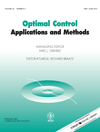
OPTIMAL CONTROL APPLICATIONS & METHODS
Unveiling cutting-edge applications in control and optimization.OPTIMAL CONTROL APPLICATIONS & METHODS, published by WILEY, is a prestigious academic journal dedicated to advancing the field of applied mathematics, control, and optimization. With an impressive impact factor in its respective categories—ranking in the second quartile for Applied Mathematics, Control and Optimization, and Control and Systems Engineering—the journal serves as a vital platform for disseminating innovative research findings and methodologies from 1980 to 2024. The journal is indexed in Scopus, with notable rankings in its discipline, highlighting its significance in the scientific community; specifically, it is ranked 143rd in Applied Mathematics and 35th in Control and Optimization, underscoring the quality and relevance of the research it publishes. Although not an open-access journal, it provides essential insights and methodologies of paramount importance to researchers, professionals, and students committed to the fields of control theory and systems engineering. It continues to foster knowledge and collaboration among experts to address complex challenges in automation and optimization.
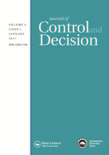
Journal of Control and Decision
Navigating the Future of Control and Decision-MakingJournal of Control and Decision, published by Taylor & Francis Ltd, is a premier academic journal that serves as a vital resource in the interdisciplinary fields of control systems, artificial intelligence, optimization, and human-computer interaction. Established in 2014 and converging into its upcoming decade, the journal emphasizes rigorous research and practical applications, contributing significantly to both academic discourse and technological advancements. With an impressive categorization in various quartiles, notably Q2 in Control and Systems Engineering and Q3 in several other categories, the journal showcases high-quality contributions that enhance our understanding of complex decision-making processes. Although it currently does not offer open access options, the journal is committed to maintaining impactful scholarly communication, securing its position in Scopus rankings across multiple disciplines. Researchers, practitioners, and students are encouraged to engage with its rich content to foster innovation and knowledge sharing in these dynamic fields.
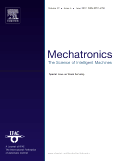
MECHATRONICS
Advancing the Frontiers of Mechatronic InnovationMECHATRONICS is a prominent journal published by PERGAMON-ELSEVIER SCIENCE LTD, focusing on the interdisciplinary fields of mechanical engineering, control and systems engineering, electrical and electronic engineering, and computer science applications. With an ISSN of 0957-4158, this journal has been a cornerstone in advancing knowledge and innovation since its inception in 1991. Known for its rigorous peer-review process and high-quality research outputs, MECHATRONICS holds prestigious rankings, including Q1 in both Electrical and Electronic Engineering and Mechanical Engineering for the year 2023, reflecting its influential position in the academic community. The journal caters to a diverse audience of researchers, professionals, and students, making it an essential resource for those looking to stay at the forefront of technological advancements in mechatronic systems. Although it does not currently offer open access, its wealth of insights and findings is indispensable for anyone pursuing excellence in engineering methodologies and applications.
INTERNATIONAL JOURNAL OF CONTROL AUTOMATION AND SYSTEMS
Elevating Knowledge in Control Automation and Systems.INTERNATIONAL JOURNAL OF CONTROL AUTOMATION AND SYSTEMS is a distinguished scholarly journal published by the Institute of Control Robotics & Systems in collaboration with the Korean Institute of Electrical Engineers. Since its inception in 2003, the journal has contributed significantly to the domains of Control and Systems Engineering and Computer Science Applications, attaining a commendable Q2 ranking in both fields as of 2023, thereby positioning itself at the forefront of academic inquiry and innovation. With an ISSN of 1598-6446 and an E-ISSN of 2005-4092, this journal serves as a platform for disseminating cutting-edge research and advancements in control automation technologies. Although it operates under a subscription model, the journal maintains a high impact factor, underscoring its relevance and appeal to researchers, engineers, and students alike who seek to expand their knowledge and apply theoretical insights in practical scenarios. We invite you to explore and contribute to the ongoing discourse that shapes the future of automation and control systems.