
International Journal of Turbomachinery Propulsion and Power
Scope & Guideline
Exploring breakthroughs in aerospace and energy engineering.
Introduction
Aims and Scopes
- Turbomachinery Design and Optimization:
The journal publishes research focused on the design and optimization of various turbomachinery components, including turbines, compressors, and fans. This includes the use of computational fluid dynamics (CFD), optimization algorithms, and experimental validation. - Performance Analysis and Assessment:
A core area of research is the performance evaluation of turbomachinery systems under different operating conditions. Studies often involve experimental investigations, numerical simulations, and analytical approaches to quantify efficiency, stability, and operational limits. - Fluid Dynamics and Aerodynamics:
Research related to fluid flow behavior around turbomachinery components is a significant focus. This includes studies on turbulence characteristics, flow separation, and the impact of design modifications on aerodynamic performance. - Noise and Vibration Control:
The journal addresses the critical issues of noise and vibration in turbomachinery. This includes the study of acoustic phenomena, vibration analysis, and mitigation techniques to enhance operational reliability and comfort. - Thermal Management and Heat Transfer:
Heat transfer analysis in high-performance turbomachinery is a vital area of research. The journal covers innovative cooling techniques, thermal efficiency improvements, and the impact of thermal loads on component performance. - Emerging Technologies and Materials:
The journal explores advancements in materials science and emerging technologies that enhance the performance and durability of turbomachinery components, including additive manufacturing and new composite materials.
Trending and Emerging
- Machine Learning and Data-Driven Approaches:
There is a notable increase in research utilizing machine learning and data-driven methodologies to enhance turbomachinery design, performance prediction, and fault diagnosis, indicating a shift towards more innovative and computationally efficient techniques. - Advanced Cooling Technologies:
Recent publications highlight the development of advanced cooling technologies, particularly in high-pressure turbine designs. This trend underscores the industry's focus on improving thermal efficiency and component longevity amidst rising operational demands. - Aerodynamic Optimization and Flow Control:
Research concentrating on aerodynamic optimization and advanced flow control mechanisms is emerging as a critical area. This includes studies on novel blade designs and active flow control techniques to enhance performance and reduce losses. - Sustainability and Eco-Design:
With an increasing emphasis on environmental sustainability, there is a growing trend towards research focused on eco-design principles, including the integration of sustainable materials and energy-efficient technologies in turbomachinery applications. - Multi-Disciplinary Approaches:
An emerging theme is the application of multidisciplinary approaches that combine insights from various fields (e.g., materials science, fluid dynamics, and control engineering) to address complex challenges in turbomachinery design and operation.
Declining or Waning
- Traditional Analytical Methods:
There seems to be a declining emphasis on traditional analytical modeling methods for turbomachinery performance analysis, as researchers increasingly turn to advanced computational techniques and machine learning approaches. - Generalized Reviews on Established Technologies:
While foundational reviews have historically been significant, there is a noticeable decrease in the publication of generalized reviews on established turbomachinery technologies, with a shift towards more specific, cutting-edge research. - Basic Experimental Techniques:
The focus on basic experimental techniques for turbomachinery testing is waning, as more sophisticated and integrated testing methodologies, such as hybrid simulations and in-situ monitoring, gain traction.
Similar Journals

FDMP-Fluid Dynamics & Materials Processing
Fostering Collaboration for a Dynamic Future in MaterialsFDMP-Fluid Dynamics & Materials Processing, published by TECH SCIENCE PRESS, stands as a significant contribution to the field of materials science, specifically focusing on the intricate relationships between fluid dynamics and material processing. With an ISSN of 1555-256X and an E-ISSN of 1555-2578, this journal offers an open-access platform where researchers can disseminate their work broadly, promoting collaboration and innovation among professionals and students alike. Established in 2007 and continuously evolving through to 2024, the journal is classified in the Q4 category of materials science, ranking at #347 out of 463 in the Scopus database, signifying its niche yet crucial role in the academic community. By focusing on the dynamic interplay between fluid behavior and material properties, FDMP addresses contemporary challenges and advances in material processing techniques. The journal plays a pivotal role for academics and industry professionals seeking to push the boundaries of knowledge and application in materials science.

International Journal of Aeronautical and Space Sciences
Transforming Ideas into Aerospace AdvancementsThe International Journal of Aeronautical and Space Sciences, published by Springer, is a prominent platform dedicated to advancing research and innovation in the fields of Aerospace Engineering, Control and Systems Engineering, Electrical and Electronic Engineering, and Materials Science. With an ISSN of 2093-274X and an E-ISSN of 2093-2480, the journal has established itself as a vital resource since its inception in 2011, currently offering insights that span a wide range of contemporary challenges and technological advancements in aeronautics and space exploration. Ranking in the Q2 category across multiple disciplines, including Aerospace and Control Engineering, signifies its recognized impact and quality within the academic community. Although not an open-access journal, it remains accessible to researchers, professionals, and students seeking to enhance their understanding of complex aerospace systems and their applications. The journal’s commitment to publishing high-quality research makes it indispensable for those aiming to contribute to, or stay informed about, the evolving landscape of aerospace technology.

Acta Mechanica et Automatica
Connecting Ideas, Driving Engineering ExcellenceActa Mechanica et Automatica is a leading open-access journal published by SCIENDO, dedicated to the dynamic fields of Mechanical Engineering and Control and Systems Engineering. Since its inception in 2012, this journal has provided a vital platform for researchers and professionals to disseminate innovative findings and advances within these disciplines, boasting a convergence of years up to 2024. Based in Warsaw, Poland, the journal has embraced open access since 2013, ensuring broad dissemination of knowledge for the academic community globally. With a current Scopus ranking placing it in the 25th to 31st percentile among its peers, it plays an essential role in fostering scholarly communication and collaboration. The objectives of Acta Mechanica et Automatica include promoting original research, facilitating dialogue between disciplines, and enhancing the understanding of complex mechanical and control systems. This journal is invaluable for researchers looking to explore cutting-edge methodologies, theories, and applications in engineering.

Propulsion and Power Research
Connecting Researchers to Propel the Industry Forward.Propulsion and Power Research, published by KEAI PUBLISHING LTD, is a leading Open Access journal that has been advancing the field of propulsion and power systems since its inception in 2012. With its commitment to fostering scientific discourse and innovation, the journal has gained a prominent position within academia, achieving a Q1 ranking in multiple categories such as Aerospace Engineering, Automotive Engineering, and Fluid Flow and Transfer Processes as of 2023. With an impressive ranking of #18 out of 153 in Aerospace Engineering and consistent recognition in the Scopus rankings, the journal explores critical advancements and research findings that propel the industry forward. As an Open Access publication, it ensures that groundbreaking research is readily available to a broad audience, enhancing collaboration between researchers, practitioners, and students. The journal's scope encompasses a wide range of topics within propulsion and energy solutions, making it an essential resource for anyone keen on discovering significant developments in this dynamic field.

Mechanika
Pioneering Studies in Condensed Matter PhysicsMechanika is a prominent open-access journal published by Kaunas University of Technology in Lithuania, with an ISSN of 1392-1207 and E-ISSN 2029-6983. Since its transition to open access in 2007, the journal has successfully facilitated the dissemination of vital research findings within the field of condensed matter physics, carving a niche for itself in a competitive academic landscape. Despite currently being categorized in the Q4 quartile for its impact in this area, Mechanika aims to foster advancements by providing a platform for innovative studies, reviews, and applications. As researchers, professionals, and students engage with its content, they will find an array of studies that push the boundaries of understanding in mechanics and related disciplines. Situated in the vibrant academic milieu of Kaunas, Mechanika is committed to quality, accessibility, and fostering scientific dialogue among the global academic community.

Journal of Aeronautics Astronautics and Aviation
Pioneering Insights in the World of Flight and BeyondJournal of Aeronautics Astronautics and Aviation, published by the Aeronautical & Astronautical Society Republic of China, is a premier scholarly journal dedicated to advancing knowledge in the dynamic fields of aerospace engineering and space sciences. Operating under the ISSN 1990-7710, this journal plays a pivotal role in disseminating innovative research and practice-oriented studies that address both theoretical and applicative aspects of aeronautics and astronautics. With an impressive history spanning from 2006 to 2024, the journal has established itself as a valuable resource for researchers, professionals, and students alike, featuring contributions that reflect the latest developments and trends within the industry. In the latest rankings, it holds a Q3 classification in Aerospace Engineering and Q4 in Space and Planetary Science, indicating its growing influence despite its niche scope. With an open access model that facilitates widespread readership, the Journal of Aeronautics Astronautics and Aviation strives to foster collaboration and knowledge sharing in these ever-evolving scientific domains.
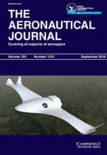
AERONAUTICAL JOURNAL
Exploring the frontiers of flight and technology.Aeronautical Journal, published by Cambridge University Press, is a premier scholarly journal dedicated to advancing the field of aerospace engineering. With a notable impact factor, this journal holds a strong position in the academic community, ranked #53 out of 153 in the Scopus category of Aerospace Engineering, placing it in the 65th percentile. The journal has been providing a platform for groundbreaking research since its inception in 1969, and continues to be a vital resource for researchers, professionals, and students involved in aeronautics. As a Q2 journal in the 2023 Aerospace Engineering category, it offers high-quality articles that cover a range of topics within the discipline, contributing to the ongoing discourse and innovation in aerospace technologies. Although not an open-access journal, it remains accessible to a vast readership through institutional subscriptions and partnerships. The Aeronautical Journal is a crucial publication for those seeking to stay at the forefront of aerospace research and development.
PROCEEDINGS OF THE INSTITUTION OF MECHANICAL ENGINEERS PART A-JOURNAL OF POWER AND ENERGY
Shaping the Future of Sustainable Engineering PracticesPROCEEDINGS OF THE INSTITUTION OF MECHANICAL ENGINEERS PART A-JOURNAL OF POWER AND ENERGY, published by SAGE PUBLICATIONS LTD, is a pivotal journal dedicated to advancing the fields of mechanical engineering and energy technology. With a history spanning from 1983 to 2024, this journal provides a respected platform for researchers and practitioners to disseminate findings that address contemporary challenges in power generation, energy efficiency, and sustainable engineering practices. As evidenced by its quarter ranking in Q3 within the categories of Energy Engineering and Power Technology, and Mechanical Engineering, it serves as a significant resource for academics aiming to enhance their understanding and explore innovation in these critical areas. While currently not an open-access journal, the research published here is invaluable for both ongoing education and professional practice, making it an essential read for anyone engaged in the engineering disciplines.
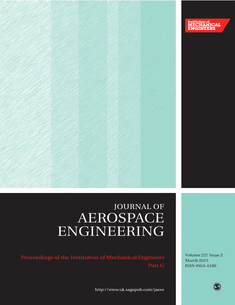
PROCEEDINGS OF THE INSTITUTION OF MECHANICAL ENGINEERS PART G-JOURNAL OF AEROSPACE ENGINEERING
Elevating Knowledge in Mechanical and Aerospace DisciplinesPROCEEDINGS OF THE INSTITUTION OF MECHANICAL ENGINEERS PART G-JOURNAL OF AEROSPACE ENGINEERING, published by SAGE PUBLICATIONS LTD, stands as a pivotal resource for those immersed in the disciplines of aerospace and mechanical engineering. With an ISSN of 0954-4100 and E-ISSN of 2041-3025, this journal not only contributes to the academic community but also reflects a robust commitment to advancing knowledge within these fields. Operating from the United Kingdom, it has garnered a respectable reputation, evidenced by its category quartiles—ranking Q3 in both Aerospace Engineering and Mechanical Engineering as of 2023. Established in 1989, the journal has evolved substantially over the years, serving as a platform for groundbreaking research and innovative methodologies. Researchers, professionals, and students alike will find a wealth of insights that foster collaboration and advance the frontiers of engineering. Although currently not available as an Open Access publication, the journal remains a critical reference point for those looking to deepen their understanding and contribute to ongoing developments in aerospace technology.
HEAT TRANSFER ENGINEERING
Elevating standards in thermal engineering research and practice.HEAT TRANSFER ENGINEERING is a leading international journal published by Taylor & Francis Inc, dedicated to advancing the field of heat transfer and thermal engineering. With a strong focus on the key aspects of Condensed Matter Physics, Fluid Flow and Transfer Processes, and Mechanical Engineering, this journal covers a comprehensive range of topics from experimental studies to theoretical analysis, aiming to foster innovative research and practical applications. Since its inception in 1979 and continuing through 2024, the journal has established itself as an essential resource for researchers and industry professionals alike, reflected in its solid rankings within Scopus—holding a Q2 quartile classification in multiple engineering disciplines. Although not open access, the journal ensures broad accessibility through institutional subscriptions, making cutting-edge research readily available. With its rigorous peer-review process and commitment to quality, HEAT TRANSFER ENGINEERING plays a crucial role in shaping the future of thermal management solutions and engineering practices.