Integrated Environmental Assessment and Management
metrics 2024
Pioneering rigorous research at the intersection of geography and environmental science.
Introduction
Integrated Environmental Assessment and Management, published by Wiley, stands at the forefront of interdisciplinary research in the fields of environmental science and geography. With an impact factor reflective of its significant contribution to the academic community, this journal is categorized as Q2 in Environmental Science, Q1 in Geography, Planning and Development, and Q2 in Medicine as of 2023. Covering a broad spectrum of topics, it facilitates the integration of assessment and management practices crucial to addressing contemporary environmental challenges. As of the convergence years from 2005 to 2024, the journal has consolidated its reputation, holding notable ranks in Scopus, including #121 in the Social Sciences—Geography, Planning and Development category and #62 in General Environmental Science. While this journal does not currently operate under an open access model, it remains an essential resource for researchers, professionals, and students who seek to enhance their understanding of environmental and geographical issues through rigorous scientific inquiry.
Metrics 2024
 0.783.003.1071
Metrics History
Rank 2024
Scopus
IF (Web Of Science)
JCI (Web Of Science)
Quartile History
Similar Journals
European Journal of Environmental and Civil Engineering
Pioneering Research at the Intersection of Environment and InfrastructureThe European Journal of Environmental and Civil Engineering, published by Taylor & Francis Ltd, is a prestigious peer-reviewed journal that serves as a vital platform for advancing knowledge in the fields of Civil and Structural Engineering as well as Environmental Engineering. With an impressive impact factor and categorized in the Q2 quartile for both engineering fields, this journal occupies a significant position in the scholarly community. Its focused scope encompasses innovative research, case studies, and practical applications that address contemporary environmental and infrastructural challenges. Researchers, professionals, and students alike benefit from the journal's commitment to high-quality discourse, as evidenced by its Scopus rankings, which place it in the top 30% in Civil and Structural Engineering and the top 40% in Environmental Engineering. Through the publication of cutting-edge studies and a commitment to fostering interdisciplinary dialogue, the European Journal of Environmental and Civil Engineering remains an essential resource for those dedicated to improving our built environment and safeguarding our natural resources.
Environmental Engineering Research
Bridging engineering and ecology for a sustainable world.Environmental Engineering Research, published by the Korean Society of Environmental Engineers (KSEE), stands as a pivotal journal in the field of environmental engineering. With an ISSN of 1226-1025 and an E-ISSN of 2005-968X, this esteemed journal has shown remarkable growth since its inception, converging years from 2011 to 2024. The journal is recognized in the Scopus ranking system, holding a position of #46 out of 197 in the Environmental Science category, marking it in the 76th percentile—a testament to its impact and significance in the field. Furthermore, it enjoys a commendable Q2 ranking in Environmental Engineering for 2023. While the journal operates under a traditional access model, its commitment to disseminating vital research and innovative solutions for environmental challenges enhances its appeal to researchers, professionals, and students alike. The Environmental Engineering Research journal invites contributions that advance the understanding and application of engineering principles to environmental issues, providing a forum for scholars dedicated to fostering sustainability and environmental protection.
Environmental Science-Processes & Impacts
Transforming research into real-world environmental action.Environmental Science-Processes & Impacts is a premier journal published by the Royal Society of Chemistry, focusing on critical research in the field of environmental science. With ISSN 2050-7887 and E-ISSN 2050-7895, this journal has established itself as an authoritative source of knowledge since its inception in 2012, maintaining a remarkable Q1 quartile ranking across significant categories such as Environmental Chemistry, Management, Monitoring, Policy and Law, Medicine, and Public Health for the year 2023. It stands as an essential resource for professionals, researchers, and students, aimed at advancing scientific understanding and solutions to pressing environmental issues. With impressive ranks in Scopus, including #45 in Public Health and #27 in Environmental Chemistry, the journal provides a platform for impactful research and interdisciplinary collaboration, emphasizing open access to foster the dissemination of knowledge globally. Join a community committed to exploring the interconnectedness of environmental processes and their implications for society by contributing to or learning from cutting-edge studies published in this esteemed journal.
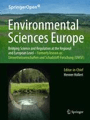
Environmental Sciences Europe
Catalyzing change through impactful environmental research.Environmental Sciences Europe is a leading peer-reviewed journal published by SPRINGER, dedicated to advancing research in the field of environmental science, with a specific focus on pollution and its mitigation. Since its transition to Open Access in 2011, the journal has been committed to disseminating high-quality research without barriers, thereby ensuring that critical knowledge is freely accessible to researchers, practitioners, and policymakers around the globe. Based in Germany and with a commendable Q1 ranking in Pollution for 2023, the journal stands out in the Scopus rankings, occupying the 23rd position out of 167 in its category, reflecting its significant impact in shaping environmental discourse. With a convergence of global research efforts projected until 2024, Environmental Sciences Europe aims to provide a vital platform for scholarly communication and collaboration, ultimately contributing to sustainable solutions for pressing environmental challenges.
Journal of Hazardous Materials Advances
Elevating standards in environmental health and safety.The Journal of Hazardous Materials Advances, published by ELSEVIER, is a premier open-access journal dedicated to advancing the understanding and management of hazardous materials. Established in 2021, this journal has quickly gained recognition, securing a place in the prestigious Q1 quartile across multiple categories, including Environmental Chemistry, Environmental Engineering, Health, Toxicology and Mutagenesis, Pollution, and Waste Management and Disposal. With its impactful research indexed under ISSN 2772-4166, the journal not only prioritizes quality but also promotes accessibility to its scholarly outputs, ensuring that vital findings are readily available to the global research community. As part of Scopus, the Journal ranks competitively in various subfields of Environmental Science, reflecting its vital role in addressing contemporary environmental challenges. Researchers, professionals, and students can rely on this journal to provide innovative insights and solutions in the ever-evolving landscape of hazardous material management and its implications for public health and environmental sustainability.

All Earth
Navigating the Complexities of Earth and SocietyAll Earth is an esteemed open-access journal published by Taylor & Francis Ltd, dedicated to multidisciplinary research in the fields of Earth and Planetary Sciences, Global and Planetary Change, as well as Management, Monitoring, Policy, and Law. Since its inception in 2021, All Earth has swiftly positioned itself in the academic community, achieving notable rankings such as Q2 in Earth and Planetary Sciences and Q3 in related fields, showcasing its commitment to high-quality interdisciplinary scholarship. Researchers and professionals can benefit from its accessible content, which contributes to the ongoing discourse on critical environmental issues and innovative solutions for sustainable development. The journal is based in the United Kingdom and continues to be a vital source of information and inspiration for students and scholars aiming to tackle the pressing challenges of our planet through rigorous scientific inquiry and policy analysis.
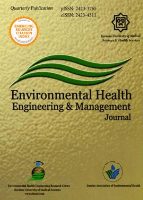
Environmental Health Engineering and Management Journal
Bridging the Gap Between Ecology and Human Well-beingEnvironmental Health Engineering and Management Journal is a premier platform dedicated to the dissemination of research findings in the essential field of environmental health. Published by Kerman University of Medical Sciences in Iran, this Open Access journal has been a beacon of scientific inquiry since its inception in 2014. With an ISSN of 2423-3765 and E-ISSN 2423-4311, it facilitates broad accessibility to cutting-edge research that addresses the complex interactions between environmental factors and human health. With a notable categorization in the Q3 quartile for Environmental Science and Public Health, alongside Q4 in Chemical Health and Safety, the journal underscores its commitment to quality and relevance. Currently ranked #132 out of 233 in Environmental Science within Scopus, it serves as a crucial resource for researchers and practitioners striving to tackle contemporary environmental challenges. The journal's scope includes innovative methodologies, environmental risk assessment, and sustainable health practices, positioning it as an indispensable reference for those invested in improving public health outcomes through environmental engineering and management.
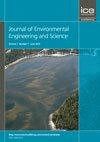
Journal of Environmental Engineering and Science
Transforming Environmental Engineering Through Rigorous ScholarshipJournal of Environmental Engineering and Science, published by Emerald Group Publishing Ltd, is a prominent academic platform dedicated to the dissemination of cutting-edge research in the fields of environmental engineering, chemistry, and science. This journal, with ISSN 1496-2551 and E-ISSN 1496-256X, features a comprehensive collection of studies that delve into innovative methodologies and practical applications aimed at solving pressing environmental issues. Having been published since 2002, it spans critical research years from 2015 to 2024, offering insights that are invaluable to both academics and practitioners alike. With its current rankings placing it in the fourth quartile for Environmental Chemistry and Engineering, and the third quartile in miscellaneous Environmental Science, the journal serves as a significant yet under-utilized resource for emerging scholars seeking to contribute to the ecological discourse. Though it does not offer Open Access, the content is meticulously curated to uphold academic rigor, catering especially to researchers, professionals, and students keen on advancing their understanding of environmental challenges and engineering solutions.
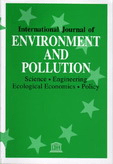
INTERNATIONAL JOURNAL OF ENVIRONMENT AND POLLUTION
Championing Sustainable Solutions to Pollution IssuesInternational Journal of Environment and Pollution is a pivotal publication in the field of environmental science, dedicated to advancing knowledge concerning pollution and its multifaceted impacts on ecosystems and human health. Published by InderScience Enterprises Ltd, this journal, which has been in circulation since 1991, serves as a vital platform for researchers, professionals, and students interested in the management, monitoring, policy, and law associated with environmental issues. With an ISSN of 0957-4352 and E-ISSN 1741-5101, it offers a critical perspective on pollution challenges, emphasizing Waste Management and Disposal. Although placed in the Q4 quartile of its categories, it remains an important resource for understanding the complexities of environmental impact, contributing to policy formulation and ecological research. The journal does not offer Open Access, but it can be accessed through various academic libraries and institutions that value comprehensive studies in environmental management. Engage with the latest findings and discussions that address pressing environmental concerns today!
Challenges in Sustainability
Pioneering Research at the Intersection of Ecology and InnovationChallenges in Sustainability, published by LIBRELLO PUBLISHING HOUSE in Switzerland, is a preeminent Open Access journal dedicated to advancing knowledge in the fields of sustainability, ecology, and environmental management. With its ISSN 2297-6477, this journal has been pivotal since its inception in 2013, providing a platform for innovative research and discourse on sustainable practices and policies. The journal currently holds a Q2 ranking in notable categories such as Ecology, Geography, Planning and Development, and Nature and Landscape Conservation, reflecting its significant contribution to these critical areas. Access options are freely available to foster a wider dissemination of knowledge, engaging researchers, professionals, and students alike. As the world grapples with pressing environmental challenges, Challenges in Sustainability serves as an essential resource for those seeking to address complex sustainability issues through interdisciplinary research and informed policy advocacy.