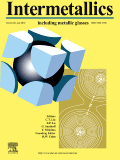
INTERMETALLICS
metrics 2024
Driving Discovery in the World of Intermetallics
Introduction
INTERMETALLICS, a prestigious journal published by ELSEVIER SCI LTD in the United Kingdom, has been a vital resource in the fields of Materials Science, Mechanical Engineering, and Chemistry since its inception in 1993. Renowned for its rigorous peer-review process and commitment to high-quality research, this journal enjoys an impressive position within the top quartile (Q1) rankings of its categories, signifying its influence and esteem in the academic community. With a particular emphasis on the study of intermetallic compounds and their applications, INTERMETALLICS attracts groundbreaking research and innovative contributions that push the boundaries of knowledge in metals and alloys, as well as mechanics of materials. Researchers looking for a platform to disseminate cutting-edge findings will find this journal an exemplary choice, further enhanced by its commendable Scopus rankings that illustrate its widespread recognition and relevance. Though it does not currently offer Open Access options, the journal remains committed to advancing the field through selective publication of impactful research, making it an essential reference for researchers, professionals, and students alike interested in the dynamic interplay between materials and engineering.
Metrics 2024
 1.024.304.20134
Metrics History
Rank 2024
Scopus
IF (Web Of Science)
JCI (Web Of Science)
Quartile History
Similar Journals
ACTA METALLURGICA SINICA
Catalyzing Scholarly Dialogue in MetallurgyACTA METALLURGICA SINICA, established in 1978 and published by SCIENCE PRESS, stands as a preeminent journal in the fields of metallurgy and materials science. This journal is particularly revered for its contributions to Metals and Alloys, Mechanical Engineering, Geotechnical Engineering, and Mechanics of Materials, with a commendable Q1 ranking in Metals and Alloys and notable placements in other engineering disciplines. With a robust history of facilitating scholarly communication from 1978 to 1991 and consistently since 1996, the journal provides a vital platform for researchers and practitioners to disseminate significant advancements in material science. Despite being a subscription-based journal, ACTA METALLURGICA SINICA remains pivotal, holding a Scopus ranking that places it in the top tiers of its categories, fostering an environment ripe for innovation and collaboration. This ensures that the journal remains central to the ongoing discussions and developments within the metallurgy community, serving both academic and professional interests.
Uspekhi Fiziki Metallov-Progress in Physics of Metals
Championing Open Access in Metal Physics ResearchUspekhi Fiziki Metallov - Progress in Physics of Metals, published by the G V KURDYUMOV INST METAL PHYSICS NAS UKRAINE, is a distinguished open-access journal that has been advancing the field of metal physics since 2000. With an ISSN of 1608-1021 and E-ISSN of 2617-0795, this journal is pivotal for disseminating rigorous research findings and innovations across diverse subfields including Condensed Matter Physics, Electronic, Optical and Magnetic Materials, and Fluid Flow and Transfer Processes. The journal's strong impact, reflected in its Q2 and Q3 quartile rankings across several categories and a commendable Scopus ranking, places it at the forefront of materials science and engineering. Researchers, professionals, and students can benefit from its rich repository of high-quality articles aimed at fostering knowledge and collaboration in metal physics. With an accessible repository and commitment to the open-access model, Progress in Physics of Metals strives to make significant contributions to the global scientific community, shaping the future of metal-based research.
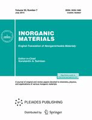
INORGANIC MATERIALS
Exploring the Foundations of Inorganic InnovationINORGANIC MATERIALS, published by MAIK NAUKA/INTERPERIODICA/SPRINGER, is a pivotal journal in the realm of Materials Science, focusing primarily on the exploration and application of inorganic materials. With a robust commitment to advancing knowledge in areas such as Metals and Alloys, Inorganic Chemistry, and Chemical Engineering, this journal has successfully maintained a reputation for quality, achieving various category quartiles in 2023, including Q3 in Chemical Engineering and Materials Chemistry, and Q4 in Inorganic Chemistry. Although it operates under traditional access models, the journal welcomes contributions from researchers dedicated to understanding the properties and applications of inorganic substances. Throughout its publication history from 1996 to 2024, INORGANIC MATERIALS has become an essential resource for those engaged in innovative research and development, making it an invaluable tool for students, professionals, and academics alike.
Russian Journal of Non-Ferrous Metals
Shaping the Future of Materials ScienceThe Russian Journal of Non-Ferrous Metals, published by PLEIADES PUBLISHING INC, serves as a vital resource for researchers and professionals in the fields of materials science and engineering. With a dual ISSN (1067-8212 for print and 1934-970X for online), this journal has been instrumental in disseminating cutting-edge research from 2007 to 2023. Specializing in the mechanics of materials, metals and alloys, and the study of surfaces, coatings, and films, it provides invaluable insights into the latest advancements and applications in these areas. Although currently categorized in the Q4 tier for mechanics of materials and surfaces, and Q3 for metals and alloys in the 2023 rankings, its commitment to quality research is reflected in its Scopus metrics, ranking it within the competitive spectrum of its fields. While not an open access journal, it remains a crucial academic platform for fostering knowledge exchange among professionals and scholars. By publishing high-quality articles, the Russian Journal of Non-Ferrous Metals contributes significantly to the ongoing dialogue in metallurgical science and engineering.
INTERNATIONAL MATERIALS REVIEWS
Advancing Knowledge in Materials Chemistry and EngineeringINTERNATIONAL MATERIALS REVIEWS, published by SAGE Publications Inc, is a leading journal dedicated to the comprehensive analysis of contemporary research in the fields of materials chemistry, mechanical engineering, mechanics of materials, and the study of metals and alloys. With an impressive impact factor and a Q1 ranking across multiple categories such as Materials Chemistry and Mechanical Engineering in 2023, it ranks amongst the top journals for innovative materials research. The journal has a long-standing history since its inception in 1987 and continues to serve as a crucial resource for academics and professionals alike. Although it is not open access, it is renowned for its rigorous peer-review process and its commitment to disseminating high-quality materials science research globally. Researchers, students, and industry professionals benefit greatly from the journal's insightful reviews, both for the advancement of theoretical knowledge and practical applications within the fast-evolving materials field.
JOM
Shaping the future of engineering and materials applications.JOM, published by Springer, is a leading academic journal dedicated to advancing research in the fields of Engineering and Materials Science. With an ISSN of 1047-4838 and an E-ISSN of 1543-1851, JOM has established itself as a reputable source of scholarly articles, contributing significantly to the understanding and development of materials and their applications in engineering. As of 2023, it ranks in the second quartile (Q2) in both the Engineering (miscellaneous) and Materials Science (miscellaneous) categories, showcasing its influence and academic rigor. With a Scopus rank of #84 in General Engineering and #212 in General Materials Science, JOM is positioned as a vital resource for academics and professionals aiming to stay abreast of the latest research trends and innovations. Although the journal does not currently offer open access options, its commitment to quality publishing continues to make it an essential read for researchers and students alike, fostering a collaborative environment for growth and discovery in the materials science community.
ACTA MATERIALIA
Shaping Tomorrow's Materials TodayACTA MATERIALIA is a premier journal in the field of materials science, published by PERGAMON-ELSEVIER SCIENCE LTD. With an ISSN of 1359-6454 and an E-ISSN of 1873-2453, this esteemed journal serves as a vital platform for disseminating high-quality research across various critical domains, including ceramics and composites, electronic, optical and magnetic materials, metals and alloys, and polymers and plastics. Recognized for its impact in the field, ACTA MATERIALIA boasts a remarkable standing, featuring a Q1 ranking in multiple categories as of 2023, solidifying its importance among the top journals in materials science. Researchers and professionals benefit from open access options, ensuring that groundbreaking findings are available to a global audience. Operating out of the United Kingdom, ACTA MATERIALIA strives to advance knowledge and innovation within the materials science community, making it an invaluable resource for academics, industrial professionals, and students dedicated to the future of material engineering and technology.
Metallurgical Research & Technology
Pioneering insights in the dynamic world of metallurgy.Metallurgical Research & Technology is a distinguished journal published by EDP SCIENCES S A based in France, focusing on the dynamic field of metallurgical science and engineering. With a strong emphasis on the latest advancements in Materials Chemistry, Computational Mechanics, and Mechanics of Materials, this journal aims to provide a platform for researchers to share innovative findings that propel the field forward. As of 2023, it has secured a commendable position in various categories, including Q3 rankings in Computational Mechanics, Materials Chemistry, and Mechanics of Materials, along with a Q2 ranking in Metals and Alloys. The journal actively promotes open access, facilitating broader dissemination of critical research across the globe. Researchers, professionals, and students in the metallurgical domain will find Metallurgical Research & Technology an invaluable resource for cutting-edge developments and collaborative opportunities.
Korean Journal of Metals and Materials
Unveiling Breakthroughs in Materials ResearchWelcome to the Korean Journal of Metals and Materials, a premier publication dedicated to advancing research in the interdisciplinary fields of metals and materials science. Published by the Korean Institute of Metals and Materials, this journal aims to foster the dissemination of innovative findings and significant developments across various domains, including electronic, optical, and magnetic materials, metals and alloys, as well as modeling, simulation, and surface coatings. With a commendable Q3 quartile ranking in several relevant categories as of 2023, it serves as a vital resource for researchers, professionals, and students interested in the latest scientific trends and technological applications. The journal has successfully converged from 2007 to 2024, showcasing a rich archive of knowledge. Engaging with this publication gives readers the opportunity to stay updated with critical advancements and enhances collaboration within the vibrant materials science community. Access is available through various platforms, ensuring that our content is widely accessible to all those striving for excellence in the field.
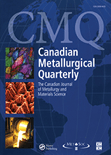
CANADIAN METALLURGICAL QUARTERLY
Exploring the Depths of Metallurgical Engineering.Canadian Metallurgical Quarterly is a prestigious scholarly journal published by Taylor & Francis Ltd, dedicated to the field of metallurgical engineering and materials science. With a rich history dating back to its inception in 1962 and continuing through its most recent publications, this journal serves as a vital platform for the dissemination of innovative research, advancements, and critical reviews in metallurgy, metals, and alloys. Positioned strategically within the academic community, it holds a significant impact factor and is currently rated in the Q2 category for Metals and Alloys, and Q3 in Industrial and Manufacturing Engineering as of 2023, showcasing its authoritative role in these disciplines. Although it does not offer open access, the journal remains widely recognized for its rigorous peer-review process, ensuring that published work adheres to the highest standards of scientific quality. Researchers, professionals, and students alike will find invaluable insights and contributions that drive the field forward.