
Istorija
Scope & Guideline
Cultivating Knowledge Through Historical Exploration
Introduction
Aims and Scopes
- Lithuanian National Identity and Diaspora Studies:
The journal emphasizes research on the evolution of Lithuanian national identity, especially in the context of the diaspora, examining how historical events influenced Lithuanian communities abroad. - Political History and Diplomacy:
A significant focus is placed on the political history of Lithuania, including diplomatic relations and international politics, particularly during critical periods such as the Soviet occupation and independence movements. - Social and Cultural History:
The journal explores the social fabric of Lithuania, including gender studies, cultural mobilization, and the role of various social groups in historical contexts. - Historiographical Analysis:
Istorija encourages critical historiographical studies that reinterpret historical events, providing new insights into Lithuania's past and the methodologies used to study it. - Transnational and Comparative History:
The journal also engages with transnational perspectives, comparing Lithuanian historical experiences with those of neighboring countries and broader European trends.
Trending and Emerging
- Post-Soviet Identity and Memory Studies:
There is an increasing focus on how post-Soviet experiences shape contemporary Lithuanian identity and memory, highlighting the importance of collective memory in understanding current socio-political dynamics. - Gender and Social Movements:
Research on the role of gender in historical contexts, particularly regarding social movements and political mobilization, is emerging as a significant theme, reflecting broader global discourses on gender studies. - Diaspora and Transnational Relations:
The exploration of Lithuanian diaspora communities and their influence on both local and international politics is gaining prominence, emphasizing transnational connections and cultural exchanges. - Environmental History and Heritage:
An emerging interest in environmental history and the preservation of cultural heritage is evident, reflecting a growing awareness of historical narratives related to environmental changes and cultural sustainability. - Digital History and Archival Studies:
There is a rising trend in utilizing digital tools for historical research and archival studies, indicating a shift towards modern methodologies in the field of historiography.
Declining or Waning
- Early Medieval Studies:
Research centered on the early medieval period of Lithuania appears to have waned, with fewer papers exploring this era compared to previous years. This may reflect a broader trend of scholars focusing on more contemporary issues. - Military History:
While military aspects have been included in some studies, there seems to be a decline in dedicated research on military history outside of specific conflicts, suggesting a shift towards social and cultural themes. - Local History Studies:
There is a noticeable decrease in the publication of papers focusing on very localized historical studies, which may be giving way to broader national narratives and thematic explorations. - Traditional Economic History:
The traditional focus on economic history, particularly in the context of agrarian studies and early economic systems, has become less prominent, possibly overshadowed by social and political themes.
Similar Journals

Istoriya-History
Empowering Historical Discourse for AllIstoriya-History is a reputable academic journal published by NATSIONALNO IZDATELSTVO AZ BUKI, focusing on the rich tapestry of historical analysis and interpretation. With its print ISSN 0861-3710 and E-ISSN 1314-8524, the journal provides a platform for scholars, researchers, and students to publish their work and contribute to the growing body of knowledge in the field of history. Although it operates under a subscription model, the journal aims to make significant historical research accessible to the scholarly community. The journal’s editorial board comprises experienced historians and academics dedicated to ensuring high-quality peer-reviewed articles that uphold rigorous academic standards. With its base in Sofia, Bulgaria, and an emphasis on both regional and global historical discourses, *Istoriya-History* serves as a vital resource for professionals and enthusiasts eager to understand the complexities of the past and its implications for the present and future.

RUSSIAN HISTORY-HISTOIRE RUSSE
Charting New Territories in Russian Historical ResearchRUSSIAN HISTORY-HISTOIRE RUSSE is a distinguished academic journal published by BRILL, focusing on the rich and complex tapestry of Russian historical studies. Established in 1975, this journal serves as a vital platform for scholars, researchers, and students interested in exploring the multifaceted aspects of Russia's past. With its ISSN 0094-288X, it has undergone significant evolution over the years, marking its converged publication years as essential milestones in the academic discourse surrounding Russian history. While currently not an open access journal, it is recognized for its rigorous peer-reviewed articles and contributes to the field's scholarship, as reflected in its 2023 Scopus ranking within the 49th percentile (Rank #876 out of 1760) in Arts and Humanities - History, and its Q4 quartile classification. Located in Leiden, Netherlands, the journal is committed to enhancing understanding of both historical patterns and contemporary implications, making it an essential resource for academic inquiry and research excellence.

NEW ZEALAND JOURNAL OF HISTORY
Unveiling the Rich Tapestry of Aotearoa's HistoryThe New Zealand Journal of History is a preeminent scholarly publication dedicated to the field of historical research, focusing on the rich and diverse history of New Zealand from both national and global perspectives. Published by the University of Auckland, this journal serves as a vital platform for historians, researchers, and students to engage with novel ideas and scholarly discourse. Although it is not an open-access journal, its impact within the academic community is underscored by its consistent ranking within the Scopus database, where it holds the position of rank #681 out of 1328 in the Arts and Humanities category, reflecting a commendable percentile of 48th. Covering essential years of publication from 1978 to 2019, the journal offers a comprehensive archive of articles that explore various historical themes and methodologies. By providing a critical examination of New Zealand's past, the New Zealand Journal of History plays an essential role in inspiring further research and understanding of historical contexts, making it indispensable for historians and students alike.

REVUE HISTORIQUE
Where Innovative Research Meets Historical DiscourseREVUE HISTORIQUE is a distinguished scholarly journal dedicated to the field of history, published by PRESSES UNIV FRANCE. With an ISSN of 0035-3264 and an E-ISSN of 2104-3825, this journal has been a vital resource for historians and academics since its inception, exploring various dimensions of historical research and discourse. The journal is currently categorized in the Q3 quartile for history according to the 2023 metrics, highlighting its significance and academic rigor, although it is rated in the 19th percentile in the Scopus Ranks among Arts and Humanities journals. Based in France, the journal encompasses a wide range of historical topics and serves as a platform for innovative research, critical analysis, and scholarly discourse, making it an essential read for anyone looking to deepen their understanding of the past. Researchers, professionals, and students alike will benefit from its comprehensive articles, which reflect the latest trends and developments in historical research. As a non-open access journal, subscribers and institutional access are essential to engage with its rich content.

Radovi-Zavoda za Hrvatsku Povijest
Innovative Insights into Croatia's Historical NarrativeRadovi-Zavoda za Hrvatsku Povijest, published by the Institute of Croatian History within the Faculty of Humanities and Social Sciences, is a distinguished open-access journal dedicated to advancing scholarly discourse in the field of history, with a specific focus on Croatian heritage and historiography. Established in 1971, this journal has evolved to become a vital resource for researchers, professionals, and students alike, showcasing innovative research and critical perspectives on historical developments in Croatia and the broader region. With an ISSN of 0353-295X and a recent Scopus ranking placing it in the Q3 quartile for 2023, it stands as a testament to the rich historiographical contributions emerging from Croatia. By providing immediate open access to its content, Radovi-Zavoda za Hrvatsku Povijest seeks to enhance the visibility and impact of historical research, facilitating knowledge exchange and academic collaboration. The journal's commitment to excellence is reflected in its rigorous peer-review process, ensuring that all published works meet high academic standards. As the journal continues to converge from 2013 to 2023, it solidifies its role as a key player in the global historical narrative.

Turkish Journal of History-Tarih Dergisi
Advancing historical scholarship with open access.Turkish Journal of History-Tarih Dergisi, published by ISTANBUL UNIV, is a prominent open access journal dedicated to advancing the field of history since its inception. With an ISSN of 1015-1818 and an E-ISSN of the same number, this journal provides a platform for scholarly exchange, featuring a diverse range of research articles that explore various dimensions of historical inquiry. As of 2023, it has achieved a distinguished placement in the Q2 category within the history discipline, ranking 1112 out of 1760 in Scopus, thus reflecting its growing influence in academia, with a percentile standing of 36th. The journal's commitment to open access since 2017 enhances its accessibility, allowing scholars globally to engage with cutting-edge research. Situated in Istanbul, Turkey, the journal serves as a vital resource for researchers, professionals, and students, fostering a deeper understanding of historical contexts and narratives.
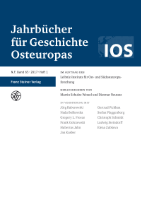
JAHRBUCHER FUR GESCHICHTE OSTEUROPAS
Enriching Understanding of Eastern Europe's Cultural ChroniclesJAHRBUCHER FUR GESCHICHTE OSTEUROPAS, published by FRANZ STEINER VERLAG GMBH, is a prominent academic journal dedicated to the exploration of Eastern European history. With its inception dating back to 1978, this journal has consistently provided a platform for scholarly discourse, contributing significantly to the understanding of the region's complex historical narratives. While the journal is not open access, it holds a solid reputation within the academic community, positioned in the Q4 quartile in history as per the 2023 category rankings, and stands at Rank #1636 within the Scopus Arts and Humanities History ranking. The convergence of its publication years throughout the decades emphasizes a long-standing commitment to historical research, thereby making it an essential resource for researchers, professionals, and students interested in Eastern European studies. Explore the intricate dynamics of historical events and cultural developments that shape Eastern Europe through this invaluable periodical.

Noveishaya Istoriya Rossii-Modern History of Russia
Charting the Evolution of Russia from 2015 to 2024Noveishaya Istoriya Rossii - Modern History of Russia, published by ST PETERSBURG UNIV PRESS, is a premier peer-reviewed journal dedicated to the exploration and analysis of contemporary Russian history. With an ISSN of 2219-9659 and an E-ISSN of 2309-7973, this influential journal emphasizes critical scholarship across various historical epochs from 2015 to 2024, enhancing our understanding of Russia's complex socio-political landscape. Recognized with a Q1 category ranking in History for 2023, it serves as a significant platform for historians, researchers, and academicians interested in advancing discourse on Russian history. While it operates within a traditional access model, the journal remains committed to disseminating knowledge through rigorous research methodologies and comprehensive reviews. Located in the heart of St. Petersburg, this journal not only contributes to academic scholarship but also serves as a vital resource for students and professionals seeking in-depth knowledge of modern Russian historical narratives.

REVUE D HISTOIRE MODERNE ET CONTEMPORAINE
Fostering Insightful Discourse on Contemporary NarrativesREVUE D HISTOIRE MODERNE ET CONTEMPORAINE, published by the Société d'Histoire Moderne et Contemporaine, serves as a vital platform for scholars and enthusiasts in the field of history. With a focus on modern and contemporary historical discourse, this journal has been pivotal since its inception, aiming to promote research, analysis, and debate surrounding pivotal historical developments from the 1970s to the present day. While maintaining a Q4 ranking in History according to Scopus and a 49th percentile placement among arts and humanities journals, it continues to foster scholarly engagement across diverse topics within modern history. Although not an open-access publication, REVUE D HISTOIRE MODERNE ET CONTEMPORAINE offers researchers detailed insights that are crucial for understanding historical narratives and methodologies. Its location in the heart of Paris also symbolizes its commitment to accessing diverse historical perspectives. This journal invites contributions that expand the boundaries of contemporary historical study and enrich academic dialogue.

Lietuvos istorijos studijos
Innovating Perspectives on Lithuania's PastLietuvos istorijos studijos is a prominent open access journal devoted to the multifaceted exploration of Lithuanian history and its broader implications in the context of global historical narratives. Published by Vilnius University Press, this journal has been fostering scholarly communication in its field since 2013, making a significant contribution to the advancement of historical research in Lithuania. With a focus on innovative historical methodologies and interdisciplinary approaches, Lietuvos istorijos studijos serves as a crucial platform for researchers, professionals, and students who are keen to engage with both primary and secondary sources pertaining to the diverse tapestry of Lithuanian heritage. The journal operates under the ISSN 1392-0448 and E-ISSN 1648-9101 and has been classified in the Q4 category in History for 2023, indicating a growing interest and engagement within the academic community. The ongoing convergence of historical studies from 2022 through 2024 further highlights its commitment to evolving research trends. Interested readers can access the journal freely, making it a vital resource for anyone seeking to deepen their understanding of Lithuania's historical landscape.