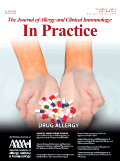
Journal of Allergy and Clinical Immunology-In Practice
Scope & Guideline
Empowering practitioners with cutting-edge insights.
Introduction
Aims and Scopes
- Clinical Management of Allergies and Asthma:
The journal emphasizes studies that provide insights into the management and treatment of allergic conditions, particularly asthma, highlighting evidence-based strategies and clinical outcomes. - Innovations in Immunotherapy:
A significant focus is on the development and evaluation of new immunotherapies for allergic conditions, including oral and sublingual immunotherapy, and their impact on patient quality of life. - Comorbidities and Their Impact:
Research examining the interplay between allergic diseases and comorbid conditions, such as obesity, cardiovascular disease, and mental health issues, is prominently featured. - Health Disparities in Allergy and Immunology:
The journal addresses the disparities in access to care and treatment outcomes among different populations, promoting equitable healthcare practices. - Emerging Research in Allergic Diseases:
It encompasses novel findings related to the pathophysiology of allergic diseases, including genetic factors, environmental triggers, and the role of the microbiome. - Patient-Centered Approaches:
The journal promotes research that emphasizes patient-reported outcomes, adherence to treatment, and the psychosocial aspects of managing allergies and asthma.
Trending and Emerging
- Biologics and Targeted Therapies:
There is a growing body of research focused on biologics and targeted therapies for severe asthma and other allergic conditions, emphasizing their effectiveness and safety in real-world settings. - Digital Health and Telemedicine:
The integration of digital health solutions and telemedicine into allergy care has become increasingly relevant, particularly in the context of the COVID-19 pandemic, leading to studies on their effectiveness and patient satisfaction. - Food Allergies and Immunotherapy:
Research on food allergies, particularly the efficacy of oral immunotherapy and management strategies, has gained momentum, reflecting a heightened awareness of food allergy prevalence and its impact on quality of life. - Health Equity and Social Determinants of Health:
Emerging discussions around health equity and the impact of social determinants on allergy and asthma outcomes are becoming more prominent, aiming to address disparities in care. - Longitudinal Studies of Asthma and Allergic Conditions:
There is an increasing interest in longitudinal studies that track the progression of asthma and allergies over time, providing valuable insights into long-term management and outcomes.
Declining or Waning
- Traditional Allergy Testing Methods:
There has been a noticeable decrease in studies centered around conventional allergy testing methods, such as skin prick tests, as newer, more innovative diagnostic approaches gain traction. - Generalized Treatment Guidelines:
Research focusing on broad, non-specific treatment guidelines is becoming less common, with a shift towards personalized and precision medicine approaches that cater to individual patient needs. - Drug Allergy Labels and Management:
The frequency of studies solely focused on the management of drug allergy labels is waning, as integrated approaches to allergy management, including the evaluation of multiple allergies, gain more attention. - Environmental Allergens in Isolation:
The exploration of environmental allergens as isolated factors is decreasing, with more emphasis being placed on the complex interactions between multiple allergens and individual patient responses.
Similar Journals
CLINICAL AND EXPERIMENTAL ALLERGY
Empowering Knowledge in Allergy and ImmunologyCLINICAL AND EXPERIMENTAL ALLERGY is a premier peer-reviewed journal dedicated to advancing the scientific understanding of allergy and immunology. Published by Wiley in the United Kingdom, this esteemed journal maintains a significant impact factor, reflecting its high standards and influential research contributions. With an impressive history since its inception in 1971, the journal is poised to continue leading the discourse in the field until at least 2024. It is ranked in the Q2 quartile for both Immunology and Allergy categories, further highlighting its reputable standing within the academic community. The journal's Scopus rankings showcase its academic relevance, securing the 49th and 51st positions in the Medicine and Immunology categories, respectively. Researchers, professionals, and students will find vital insights and contemporary research trends within its pages, making it an essential resource for those invested in understanding and addressing allergic diseases and disorders.
American Journal of Rhinology & Allergy
Exploring innovative therapies for respiratory health.Welcome to the American Journal of Rhinology & Allergy, a leading publication in the fields of otolaryngology and immunology, published by SAGE Publications Inc. Since its inception in 2009, this journal has played a pivotal role in disseminating cutting-edge research and reviews, addressing critical topics related to sinus disease, allergic disorders, and respiratory health. With an impressive Scopus ranking that places it in the top quartiles of both immunology and medicine, the journal garners about a 90th percentile ranking in otorhinolaryngology, reflecting its significance in advancing medical knowledge and clinical practice. The American Journal of Rhinology & Allergy aims to bridge the gap between laboratory research and clinical application, providing a platform for researchers and professionals to explore innovative therapies and treatment protocols. Access options include traditional subscription models to ensure comprehensive support for the academic community. Join our efforts to enhance understanding and treatment in the critical area of rhinology and allergy.
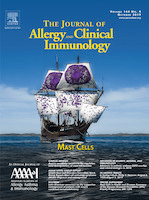
JOURNAL OF ALLERGY AND CLINICAL IMMUNOLOGY
Shaping the future of allergy research and patient care.JOURNAL OF ALLERGY AND CLINICAL IMMUNOLOGY, published by MOSBY-ELSEVIER, stands as a leading peer-reviewed journal dedicated to advancing the understanding of allergies and immunological conditions. With a notable impact factor and a prominent stature in the academic community, it ranks in the Q1 category for both Immunology and Allergy in 2023, reflecting its significance and high citation rates among researchers. Since its establishment in 1963, the journal has fostered scientific discourse and innovation in the field, positioning itself as an essential resource for both seasoned professionals and emerging scholars. The Scopus rankings underscore its influence, being ranked 12th out of 233 in Immunology and Allergy and 15th out of 236 in Immunology and Microbiology, placing it in the top centile of both categories. The journal aims to disseminate cutting-edge research, reviews, and clinical studies that deepen our understanding of allergic diseases and enhance patient care. While not an open access journal, it provides institutions and individuals with opportunities to stay informed on crucial advancements in the immunological sciences.

Frontiers in Allergy
Innovating solutions for allergy management.Frontiers in Allergy is a pioneering open-access journal published by FRONTIERS MEDIA SA, dedicated to advancing the frontiers of research in the fields of Immunology and Infectious Diseases. Launched in 2020 and based in Lausanne, Switzerland, this journal provides a dynamic platform for researchers, professionals, and students to share innovative findings and insights related to allergic disorders and their broader immunological implications. With a respectable Q2 ranking in both Immunology and Allergy and Infectious Diseases categories, as well as being indexed in Scopus, this journal is emerging as a significant resource for the scientific community. The open-access model ensures wide dissemination of valuable knowledge, facilitating collaboration and breakthroughs in treatments and understanding of allergies and related conditions. Frontiers in Allergy invites contributions that drive forward the understanding of immune responses, allergy prevention, and management, solidifying its role as a crucial player in the sustainability and growth of health sciences.
JOURNAL OF INVESTIGATIONAL ALLERGOLOGY AND CLINICAL IMMUNOLOGY
Elevating scientific dialogue in immunological sciences.JOURNAL OF INVESTIGATIONAL ALLERGOLOGY AND CLINICAL IMMUNOLOGY is an esteemed publication dedicated to the fields of Immunology and Allergy, published by ESMON PUBLICIDAD S A in collaboration with the Department of Allergy and Clinical Immunology at the University Clinical Navarra, Spain. With its rich history spanning over three decades since its inception in 1991, this journal has gained prominence in the scientific community, holding a commendable Q2 quartile in Allergy and a Q3 quartile in Immunology. Ranked within the top tiers of its categories according to Scopus, it stands at Rank #80/233 in Immunology and Allergy, and Rank #96/236 in Immunology and Microbiology, indicating its influential role in disseminating cutting-edge research and clinical insights. Though primarily print-focused, the journal strives to bridge gaps in knowledge and contribute to the ongoing dialogue among researchers, professionals, and students in the immunological sciences. The JOURNAL OF INVESTIGATIONAL ALLERGOLOGY AND CLINICAL IMMUNOLOGY is essential for anyone committed to advancing the understanding of allergic and immunological conditions.
Allergy Asthma & Respiratory Disease
Transforming insights into impactful clinical practices.Allergy Asthma & Respiratory Disease is a pioneering journal dedicated to advancing research and clinical practice in the fields of allergy, asthma, and related respiratory diseases. Published by the esteemed Korean Academy of Asthma Allergy & Clinical Immunology, this journal aims to disseminate high-quality, peer-reviewed articles that contribute to the understanding, diagnosis, and treatment of these prevalent health issues. Although it operates under a subscription model, it maintains a robust reputation for being a pivotal resource in respiratory health, attracting authors and researchers worldwide. The journal emphasizes interdisciplinary approaches and encourages submissions that span from molecular biology to public health perspectives, making it a vital platform for professionals, researchers, and students eager to deepen their knowledge in respiratory medicine. With a commitment to fostering academic discourse in South Korea and beyond, Allergy Asthma & Respiratory Disease is positioned as a significant contributor to the global conversation on respiratory health.

Current Allergy & Clinical Immunology
Pioneering knowledge in allergy medicine.Current Allergy & Clinical Immunology is a vital peer-reviewed journal published by the Allergy Society of South Africa, focused on advancing the field of immunology and allergy medicine. With an ISSN of 1609-3607, this journal offers crucial insights and research findings pertinent to the understanding and treatment of allergic conditions. Operating from South Africa, it features contributions from a diverse range of authors and professionals in the field. Published from 2008 to 2024, the journal plays an essential role in disseminating current knowledge, even as it holds a Q4 ranking in Immunology and Allergy and is positioned at the 4th percentile based on Scopus rankings. While not open access, it remains an important resource for researchers, practitioners, and students looking to stay informed on emerging trends and breakthroughs in allergy and clinical immunology.

Arthritis & Rheumatology
Empowering Global Collaboration in RheumatologyArthritis & Rheumatology is a leading journal dedicated to the advancement of knowledge in the fields of rheumatology, immunology, and allergy. Published by WILEY in the United Kingdom, this prestigious journal boasts an impressive impact factor and a prominent reputation, ranking in the Q1 category across multiple disciplines, including Immunology and Rheumatology. With its high ranking of 4th out of 73 in Rheumatology and notable standings in related fields, it serves as a crucial platform for researchers, healthcare professionals, and scholars to disseminate groundbreaking findings. The journal embraces an Open Access model, enhancing the accessibility of vital research to a global audience and ensuring that knowledge dissemination is maximized. Since its inception in 2014, Arthritis & Rheumatology has been at the forefront of impactful research, fostering collaboration and innovation in tackling complex challenges within these medical disciplines. Researchers looking to explore the latest advancements and engage with cutting-edge studies in these fields will find this journal to be an essential resource.
Current Treatment Options in Allergy
Connecting Researchers and Clinicians for Allergy InnovationsCurrent Treatment Options in Allergy is an esteemed academic journal published by SpringerNature, focusing on a critical area of health science: the evolving landscape of allergy treatments. With an E-ISSN of 2196-3053, this journal aims to provide a comprehensive platform for researchers and practitioners in the fields of Immunology and Allergy and Medicine. It has garnered recognition in the academic community, reflecting its significant contribution with a Q3 ranking in Immunology and Allergy and a Q3 ranking in Medicine as of 2023. The journal is based in Switzerland and encompasses research spanning from 2014 to 2024, ensuring that the latest findings and treatment options are available to professionals and students alike. With a growing focus on open access, it aims to make critical allergy treatment research widely accessible, thus fostering innovation and collaboration in this vital health sector. As the prevalence of allergies continues to rise globally, Current Treatment Options in Allergy plays a crucial role in disseminating important research and treatment strategies to improve patient outcomes.
International Forum of Allergy & Rhinology
Advancing Knowledge in Allergy and RhinologyThe International Forum of Allergy & Rhinology, published by Wiley, is a leading journal dedicated to advancing the field of allergy, rhinology, and related health issues. With an ISSN of 2042-6976 and an E-ISSN of 2042-6984, this esteemed journal showcases high-quality research and innovative findings by publishing original articles, reviews, and clinical case studies. As of 2023, it holds impressive rankings within the Scopus metrics, placing it in the top 2% for Medicine in Otorhinolaryngology and in the top 16% for Immunology and Allergy, highlighting its influence and credibility in these specialized fields. Operating without an open access model, the journal aims to offer comprehensive insights into the diagnosis and treatment of allergic conditions and their impact on rhinology, fostering a deeper understanding among researchers and practitioners. Located in Hoboken, NJ, the journal has been at the forefront of scientific exploration since its inception in 2011, continuing to play a pivotal role in informing the academic community and influencing clinical practice up to 2024 and beyond.