Journal of Applied Mechanics and Technical Physics
Scope & Guideline
Pioneering Research in Mechanics and Condensed Matter
Introduction
Aims and Scopes
- Applied Mechanics:
The journal covers a broad range of topics in applied mechanics, including elasticity, dynamics, and fluid mechanics, with a focus on practical applications in engineering. - Material Science:
Research on the mechanical properties and behavior of materials, especially composites and nanostructures, is a core focus area, emphasizing both experimental and computational approaches. - Thermal Physics and Heat Transfer:
Studies related to thermal characteristics, heat transfer mechanisms, and thermodynamic processes are prominently featured, highlighting their importance in engineering applications. - Computational Modeling and Simulation:
The journal encourages the use of advanced computational techniques, including finite element analysis, computational fluid dynamics, and molecular dynamics, to solve complex engineering problems. - Interdisciplinary Applications:
The journal promotes research that intersects with other disciplines, such as biotechnology, environmental engineering, and materials science, showcasing innovative applications of mechanics and physics.
Trending and Emerging
- Nanotechnology and Composite Materials:
There is a significant increase in publications focusing on nanostructured materials and composites, highlighting their innovative applications across various engineering sectors. - Advanced Thermal Management Techniques:
Research into effective thermal management and heat transfer solutions is trending, driven by the need for improved efficiency in energy systems and materials processing. - Multiscale Modeling Approaches:
Emerging studies employing multiscale modeling techniques are gaining traction, allowing for better understanding of complex interactions in materials and systems. - Bio-inspired Engineering Solutions:
An increasing number of papers are addressing bio-inspired designs and solutions, reflecting a growing interest in sustainable and efficient engineering practices. - Machine Learning in Mechanics:
The integration of machine learning techniques into mechanical analyses and simulations is a burgeoning area, enabling more efficient data processing and predictive modeling.
Declining or Waning
- Classical Fluid Dynamics:
There appears to be a waning interest in classical fluid dynamics topics, as more focus shifts toward complex fluid interactions and multiphase flow studies. - Traditional Mechanical Properties Testing:
Research centered solely on conventional mechanical testing methods has decreased, likely due to the growing emphasis on advanced materials and their unique properties. - Static Structural Analysis:
Static analysis topics are becoming less prominent as dynamic and time-dependent behaviors gain more attention, particularly in real-time applications and simulations.
Similar Journals
COMPTES RENDUS MECANIQUE
Connecting Researchers with Cutting-Edge Discoveries in MechanicsCOMPTES RENDUS MECANIQUE, an esteemed journal published by the Académie des Sciences, serves as a critical platform for cutting-edge research in the fields of mechanics and materials science. With an ISSN of 1631-0721 and an E-ISSN of 1873-7234, this open-access journal has gained visibility since its transition to open access in 2020, encouraging a broader dissemination of knowledge within the community. As of 2023, it holds a Q3 ranking in both the Materials Science (Miscellaneous) and Mechanics of Materials categories, according to category quartiles. Given its Scopus rankings—299th out of 398 in Mechanics of Materials and 360th out of 463 in General Materials Science—it provides valuable insights and advancements in these disciplines. Located in Paris, France, the journal caters to researchers, professionals, and students alike, showcasing a diverse range of studies and developments that push the boundaries of knowledge in mechanics. Through its accessible format, COMPTES RENDUS MECANIQUE not only highlights significant findings but also promotes collaboration and innovation across the global scientific community.
INTERNATIONAL JOURNAL OF ENGINEERING SCIENCE
Fostering a Global Community of Engineering ScholarsInternational Journal of Engineering Science, published by Pergamon-Elsevier Science Ltd in the United Kingdom, stands as a premier platform for pioneering research in the diverse fields of engineering and materials science. Since its inception in 1963, this journal has consistently demonstrated its commitment to advancing academic discourse, maintaining an impressive trajectory that positions it in the Q1 category across multiple engineering disciplines including Mechanical Engineering and Mechanics of Materials as of 2023. With notable Scopus rankings—placing it in the top 5% percentile for Mechanical Engineering and related fields—this journal attracts high-quality, impactful research designed for both industry practitioners and academic scholars. Although it does not currently offer Open Access options, its readership is enriched by comprehensive peer-reviewed articles, fostering a deeper understanding of complex engineering problems and innovative solutions. The International Journal of Engineering Science continues to be an invaluable resource for researchers, professionals, and students committed to pushing the boundaries of knowledge in engineering and materials science.

Journal of the Serbian Society for Computational Mechanics
Exploring New Dimensions in EngineeringJournal of the Serbian Society for Computational Mechanics, published by the Serbian Society for Computational Mechanics, is a vital platform for advancing research and knowledge in the field of computational mechanics. Established in 2012, this journal serves the academic community by providing a forum for innovative studies, methodologies, and applications within computational mechanics, presenting valuable insights for researchers, professionals, and students alike. With an ISSN of 1820-6530 and a ranking of Q4 in Computational Mechanics, it carries an essential influence in the engineering realm, despite its current rank of 71 out of 89. The journal's commitment to scholarly excellence aims to foster collaboration and encourage interdisciplinary research, making it an important resource for those invested in the evolving landscape of computational methodologies. Although the journal currently does not offer Open Access options, it remains dedicated to disseminating knowledge that will resonate within the local and global scientific community.
JOURNAL OF COMPUTATIONAL PHYSICS
Elevating Standards in Interdisciplinary Physics ResearchJOURNAL OF COMPUTATIONAL PHYSICS, an esteemed publication from ACADEMIC PRESS INC ELSEVIER SCIENCE, serves as a premier platform in the field of computational physics and its interdisciplinary applications. Since its inception in 1966, the journal has provided invaluable insights and significant advancements in areas such as applied mathematics, numerical analysis, and modeling and simulation. With a robust impact factor and ranking in the top quartile across various related categories, including Q1 in Applied Mathematics and Physics and Astronomy, it is essential reading for researchers and professionals aiming to stay at the forefront of computational techniques and methodologies. Although the journal is not open access, it remains highly regarded with a reputation for rigorous peer review and high-quality publications. As the field continues to evolve, the JOURNAL OF COMPUTATIONAL PHYSICS highlights innovative research that not only advances theoretical constructs but also offers practical applications in scientific and engineering domains. For scholars and students, this journal embodies a critical resource for deepening their understanding and fostering dialogue within the scientific community.
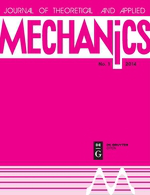
Journal of Theoretical and Applied Mechanics-Bulgaria
Pioneering Research in Computational MechanicsThe Journal of Theoretical and Applied Mechanics-Bulgaria, with the ISSN 0861-6663 and E-ISSN 1314-8710, is a pivotal publication in the field of mechanics, published by the esteemed BULGARIAN ACAD SCIENCES, INST MECHANICS. Based in Germany, this journal serves as a forum for researchers and practitioners to disseminate groundbreaking theories and applications in Computational Mechanics, Mechanical Engineering, and Modeling and Simulation. As of 2023, it is classified in the Q4 quartile for these categories, reflecting its emergence in the academic landscape, though it has room for growth in visibility and impact. The journal encompasses an ambitious scope aimed at fostering innovation and collaboration among academics, making it an invaluable resource for students and professionals seeking to stay abreast of emerging trends and methodologies in mechanics. Despite its current rank and percentile indicators in Scopus, the journal is committed to enhancing its reach and impact within the community through future editions converging from 2016 to 2024. With no open access options currently available, it emphasizes the importance of institutional subscriptions and academic partnerships to maintain its quality publication standards.

Composites-Mechanics Computations Applications
Exploring the future of mechanics through computational insights.Composites-Mechanics Computations Applications is a pioneering journal published by BEGELL HOUSE INC, dedicated to advancing the field of composite materials and mechanics. With an ISSN of 2152-2057 and an E-ISSN of 2152-2073, this journal serves as a vital resource for researchers, professionals, and students seeking to explore the latest advancements in composite materials, computational mechanics, and their applications across various industries. Although it currently resides in the Q4 category for both ceramics and composites, as well as mechanics of materials, it provides a platform for quality research that highlights emerging trends and innovations. The journal, operational from 2010 to 2024, encourages submissions that cover theoretical, experimental, and computational methodologies, aiming to bridge the gap between practical applications and theoretical advancements. While the journal does not offer open access, it remains an important source for insightful studies that contribute to the evolving disciplines of materials science and engineering.

ARCHIVES OF MECHANICS
Unleashing Innovation in Mechanical Engineering and Materials ScienceArchives of Mechanics, published by the Polish Academy of Sciences Institute of Fundamental Technological Research, is a distinguished open-access journal established in 1971 that has played a pivotal role in the dissemination of knowledge in the fields of Mechanical Engineering and Condensed Matter Physics. With its commitment to accessibility since adopting open access in 2022, this journal provides a platform for researchers, professionals, and students to share cutting-edge research findings and innovative methodologies. Although it currently holds a Q4 ranking in Condensed Matter Physics and a Q3 ranking in Mechanical Engineering for 2023, its comprehensive scope, which spans critical advancements in mechanical systems and materials science, positions it as a valuable resource for the academic community. Located in Warsaw, Poland, the journal continues to contribute significantly to the global discourse on mechanics and is dedicated to fostering new ideas that advance both theoretical and applied aspects of the discipline.
QUARTERLY JOURNAL OF MECHANICS AND APPLIED MATHEMATICS
Connecting Theory and Practice in Applied Mathematics.Quarterly Journal of Mechanics and Applied Mathematics, published by Oxford University Press, stands as a pivotal platform in the realms of applied mathematics, mechanical engineering, and condensed matter physics. Established in 1948, this venerable journal has continuously contributed to advancements in the understanding of complex mechanical phenomena through rigorous research and scholarly articles. With its Q3 status across multiple categories—applied mathematics, condensed matter physics, mechanical engineering, and mechanics of materials—it serves as a significant resource for both emerging and established researchers. While the journal is not open access, it is highly regarded for its selective publication process, ensuring that only high-quality, original research is disseminated. The impact factor reflects its critical role within the academic community, making it an essential read for scholars, professionals, and students aiming to stay at the forefront of developments in mechanics and applied mathematics.
MECCANICA
Connecting Ideas in Condensed Matter and MechanicsMECCANICA, an esteemed journal published by Springer, stands at the forefront of research in the fields of Condensed Matter Physics, Mechanical Engineering, and Mechanics of Materials. Established in 1966 and continuing through 2024, this journal provides a robust platform for the dissemination of innovative research and advancements in these increasingly interconnected domains. With an impressive 2023 ranking placing it in the Q2 category across multiple fields, MECCANICA boasts a Scopus rank of #198 in Mechanical Engineering, #150 in Condensed Matter Physics, and #141 in Mechanics of Materials, highlighting its significance and influence within the scholarly community. The journal aims to foster dialogue among researchers, professionals, and students, facilitating the exchange of cutting-edge ideas and methodologies crucial for overcoming contemporary engineering and physics challenges. Readers can access a wealth of knowledge through its comprehensive articles, and while it does not currently offer open access, the journal remains instrumental in shaping the future of engineering and physical sciences.
Moscow University Mechanics Bulletin
Connecting Innovators in Mechanical ResearchMoscow University Mechanics Bulletin, published by PLEIADES PUBLISHING INC, is a dedicated journal that has been influencing the fields of mechanical engineering and mechanics since its inception. With an ISSN of 0027-1330 and E-ISSN of 1934-8452, this journal serves as a crucial platform for advancing knowledge in mathematics, mechanical engineering, and mechanics of materials. Though currently indexed in the Q4 category across these disciplines, it offers a unique space for researchers and professionals to engage with emerging theories, experimental results, and practical applications. With a converged publication history spanning from 1973 to 1987, and continuing from 2007 to 2024, the journal remains relevant in today’s academic landscape. Though it operates under traditional access models, the journal's global reach aims to connect diverse voices in engineering research. Aspiring researchers and seasoned professionals alike will find valuable insights and a robust discourse that contribute to their respective fields.