JOURNAL OF APPLIED PROBABILITY
Scope & Guideline
Exploring the Frontiers of Applied Probability
Introduction
Aims and Scopes
- Applied Probability Theory:
The journal publishes research that utilizes probability theory to solve practical problems, emphasizing real-world applications in fields such as finance, insurance, and risk management. - Stochastic Processes:
A significant part of the journal's content revolves around the study of stochastic processes, including Markov chains, branching processes, and renewal processes, which are essential for modeling random phenomena. - Statistical Inference and Methodology:
The journal showcases developments in statistical methods and inference techniques that are grounded in probabilistic frameworks, enabling researchers to analyze and interpret complex data. - Computational Techniques:
Research that focuses on computational methods for simulating and analyzing stochastic systems is a core area, including Monte Carlo methods and other numerical techniques essential for applied probability. - Interdisciplinary Applications:
The journal encourages interdisciplinary research that applies probabilistic models to diverse areas such as epidemiology, network theory, and machine learning, highlighting the versatility of probability in various domains.
Trending and Emerging
- Complex Systems and Networks:
There is a growing emphasis on probabilistic models applied to complex systems and networks, including social networks, communication networks, and biological systems, reflecting the interconnectedness of modern problems. - Machine Learning and AI Integration:
Research integrating probability with machine learning techniques is on the rise, showcasing the application of probabilistic models in enhancing algorithms and understanding uncertainty in AI systems. - Uncertainty Quantification:
The focus on methods for quantifying uncertainty in applied settings, particularly in engineering and scientific modeling, is gaining traction, highlighting the importance of robust probabilistic frameworks. - Advanced Stochastic Modeling:
Emerging trends include the development of advanced stochastic models that incorporate real-world complexities, such as regime-switching models and those considering external influences like climate change. - Data-Driven Probability Models:
As data availability increases, there is a trend towards developing probabilistic models that are data-driven, utilizing large datasets to inform and refine theoretical frameworks.
Declining or Waning
- Traditional Queueing Theory:
While queueing theory remains relevant, the emergence of more complex models and the integration of queueing theory with other disciplines have led to a decrease in standalone queueing theory publications. - Classic Markov Chain Applications:
Research focused solely on classical Markov chain applications without incorporating modern computational techniques or interdisciplinary approaches has become less common as the field advances. - Basic Random Walk Studies:
The focus on fundamental random walk problems has waned in favor of more complex stochastic models that incorporate additional layers of realism and complexity. - Simple Models of Epidemic Spread:
Research on basic epidemic models has seen a decline as more sophisticated models that account for interactions and network effects have become the focus of current studies. - Elementary Statistical Methods:
The publication of papers solely dedicated to basic statistical methods without a probabilistic framework or application context is decreasing, reflecting a shift towards more complex analyses.
Similar Journals
STATISTICS & PROBABILITY LETTERS
Fostering rigorous research for a deeper understanding of uncertainty.STATISTICS & PROBABILITY LETTERS is a distinguished journal published by ELSEVIER, dedicated to advancing the field of statistics and probability. With an ISSN of 0167-7152 and an E-ISSN of 1879-2103, this journal is an essential platform for research, featuring cutting-edge studies and significant findings in the realms of statistical theory and applied probability. The journal operates under a notable Q3 ranking in both the categories of Statistics and Probability, and Statistics, Probability and Uncertainty for 2023, underscoring its relevance in these fields. Researchers, professionals, and students alike benefit from its rigorous peer-review process and its commitment to published integrity, fostering innovative insights from 1982 through its anticipated convergence in 2025. While it does not offer open access, the journal’s widely recognized impact within the academic community makes it a valuable resource for anyone seeking to deepen their understanding of statistical methodologies and probabilistic models.

THEORY OF PROBABILITY AND ITS APPLICATIONS
Cultivating Knowledge in Probability and Its UsesTHEORY OF PROBABILITY AND ITS APPLICATIONS, published by SIAM Publications, is a crucial journal dedicated to advancing the field of probability and its extensive applications. With its ISSN 0040-585X and E-ISSN 1095-7219, this esteemed publication has been a vital resource for scholars and practitioners since its inception. Operating out of the United States, the journal has a commitment to supporting research that falls within the Q3 quartile in both Statistics and Probability, as well as in Statistics, Probability, and Uncertainty for 2023. Despite its current position in a competitive landscape, ranked #137 in Statistics, Probability and Uncertainty and #227 in Mathematics, this journal remains an essential platform for disseminating innovative ideas and breakthroughs in probability theory. Although it lacks an open-access model, its rigorous peer-reviewed articles offer invaluable insights to enhance both theoretical understanding and practical application. With a focus on fostering collaboration and inspiring future research, THEORY OF PROBABILITY AND ITS APPLICATIONS is indispensable for researchers, professionals, and students striving to delve deeper into the intricate world of probability.

ELECTRONIC COMMUNICATIONS IN PROBABILITY
Catalyzing Discoveries in Probability and UncertaintyELECTRONIC COMMUNICATIONS IN PROBABILITY is a distinguished open-access journal published by the Institute of Mathematical Statistics (IMS) that has been contributing to the field of statistics and probability since its inception in 1996. With a commitment to disseminating high-quality research, this journal plays a crucial role in fostering advancements in the areas of statistical theory and probabilistic models. The journal's impact is reflected in its notable rankings, including a Q2 categorization in both Statistics and Probability and Statistics, Probability and Uncertainty for 2023, indicating its relevance and scholarly influence in the academic community. Having a consistent converged publication timeline from 1996 to 2024, it provides researchers, professionals, and students with a platform to share and access innovative studies without barriers. With an aim to enhance our understanding of statistical applications and methodologies, ELECTRONIC COMMUNICATIONS IN PROBABILITY serves as an essential resource for those engaged in statistical research and applications.
ADVANCES IN APPLIED PROBABILITY
Elevating Statistical Rigor with Cutting-edge ResearchADVANCES IN APPLIED PROBABILITY is a prestigious academic journal published by Cambridge University Press, focusing on the critical intersection of applied mathematics and probability theory. With an ISSN of 0001-8678 and an E-ISSN of 1475-6064, this journal emphasizes the development and application of probabilistic models in various sectors, enhancing the rigor and reliability of statistical methodologies. Established in 1969, the journal has evolved with converged years designated up to 2024, maintaining a steady release of cutting-edge research. As a Q2-ranked journal in both Applied Mathematics and Statistics and Probability categories as of 2023, it ranks favorably within the Scopus database, demonstrating its growth in influence and relevance within the academic community, with ranks of 141/278 and 353/635 in its respective fields. Although it does not offer open access, the journal remains a vital resource for researchers, professionals, and students seeking to advance their knowledge and understanding of probability applications across diverse disciplines.
PROBABILITY IN THE ENGINEERING AND INFORMATIONAL SCIENCES
Transforming engineering challenges with cutting-edge probabilistic insights.PROBABILITY IN THE ENGINEERING AND INFORMATIONAL SCIENCES is a premier journal published by Cambridge University Press, dedicated to advancing the fields of statistics, probability, and their applications within engineering and informational sciences. With an ISSN of 0269-9648 and an E-ISSN of 1469-8951, this journal has established itself as a significant resource since its inception in 1987, continuing to publish impactful research through 2024. Ranking in the Q2 category for Industrial and Manufacturing Engineering and holding Q3 status in multiple relevant categories, it boasts a respectable impact in academia, reflected in its Scopus rankings across various disciplines. Although not an open-access journal, it remains essential for researchers interested in the integration of probabilistic methods in contemporary engineering challenges. By providing a platform for innovative studies and practical applications, PROBABILITY IN THE ENGINEERING AND INFORMATIONAL SCIENCES plays a crucial role in shaping future research and methodologies in these overlapping domains, fostering collaboration and knowledge exchange among researchers, professionals, and students alike.
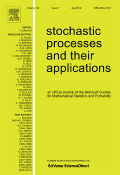
STOCHASTIC PROCESSES AND THEIR APPLICATIONS
Pioneering Insights in Applied Mathematics and SimulationSTOCHASTIC PROCESSES AND THEIR APPLICATIONS, published by Elsevier, is a leading journal in the realms of Applied Mathematics, Modeling and Simulation, and Statistics and Probability. Established in 1973 and continually evolving with the latest research trends, this journal has secured its place in the Q1 category across multiple disciplines, reflecting its influence and prestige in the academic community. With a Scopus Rank of #90 in Statistics and Probability and notable rankings in Applied Mathematics and Modeling and Simulation, it serves as a crucial platform for disseminating cutting-edge research findings and applications of stochastic processes. Although it operates under a traditional access model, its comprehensive scope encourages submissions from a diverse range of topics that push the boundaries of knowledge in probability theory and its practical applications. Researchers, professionals, and students are invited to contribute original research, reviews, and case studies that can propel the field into new territories, further solidifying the journal's role as an essential resource for advancing understanding in stochastic processes.
METHODOLOGY AND COMPUTING IN APPLIED PROBABILITY
Advancing the frontier of applied probability and computation.METHODOLOGY AND COMPUTING IN APPLIED PROBABILITY is a distinguished journal published by SPRINGER, dedicated to advancing research in applied probability and its relationship with various computational methodologies. With an ISSN of 1387-5841 and an E-ISSN of 1573-7713, this journal provides a platform for innovative studies that bridge theory and practical application in the field of mathematics and statistics. Ranking in the Q2 category for Mathematics (miscellaneous) and Q3 for Statistics and Probability as of 2023, it reflects a robust academic discourse, featuring contributions that span a range of methodologies utilized in probability-related studies. The journal's sustained engagement in the academic landscape from 2004 to 2024 puts it at the forefront of ongoing developments in statistics and probability. Researchers, professionals, and students alike will find the insights found within to be invaluable for both theoretical understanding and practical implementation.
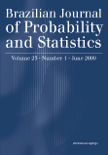
Brazilian Journal of Probability and Statistics
Innovating Insights in Probability and StatisticsThe Brazilian Journal of Probability and Statistics, published by the Brazilian Statistical Association, stands as a pivotal platform for researchers and practitioners in the realms of probability and statistics. With an ISSN of 0103-0752, this esteemed journal has contributed significantly to the advancement of statistical theory and its applications since its inception. The journal is currently indexed in Scopus, holding a rank of #175 in the Statistics and Probability category and a third quartile (Q3) designation as of 2023, indicating its steady impact within the field. Covering a broad scope of topics, from theoretical advancements to practical applications, it invites submissions that enhance understanding and fosters discussion among academics and professionals alike. The journal is based in São Paulo, Brazil, and operates without open access, ensuring a quality review process that adheres to the highest scholarly standards. Researchers, professionals, and students interested in the latest findings and innovative methodologies in statistics are encouraged to engage with the Brazilian Journal of Probability and Statistics, a vital resource at the intersection of theory and practice.

Journal of Probability and Statistics
Exploring New Frontiers in Data AnalysisJournal of Probability and Statistics, published by HINDAWI LTD, is a distinguished open-access journal that has been serving the academic community since 2009. With an ISSN of 1687-952X and E-ISSN 1687-9538, this journal facilitates the dissemination of research covering various foundational and applied aspects of probability and statistics. As researchers, professionals, and students in the fields of mathematics and statistical sciences seek to advance their knowledge and understanding, this journal offers a unique platform for innovative studies and comprehensive reviews. Although the journal has been discontinued from Scopus from 2009 to 2020, it continues to play an essential role within its niche, despite its Scopus ranking of #181/227 (20th percentile) in Statistics and Probability. The open-access model ensures that valuable findings are readily accessible to a global audience, fostering collaboration and engagement across diverse disciplines. Join the multitude of contributors and readers who rely on the Journal of Probability and Statistics as a vital resource for research and education in this ever-evolving field.
INFINITE DIMENSIONAL ANALYSIS QUANTUM PROBABILITY AND RELATED TOPICS
Pioneering Research in Infinite Dimensional AnalysisINFINITE DIMENSIONAL ANALYSIS QUANTUM PROBABILITY AND RELATED TOPICS, published by WORLD SCIENTIFIC PUBL CO PTE LTD, is a key academic journal dedicated to the exploration of advanced themes in applied mathematics, mathematical physics, and quantum probability. Since its inception in 1998, the journal has established itself as a critical resource for researchers and professionals in these interdisciplinary fields, currently standing in the third quartile according to the 2023 category rankings. Scholars can access a wealth of rigorous articles that delve into infinite dimensional analysis, providing valuable insights pertinent to statistical and nonlinear physics, and offering a platform for pioneering research. This journal not only bridges theoretical frameworks and practical applications but also nurtures a collaborative environment for emerging and established scholars. Through its commitment to advancing knowledge, INFINITE DIMENSIONAL ANALYSIS QUANTUM PROBABILITY AND RELATED TOPICS serves as an indispensable tool for anyone engaged in the forefront of quantum probability research.