Journal of Behavioral Education
Scope & Guideline
Empowering Educators with Research-Driven Insights
Introduction
Aims and Scopes
- Behavioral Interventions for Diverse Learners:
The journal publishes research on interventions designed to support students with disabilities, including autism spectrum disorder, developmental delays, and other learning challenges. This includes studies on specific instructional strategies, behavior management techniques, and the application of behavioral analysis in educational contexts. - Teacher Training and Professional Development:
A significant focus area is the training and professional development of educators. The journal features studies that examine the effectiveness of various training models and strategies aimed at enhancing teachers' skills in implementing evidence-based practices in the classroom. - Application of Technology in Education:
The journal explores the integration of technology in behavioral education, including the use of telehealth, virtual reality, and digital tools to support teaching and learning. Research in this area evaluates the effectiveness of technology-enhanced interventions and instructional methods. - Single-Case Design and Methodology:
The Journal of Behavioral Education frequently publishes studies employing single-case experimental designs, emphasizing the analysis of individual student outcomes and the effectiveness of specific interventions. This methodological focus contributes to the rigorous evaluation of educational practices. - Cultural Responsiveness and Equity in Education:
Research that addresses cultural responsiveness in behavioral interventions and the need for equitable educational practices for racially and ethnically diverse student populations is a core area of interest, reflecting the journal's commitment to inclusive education.
Trending and Emerging
- Telehealth and Remote Learning Interventions:
The rise of telehealth and remote learning interventions has become a prominent theme, particularly in the wake of the COVID-19 pandemic. Studies exploring the efficacy of remote training for educators and interventions for students with disabilities are increasingly common, highlighting the need for adaptable educational practices. - Culturally Responsive Practices:
There is a growing emphasis on culturally responsive practices in educational interventions. Recent publications focus on adapting behavioral strategies to meet the diverse cultural backgrounds of students, reflecting a broader movement towards equity and inclusion in education. - Integration of Behavioral and Social Emotional Learning (SEL):
Research that integrates behavioral interventions with social-emotional learning is on the rise. This trend underscores a shift towards addressing the holistic needs of students, recognizing that emotional and social factors significantly impact learning outcomes. - Data-Based Decision Making:
The use of data-based decision-making in educational settings is increasingly emphasized. Studies are exploring how educators can leverage data to inform instructional practices and improve student outcomes, particularly for those with complex needs. - Research on Teacher Well-Being and Support:
Emerging research on the well-being of teachers and its impact on student outcomes is gaining attention. This includes studies examining the effects of teacher training, feedback mechanisms, and support systems aimed at enhancing teacher efficacy and resilience.
Declining or Waning
- Traditional Behavior Management Strategies:
There has been a noticeable decline in studies focused solely on traditional behavior management strategies, such as token economies and basic reinforcement schedules, as the field shifts towards more comprehensive and integrative approaches that consider the social and emotional dimensions of learning. - Generalized Findings from Single-Case Studies:
Research that seeks to generalize findings from single-case studies to broader populations has diminished. This may indicate a growing recognition of the limitations of such generalizations and a preference for more robust, multi-site or large-scale studies. - Focus on Academic Skills in Isolation:
The emphasis on teaching academic skills in isolation—without consideration of behavioral and social contexts—has waned. Recent publications are increasingly integrating academic instruction with behavioral interventions, reflecting a more holistic approach to education.
Similar Journals

International Journal of Whole Schooling
Cultivating Inclusive Classrooms for a Just SocietyInternational Journal of Whole Schooling, published by the Whole Schooling Consortium, is a leading platform committed to advancing the ideals and practices of inclusive education through a holistic approach. With an Open Access policy since its inception in 2004, this journal is dedicated to disseminating high-quality research and innovative practices that promote whole schooling, ensuring that diverse learners are accommodated and valued in educational settings. The journal's ISSN 1710-2146 provides it with a unique identity in the academic community, while its impactful articles play a crucial role in guiding policymakers, educators, and researchers in fostering inclusive learning environments. Through rigorous peer-reviewed research and evidence-based practices, the journal aims to bridge theory and practice, making it an indispensable resource for those committed to educational equity and social justice.
South African Journal of Education
Driving educational improvement through open-access scholarship.The South African Journal of Education (ISSN: 0256-0100, E-ISSN: 2076-3433) is a premier peer-reviewed, open-access journal dedicated to advancing the field of education in South Africa and beyond. Published by the Education Association of South Africa, this journal has been a vital resource since its establishment, with open access status since 2007, allowing for broader dissemination of research findings and innovative educational practices. With a strong emphasis on empirical research, the journal aims to contribute to educational improvement and policy development while fostering scholarly dialogue among researchers, educators, and policymakers. As evidenced by its Scopus ranking of #883 out of 1543 in the Social Sciences Education category and a Q3 quartile designation as of 2023, the journal serves as a significant platform for high-quality, impactful research. Based in South Africa, it addresses critical issues in education relevant to the region and the international academic community. Through its commitment to accessible scholarship, the South African Journal of Education remains an essential resource for those seeking to enhance their understanding and practice in the field of education.
Revista Interuniversitaria de Formacion del Profesorado-RIFOP
Fostering Excellence in Teacher EducationRevista Interuniversitaria de Formacion del Profesorado-RIFOP, published by the ASOC UNIV FORMACION PROFESORADO-AUFOP in Spain, is a distinguished academic journal that has been fostering the discourse around teacher education since its inception in 1987. With an established reputation for quality, the journal is indexed in prominent databases and boasts impressive rankings: it holds a Q1 rating in Cultural Studies and a Q3 rating in Education, positioning it among the leading publications in its field. With an emphasis on open access, RIFOP provides invaluable insights and research findings that are freely available to a global audience, promoting widespread dissemination and engagement among researchers, educators, and policymakers. Notable metrics include its ranking in the 81st percentile in Social Sciences - Cultural Studies and 37th percentile in Education, highlighting its relevance and impact. By creatively intersecting theory and practice, RIFOP continues to contribute significantly to the evolving landscape of teacher training and educational methodologies, making it an essential resource for anyone interested in innovative educational practices and research.
INSTRUCTIONAL SCIENCE
Pioneering the future of instructional practices.INSTRUCTIONAL SCIENCE is a premier academic journal published by Springer that focuses on advancing the field of education through research in instructional methodologies and practices. With an ISSN of 0020-4277 and an E-ISSN of 1573-1952, this journal is recognized for its rigorous scholarly contributions, evident in its impressive 2023 impact factor that places it in the top quartile (Q1) for both Developmental and Educational Psychology and Education. Situated in the Netherlands, the journal has a comprehensive publication history from 1972, making it a respected source for researchers seeking to explore innovative teaching strategies and learning processes. Its Scopus rankings further reflect its esteemed position, ranking #285 out of 1543 in Social Sciences – Education and #99 out of 360 in Psychology – Developmental and Educational Psychology, highlighting its relevance and impact within these fields. While currently not offering Open Access, INSTRUCTIONAL SCIENCE remains a vital resource for educators, psychologists, and students who are committed to fostering effective learning environments through evidence-based practices.
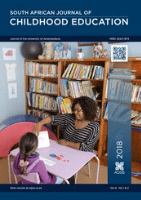
South African Journal of Childhood Education
Bridging theory and practice for impactful early education.South African Journal of Childhood Education, published by AOSIS, serves as a crucial platform for the dissemination of research focused on early childhood education and developmental psychology in South Africa and beyond. With an Open Access model initiated in 2011, it ensures that valuable insights and findings are accessible to a broad audience, fostering collaboration and innovation in educational practices. The journal's impact in the field is reflected in its rankings, placing it in Q3 and Q4 categories for Education and Developmental and Educational Psychology, respectively. It ranks at #824 out of 1543 in Social Sciences - Education and #240 out of 360 in Psychology, highlighting its relevance and academic rigor. By bridging theoretical perspectives with practical implications, the journal aims to advance understanding in childhood education, making it an essential resource for researchers, educators, and students committed to improving educational outcomes in early development.

Journal of Education and Future-Egitim ve Gelecek Dergisi
Innovating pathways to future learning.Journal of Education and Future - Egitim ve Gelecek Dergisi is a prominent academic journal dedicated to advancing knowledge and research in the field of education. Published by NESIBE AYDIN EDUCATION INST, this journal provides a platform for innovative educational theories, practices, and policies that shape the future of learning and teaching. With an ISSN of 2146-8249, the journal aims to disseminate high-quality research and insights to researchers, professionals, and students interested in the transformative potential of education. Although currently not indexed in major databases like Scopus, the journal strives to establish its impact in the scholarly community by fostering collaboration and dialogue among educators and thought leaders. The focus on interdisciplinary studies within the realm of education positions it as a vital resource for those looking to engage with emerging trends and challenges in the educational landscape. Serving as a conduit for new ideas, the journal is dedicated to fostering an inclusive and reflective discourse around future educational practices.
Revista Educacion
Fostering Innovation in Teaching and LearningRevista Educación is a prestigious academic journal published by Universidad de Costa Rica, Editorial, dedicated to advancing the field of education through scholarly research and innovative pedagogical practices. Established as an Open Access journal since 1977, it aims to provide unrestricted access to high-quality research, fostering a collaborative environment for educators, researchers, and students to share knowledge and insights. With a commitment to addressing contemporary educational challenges in Costa Rica and beyond, Revista Educación serves as a vital forum for disseminating original research articles, case studies, and theoretical discussions that engage a diverse audience. The journal’s dedication to enhancing educational practices makes it an essential resource for those seeking to contribute to the field of education while promoting inclusive and equitable access to educational resources.
ASSESSMENT FOR EFFECTIVE INTERVENTION
Fostering innovation in assessment for transformative practices.ASSESSMENT FOR EFFECTIVE INTERVENTION, published by SAGE Publications Inc, serves as a pivotal journal in the realms of Developmental and Educational Psychology, Education, and Health Professions. With its ISSN 1534-5084 and E-ISSN 1938-7458, the journal contributes significantly to advancing knowledge and practice in these interdisciplinary areas by providing a platform for rigorous evaluation and insightful research. Recognized for its quality with a Q3 quartile ranking in Developmental and Educational Psychology and a Q2 ranking in both Education and Health Professions, ASSESSMENT FOR EFFECTIVE INTERVENTION is a respected source among its peers, ranking 507 out of 1543 in the Social Sciences Education category according to Scopus. Researchers, practitioners, and students alike can benefit from the journal's comprehensive articles, which aim to enhance intervention strategies and foster effective assessment practices. Although the journal does not currently offer open access, its enduring legacy since 1988 ensures a wealth of knowledge spanning over three decades, making it an essential read for anyone invested in improving educational and psychological outcomes.
Obrazovanie i Nauka-Education and Science
Championing Accessibility in Educational and Psychological ResearchObrazovanie i Nauka - Education and Science is a distinguished open-access journal published by the Russian State Vocational Pedagogical University, dedicated to advancing knowledge in the fields of education, developmental and educational psychology, and physical therapy. With ISSN 1994-5639 and E-ISSN 2310-5828, the journal has established itself as a pivotal source of research and scholarly discourse in Russia since adopting an open-access model in 2012, allowing unrestricted access to its content for scholars and practitioners alike. The journal's significant impact is mirrored in its recent category quartiles, ranking in Q3 for both Education and Physical Therapy as of 2023, affirming its relevance to modern educational practices and rehabilitation sciences. Furthermore, its respectable Scopus ranking indicates a solid position within the competitive realms of social sciences and health professions. With a commitment to quality and accessibility, Obrazovanie i Nauka serves as an invaluable resource for researchers, educators, and students aiming to deepen their understanding and improve practices within these vital sectors.
Education and Treatment of Children
Fostering Knowledge Exchange for Enhanced Child Education and TreatmentEducation and Treatment of Children is a leading academic journal published by SPRINGERNATURE, dedicated to advancing the understanding of child development and education. With an ISSN of 0748-8491 and an E-ISSN of 1934-8924, this journal has been a significant resource in the fields of Developmental and Educational Psychology and Education, as evidenced by its categorization in Q3 and Q2 respectively in the 2023 category quartiles. Spanning publications from 2005 to 2024, it aims to disseminate innovative research that informs best practices for the education and treatment of children. It holds a notable position in the academic landscape, ranking #859 in Social Sciences - Education and #250 in Psychology - Developmental and Educational Psychology according to Scopus. This journal serves as a crucial platform for researchers, professionals, and students, fostering collaboration and the exchange of knowledge essential for improving educational outcomes and interventions for children.