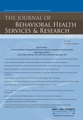
JOURNAL OF BEHAVIORAL HEALTH SERVICES & RESEARCH
Scope & Guideline
Transforming insights into impactful health solutions.
Introduction
Aims and Scopes
- Integrated Behavioral Health Services:
The journal emphasizes research on integrated care models that combine behavioral health with primary care, aiming to improve accessibility and outcomes for patients with mental health and substance use disorders. - Implementation Science in Behavioral Health:
A key focus is on the application of implementation science methodologies to enhance the uptake of evidence-based practices in behavioral health settings, ensuring that interventions are effectively integrated into existing systems. - Health Disparities and Access to Care:
Research addressing disparities in access to behavioral health services, particularly among marginalized populations, is a significant area of interest, exploring factors that influence treatment engagement and outcomes. - Qualitative and Mixed Methods Research:
The journal frequently publishes qualitative and mixed methods studies that provide in-depth insights into patient and provider experiences, informing best practices and policy initiatives. - Policy Analysis and Recommendations:
The journal contributes to the discourse on behavioral health policy by analyzing existing frameworks and proposing recommendations for improving service delivery and funding mechanisms. - Innovations in Behavioral Health Treatment:
There is a consistent focus on innovative treatment approaches, including telehealth, peer support, and community-based interventions, aimed at enhancing service delivery and patient engagement.
Trending and Emerging
- Telehealth and Digital Interventions:
The rise of telehealth, especially accelerated by the COVID-19 pandemic, is a prominent theme. Research is increasingly focusing on the effectiveness, accessibility, and patient satisfaction associated with digital mental health interventions. - Community-Based Interventions:
There is a noticeable trend towards community-driven approaches to behavioral health, emphasizing the importance of local resources and support systems in improving mental health outcomes. - Trauma-Informed Care:
An emerging focus on trauma-informed care frameworks highlights the need to understand the impact of trauma on mental health and the necessity of integrating trauma sensitivity into all levels of care. - Youth Mental Health Initiatives:
There is a growing emphasis on addressing mental health issues among youth, particularly in educational settings, and the effectiveness of programs tailored to this demographic. - Behavioral Health Workforce Development:
Research is increasingly focusing on workforce issues, including training, retention, and the need for diverse skill sets among behavioral health providers to meet the needs of varied populations.
Declining or Waning
- Traditional Mental Health Treatment Models:
Research focused on conventional treatment models, such as inpatient care without integration into broader health systems, appears to be declining as the field moves towards more integrated and community-based approaches. - Single-Disorder Focus:
There is a waning interest in studies that address single disorders in isolation, with a shift towards understanding co-occurring disorders and their complex interactions within patients' lives. - General Population Studies:
Research examining mental health trends in the general population is becoming less frequent, as more studies focus on specific vulnerable populations and their unique needs. - Pharmacological Interventions:
The emphasis on pharmacological treatments alone is decreasing, with more attention being given to holistic and integrative approaches that include psychosocial therapies and lifestyle interventions. - Static Policy Analysis:
Static analyses of behavioral health policies without recommendations for dynamic changes or innovations are less common, indicating a shift towards more actionable and practical policy discussions.
Similar Journals
HEALTH SERVICES RESEARCH
Exploring the intersection of health services and policy.HEALTH SERVICES RESEARCH, published by Wiley, is a premier journal focused on advancing the field of health policy and services research. With an ISSN of 0017-9124 and an impressive E-ISSN of 1475-6773, this esteemed publication has been at the forefront of health services inquiry since its inception in 1966. Recognized as a Q1 journal in Health Policy for 2023, it ranks #80 out of 310 in Scopus, placing it in the 74th percentile, underlining its significant influence in the field. The journal caters to a global audience of researchers, practitioners, and students by providing a platform for rigorous empirical studies and critical reviews that aim to improve health care delivery and policy outcomes. Although it does not offer open access, the comprehensive articles and insights published within its pages are essential for anyone seeking to understand and influence health systems. With its convergence towards the year 2024, HEALTH SERVICES RESEARCH continues to be a vital resource for those dedicated to enhancing healthcare effectiveness and accessibility.

Rural and Remote Health
Exploring innovative solutions for rural health challenges.Rural and Remote Health is a distinguished open-access journal published by the College of Medicine & Dentistry, James Cook University Townsville, dedicated to advancing the discourse in the field of rural and remote health care. With a strong emphasis on emergency medical services, public health, and social sciences, this journal places a critical spotlight on the unique health challenges faced by underserved populations. Since its inception in 2001, it has made significant contributions to the academic community, achieving Q1 status in Emergency Medical Services and Q2 rankings in various related categories in 2023. The journal operates with a commitment to promoting equitable health outcomes, making research accessible to a global audience. Leveraging its position within the Scopus database, where it ranks favorably among its peers, Rural and Remote Health aims to foster interdisciplinary collaboration among researchers, health professionals, and students interested in the complexities of health care delivery in rural regions. The publication not only seeks to disseminate high-quality research but also to stimulate innovative solutions addressing the pressing health disparities faced by remote communities.
Journal of Family Medicine and Primary Care
Empowering Primary Care with Evidence-Based InsightsThe Journal of Family Medicine and Primary Care is a premier, peer-reviewed academic journal dedicated to the fields of family medicine and primary healthcare. Published by Wolters Kluwer Medknow Publications, this Open Access journal has been providing a platform for the dissemination of valuable research since 2012, offering researchers, practitioners, and scholars unrestricted access to a wealth of knowledge in primary care practices, policies, and innovations. The journal seeks to bridge the gap between academia and practice by publishing original articles, reviews, and case studies that address contemporary issues in family medicine, thereby enhancing patient care and outcomes. With a commitment to advancing the field, the journal serves as an essential resource for those striving to improve the delivery and effectiveness of healthcare services within families and communities.
Addiction Science & Clinical Practice
Championing open access to addiction research and practice.Addiction Science & Clinical Practice is a premier open-access journal dedicated to advancing the understanding and treatment of addiction through evidence-based research and clinical practice. Published by BMC in the United Kingdom since 2007, this journal has significantly impacted the fields of Clinical Psychology, Medicine, and Psychiatry and Mental Health, proudly securing a Q1 ranking in multiple categories as of 2023. With an emphasis on high-quality research, the journal provides an inclusive platform for the dissemination of innovative findings and clinical insights that address the complexities of addiction. Researchers, practitioners, and students alike benefit from its unrestricted access since 2012, allowing for widespread dissemination of knowledge. Located at CAMPUS, 4 CRINAN ST, LONDON N1 9XW, the journal continues to lead the way in fostering collaboration and informing best practices in addiction science.

Administration and Policy in Mental Health and Mental Health Services Research
Fostering excellence in mental health policy and practice.Administration and Policy in Mental Health and Mental Health Services Research, published by SPRINGER, serves as a premier outlet in the fields of health policy, psychiatry, and public health. With an impact factor reflective of its rigorous standards and relevance—ranking in the top quartiles (Q1 and Q2) across multiple categories—the journal is committed to advancing knowledge and practices for effective mental health administration and policy-making. Established in 1988 and converging its insights to the present day, it aims to bridge the gap between research and application, making significant contributions to the improvement of mental health systems. The journal is indexed in prominent databases, boasting impressive Scopus rankings in key areas, thus appealing to researchers, professionals, and students invested in achieving best practices in mental health services. Although it does not provide Open Access options, it remains a vital resource for those aiming to influence policy and elevate mental health care on a global scale.

BMC HEALTH SERVICES RESEARCH
Advancing health policy through impactful research.BMC Health Services Research is a leading open-access journal dedicated to advancing the field of health policy and services research. Published by BMC since 2001 and based in the United Kingdom, this journal has established itself as an essential resource for researchers, professionals, and students alike, fostering a deeper understanding of health care systems and policies. With an impressive 2023 Q1 ranking in the Health Policy category and a Scopus rank of 90/310, it clearly demonstrates its commitment to high-quality, impactful research. The journal's open-access model ensures that research findings are accessible to a global audience, promoting collaboration and innovation in health services. Spanning from 2001 to 2024, BMC Health Services Research is poised to remain at the forefront of health services research, making significant contributions to policy formulation and practice improvement in the healthcare sector.
JOURNAL OF COMMUNITY HEALTH
Transforming health practices for a better tomorrow.JOURNAL OF COMMUNITY HEALTH, published by SPRINGER, stands as a premier source of scholarly information in the fields of community health, public health, environmental, and occupational health. With an impressive impact factor and ranked in the top quartiles (Q1) across related categories, this journal positions itself as a critical resource for researchers, professionals, and students dedicated to advancing the well-being of communities. Since its inception in 1975, it has tackled vital issues affecting public health systems and policies, providing a platform for innovative research and critical analyses. The journal's high Scopus rankings reflect its commitment to quality and academic excellence, being ranked #12 in Social Sciences - Health and #36 in Medicine - Public Health. Subscribers can benefit from comprehensive reviews and empirical studies, while authors are invited to contribute to a growing body of knowledge that shapes health practices globally. With a clear focus on real-world impact and community engagement, JOURNAL OF COMMUNITY HEALTH continues to play a fundamental role in informing public health strategies and interventions.

Journal of Migration and Health
Illuminating Health Challenges in MigrationJournal of Migration and Health, published by ELSEVIER, is a leading open access journal dedicated to exploring the intersection of migration and health, a critical area of study in contemporary social sciences. Since its inception in 2020, this journal has quickly established itself in the academic community, earning a prestigious Q1 ranking in several categories including Demography, Health (Social Science), Infectious Diseases, and Sociology and Political Science for 2023. With an impactful presence reflected in its Scopus Rankings—such as Rank #15 in Demography and Rank #57 in Health (social science)—the journal serves as a vital platform for researchers, practitioners, and students interested in understanding the complex health dynamics affecting migrant populations. The journal promotes scholarly discourse through rigorous peer-reviewed articles, fostering knowledge that informs health policies and practices relevant to migrants across the globe. For those keen on delving into pressing health issues influenced by migration trends, the Journal of Migration and Health offers rich insights and research opportunities, playing an essential role in shaping the future of health studies in a global context.
AIDS AND BEHAVIOR
Innovating interventions for safer practices.AIDS AND BEHAVIOR, published by SPRINGER/PLENUM PUBLISHERS, is a leading scholarly journal dedicated to the interdisciplinary study of HIV/AIDS, focusing particularly on the behavioral aspects of the epidemic. With an impressive impact factor reflected in its Q1 rankings across key categories including Infectious Diseases, Public Health, and Social Psychology, this journal serves as a vital resource for researchers, clinicians, and public health professionals. It encompasses a wide scope of research, from the psychosocial factors influencing HIV transmission to innovative interventions that promote safe practices. Although it does not offer open access, the journal's rigorous peer-review process ensures the dissemination of high-quality, impactful research. Covering data from 1997 to 2024, AIDS AND BEHAVIOR is positioned at the forefront of advancements in the field, making it an essential addition to any academic library and a must-read for those involved in combating HIV/AIDS.

JAMA Health Forum
Leading the Conversation on Health StrategiesIntroducing the JAMA Health Forum, a premier journal published by the American Medical Association, dedicated to advancing knowledge in the critical fields of health policy and public health. Since its inception in 2020, this open-access journal has emerged as a leading platform for high-quality research, achieving a distinguished Q1 ranking in both Health Policy and Public Health, Environmental and Occupational Health for 2023. With an ISSN of 2689-0186, it provides a vital resource for researchers, policymakers, and students alike, facilitating widespread dissemination of impactful studies that aim to shape health strategies and improve community health outcomes. The JAMA Health Forum not only fosters collaboration among experts but also enhances global discussions on pressing health issues, making it an essential read for anyone involved in health-related research and practice.