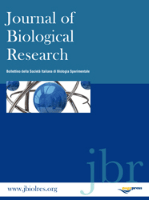
Journal of Biological Research-Bollettino della Societa Italiana di Biologia Sperimentale
Scope & Guideline
Unlocking the Secrets of Genetics and Molecular Biology
Introduction
Aims and Scopes
- Biodiversity and Conservation Biology:
The journal publishes studies on the genetic diversity and ecological significance of various species, contributing to the understanding of biodiversity and conservation efforts. - Phytochemistry and Medicinal Plants:
Research on the chemical properties and biological activities of plant extracts, essential oils, and their therapeutic potentials, highlighting the importance of plants in health and nutrition. - Molecular and Cellular Biology:
Papers focus on cellular mechanisms, molecular interactions, and genetic studies, providing insights into disease mechanisms and potential therapeutic targets. - Clinical and Experimental Medicine:
The journal features studies that bridge laboratory research and clinical applications, including drug effects, disease models, and treatment strategies. - Environmental and Ecological Research:
Research addressing the impact of environmental factors on biological systems, including studies on pollution, climate change, and ecosystem dynamics. - Nutritional Science and Dietetics:
Investigation of the nutritional properties of foods and their health implications, with a focus on dietary interventions and functional foods.
Trending and Emerging
- Genomic and Biotechnological Applications:
There is a noticeable increase in studies focused on genomic characterization, molecular biology techniques, and biotechnological innovations, reflecting the growing importance of genomics in understanding biological processes. - Health and Disease Mechanisms:
Research addressing the molecular and physiological mechanisms underlying diseases, particularly in relation to metabolic disorders and cancer, has gained traction, emphasizing the journal's commitment to health-related biological research. - Sustainable Agriculture and Food Security:
Emerging interest in plant-based foods, nutritional profiles, and the role of phytochemicals in health indicates a trend towards sustainable agricultural practices and food security, aligning with global health initiatives. - Environmental Microbiology and Biocontrol:
An increase in studies examining microbial interactions, biocontrol methods, and the ecological roles of microorganisms suggests a growing focus on sustainable agricultural practices and environmental health. - Innovative Therapeutics and Nutraceuticals:
Papers exploring the therapeutic potential of natural products, including nutraceuticals and functional foods, highlight a trend towards integrating traditional knowledge with modern scientific research.
Declining or Waning
- Traditional Ethnobotany:
Research focusing on traditional uses of plants in medicine has decreased, indicating a potential shift towards more biochemical and pharmacological studies rather than ethnobotanical documentation. - Animal Husbandry and Veterinary Studies:
There seems to be a reduction in studies related to traditional animal husbandry practices and veterinary sciences, suggesting a possible shift towards more molecular or genetic approaches in animal biology. - Non-Experimental Social Studies in Biology:
The journal has seen fewer publications featuring sociological perspectives or surveys related to biological practices, which may indicate a move towards more experimental and quantitative studies.
Similar Journals

TURKISH JOURNAL OF BOTANY
Empowering discoveries in plant science.Welcome to the TURKISH JOURNAL OF BOTANY, a prestigious publication dedicated to advancing the field of plant science. Established in 1990 and published by the Tubitak Scientific & Technological Research Council Turkey, this journal serves as a vital platform for researchers, professionals, and students to disseminate their findings and insights on various botanical topics. With an impressive H-index that underscores its academic influence and recognition in the field, the journal is positioned in the Q2 quartile of plant science according to the latest category rankings. The ISSN of the journal is 1300-008X and the E-ISSN is 1303-6106, ensuring broad accessibility in both print and digital formats. As of 2023, it ranks #213 out of 516 in Scopus for Agricultural and Biological Sciences, placing it in the 58th percentile, which highlights its competitive standing among botanical journals. Researchers are encouraged to engage with its open-access options where available, fostering a collaborative and accessible research environment. With its commitment to quality and scientific rigor, the Turkish Journal of Botany remains an essential resource for anyone engaged in the exploration of plant sciences.

Applied Biological Research
Advancing the Frontiers of Biological ScienceApplied Biological Research is a dynamic journal issued by the CENTRE ADVANCEMENT APPLIED SCIENCES, specializing in the interdisciplinary fields of biochemistry, genetics, and molecular biology. With its ISSN 0972-0979 and E-ISSN 0974-4517, this journal serves as a critical platform for the dissemination of peer-reviewed research that addresses pressing challenges and innovations within biological sciences. Although currently it does not adopt an Open Access model, it is dedicated to fostering academic discourse through rigorous publication practices. The journal's impact is underscored by its Scopus rankings, which place it in the 4th and 2nd percentiles in respective categories, emphasizing its emerging influence in the scientific community. Covering research from 2020 to 2024, Applied Biological Research is positioned as an essential read for researchers, professionals, and students seeking to stay at the forefront of biological research and application. Based in the beautiful region of Jammu & Kashmir, India, this journal is committed to advancing applied sciences through innovative research and outreach.
BIOLOGICAL RESEARCH
Exploring the frontiers of life sciences.BIOLOGICAL RESEARCH is a prestigious, peer-reviewed journal published by the Société de Biologie de Chile, dedicated to advancing the fields of Agricultural and Biological Sciences, Biochemistry, Genetics, and Molecular Biology, and Medicine. With an impressive ranking in the top quartile (Q1) in these categories as of 2023, this journal maintains high academic standards and visibility, making it a vital resource for researchers and professionals alike. Operating under an Open Access model since 2013, it ensures that research findings are freely accessible to a global audience, promoting the dissemination of knowledge and collaboration across disciplines. With a publication history dating back to 1992 and continued updates until 2024, BIOLOGICAL RESEARCH serves as a crucial platform for innovative research that impacts both scientific and healthcare communities. The journal’s commitment to quality and relevance is evidenced by its competitive performance in Scopus rankings, further solidifying its role as a leading journal within the biological sciences.

INDIAN JOURNAL OF EXPERIMENTAL BIOLOGY
Pioneering Research for a Healthier TomorrowINDIAN JOURNAL OF EXPERIMENTAL BIOLOGY, published by the NATL INST SCIENCE COMMUNICATION-NISCAIR, stands as a significant platform for the dissemination of original research in the fields of biochemistry, genetics, and molecular biology, particularly within the context of Indian scientific advancements. With its ISSN 0019-5189 and E-ISSN 0975-1009, the journal has been an essential resource since its inception in 1965, although coverage in prominent databases like Scopus was discontinued in 2018. The journal ranks in the 57th percentile for Biotechnology, as well as in the 27th and 25th percentiles for Molecular Biology and Cell Biology respectively, underscoring its impact and relevance. While currently not an Open Access journal, it continues to provide valuable insights and contributions from researchers and professionals in the growing field of experimental biology. The esteemed contributions published in this journal enhance our understanding of biological processes and foster the development of innovative solutions to contemporary challenges in health and environmental science.

Tropical Life Sciences Research
Empowering Knowledge in Tropical Ecosystems and MedicineTropical Life Sciences Research, published by PENERBIT UNIVERSITI SAINS MALAYSIA, is an esteemed open-access journal dedicated to the realms of Agricultural and Biological Sciences, Biochemistry, Genetics, and Molecular Biology, and Medicine. Since its inception in 2006, this journal has established itself as a significant platform for disseminating high-quality research findings that contribute to the understanding of tropical biodiversity and health-related issues. With its innovative approach, Tropical Life Sciences Research has garnered an impressive impact factor, reflecting its influence in the academic community; it is ranked Q2 in Agricultural and Biological Sciences and Q3 in both Biochemistry and Medicine categories as of 2023. Researchers and professionals can access a wealth of knowledge through this journal, whose content spans from 2009 to 2024, making it a vital resource for students and experts alike interested in advancing the science of tropical ecosystems and health. The journal also stands out for its comprehensive Scopus rankings, indicating its relevance and quality in the competitive academic landscape.
JOURNAL OF BIOSCIENCES
Exploring Innovations in Biochemistry and MedicineJOURNAL OF BIOSCIENCES, published by the Indian Academy of Sciences, has established itself as a pioneering platform in the fields of biosciences, encompassing diverse research areas such as agricultural and biological sciences, biochemistry, genetics, molecular biology, and medicine. With an impressive trajectory since its inception in 1979, the journal has achieved notable recognition, securing a Q1 ranking in Agricultural and Biological Sciences and maintaining its place in the top quartiles for Biochemistry and Medicine as of 2023. With Scopus rankings placing it at #32 in General Agricultural and Biological Sciences and #65 in General Biochemistry, Genetics, and Molecular Biology, the journal reaches the 85th and 70th percentiles respectively, reflecting its impact and relevance in current scientific discourse. Although it does not offer open access, the JOURNAL OF BIOSCIENCES remains crucial for researchers, professionals, and students dedicated to advancing knowledge and innovation within the biosciences, providing a vibrant forum for high-quality research and comprehensive reviews.
FOLIA BIOLOGICA-KRAKOW
Exploring the frontiers of biochemistry and genetics.FOLIA BIOLOGICA-KRAKOW, published by the renowned Polish Academy of Sciences, Institute of Systematics and Evolution of Animals, serves as a pivotal platform for advancing research in the fields of Biochemistry, Genetics, and Molecular Biology. Since its inception in 1953, this journal has consistently contributed to the academic dialogue, focusing on a diverse range of topics, including evolutionary biology, molecular genetics, and ecological biochemistry. Although currently classified in Q4 quartiles according to the 2023 categorizations in both Biochemistry, Genetics and Molecular Biology (miscellaneous) and Medicine (miscellaneous), its dedicated efforts to disseminate critical findings and foster scholarly exchange ensure its relevance and growth in the scientific community. FOLIA BIOLOGICA-KRAKOW is not Open Access, but researchers can access its publications through institutional subscriptions or library services, making it a valuable resource for scientists seeking to enrich their understanding of biological processes. With its commitment to excellence and innovation in biological research, this journal remains an essential reference for researchers, professionals, and students alike, contributing significantly to the evolution of contemporary biological sciences.

Biology-Basel is a premier, peer-reviewed open-access journal published by MDPI since 2012, situated in the heart of Switzerland. With an E-ISSN of 2079-7737, this journal serves as a vital platform for the dissemination of innovative research across the broad spectrum of Agricultural and Biological Sciences, Biochemistry, Genetics, Molecular Biology, and Immunology. Recognized for its rigorous editorial standards and impactful findings, it currently ranks Q1 in Agricultural and Biological Sciences and holds impressive positions in several categories according to the 2023 Scopus rankings. The journal’s open-access model ensures that high-quality research is freely available to a global audience, fostering collaboration and knowledge sharing among researchers, professionals, and students alike. Spanning from 2012 to 2024, Biology-Basel is committed to reflecting the latest advancements in biological sciences, making it an essential resource in the ever-evolving landscape of biological research.
CURRENT BIOLOGY
Unveiling the Future of Biology, One Study at a TimeCURRENT BIOLOGY is a premier academic journal published by CELL PRESS, dedicated to a broad spectrum of fields within biological sciences. With an ISSN of 0960-9822 and E-ISSN 1879-0445, the journal has established itself as a vital resource for groundbreaking research and advancements since its inception in 1991. CURRENT BIOLOGY boasts high prominence in its categories, securing a Q1 quartile ranking in Agricultural and Biological Sciences, Biochemistry, Genetics and Molecular Biology, and Neuroscience, indicating its significant impact and relevance in these fields. Notably, it ranks #9 out of 221 journals in Agricultural and Biological Sciences, placing it in the 96th percentile, while also maintaining a strong presence in the Biochemistry category with a rank of #26. Researchers and professionals can rely on CURRENT BIOLOGY for comprehensive reviews, innovative methodologies, and crucial scientific developments that bridge theoretical knowledge with practical applications. The journal continues to play an essential role in enhancing the global dialogue in biological research, making it indispensable for students, academics, and industry experts aiming to stay at the forefront of the rapidly evolving landscape of life sciences.
BIOLOGY BULLETIN
Nurturing Knowledge in the Life Sciences Landscape.BIOLOGY BULLETIN is a prominent academic journal published by PLEIADES PUBLISHING INC, dedicated to advancing the fields of Agricultural and Biological Sciences as well as Biochemistry, Genetics, and Molecular Biology. With an ISSN of 1062-3590 and E-ISSN of 1608-3059, the journal has been a vital resource for researchers and professionals since its commencement in 1996. Located in the United States, BIOLOGY BULLETIN operates within a highly competitive academic landscape, achieving a 2023 ranking in the Q3 quartile for Agricultural and Biological Sciences and Q4 for Biochemistry, Genetics, and Molecular Biology, highlighting its commitment to delivering impactful research despite its challenges. Researchers seeking to publish their findings will find a platform for significant insights, as reflected in its Scopus rankings, where it stands at #183 and #199 out of 221 in its respective categories, showcasing opportunities for growth and visibility. While currently not an open-access publication, BIOLOGY BULLETIN plays a crucial role in facilitating scholarly communication and fostering an understanding of biological sciences, making it an essential read for academics, professionals, and students alike.