JOURNAL OF CANCER EDUCATION
Scope & Guideline
Elevating Public Health through Cancer Education Insights
Introduction
Aims and Scopes
- Cancer Education and Training:
The journal emphasizes the development and assessment of educational interventions targeting healthcare providers and patients to improve cancer knowledge, screening practices, and treatment adherence. - Health Disparities and Equity:
A consistent focus on addressing health disparities in cancer care, particularly among underserved populations, reflects the journal's commitment to promoting equitable access to cancer education and resources. - Patient Navigation and Support:
Research on patient navigation programs and supportive care initiatives aims to improve the patient experience and outcomes throughout the cancer care continuum. - Innovative Educational Approaches:
The journal explores the use of technology and innovative teaching strategies, such as digital storytelling, virtual learning environments, and simulation-based training, to enhance cancer education. - Community Engagement and Outreach:
The journal highlights community-based cancer education initiatives that engage diverse populations and promote awareness, prevention, and screening for various cancer types.
Trending and Emerging
- Integration of Technology in Education:
The use of digital tools, telehealth, and online learning platforms is rapidly increasing, allowing for innovative educational strategies that enhance accessibility and engagement for diverse populations. - Focus on Health Equity and Cultural Competence:
There is a growing emphasis on addressing health disparities through culturally tailored cancer education programs, particularly for marginalized communities, reflecting a commitment to health equity. - Patient-Centered Care and Informed Decision-Making:
Research exploring patient engagement, shared decision-making, and the role of health literacy in empowering patients to make informed choices about their cancer care is gaining momentum. - Interdisciplinary Collaboration:
Emerging trends highlight the importance of interdisciplinary education and collaboration among healthcare professionals to improve cancer care delivery and education. - Impact of COVID-19 on Cancer Education:
The pandemic has led to an increase in studies examining the effects of COVID-19 on cancer education, patient care, and the adaptation of educational programs to virtual formats.
Declining or Waning
- Traditional Didactic Education:
There is a noticeable reduction in studies focused solely on traditional didactic teaching methods, as the journal increasingly favors interactive, experiential, and community-based educational approaches. - General Cancer Awareness Campaigns:
Publications centered on broad cancer awareness campaigns without specific targeted interventions or evaluations are becoming less frequent, indicating a shift toward more focused and measurable educational strategies. - Single-Discipline Focus:
Papers concentrating solely on one discipline within cancer education (e.g., nursing or medical education) are declining, as interdisciplinary collaboration and integrated approaches gain more attention.
Similar Journals
CA-A CANCER JOURNAL FOR CLINICIANS
Elevating Standards in Cancer Care Through Scholarly ExcellenceCA: A Cancer Journal for Clinicians is a prestigious academic journal published by Wiley, serving as a leading source of evidence-based information for those in the fields of oncology and hematology. With an impressive impact factor and ranked in the top quartile (Q1) for both specialties, this journal aims to bridge the gap between the latest research findings and clinical practice. Established in 1950, it boasts a long-standing history of delivering essential insights, guidelines, and innovative strategies to healthcare professionals worldwide, making significant contributions to the understanding and treatment of cancer. Although it does not offer open access, its published content is crucial for researchers, clinicians, and students dedicated to advancing cancer care. The journal's commitment to excellence is reflected in its elite rankings, holding the #1 position in both the Medicine – Oncology and Medicine – Hematology categories according to Scopus, positioning it in the 99th percentile of scholarly impact.
JCO Oncology Practice
Transforming Oncology Through Evidence and InnovationJCO Oncology Practice is a premier peer-reviewed journal published by Lippincott Williams & Wilkins, specializing in the intersection of oncology and health policy. Established as a vital resource since 2020, this journal serves as a platform for the dissemination of innovative research, policy analysis, and clinical practice advancements aimed at enhancing cancer care. With its impressive impact factor and recognition in the top quartile (Q1) across multiple categories including Health Policy and Oncology, JCO Oncology Practice ranks #3 in Oncology Nursing and consistently shares cutting-edge insights that drive improvements within the field. The journal is accessible to a broad audience through its open access options, ensuring that vital knowledge reaches practitioners, researchers, and students alike. By prioritizing the latest evidence-based practices and addressing contemporary challenges in cancer treatment, JCO Oncology Practice plays an essential role in shaping the future of oncology practice and policy in the United States and beyond.
Asia-Pacific Journal of Oncology Nursing
Empowering Oncology Nursing Through Innovative ResearchAsia-Pacific Journal of Oncology Nursing, published by Elsevier Science Inc, serves as a vital resource for researchers, practitioners, and students involved in the fields of oncology and nursing within the Asia-Pacific region. Since its transition to Open Access in 2014, the journal has aimed to disseminate cutting-edge research and innovative practices that enhance the quality of nursing care in oncology. With its ISSN 2347-5625 and E-ISSN 2349-6673, this journal holds a Q3 rank in both Oncology and Nursing (Oncology Nursing) as of 2023, reflecting its commitment to addressing current challenges and advancements in the discipline. With a Scopus ranking of 252/404 in Medicine (Oncology) and 13/20 in Nursing (Oncology Nursing), it occupies a crucial position in the academic landscape, nurturing knowledge that directly impacts patient care in oncology settings. Located at STE 800, 230 Park Ave, New York, NY 10169, the journal encourages contributions that explore multifaceted aspects of oncology nursing from 2018 to 2024, making it an important platform for emerging voices and established experts alike.
eCancerMedicalScience
Connecting minds to conquer cancer.eCancerMedicalScience, a leading open-access journal published by the eCancer Global Foundation, is dedicated to advancing the field of cancer research and oncology. With its inception in 2007, this esteemed journal has emerged as a pivotal platform for disseminating groundbreaking research, innovative treatments, and comprehensive reviews in the cancer domain. Based in the United Kingdom, eCancerMedicalScience has continuously contributed to the academic community with its rigorous peer-review process and broad-ranging scope, now encompassing topics from clinical oncology to molecular biology. Currently ranked in the Q3 quartile for both Cancer Research and Oncology in 2023, the journal provides a significant opportunity for researchers, professionals, and students to access valuable insights and share their findings within a global network. The commitment to open access ensures that knowledge is readily available, fostering collaborative efforts to combat cancer and improve patient outcomes.

CANCER NURSING
Elevating patient care in oncology nursing since 1978.Cancer Nursing, a peer-reviewed journal published by Lippincott Williams & Wilkins, plays a pivotal role in the field of oncology nursing, providing a vital platform for the dissemination of research that enhances patient care and nursing practices related to cancer. With an impressive impact factor and categorized within the Q2 quartile for both oncology and nursing disciplines, this journal ranks among the top resources in its field, sitting at Rank #5 out of 20 in Nursing Oncology. Since its inception in 1978, the journal has continuously evolved to address critical issues in cancer treatment, patient education, and healthcare delivery, making it essential reading for researchers, practitioners, and students alike. Although it does not currently offer open access, the journal's commitment to advancing knowledge in oncology nursing is reflected in its rigorous selection process and the quality of its published research. As we look towards its upcoming issues in 2024, the journal remains a cornerstone for those dedicated to improving cancer care and the overall quality of life for patients and their families.
Current Opinion in Supportive and Palliative Care
Elevating practices in supportive and palliative care.Current Opinion in Supportive and Palliative Care, an esteemed journal published by Lippincott Williams & Wilkins, provides a vital platform for the dissemination of contemporary research and expert perspectives in the fields of supportive and palliative care. As part of the medical community's growing focus on critical care and oncology, this journal has earned its place in the Q2 category across multiple rankings, reflecting its influence and significance in advancing knowledge and practices. With its ISSN 1751-4258 and E-ISSN 1751-4266, it covers literature from 2007 to 2024, making it a reliable resource for the latest developments. While it does not offer open access, the journal ensures careful curating of high-quality articles, fostering a deeper understanding of complex care needs. Researchers, clinicians, and students alike will benefit from the journal's insights, exploring innovative strategies and multidisciplinary approaches to improve patient outcomes in critical situations. The commitment to such a crucial area of healthcare underscores the importance of this publication in shaping future practices and policies.
GEBURTSHILFE UND FRAUENHEILKUNDE
Leading the Way in Women's Health Research.GEBURTSHILFE UND FRAUENHEILKUNDE is a prestigious journal dedicated to the fields of Maternity, Midwifery, Obstetrics, and Gynecology, published by GEORG THIEME VERLAG KG, a reputable publisher known for its commitment to advancing medical knowledge. Established in 1947, the journal has consistently provided a platform for high-quality research and clinical studies that address current challenges and innovations in women's health. With an impact factor positioned in Q2 for Maternity and Midwifery and Q3 in Obstetrics and Gynecology, it ranks among the top journals within its field, further solidified by its Scopus rankings highlighting its influential presence. Although the journal is not open access, it remains an essential resource for academics and practitioners keen to stay informed on the latest evidence-based practices and cutting-edge research, ensuring that all stakeholders in women's healthcare can access critical insights to enhance patient outcomes.

Frontiers in Oncology
Advancing cancer research for a healthier tomorrow.Frontiers in Oncology is a premier open access journal dedicated to advancing the field of oncology through innovative research and knowledge dissemination. Published by FRONTIERS MEDIA SA since 2011, this journal is based in Switzerland and holds an impressive Q2 ranking in both Cancer Research and Oncology as of 2023, highlighting its significance in the academic community. With its commitment to open access, Frontiers in Oncology ensures that vital research is readily available to researchers, healthcare professionals, and students around the globe, enhancing collaboration and fostering breakthroughs in cancer research. The journal's robust Scopus rankings further illustrate its academic influence, with notable positions in the fields of Oncology and Cancer Research. By covering a wide range of topics within oncology, this journal serves as a vital resource, supporting the rapid evolution of cancer treatment, diagnostics, and patient care strategies.
JOURNAL OF CANCER RESEARCH AND CLINICAL ONCOLOGY
Illuminating the Pathways of Cancer Discovery and Treatment.JOURNAL OF CANCER RESEARCH AND CLINICAL ONCOLOGY, published by Springer, is a prestigious peer-reviewed journal dedicated to advancing the fields of cancer research and clinical oncology. With an impact factor reflecting its significance within the academic community, the journal operates under a rigorous quality standard and offers a wealth of knowledge spanning from 1979 and continuing through 2025. With its comprehensive scope, it encompasses a wide array of topics including novel therapeutic strategies, clinical trials, and cutting-edge research methodologies, making it an essential resource for researchers, practitioners, and students alike. The journal’s category quartiles highlight its competitive edge, ranking Q2 in Cancer Research and Q1 in Medicine (miscellaneous) as of 2023. This positioning underscores its role at the forefront of oncology discourse. Through this journal, contributors and readers alike engage with impactful research that informs clinical practices and enhances patient care in oncology. Access to the journal’s content, although not open access, ensures curated and high-quality insights available to the academic and professional community.
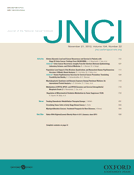
JNCI-Journal of the National Cancer Institute
Empowering oncologists with groundbreaking insights.JNCI-Journal of the National Cancer Institute, published by Oxford University Press Inc. in the United Kingdom, is a premier journal dedicated to advancing the field of cancer research and oncology. With a distinguished history dating back to 1940, this journal has consistently maintained a strong reputation within the academic community, achieving a remarkable Q1 ranking in both Cancer Research and Oncology as of 2023. Researchers and practitioners rely on the JNCI for original research articles, review papers, and cutting-edge findings that impact clinical practices and therapeutic strategies. Although it does not currently offer open access, the journal remains a vital resource for academicians and healthcare professionals seeking to enhance their understanding of cancer mechanisms and treatment innovations. Its rigorous peer-review process ensures the publication of high-quality, credible research that meets the evolving challenges of cancer treatment and prevention through to 2024.