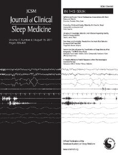
Journal of Clinical Sleep Medicine
Scope & Guideline
Exploring the depths of sleep medicine research.
Introduction
Aims and Scopes
- Obstructive Sleep Apnea (OSA) Research:
A substantial focus on the pathophysiology, diagnosis, and treatment of obstructive sleep apnea, including studies on CPAP adherence, surgical interventions, and the impact of OSA on comorbid conditions. - Sleep Disorders in Special Populations:
Research highlighting sleep disorders in specific populations, such as children, veterans, and individuals with neurodevelopmental disorders, emphasizing tailored treatment approaches. - Behavioral and Psychological Interventions:
Exploration of non-pharmacological treatments for sleep disorders, including cognitive behavioral therapy for insomnia and the application of mindfulness and other behavioral techniques. - Technological Innovations in Sleep Medicine:
Investigation of new technologies for sleep assessment and treatment, such as wearable devices, telemedicine applications, and automated scoring systems. - Sleep and Comorbid Conditions:
Studies examining the interplay between sleep disorders and other health issues, such as cardiovascular disease, diabetes, and mental health conditions, to better understand their shared pathophysiology.
Trending and Emerging
- Telemedicine and Remote Monitoring:
The COVID-19 pandemic has accelerated interest in telehealth solutions for sleep disorders, with increasing studies on remote monitoring and virtual consultations, highlighting their efficacy and patient acceptance. - Multidisciplinary Approaches to Sleep Disorders:
Growing emphasis on integrating various disciplines, such as psychology, neurology, and cardiology, to address complex sleep disorders, illustrating the interconnectedness of sleep with broader health issues. - Impact of Sleep on Mental Health:
Increasing recognition of the relationship between sleep disorders and mental health conditions, with more studies exploring how sleep interventions can improve psychological outcomes. - Personalized Medicine in Sleep Treatment:
Emerging research focused on tailoring sleep disorder treatments to individual patient profiles, including genetic and phenotypic factors, to enhance efficacy and adherence. - Machine Learning and AI in Sleep Research:
A surge in studies utilizing machine learning techniques to analyze sleep data, predict outcomes, and improve diagnostic accuracy, reflecting a significant technological advancement in the field.
Declining or Waning
- Traditional Pharmacological Treatments:
Research on conventional pharmacological interventions for sleep disorders has diminished, possibly due to the growing emphasis on non-pharmacological approaches and behavioral therapies. - General Sleep Quality Assessments:
A decline in studies solely focused on general sleep quality metrics without specific ties to sleep disorders, as the journal shifts towards more targeted research on specific conditions. - Single-Center Studies:
There has been a reduction in small-scale, single-center studies, with a trend towards larger, multi-center trials that provide more generalizable data. - Aging and Sleep Research:
While aging remains an important factor in sleep studies, specific investigations focused exclusively on aging-related sleep disorders have decreased as the journal expands its focus on broader sleep health topics. - Cultural Perspectives on Sleep Disorders:
Fewer studies are addressing sleep disorders from a cultural context, suggesting a waning interest in this area despite its relevance in diverse populations.
Similar Journals

Clinical Medicine Insights-Circulatory Respiratory and Pulmonary Medicine
Exploring the Frontiers of Cardiology and PulmonologyClinical Medicine Insights-Circulatory Respiratory and Pulmonary Medicine, published by SAGE Publications Ltd, stands as a vital resource in the fields of Cardiology and Pulmonary Medicine, underscored by its Q3 quartile rankings in both areas for 2023. Established in 2007 as an open-access journal, it facilitates the dissemination of cutting-edge research and observations from the international scientific community. With an ISSN of 1179-5484, the journal has garnered recognition for its contributions to clinical medicine, particularly covering topics of circulatory, respiratory, and pulmonary health. The journal not only aims to bridge the gap between research and clinical practice but also to serve as a platform for innovative ideas and collaborations among researchers, healthcare professionals, and trainees. By offering unrestricted access to its articles, Clinical Medicine Insights ensures that vital knowledge reaches a broad audience, ultimately fostering advancements in medical science and patient care.
NEUROPHYSIOLOGIE CLINIQUE-CLINICAL NEUROPHYSIOLOGY
Shaping the Landscape of Neurophysiological ScienceNEUROPHYSIOLOGIE CLINIQUE-CLINICAL NEUROPHYSIOLOGY is a prominent journal dedicated to advancing the field of clinical neurophysiology, published by Elsevier France - Éditions Scientifiques Médicales Elsevier. With an ISSN of 0987-7053 and an E-ISSN of 1769-7131, this journal serves as a vital platform for disseminating high-quality research and insights from 1988 through 2024. As evidenced by its excellence, the journal currently holds a Q2 ranking in the categories of Medicine (miscellaneous), Neurology, Clinical Neurology, and Medical Physiology, reflecting its impact and relevance in these critical fields. Additionally, the Scopus rankings underscore its contribution to the scientific community, particularly in clinical neurology and physiology. Researchers, professionals, and students in neurophysiology will find this journal crucial for accessing innovative studies and enhancing their understanding of clinical practices. While access to articles may vary, the journal's commitment to excellence continues to engage an international readership, fostering collaboration and knowledge advancement in the neurophysiology domain.

Somnologie
Pioneering Insights into Sleep PhysiologySomnologie is a prestigious academic journal published by SPRINGER INT PUBL AG, focusing on the interdisciplinary field of sleep medicine. Established in 1997, this journal has consistently provided a platform for cutting-edge research and review articles that explore the various physiological, psychological, and pharmacological aspects of sleep. With a current impact factor placing it in the Q3 category in Physiological (Medical) studies, it ranks #82 out of 113 in Scopus, representing a notable presence in the field. Though not an Open Access journal, Somnologie remains vital for researchers, clinicians, and students seeking to deepen their understanding of sleep science. Located in Germany, this journal promotes global collaboration, and its comprehensive archive from 1997 to the current year serves as an invaluable resource for the ongoing advancements in sleep-related studies.
Sleep and Breathing
Pioneering Research in Sleep and Respiratory WellnessSleep and Breathing is a leading international journal published by SPRINGER HEIDELBERG, specializing in the fields of neurology and otorhinolaryngology. Since its inception in 1996, the journal has established itself as a pivotal resource for clinicians and researchers exploring the complex interactions between sleep and respiratory health. With an impressive Q2 ranking in Neurology (clinical) and a Q1 ranking in Otorhinolaryngology, it serves a diverse readership, offering a rich repository of original research, reviews, and clinical studies that address critical challenges in sleep medicine. The journal currently boasts a robust Scopus ranking, placing it among the top-tier publications in both specialties (Rank #16/123 in Otorhinolaryngology and Rank #140/400 in Clinical Neurology). While access options are limited, the high impact factor underscores its significance in shaping contemporary research dialogue. As such, Sleep and Breathing continues to be an essential platform for advancing knowledge and fostering collaboration within the nexus of sleep science and respiratory health.

Nature and Science of Sleep
Bridging Research and Practice in Sleep ScienceNature and Science of Sleep is an esteemed open-access journal published by Dove Medical Press Ltd, dedicated to the interdisciplinary fields of sleep science and behavioral neuroscience. Since its inception in 2009, the journal has become a vital resource for researchers, clinicians, and students alike, offering a platform for innovative research and insights that advance the understanding of sleep and its profound effects on human health and behavior. With a commendable Q2 ranking in both Applied Psychology and Behavioral Neuroscience as of 2023, it positions itself in the top tier of its fields, reflecting its importance and relevance in ongoing discussions and research. Accessible globally, Nature and Science of Sleep serves to bridge the gap between basic research and practical applications, facilitating the dissemination of knowledge that informs better practices in sleep medicine, psychology, and neuroscience. With an active commitment to fostering scientific dialogue, the journal continues to influence best practices and set new standards in sleep research through its rigorous peer-review process and focus on high-impact studies.
Clinical Obesity
Innovative Research for a Healthier FutureClinical Obesity, published by WILEY, is a leading journal in the field of Endocrinology, Diabetes, and Metabolism that strives to advance the understanding of obesity-related health issues. With an ISSN of 1758-8103 and an E-ISSN of 1758-8111, this journal provides a platform for cutting-edge research and findings pertaining to the epidemiology, pathophysiology, prevention, and treatment of obesity. Recognized with a Q2 ranking in both Endocrinology, Diabetes and Metabolism and Medicine (miscellaneous) categories, and boasting a Scopus rank of #90 out of 244, Clinical Obesity encompasses innovative studies that influence clinical practice and public health policies. While this journal operates under a subscription model, its discipline-specific contributions are invaluable for researchers, healthcare professionals, and students keen on addressing the complexities of obesity in a comprehensive manner.

Clocks & Sleep
Transforming Sleep Science with Open Access KnowledgeClocks & Sleep is an esteemed open access journal published by MDPI, dedicated to advancing the understanding of sleep-related phenomena through a multidisciplinary lens. Since its inception in 2019, the journal has progressively emerged as a vital resource in the fields of Neurology and Neuroscience, achieving a respectable ranking in the third quartile (Q3) among its peers according to the 2023 category quartiles. The journal's commitment to disseminating high-quality research is reflected in its Scopus rankings, placing it in the 58th percentile for Neuroscience and the 50th percentile for Neurology. Based in Switzerland, Clocks & Sleep promotes a global dialogue through its open access model, enabling researchers, professionals, and students to engage with cutting-edge findings and contribute to the growing body of literature on sleep science. With a focus on interdisciplinary studies that intersect with psychology, psychiatry, and circadian rhythms, Clocks & Sleep is poised to shape the future of sleep research.
Sleep and Biological Rhythms
Illuminating the Science of Sleep and Circadian RhythmsSleep and Biological Rhythms is a pivotal scholarly journal published by Springer Japan KK, focusing on the intricate relationships between sleep patterns and biological rhythms across various biological and psychological paradigms. Since its inception in 2003, this journal has consistently presented high-quality original research and comprehensive reviews that shed light on the multifaceted roles of sleep in health, disease, and behavioral science, making it an essential resource for researchers, professionals, and students in neurology, neuropsychology, and physiology. With an impact factor that places it in the Q3 quartile across several relevant categories, including neurology and physiological psychology, Sleep and Biological Rhythms provides critical insights that help advance our understanding of the physiological mechanisms underpinning sleep and circadian rhythms. While this journal offers a subscription-based model, its commitment to publishing rigorously peer-reviewed content ensures that it remains a trusted reference point for innovators and thought leaders in the fields of neuroscience and medicine. For more information, users are encouraged to access the journal through its dedicated page on the Springer website.
AURIS NASUS LARYNX
Innovating surgical practices through peer-reviewed insights.AURIS NASUS LARYNX, published by Elsevier Science Ltd, is a leading peer-reviewed journal specializing in the fields of otorhinolaryngology, surgery, and general medicine. Since its inception in 1974, this esteemed journal has been committed to disseminating high-quality research and innovative findings pertinent to the diagnosis, treatment, and management of ear, nose, and throat diseases. With an impressive 2023 impact factor reflected in its Q2 quartile rankings in both Medicine (miscellaneous) and Otorhinolaryngology, as well as its strong position in Surgery, AURIS NASUS LARYNX is regarded highly among researchers and practitioners. The journal is accessible through a subscription model, ensuring that essential knowledge remains within reach for both clinical and academic pursuits. The continuous evolution of its content promises to stay at the forefront of medical advancements, making it an invaluable resource for scholars, clinicians, and students striving for excellence in the medical field.
JOURNAL OF SLEEP RESEARCH
Bridging Research and Application in Sleep Studies.JOURNAL OF SLEEP RESEARCH, published by Wiley, stands as a leading platform for disseminating innovative research and insights in the fields of sleep science, behavioral neuroscience, and cognitive neuroscience. With a commendable Impact Factor that reflects its pivotal role in advancing our understanding of sleep and associated neurological processes, this journal ranks in the top quartile (Q1) across multiple categories in 2023—demonstrating its substantial influence and outreach. The journal's dedicated focus spans various aspects of sleep research, from basic science to clinical applications, making it an invaluable resource for researchers, clinicians, and students alike. Operating from the United Kingdom, the journal has been in continuous circulation since 1992 and will continue to contribute to the field until at least 2024. For those seeking to enrich their knowledge and stay abreast of the latest advancements in sleep research, the JOURNAL OF SLEEP RESEARCH is an essential read.