Journal of Contemporary African Studies
Scope & Guideline
Navigating the intersections of geography, politics, and development in Africa.
Introduction
Aims and Scopes
- Socio-Political Dynamics:
The journal explores the complex interplay of power, governance, and civil society in African contexts, examining themes such as state sovereignty, grassroots activism, and the role of non-state actors. - Economic Development and Policy:
Focusing on economic issues, the journal addresses topics like trade agreements, public finance, and the impact of global economic trends on African nations, with an emphasis on empirical analyses and policy implications. - Cultural Studies and Identity:
The journal investigates cultural expressions and identities in Africa, including literature, music, and religious practices, highlighting how these elements interact with social and political realities. - Gender Studies and Social Inequality:
A significant focus is placed on gender dynamics, examining the intersections of gender, politics, and socio-economic factors, and advocating for gender equity and social justice. - Environmental and Sustainable Development:
The journal also emphasizes the importance of environmental sustainability, exploring indigenous practices, climate change implications, and community-led conservation efforts.
Trending and Emerging
- Climate Change and Environmental Justice:
There is a growing emphasis on research related to climate change and its socio-economic impacts, reflecting an urgent need to address environmental degradation and promote sustainable practices. - Youth and Employment Dynamics:
The journal increasingly focuses on the challenges faced by African youth, particularly regarding unemployment and the effectiveness of human capital investment, highlighting the need for innovative solutions. - Digital Activism and Social Change:
The rise of digital platforms for activism and social movements is gaining attention, showcasing how technology intersects with traditional forms of activism in driving change across the continent. - Gender-Based Analysis in Policy Making:
An emerging theme is the critical examination of gender dynamics within policy frameworks, emphasizing the importance of integrating gender perspectives in development and governance strategies. - Indigenous Knowledge Systems:
The journal is increasingly recognizing the value of indigenous practices and knowledge systems in addressing contemporary challenges, particularly in environmental conservation and community development.
Declining or Waning
- Traditional Economic Models:
There has been a reduction in studies centered on conventional economic models and theories, as the journal increasingly favors innovative, context-specific analyses that reflect contemporary challenges in African economies. - Post-Colonial Theories:
Research grounded in older post-colonial theoretical frameworks appears to be waning, with a shift towards more nuanced and intersectional approaches that incorporate contemporary socio-political realities. - Historical Analyses:
While historical context remains important, there is a noticeable decrease in the frequency of papers focusing solely on historical narratives without linking them to current socio-economic and political issues.
Similar Journals
African and Asian Studies
Illuminating Social Dynamics in Two Diverse RegionsAfrican and Asian Studies, published by BRILL, is a pivotal interdisciplinary journal that delves into the historical, social, and cultural dynamics of Africa and Asia. With an ISSN of 1569-2094 and an E-ISSN of 1569-2108, the journal serves as a vital platform for scholars and practitioners eager to understand the complexities of these regions. Notable for its historical convergence since its inception in 1966, African and Asian Studies has evolved to encompass a wide range of topics within the disciplines of history, sociology, and political science, highlighting its significance in contemporary research as reflected by its Scopus rankings, notably in the 70th percentile for Arts and Humanities - History. While not an Open Access journal, it offers invaluable insights and rigorous analyses that elevate the discourse surrounding development issues and sociopolitical contexts in Africa and Asia. Its commitment to fostering academic exchange is essential for researchers, professionals, and students dedicated to exploring these vibrant regions.

PACIFIC AFFAIRS
Exploring the Dynamics of Society and Politics in the PacificPACIFIC AFFAIRS is a distinguished journal published by the University of British Columbia, specializing in the fields of Sociology, Political Science, and Geography. With a history dating back to its converged years starting in 1979, this journal has established itself as a crucial platform for scholarly discourse on societal and geopolitical issues within the Pacific region and beyond. Although it is not an open-access journal, it provides valuable insights and research findings that contribute rigorously to its respective fields, holding a respectable Q3 ranking in Geography, Planning and Development and a Q2 ranking in Sociology and Political Science as of 2023. Currently, it holds a Scopus rank of 620 out of 1466 in Sociology and Political Science, reflecting its significance in academic research. PACIFIC AFFAIRS continues to inspire researchers, professionals, and students alike to engage with pressing topics relevant to the Pacific area, providing a platform for innovative research and critical analysis.
Contemporary South Asia
Engaging with the Heartbeat of South Asian StudiesContemporary South Asia, a peer-reviewed journal published by Routledge Journals, Taylor & Francis Ltd, stands as a critical platform for scholarly discourse in the fields of Development, Geography, and Political Science, with a notable impact factor that reflects its significance in academic circles. With a focus on the socio-political and economic dynamics of South Asia, the journal provides a rigorous forum for researchers, professionals, and students to engage with diverse perspectives and empirical studies from the region. Covering articles from 1992 to 2024, it has earned a commendable reputation as evidenced by its Q2 ranking across multiple categories in 2023 in both Development and Geography, as well as Political Science and International Relations. This journal not only hosts a plethora of insightful research but also serves as an essential resource for those seeking to understand the complexities of contemporary issues affecting South Asia. While it operates under a subscription model, the quality and relevance of the content ensure it remains a vital tool for intellectual inquiry and policy analysis in an increasingly interconnected world.

Historia-Santiago
Unlocking the Past: Open Access to Innovative HistoriesHistoria-Santiago is an esteemed academic journal published by the Pontificia Universidad Católica de Chile, Instituto de Historia. Since its inception in 2000, the journal has embraced an Open Access model, facilitating broad dissemination of historical research and ensuring that critical scholarly work is freely accessible to researchers, professionals, and students around the globe. With a focus on Latin American history, Historia-Santiago provides a platform for innovative research and contributions that engage with diverse historical narratives and methodologies. The journal aims to foster interdisciplinary dialogue and stimulate scholarly debate, thereby enriching the understanding of historical contexts and their implications in contemporary society. By maintaining high academic standards, Historia-Santiago occupies a vital role in the field of historical studies, encouraging authors to explore new ideas and perspectives that shape the understanding of our past.

Annee du Maghreb
Connecting Scholars to the Heart of North AfricaAnnée du Maghreb, published by CNRS Éditions, is an esteemed open-access journal dedicated to advancing the study of Mediterranean and North African cultures, history, and societies. Since its inception in 2004, the journal has aimed to foster a deeper understanding of the complex socio-political dynamics, artistic expressions, and historical contexts of the Maghreb region. By providing a platform for rigorous research and interdisciplinary dialogue, Année du Maghreb plays a pivotal role in enriching academic discourse and enhancing knowledge within the fields of anthropology, history, and cultural studies. Accessible to a global audience, this journal invites researchers, professionals, and students to contribute to its growing repository of scholarly work, ensuring the continuation of high-quality discussions pertinent to this vibrant area of study.
MIDDLE EAST JOURNAL
Advancing Understanding of Middle Eastern Socio-PoliticsThe Middle East Journal, published by the esteemed Middle East Institute, serves as a vital platform for scholarly discourse on the complexities of the Middle East, encompassing rich analyses in the fields of Sociology, Political Science, and Geography. With a legacy dating back to 1976, this journal continues to shape contemporary dialogues, offering rigorous research and insights that influence policy-making and academic studies alike. Academic readers will note its Scopus rankings, positioning it within the lower quartiles of Geography, Planning and Development and Sociology and Political Science, reflecting an opportunity for growth and increased visibility within these fields. Although the journal is not open access, it remains an essential resource for those aiming to enhance their understanding of the historical and current dynamics of the Middle East. The Middle East Journal stands as a testament to the region's complex socio-political landscape and offers a comprehensive lens for both established scholars and aspiring researchers.
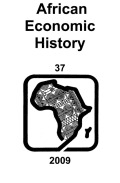
AFRICAN ECONOMIC HISTORY
Decoding Africa's Past for a Prosperous FutureAFRICAN ECONOMIC HISTORY is a distinguished academic journal published by the University of Wisconsin-Madison’s African Studies Program, focusing on the complex interplay of economic and historical dynamics in Africa. With its ISSN 0145-2258 and E-ISSN 2163-9108, this journal has been a vital resource since its inception in 1976, showcasing pioneering research that traverses various periods and regions across the continent. The journal is highly regarded in its field, holding a Q2 ranking in History and a Q4 ranking in Economics and Econometrics according to the latest category quartiles. It remains committed to advancing knowledge through rigorous scholarship while maintaining academic integrity and relevance in an evolving global landscape. Although not open access, it provides critical insights and a platform for discourse among researchers, economists, and historians alike. By delving deeply into the economic factors that shape societies, AFRICAN ECONOMIC HISTORY continues to contribute significantly to the understanding of Africa's past and its implications for the future.
AFRICA
Connecting Disciplines, Transforming UnderstandingAFRICA is a premier journal published by Cambridge University Press, dedicated to advancing scholarly research and discourse within the realms of Anthropology, Arts and Humanities, and Geography. Established in 1928, this journal has demonstrated an unwavering commitment to excellence, consistently achieving Q1 status in its respective fields as of 2023, demonstrating its impact and prestige in the academic community. With Scopus rankings highlighting it among the top 80th percentile in Social Sciences and 72nd percentile in Arts and Humanities, AFRICA serves as a vital resource for researchers, professionals, and students seeking to explore the complexities of African societies and cultures. The journal promotes a multidisciplinary approach, encouraging contributions that address contemporary challenges and opportunities within Africa. Although access is not open, AFRICA remains an essential asset for anyone aiming to deepen their understanding of the continent's diverse narratives and dynamics, publishing high-quality, peer-reviewed articles that shape the future of African studies.
Review of African Political Economy
Championing scholarly dialogue on Africa's socio-economic challenges.Review of African Political Economy, published by ROUTLEDGE JOURNALS, TAYLOR & FRANCIS LTD, serves as a pivotal platform for scholarly discourse on the dynamics of political and economic transformations across Africa. With an Impact Factor reflective of its academic rigor and importance, this journal ranks in Q2 across Development and Geography, Planning and Development categories, and Q1 in Political Science and International Relations as of 2023. Established in 1974 and continuously evolving through to 2023, it provides vital insights drawn from contemporary research that contribute to the understanding of socio-political challenges and economic developments facing the African continent. Researchers, analysts, and students are encouraged to engage with its comprehensive array of articles, case studies, and theoretical discourse, aimed at fostering a deeper understanding of African political economies. Although it does not offer Open Access, its critical contributions in shaping policy and academic perspectives in the region make it an essential resource for those invested in African studies.
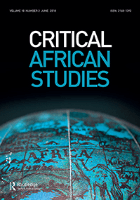
Critical African Studies
Navigating the Intersection of Culture and SocietyCritical African Studies, published by TAYLOR & FRANCIS LTD, is a premier journal dedicated to advancing the discourse on critical issues affecting Africa and its diaspora. With an ISSN of 2168-1392 and an E-ISSN of 2040-7211, this journal has established itself as a leading publication in the field of Arts and Humanities, ranked Q1 in Arts and Humanities (miscellaneous) and Q2 in Social Sciences (miscellaneous) as of 2023, showcasing its commitment to high-quality research. Over its converged years from 2015 to 2024, it has become a critical platform for scholars and practitioners to explore diverse perspectives, innovative ideas, and multidisciplinary approaches to issues such as social justice, governance, and cultural narratives within the African context. The journal's Scopus rankings reflect its significant impact, with impressive placements in both the Arts and Humanities and Social Sciences categories. Critical African Studies aims to foster a robust dialogue among researchers, professionals, and students, making it essential reading for anyone interested in the complexities of Africa's socio-political landscape and cultural heritage.